How Can an Animal Feed Plant Meet Different Nutritional and Production Needs?
How Can an Animal Feed Plant Meet Different Nutritional and Production Needs?
An animal feed plant is an essential part of modern agriculture, transforming grains, oilseed meals, protein sources, and other ingredients into nutritionally balanced feed. As livestock farming and aquaculture continue to develop, feed manufacturers must consider more than production capacity. Ingredient quality, processing methods, nutritional consistency, and equipment efficiency all influence the quality of the final product. Understanding these factors helps producers build facilities that meet practical farming needs while maintaining reliable operations.
1. Understanding the Basics of Feed Manufacturing
Although feed plants vary in size and purpose, most follow a series of common processing stages: raw material receiving, cleaning, grinding, batching, mixing, and, where required, pelleting or extrusion. Each stage has a specific role in maintaining feed quality.
Grinding reduces ingredients to a suitable particle size, making them easier to mix and digest. Batching ensures that each ingredient is added in the correct proportion, while mixing distributes nutrients evenly throughout the formula. Depending on the intended application, the finished feed may be supplied as mash, pellets, or floating and sinking extruded products.
For manufacturers serving aquaculture businesses, a shrimp feed mill requires particular attention to particle size, water stability, and pellet durability. Shrimp feed must retain its physical integrity in water long enough for the animals to consume it. Therefore, formulation, grinding fineness, conditioning, and pelleting parameters should be considered together rather than treated as separate production issues.
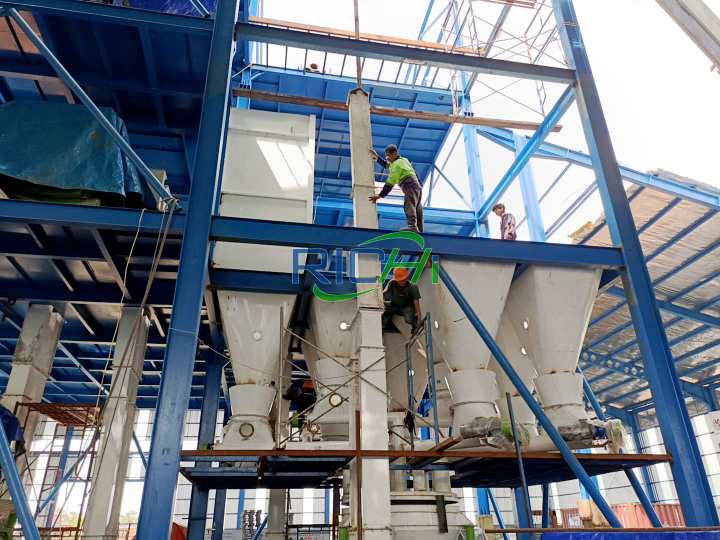
Installation site of a 2T/H shrimp feed production line in Indonesia
2. Selecting Equipment According to Feed Requirements
Different animals have different nutritional needs, so a single processing configuration may not be suitable for every feed product. Poultry diets require balanced energy, protein, vitamins, and minerals, while livestock formulas must account for species, age, growth stage, and production objectives.
A premix feed production line for poultry and livestock focuses on accurately handling concentrated nutritional ingredients. Because vitamins, trace minerals, and other additives may be included at relatively low inclusion rates, precise weighing and thorough mixing are essential. Inadequate mixing can create nutrient variations between batches, even when the overall formula is correctly calculated.
A suitable system may include ingredient storage, dosing equipment, weighing scales, mixers, dust collection, and finished-product packaging. The exact configuration depends on the number of formulas, batch size, required accuracy, and degree of automation. Manufacturers should also consider cleaning procedures to minimize cross-contamination between different formulations.
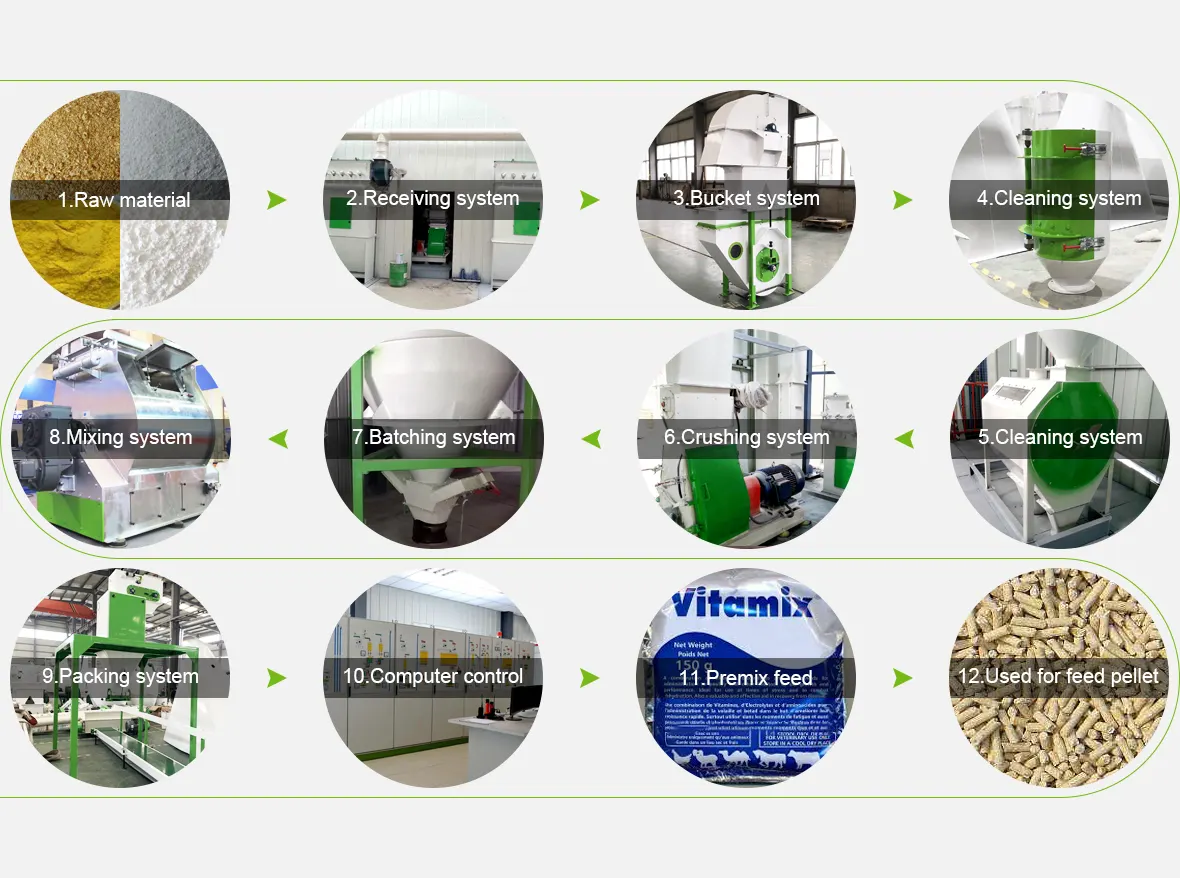
premix production line processing flow
3. Why Production Processes Differ Between Feed Types
Mash feed and pelleted feed have different processing requirements. Mash feed is produced by grinding and mixing ingredients without forming them into compact pellets. It can be useful for certain feeding systems and may require less processing equipment than a pelleting line. However, particle segregation during transportation and storage can affect consistency.
A pig mash feed production line typically includes raw material cleaning, grinding, accurate batching, mixing, and conveying equipment. Its design should reflect the farm's feeding practices and the nutritional requirements of piglets, growing pigs, or finishing pigs. For example, younger pigs may require finer particle sizes and carefully formulated diets, while other production stages may use different ingredient ratios.
Related Post: https://commercialpelletmill.com/pig-feed-production-line/
Feed manufacturers should also consider dust control, equipment accessibility, and the prevention of ingredient losses. A well-organized material flow can reduce unnecessary handling and make routine cleaning and maintenance easier. These practical details often have as much influence on daily efficiency as the rated capacity of individual machines.
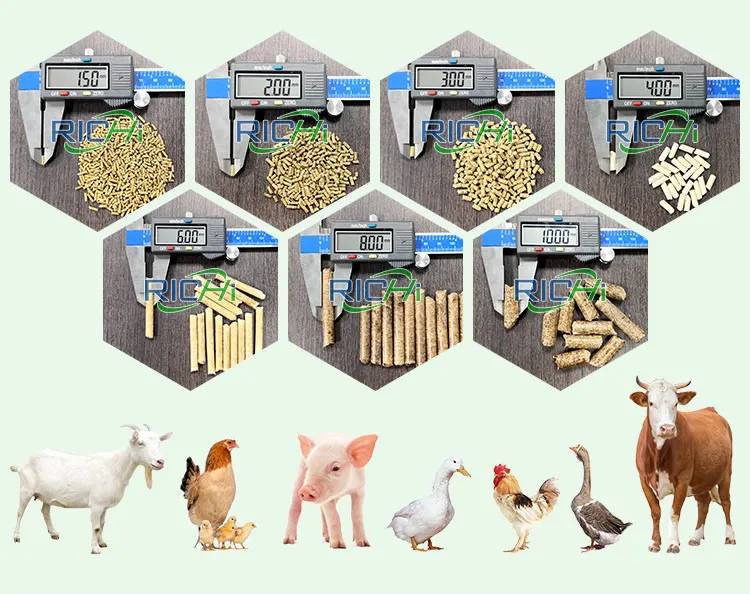
animal feed pellets in various sizes
4. Managing Production Costs and Quality Control
The main operating expenses of a feed plant generally include raw materials, electricity, labor, maintenance, and packaging. Since ingredient costs can account for a substantial proportion of total expenditure, reliable purchasing arrangements and effective inventory management are important.
Equipment selection should be based on actual production requirements rather than maximum advertised output alone. A machine's performance may vary depending on ingredient characteristics, moisture content, formula changes, and product specifications. Planning for realistic operating conditions helps avoid unnecessary investment and production bottlenecks.
Quality control should cover both incoming ingredients and finished products. Moisture testing, particle-size analysis, weighing checks, and routine inspection of finished feed can help identify problems early. Preventive maintenance is equally important, as worn components and poorly adjusted equipment may reduce output or lead to inconsistent product quality.
When researching feed manufacturing practices, i was reading this as a reminder that technical information is most useful when it can be compared with real production conditions. Equipment specifications should always be evaluated alongside the plant's intended applications, operating environment, and long-term maintenance requirements.
5. Planning for Long-Term Plant Performance
A reliable animal feed plant depends on coordination between nutritional formulation, process engineering, equipment selection, and daily management. Before investing, owners should estimate feed demand, identify available raw materials, define product specifications, and determine the required production capacity. They should also consider installation space, electricity supply, operator training, and future expansion.
Companies such as pellet machine for sale are relevant to this evaluation process because equipment suppliers can help clarify potential production configurations and machinery requirements. When comparing proposals, buyers should examine the complete process flow, equipment compatibility, technical support, and expected maintenance needs rather than focusing exclusively on the initial purchase price.
Ultimately, an efficient feed plant is not simply a collection of machines. It is an integrated production system designed around specific nutritional and operational goals. With careful planning, consistent quality control, and appropriate equipment maintenance, feed manufacturers can improve production stability, manage operating expenses, and provide dependable feed for livestock and aquaculture.
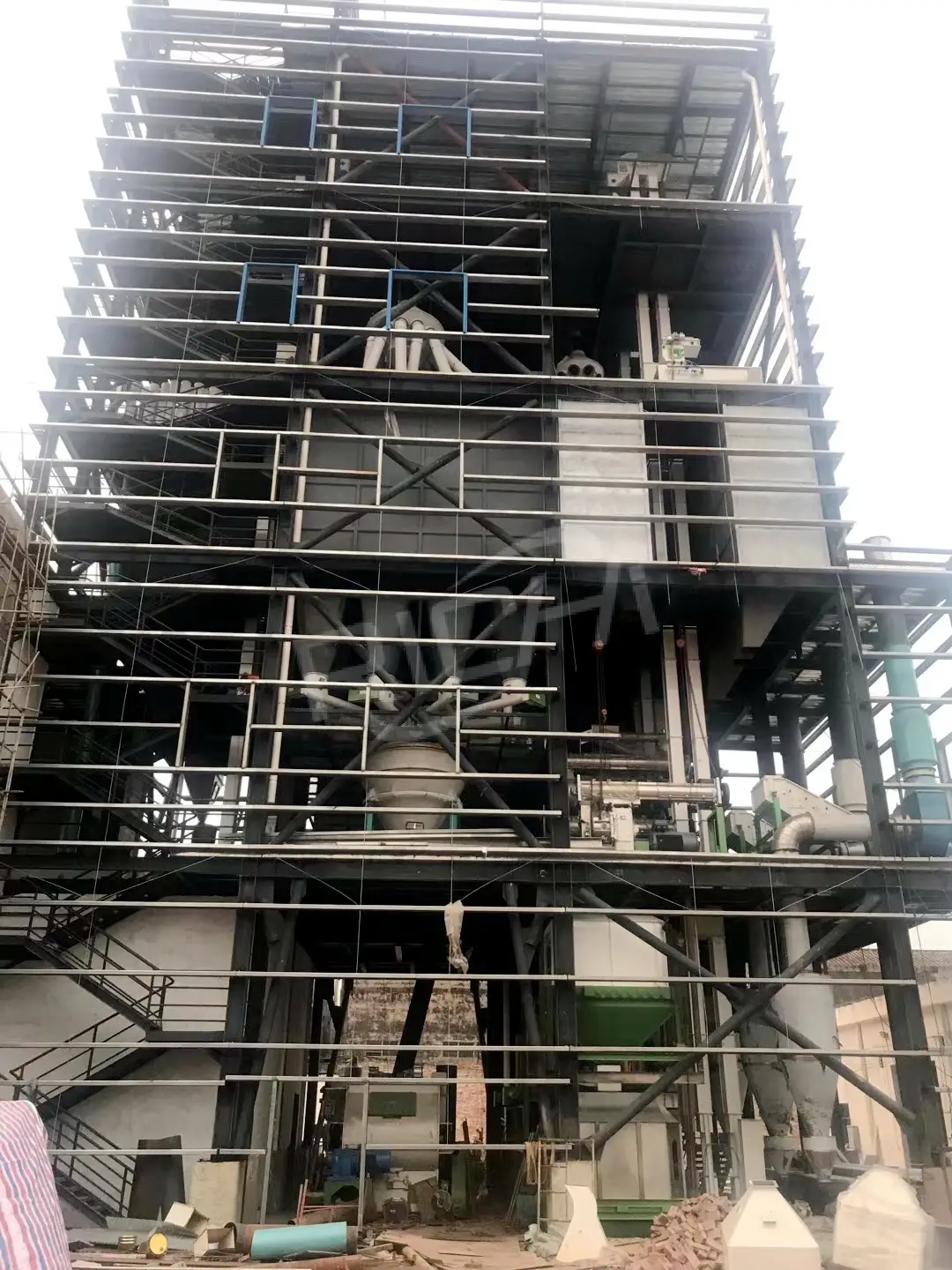
On-site setup of a compound animal feed production line in Algeria (10t/h aquafeed, 5t/h livestock and poultry feed, and two 5t/h premix lines)