Thoth transparency post for August 2026
It feels like forever and a day since I've done a Thoth Transparency post, so it must be time for another one. Code-wise, I haven't made any code updates recently because it's been running pretty well, and the Proof of Burn++ (PoB++) stuff seems like it's a better place to focus my limited attention right now.
Thoth Overview
Before moving on to the numbers and charts, a few words about what Thoth is. Thoth is an Open Source AI/LLM curator that reviews posts on the Steem blockchain in two passes, picks out the ones that it supports, and then posts about them. Anyone can run their own copy, and it is currently running twice per day through my test account.
The unique aspect of Thoth is its use of beneficiary rewards. Beneficiary rewards are set by the operator for any/all of the following targets:
- Fixed distribution to the authors of the posts that it finds and posts about.
- Delegators to the account. Due to the blockchain's limit of 8 beneficiaries per post, delegators are randomly selected with the odds of being selected being proportionate to their share of the incoming delegations.
- It is possible to exclude specific delegators from the selection pool.
- The @
nullaccount for burning. - The Thoth operator's account.
Thoth's test instance is currently setting beneficiaries to include: selected authors; delegator accounts that aren't owned by me; and @null (25%). The operator account is not receiving beneficiary rewards.
After posting with the appropriate beneficiary settings described above, Thoth also votes on its own posts.
There are two tactical goals here:
- Give delegators a way to collect passive rewards without needing to spam the blockchain each day; and
- Make sure that Steem posts with lasting value can continue to generate rewards, even after the post has passed its initial payout time.
Because post payouts are defined by blockchain consensus, including automated and organic voting, it is not possible to anticipate a fixed value that any stakeholder will receive. However, if Thoth does a good job at finding valuable content, and if the reward distribution is set to distribute enough beneficiaries to the original authors, IMO we would expect Thoth to attract organic votes in addition to its own votes.
Aligning the interests of the Thoth operator, the authors, and the delegators in this way is all done in pursuit of these strategic goals:
- Demonstrate a way forward beyond the legacy delegation bots that can only succeed by ignoring the value (or lack thereof) of the posts that they support;
- Increase the proportion of content on the blockchain that delivers true, lasting value; and
- Plant seeds for bringing back account-holders who once created content with lasting value and subsequently went idle.
I have verified fairly recently that Thoth works with at least three models: Gemini and Gemma from Google and Qwen3.5-27B-Derestricted from ArliAI. The Gemma and Qwen models can be accessed for free, although I notice now that the ArliAI pricing page suggests that free access to their model may be limited or ending.
Now, let's get on to the blockchain's rewards distributions.
Here are summary tables with estimates:
Summary of PowerBI visuals
| All time | 30 days | |
|---|---|---|
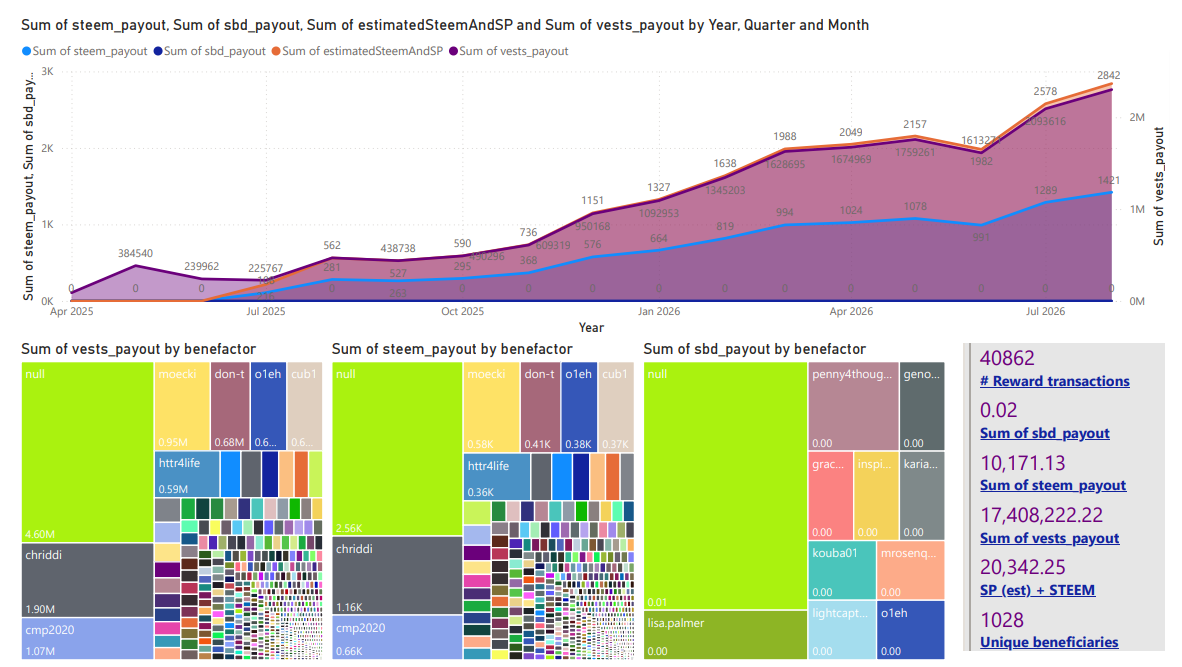
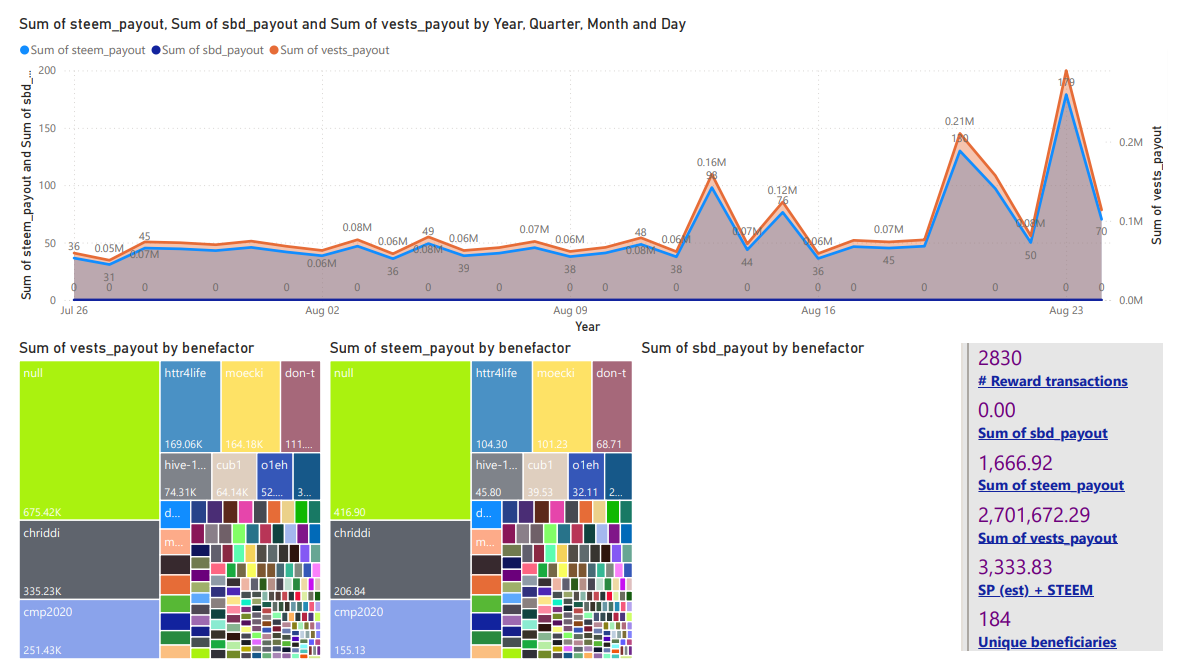
| Total beneficiary payouts (STEEM * 2 ) | 20,342 STEEM | 3,333 STEEM |
| Burned beneficiary rewards ( STEEM * 2 ) | 5,112 STEEM | 834 STEEM |
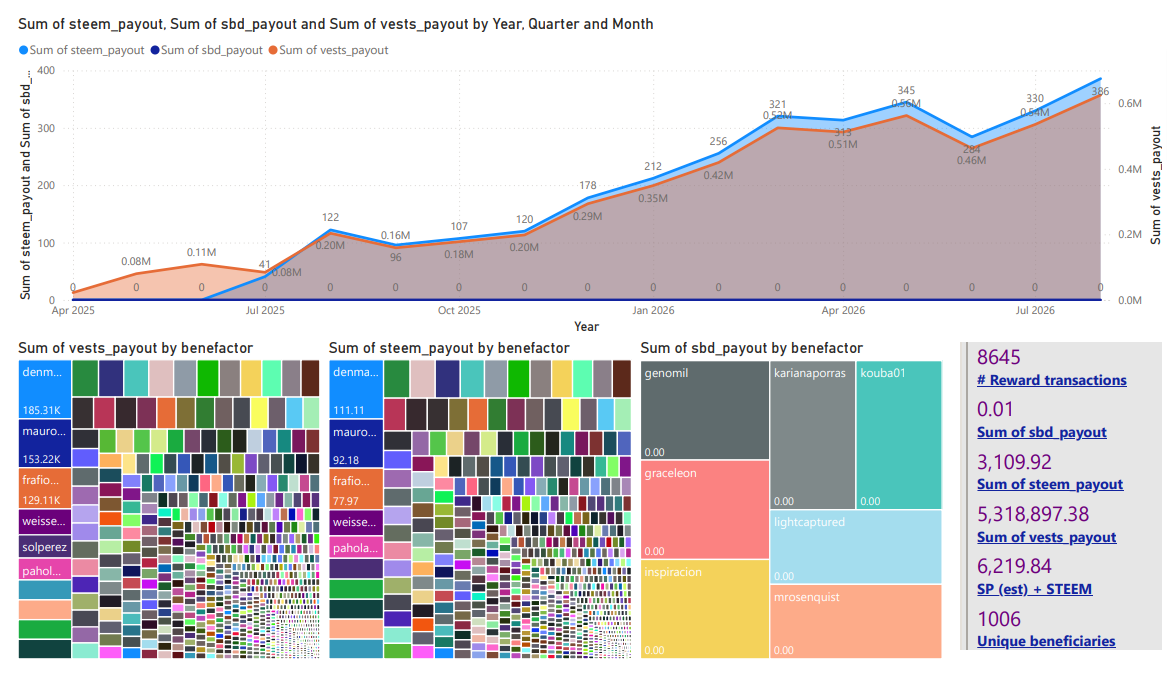
| Author beneficiary rewards ( STEEM * 2 ) | 6,219 STEEM | 886 STEEM |
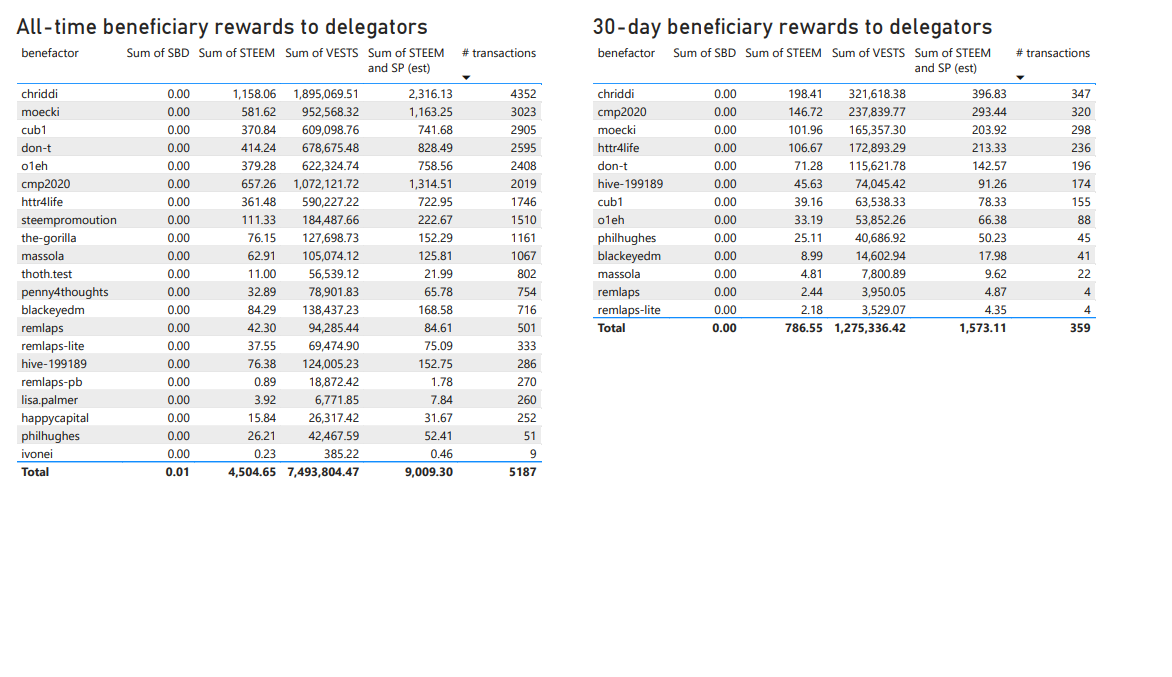
| Delegator beneficiary rewards ( STEEM * 2 ) | 9,009 STEEM | 1,600 STEEM |
| Number of unique non-delegating author beneficiary accounts | 1,006 | 170 |
| Number of unique delegator beneficiary accounts | 21 | 13 |
@thoth.test info from SteemWorld
| All time / Current | 30 days / Comment | |
|---|---|---|
| Curation Rewards | 6,369 | 806 |
| Total Delegated SP | 138,308 | n/a |
| Owned SP or Non-beneficiary delegated SP | 47,073 | These delegating accounts are not receiving FAIRD beneficiary selection. |
| SP from beneficiary-eligible delegators | 101,302 | These delegators are included in FAIRD beneficiary selection. |
And here are the updated visuals
(Reminder that July is the last complete month, so the numbers for August are not complete yet.)
All rewards / all time
All rewards / 30 days
Non-delegating authors / all time
Non-delegating authors / 30 days
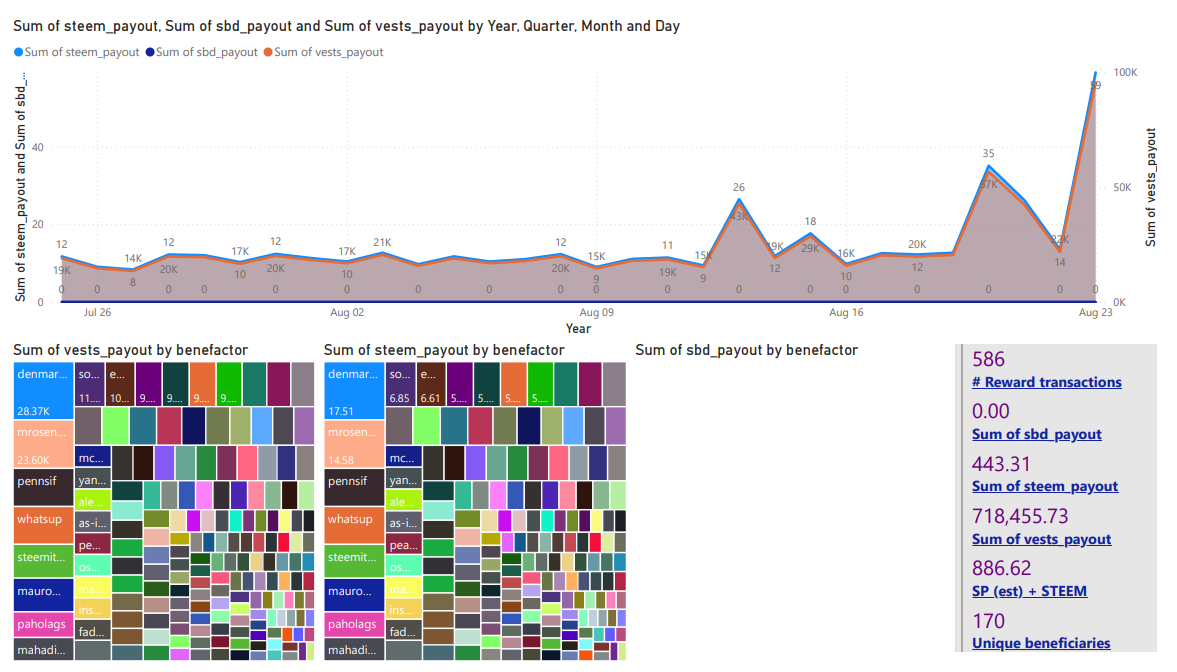
Delegators / all time
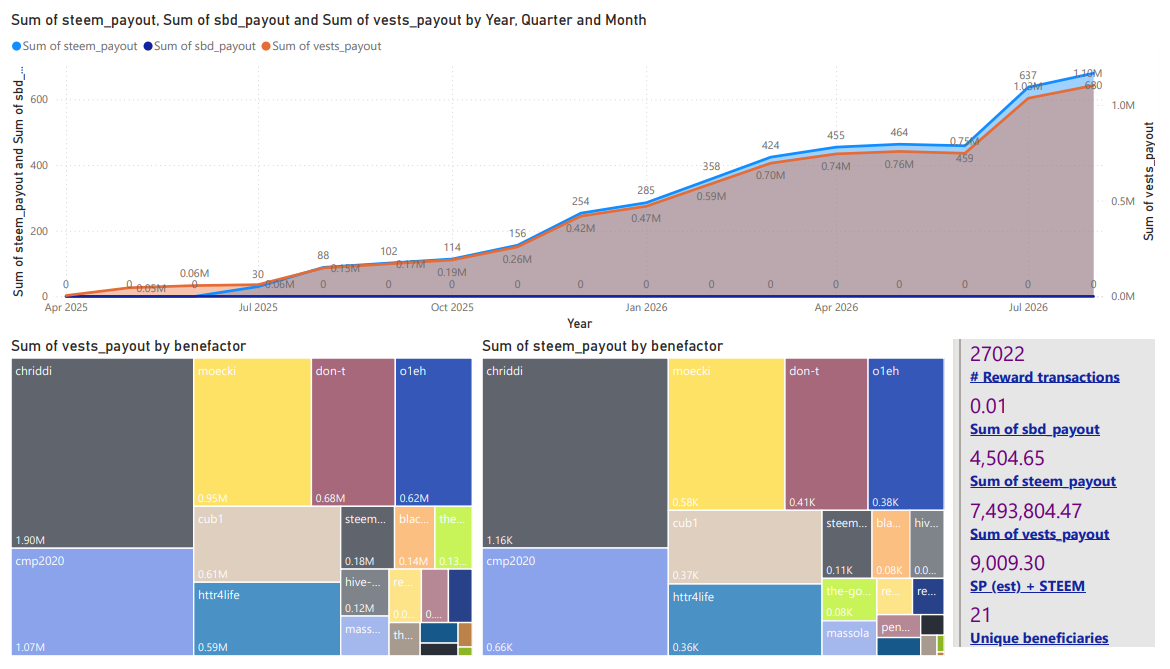
Delegators / 30 days
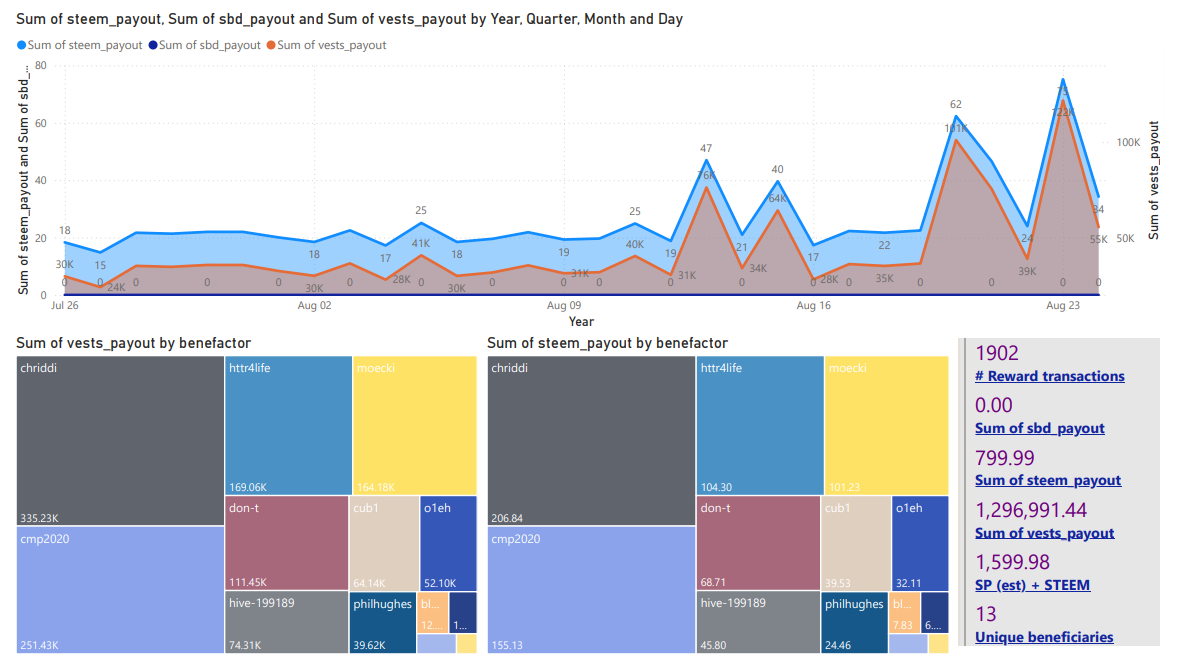
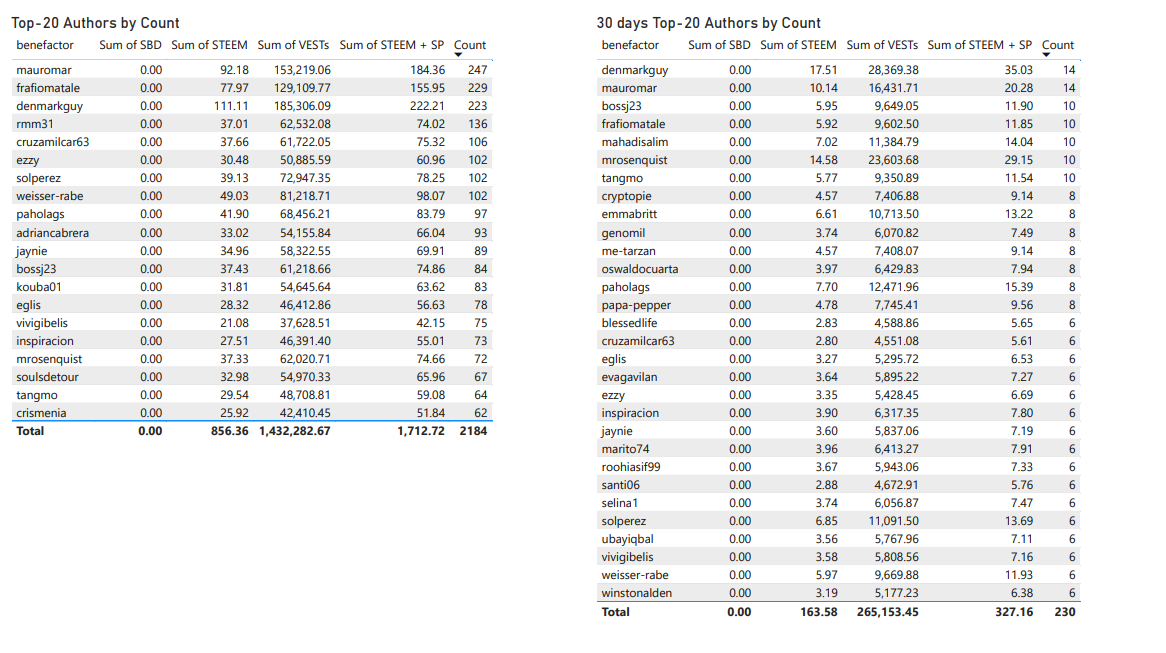
Details about beneficiary rewards to the top authors (by count) / all time
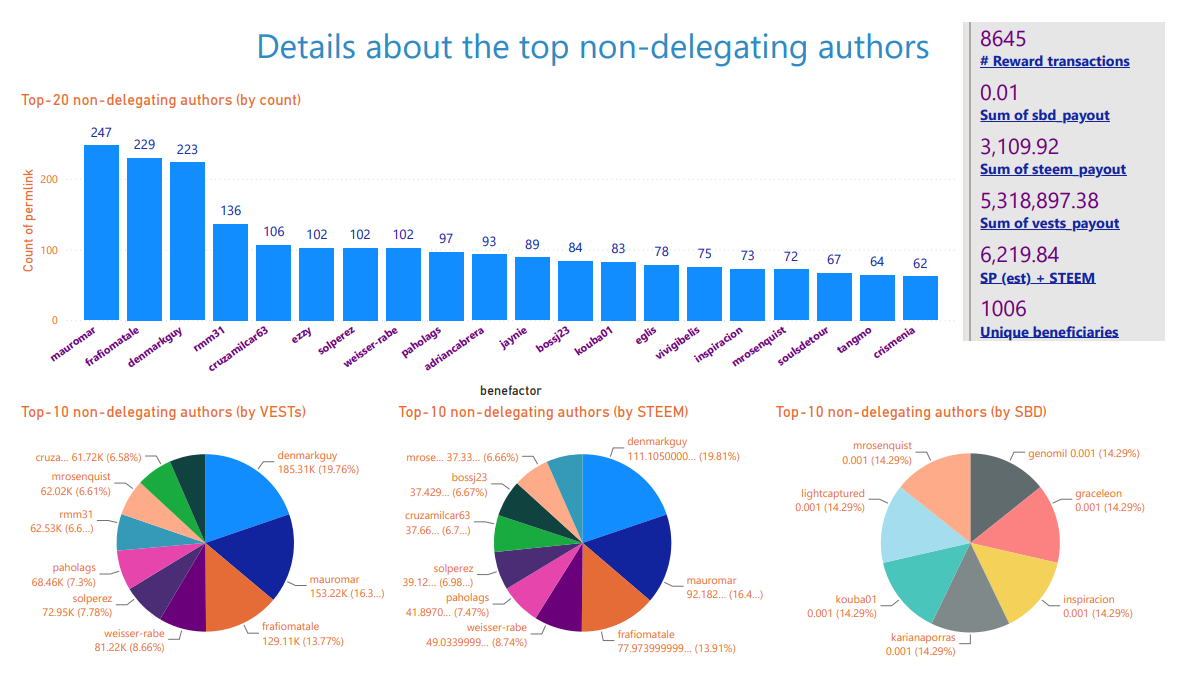
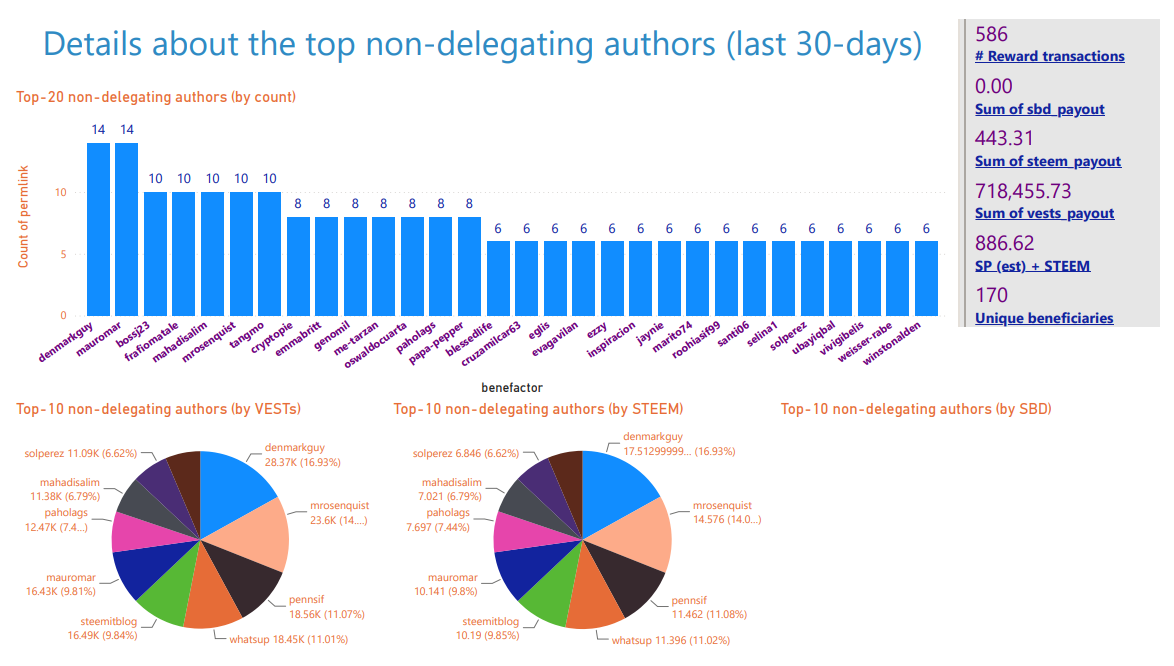
Details about beneficiary rewards to the top authors (by count) / 30 days
More details about rewards to delegators (now sorted by count)
More details about rewards to the top authors (by count)