Rogue Network: Exploring the Blockchain-Powered Pirate Gaming Ecosystem Behind Rogue Isles
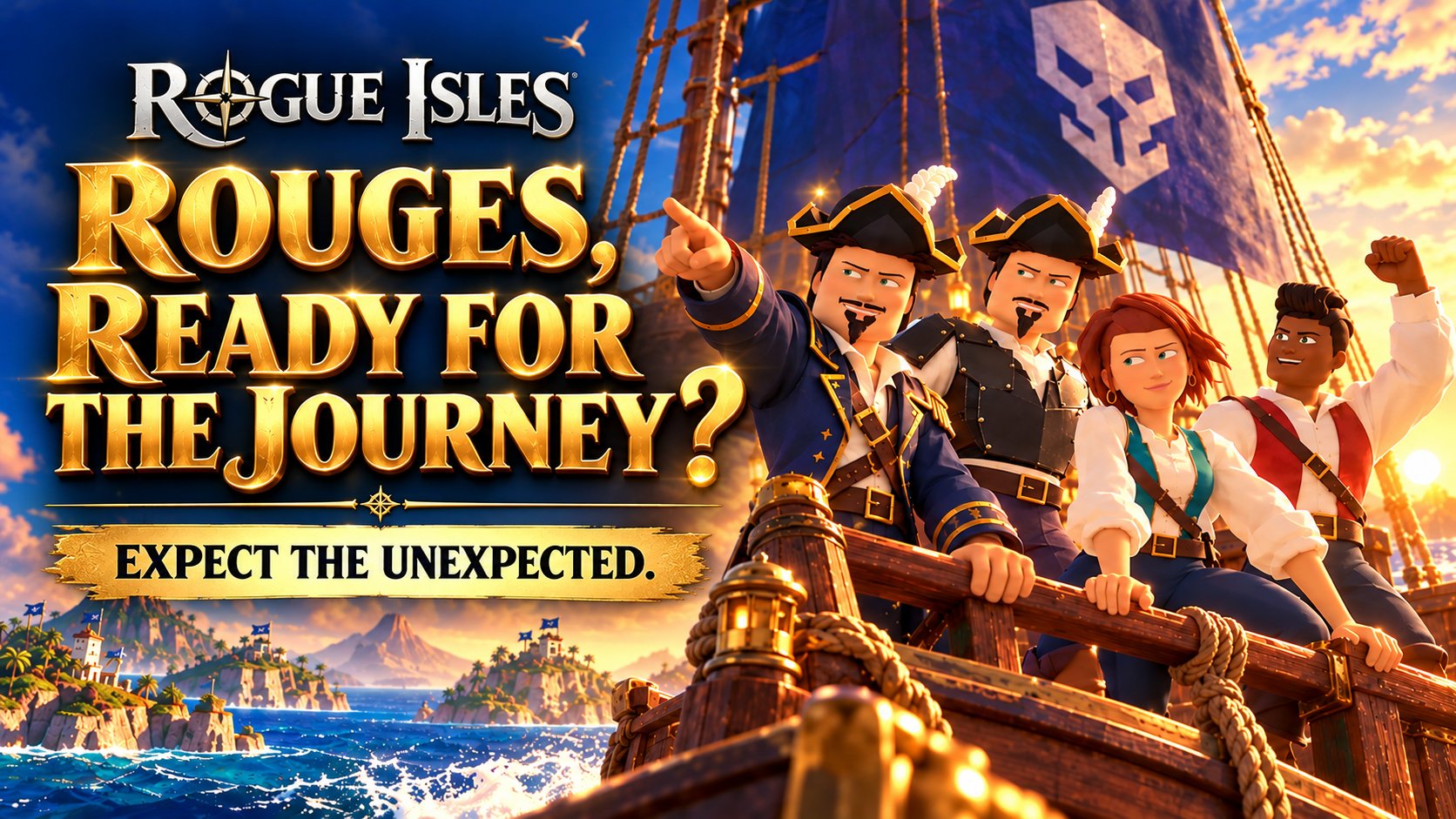
Blockchain-based games are introducing new approaches to digital ownership, player participation, token economies, and interactive entertainment. Among the projects exploring this combination is Rogue Network, an ecosystem that brings together blockchain infrastructure, cryptocurrency, and an immersive pirate-themed multiplayer gaming experience through Rogue Isles.
Rogue Network is designed around the idea of connecting an independently operated blockchain network with a persistent online gaming world. Rather than treating cryptocurrency as a separate investment-oriented product, the project integrates its native RGN asset into a broader ecosystem involving mining, staking, wallets, trading infrastructure, and planned in-game reward opportunities. At the center of the gaming experience is Rogue Isles, a pirate-themed massively multiplayer online role-playing game (MMORPG). Players can explore shared seas, develop their characters, complete quests, gather resources, improve skills, trade supplies, and participate in naval player-versus-player activities. The browser-based Alpha allows players to experience the developing game without downloading a traditional desktop client.
Rogue Isles and Rogue Network as two interconnected parts of one larger vision: an accessible digital world supported by blockchain infrastructure operating beneath the gaming experience. The project aims to make blockchain participation more understandable by connecting network activity with practical applications and an expanding gaming environment.
Introduction to Rogue Network
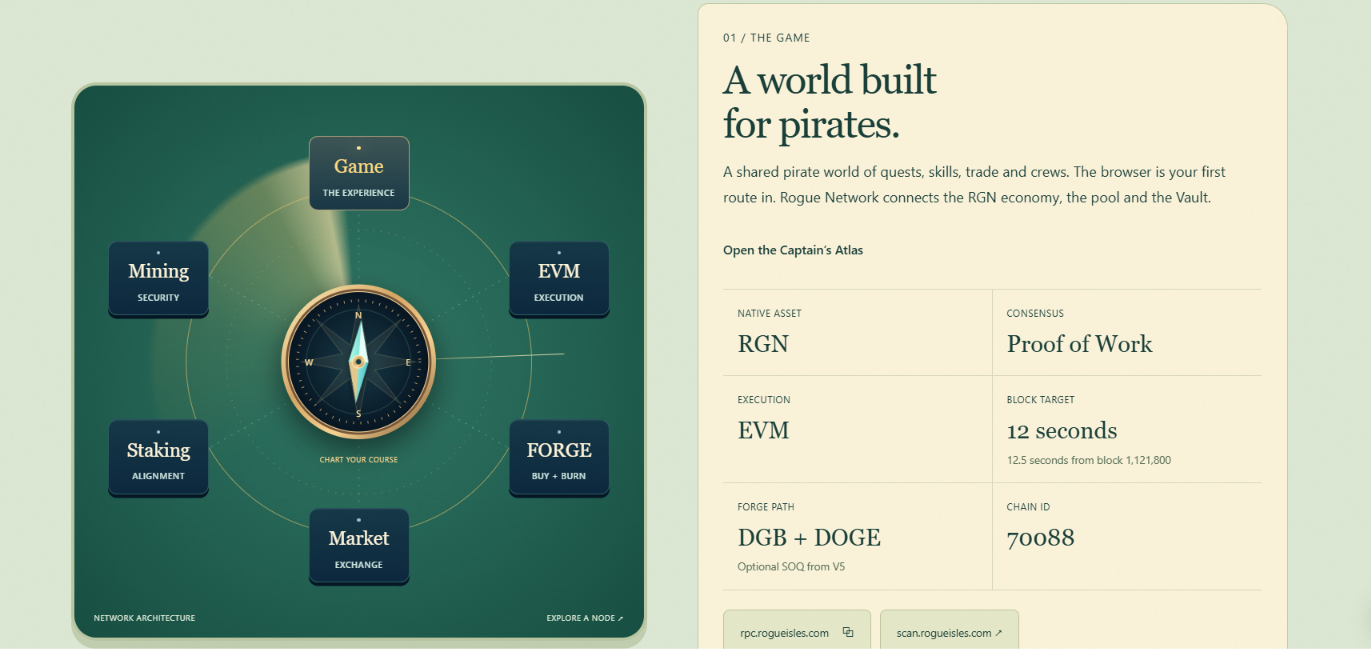
Rogue Network is a blockchain ecosystem built around RGN, its native cryptocurrency. It provides the underlying infrastructure for transactions, network participation, wallet services, staking, mining, and applications connected to the wider Rogue Isles ecosystem. The network uses an EVM-compatible proof-of-work blockchain architecture. This means it supports Ethereum Virtual Machine-compatible execution while maintaining its own network identity, native asset, and consensus infrastructure. RGN serves as the native asset of the blockchain. It is used to pay transaction fees and supports applications within the ecosystem, including the Rogue Vault. Its role extends beyond the gaming environment because the blockchain operates as an independent infrastructure layer.
One important distinction is that RGN and in-game Gold are separate assets. Gold, experience points, and ordinary gameplay discoveries belong to the Rogue Isles game economy, while RGN is the native cryptocurrency of Rogue Network. The project makes this distinction clear to help users understand how gameplay progression differs from blockchain-based participation.
The ecosystem also includes several supporting components:
- Rogue Isles: The pirate MMORPG and primary gaming experience.
- RGN: The native cryptocurrency of Rogue Network.
- Mining and FORGE: Infrastructure connecting mining activity with network security and treasury operations.
- Rogue Vault: The ecosystem's staking application.
- Rogue Wallet: Wallet software for managing native RGN accounts.
- Rogue Scan: A blockchain explorer for following public network activity.
- Deepwater Swap: A trading interface supporting available exchange and bridge routes.
Together, these components establish the foundation for a connected blockchain and gaming ecosystem.
Rogue Isles: The Gaming World Behind the Network
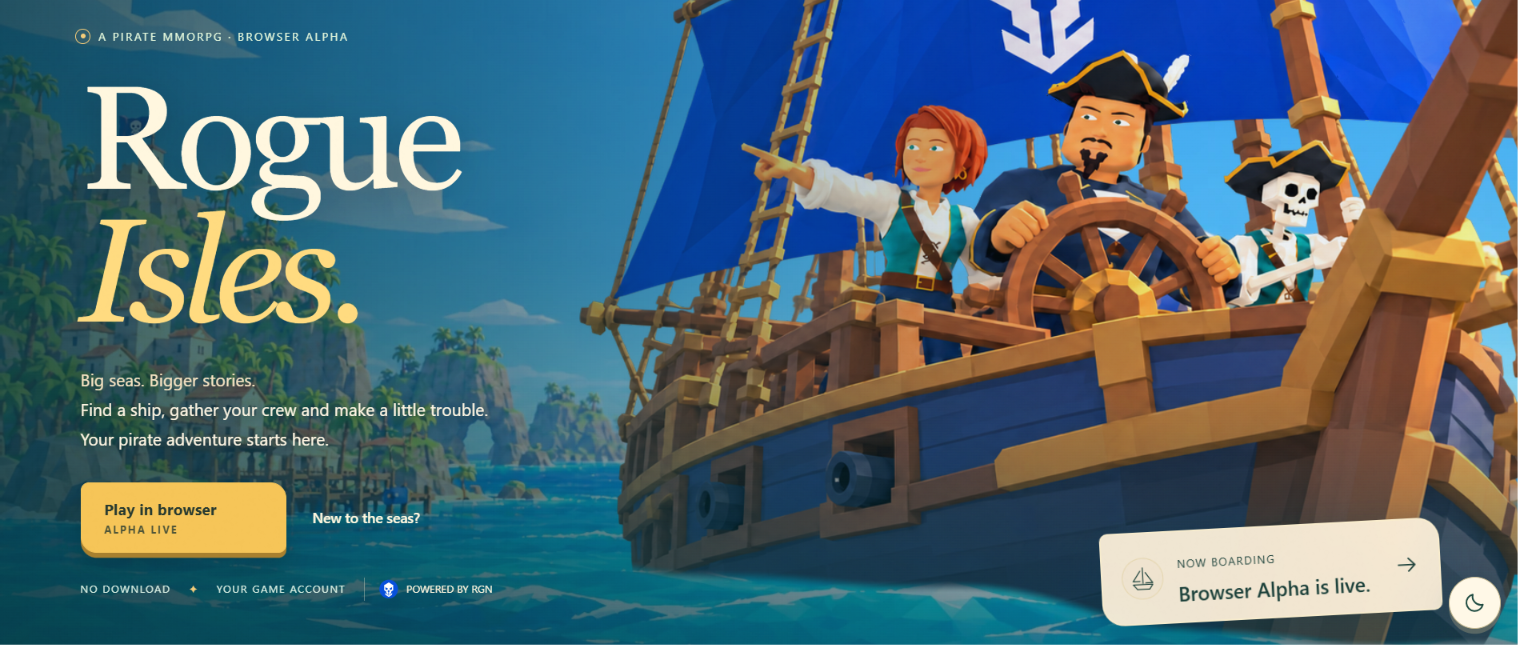
One of the most distinctive aspects of Rogue Network is its connection with Rogue Isles. Instead of focusing exclusively on blockchain transactions or cryptocurrency applications, the project places a multiplayer gaming experience at the center of its ecosystem. Rogue Isles is a pirate-themed MMORPG where players begin their adventures with limited resources and gradually develop their characters through exploration, gathering, crafting, combat, and progression. The game is designed around shared environments where players can interact with other participants, discover new opportunities, and develop their own identities within the pirate world.
Its browser-first approach is particularly important. Players can access the current Alpha through a web browser without installing a traditional game client. This lowers the technical barrier for newcomers who want to explore the experience before committing to a more extensive gaming setup.
The official website identifies several central gameplay activities:
- Sailing across shared seas.
- Completing quests and contracts.
- Training character skills.
- Gathering and crafting resources.
- Trading supplies and equipment.
- Developing ships and crews.
- Participating in naval PvP activities.
These systems provide multiple ways for players to participate rather than limiting the experience to a single repetitive activity. The long-term vision is to develop a more persistent world where ships, crews, progression, and future island systems contribute to a player's ongoing journey.
Character Development and Skill Progression
Character progression is an important part of Rogue Isles. Players are encouraged to improve their abilities by participating in activities connected to their preferred playstyles. The project describes a broad collection of skills, including health, stamina, agility, swordsmanship, defense, mining, pistol use, navigation, cannonry, fishing, firemaking, woodcutting, crafting, potionmaking, bombthrowing, and cooking.
This progression structure gives players different opportunities to specialize. Someone interested in exploration may focus on navigation, while another player may prefer gathering materials, crafting equipment, or developing combat abilities. The connection between skills and gameplay activities also creates a reason to explore different parts of the world. Rather than treating progression as a simple numerical achievement, the system is intended to make character development relevant to everyday adventures.
For example, gathering resources can support crafting, while navigation and ship development can contribute to longer voyages. Combat-related abilities can help players participate in dangerous encounters and naval PvP. As the game continues to develop, these interconnected progression systems can help create a more engaging and varied multiplayer environment.
Ships, Exploration, and Naval Adventures
Ships are central to the identity of Rogue Isles. A pirate adventure would be incomplete without the ability to sail across open waters, transport supplies, discover new destinations, and encounter other players. The project describes a progression path that begins with a first skiff and moves toward more capable sailing vessels, including schooners. Ship progression is not presented simply as a cosmetic feature. The official website highlights navigation, repairs, supplies, and vessel condition as important elements that can influence a player's journey. This creates a more practical relationship between preparation and exploration. Players must consider their equipment, resources, and ship condition before undertaking longer voyages.
The wider vision also includes ships, markets, crews, quests, and player-versus-player activities. These systems can eventually work together to create a more interconnected pirate economy and social environment. Private island ownership is another planned expansion. It is intended to provide players with a more permanent connection to the world and opportunities to establish their own place within the developing ecosystem.
Quests, Contracts, and Discoveries
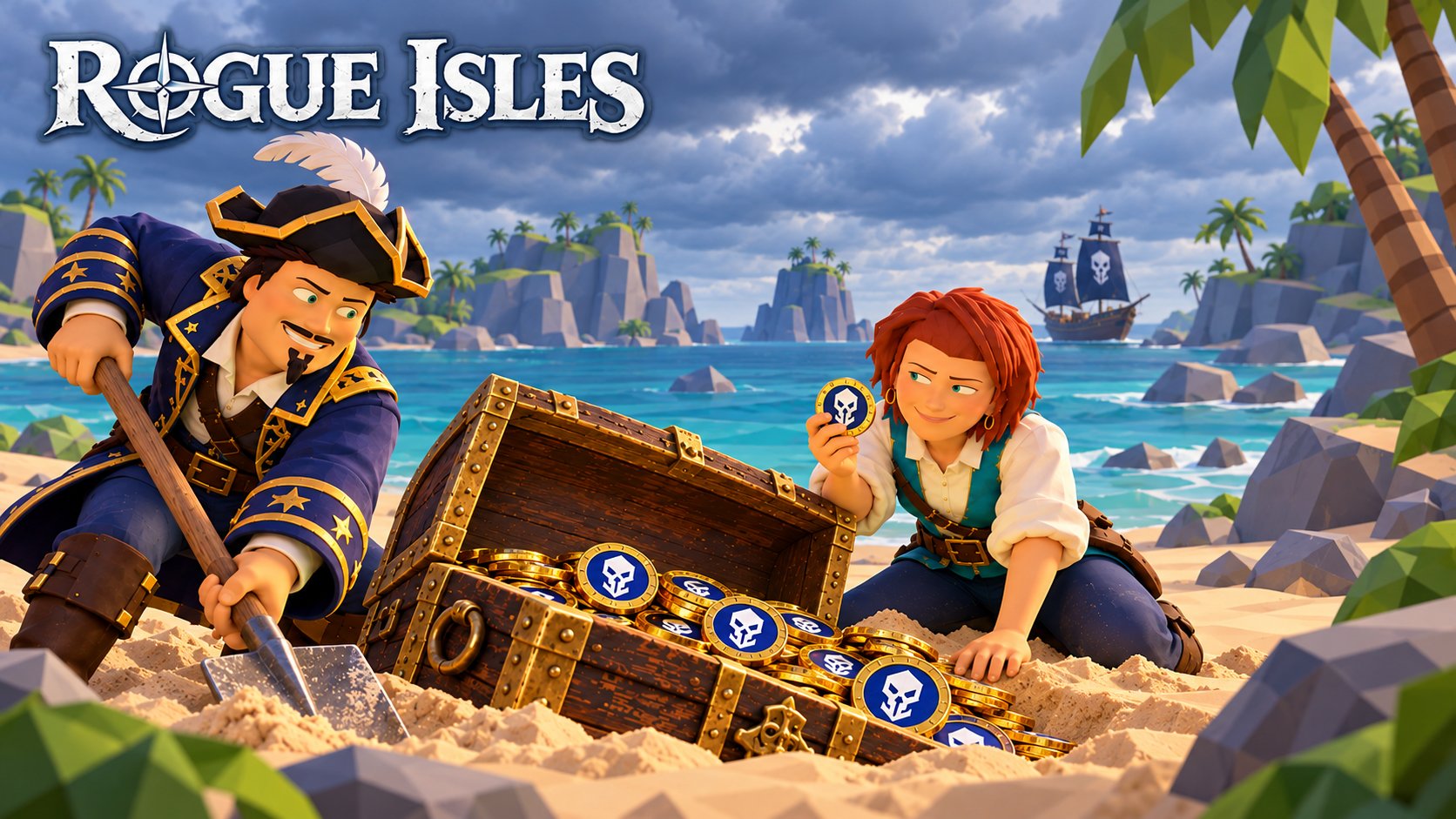
Rogue Isles aims to give players meaningful reasons to explore through quests, stories, contracts, and special discoveries. According to the Captain's Atlas, the game includes opening quests, authored stories, and eleven contract families. These activities help guide players through the world while introducing different gameplay opportunities. New players can begin by learning how to survive, gathering materials, preparing food, and developing basic crafting abilities. As they become more experienced, they can earn their first skiff, visit harbours, accept contracts, and choose their own direction.
This gradual introduction helps make the experience more approachable for newcomers. Rare discoveries and special items are also part of the game's broader progression concept. Finding something valuable can give players an additional reason to investigate unfamiliar locations and participate in exploration activities. The combination of quests, contracts, resource gathering, and trading can help create a more dynamic world where different activities support one another.
Rogue Network's Mining Infrastructure and FORGE System
Mining is one of the fundamental components of Rogue Network. The blockchain uses a proof-of-work model with Scrypt-based mining infrastructure, connecting network participation with the production and validation of blocks. An important part of this infrastructure is the FORGE system, which connects eligible external mining work with Rogue Network's native blockchain operations. The project's documentation describes DigiByte (DGB) and Dogecoin (DOGE) as supported external mining sources. Its FORGE V5 upgrade also introduces optional support for SOQ.
The system is designed around several operational stages:
- Mining: Compatible miners contribute Scrypt-based computational work.
- Work eligibility: The system checks whether submitted work satisfies the relevant requirements.
- Approvals: Authorized mining signers provide the required approvals.
- Validation: Rogue Network validators verify the proof, certificates, and blockchain state transition.
- Treasury allocation: Accepted native mining rewards are directed toward approved treasury destinations.
The FORGE architecture is particularly interesting because it separates mining participation from the network's ordinary transaction-validation process. The documentation also emphasizes that accepted mining shares do not automatically guarantee rewards from external blockchains. Native-chain rewards must satisfy their own acceptance and maturity requirements. This approach demonstrates how Rogue Network intends to connect external mining infrastructure with its internal blockchain economy.
RGN Tokenomics and Distribution
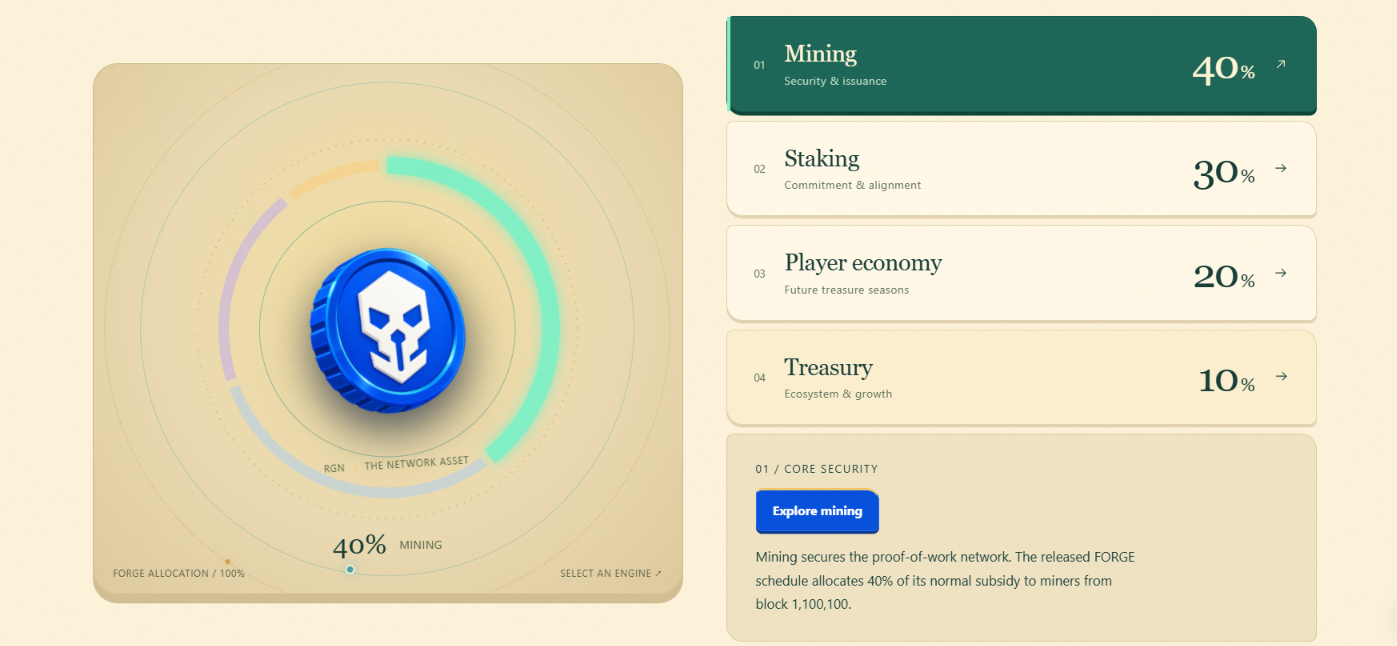
RGN is the native cryptocurrency of Rogue Network. It plays an important role in transaction processing, staking, and the ecosystem's planned gaming reward structure. According to the official tokenomics documentation, the normal block subsidy follows a four-part allocation model.
RGN normal block subsidy distribution
- Mining - 40%
- Staking - 30%
- Play-to-Earn - 20%
- Treasury - 10%
The distribution model creates a connection between network security, staking participation, gaming development, and ecosystem funding. The official documentation also specifies a gross lifetime issuance ceiling of 10.7 billion RGN. This includes previously issued coins, reserved special credits, and normal FORGE subsidies. It is important to distinguish this gross issuance ceiling from the amount currently circulating in the market.
Another important detail is that the 20% Play-to-Earn allocation does not automatically mean that players receive RGN from every ordinary gameplay activity. Actual token rewards depend on eligible treasure seasons, their individual rules, and the availability of reward budgets.
RGN Staking and the Rogue Vault
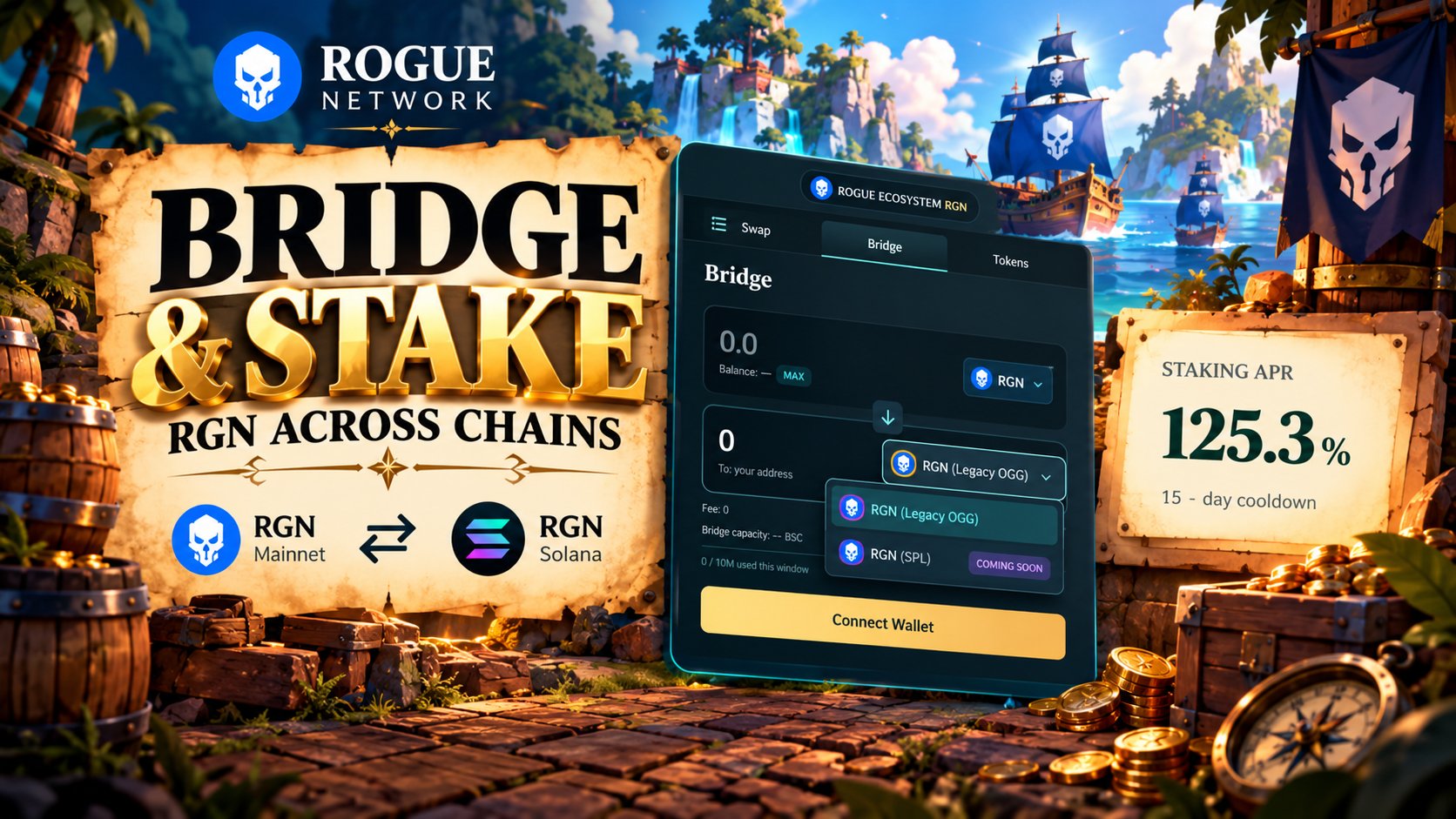
Staking is another important component of the Rogue Network ecosystem. Through the Rogue Vault, users can commit native RGN to the staking contract and manage their positions through a dedicated decentralized application.
The staking process is designed around four primary actions:
- Stake: Commit available RGN to the staking pool.
- Earn: Accumulate rewards according to the contract's rules.
- Withdraw: Request the release of some or all of an active staking position.
- Collect: Receive principal after the applicable withdrawal cooldown has ended.
The Rogue Vault supports wallet connections through options including MetaMask, SafePal, and Trust Wallet. One useful feature is the separation between staking rewards and the original deposited amount. Users can claim available rewards without automatically withdrawing their active stake. Withdrawals also involve a contract-controlled cooldown period. Therefore, users should review the applicable conditions before committing funds.
The project provides a dedicated staking interface where participants can examine pool information, available balances, active positions, pending rewards, and withdrawal status. As with any blockchain staking system, participation involves financial and technical risks. Rewards are not guaranteed, and users should independently review contract information and transaction details before confirming operations.
Rogue Network Wallets and Blockchain Tools
A blockchain ecosystem needs accessible tools that allow participants to manage assets, monitor transactions, and interact with decentralized applications. Rogue Network addresses this requirement through several supporting products introduced in its Captain's Atlas.
Rogue Wallet
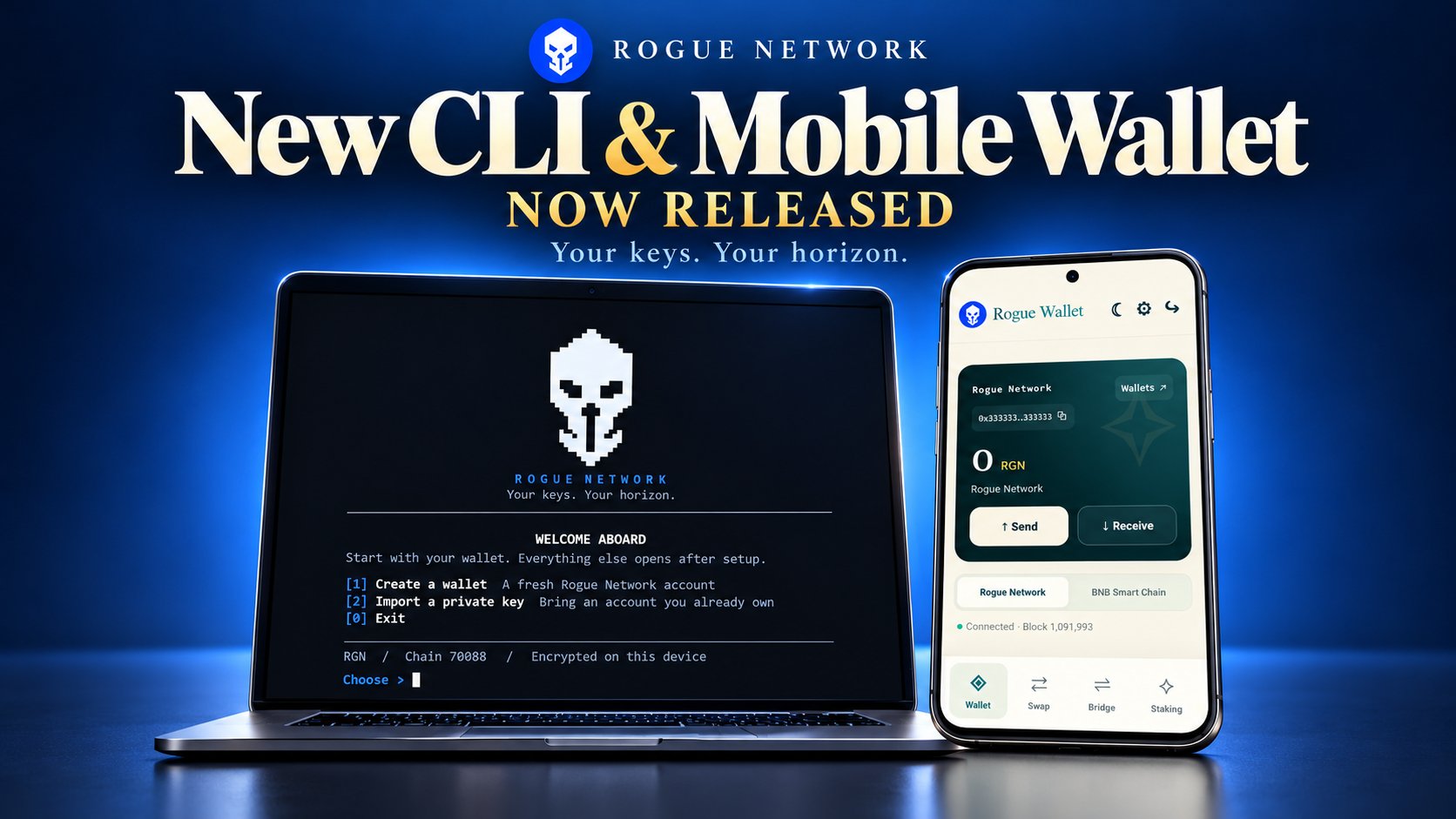
Rogue Wallet provides access to native RGN accounts and supports ecosystem interactions. The Atlas lists an Android version, Rogue Wallet 3.0.0, with native RGN account functionality and supported staking and swap routes.
Desktop Wallet
The project also lists a desktop version for Windows, Linux, and macOS. This gives users an alternative to managing their blockchain assets exclusively through mobile devices.
Rogue CLI
For technically experienced participants, the Rogue CLI Master Tool offers a terminal-based wallet and staking interface. This option may be particularly useful for users who prefer command-line workflows.
Rogue Scan
Rogue Scan serves as the blockchain explorer, allowing participants to follow public network activity, including blocks, accounts, and transactions.
Deepwater Swap
Deepwater Swap provides a trading interface with supported network and bridge routes. It adds another component to the ecosystem by connecting RGN-related activity with available exchange infrastructure.
These tools demonstrate that Rogue Network is developing more than a gaming-focused cryptocurrency. Its infrastructure includes wallet management, blockchain transparency, staking, and trading applications.
Play-to-Earn and RGN Treasure Hunts
Blockchain gaming often attracts attention because of its potential to connect gameplay achievements with digital asset ownership and token-based incentives. Rogue Isles explores this concept through its planned RGN treasure seasons. The idea is to connect eligible gaming activities with opportunities to discover and claim RGN rewards. Players will be able to follow clues, explore designated locations, participate in eligible activities, and claim rewards according to the rules of individual seasons.
The intended process involves four stages:
- Join an eligible treasure season.
- Review and follow the published treasure rules.
- Complete the required activity.
- Claim an eligible RGN reward.
This model is intended to create an additional connection between the gaming environment and the underlying blockchain economy. However, players should understand that ordinary Gold quests do not automatically generate RGN payments. The project's documentation explicitly states that treasure rewards require release activation and depend on individual season eligibility and reward budgets. The first treasure-season dates, locations, and reward details are subject to official announcements.
This distinction is important because it presents the Play-to-Earn component as a developing feature rather than suggesting that every player can currently earn guaranteed cryptocurrency simply by playing.
Why Rogue Network Is Worth Following
Rogue Network brings together several concepts that are increasingly relevant to the blockchain gaming industry. Its combination of an independent proof-of-work blockchain, cryptocurrency infrastructure, mining, staking, and multiplayer gaming creates a broader ecosystem than a conventional gaming token.
There are several reasons why the project deserves attention.
1. A gaming-first ecosystem
Rogue Isles provides a practical environment where players can explore, develop characters, complete quests, and interact with others. The gaming experience gives the broader ecosystem a recognizable application beyond cryptocurrency transactions.
2. Independent blockchain infrastructure
Rogue Network operates its own EVM-compatible blockchain with native RGN functionality. This gives the ecosystem a dedicated infrastructure layer for transactions and decentralized applications.
3. Multiple participation opportunities
The combination of mining, staking, wallet services, and planned gaming rewards offers different ways for users to interact with the ecosystem.
4. A defined token allocation model
The 40/30/20/10 normal subsidy distribution provides a documented framework for allocating RGN across mining, staking, Play-to-Earn, and treasury operations.
5. An organized documentation hub
The Captain's Atlas makes it easier for users to understand the project's different components, follow technical instructions, and distinguish current features from planned developments.
6. Long-term gaming ambitions
The development roadmap includes broader multiplayer features, future island systems, additional gaming platforms, and a more connected virtual world.
Ultimately, the project's progress will depend on whether it can deliver these features, maintain reliable infrastructure, attract active players, and develop sustainable participation across its ecosystem.
How to Get Started With Rogue Network
New users can explore Rogue Network and Rogue Isles through the official website and Captain's Atlas.
A sensible starting process includes the following steps:
Step 1: Visit the official website
Go to https://rogueisles.com to explore the ecosystem, understand its gaming concept, and find the available applications.
Step 2: Explore the browser Alpha
Use the Play in Browser option to access the currently available Rogue Isles Alpha. Players can begin learning about the world, its activities, and its progression systems.
Step 3: Read the Captain's Atlas
Visit https://rogueisles.com/atlas/ to understand the gameplay mechanics and blockchain infrastructure. The Atlas includes dedicated documentation for mining, staking, wallets, tokenomics, and gaming.
Step 4: Learn about RGN
Review the RGN tokenomics and network documentation before interacting with the cryptocurrency. Understanding its role, issuance structure, and distribution is important.
Step 5: Explore wallet and staking options
Users interested in blockchain participation can examine the official wallet and Rogue Vault documentation. Always verify the network, contract details, and transaction requirements before connecting a wallet or depositing funds.
Step 6: Follow future developments
Keep track of official announcements concerning treasure seasons, new gameplay systems, island ownership, and additional platform releases.
Taking these steps can help newcomers understand the ecosystem before making financial commitments or participating in more advanced blockchain activities.
How to Buy $RGN Token: A Step-by-Step Guide to Buying Rogue Network
Rogue Network (RGN) is the native cryptocurrency of the Rogue Network ecosystem, which connects blockchain infrastructure with the pirate-themed MMORPG Rogue Isles. The token plays an important role in the network's economy, supporting transaction fees, staking, mining-related distribution, and the project's expanding ecosystem.
For users interested in becoming part of Rogue Network, purchasing RGN is one way to gain exposure to its blockchain ecosystem. However, before buying, it is important to identify the correct token, verify its contract address, and use the appropriate trading platform. This guide explains how to prepare for purchasing RGN, connect a compatible wallet, and complete a token swap while taking basic cryptocurrency security precautions.
Where to Buy Rogue Network (RGN)
https://raydium.io/swap/?inputMint=sol&outputMint=Cn7pt6uUQt6qdYSASpWgvQHm4D9aStaujRu7AYMABray
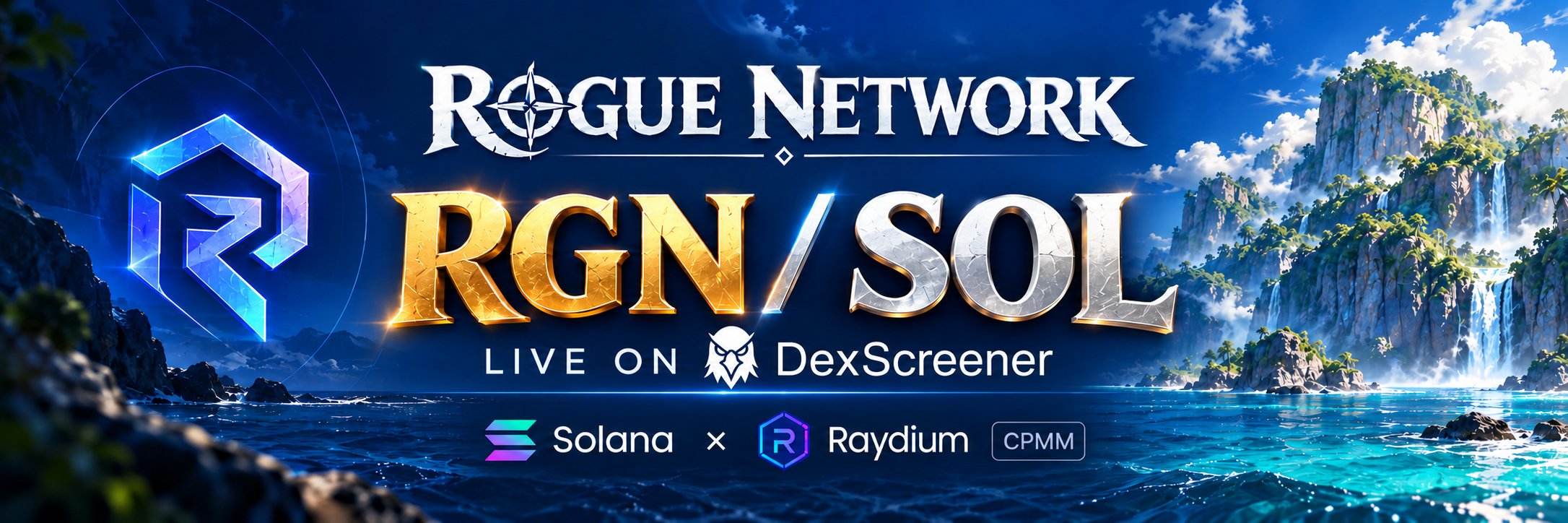
According to the latest official Rogue Isles launch announcement, RGN is live on the Solana network and available through Raydium.
The official Solana token address is:
RGN Solana token mint address: Cn7pt6uUQt6qdYSASpWgvQHm4D9aStaujRu7AYMABray
Always verify this address against the official website before swapping.
Step-by-Step Guide to Buying RGN on Raydium
Step 1: Set Up a Solana Wallet
Install a compatible Solana wallet, such as Phantom. Create a new wallet or import an existing one. Securely back up your recovery phrase and never share it.
Step 2: Deposit SOL
Transfer SOL into your wallet. You will need SOL to purchase RGN and cover Solana network transaction fees.
Step 3: Visit Raydium
Open the official Raydium swap page using the link below and connect your Solana wallet.
https://raydium.io/swap/?inputMint=sol&outputMint=Cn7pt6uUQt6qdYSASpWgvQHm4D9aStaujRu7AYMABray
Step 4: Select RGN
Select SOL as the payment token and RGN as the token you want to receive. If RGN does not appear automatically, use the official Solana token mint address provided above.
Step 5: Enter the Amount and Swap
Enter the amount of SOL you want to exchange. Review the estimated RGN amount, price impact, slippage, and transaction fees. Confirm the swap through your wallet if all details are correct.
Step 6: Check Your RGN Balance
After the transaction is confirmed, check your wallet for the RGN balance. You can also use a Solana blockchain explorer to verify the transaction.
Conclusion: The Future of Rogue Network and Rogue Isles
Rogue Network represents an ambitious attempt to combine blockchain infrastructure with an expanding pirate-themed multiplayer gaming ecosystem. Through its native RGN cryptocurrency, EVM-compatible proof-of-work blockchain, mining and FORGE infrastructure, staking applications, wallet services, and Rogue Isles MMORPG, the project brings several interconnected components under one broader vision. Rogue Isles provides the entertainment and gameplay layer, while Rogue Network supplies the blockchain infrastructure that supports transactions, staking, and future token-based participation. The Captain's Atlas further strengthens this structure by organizing technical documentation and gameplay guidance in one accessible location. The project's planned treasure seasons, player island systems, and future platform expansions offer additional development opportunities. However, these features should be evaluated according to their actual release status rather than treated as currently available services or guaranteed sources of income.
As development continues, the most important factors will be consistent delivery, network reliability, meaningful gameplay, transparent token distribution, and genuine community participation. For blockchain gaming enthusiasts interested in the combination of pirate adventures, decentralized infrastructure, and cryptocurrency-based ecosystems, Rogue Network and Rogue Isles offer an interesting project to follow as their development progresses.
Official resources
- Official Website: https://rogueisles.com/
- Official WhitePaper: https://rogueisles.com/atlas/
- Official Twitter: https://x.com/rogueisles
- Official Telegram: https://t.me/rogueisles
- Official Discord: https://discord.gg/CKHqBGsWXX
Author:
Bitcointalk username: CaspionTorin
Bitcointalk link: https://bitcointalk.org/index.php?action=profile;u=3696881
Wallet Address: CoUz235vkz8w4SwaYCDs5xzwcwc1rGiwPeDb4mWwM8Gr