Bolt and Uber Services in the United Kingdom: Transforming Modern Transportation
Bolt and Uber are two of the most widely used ride-hailing platforms in the United Kingdom, providing convenient, technology-driven transport services for millions of passengers. Through mobile applications, these companies connect passengers with licensed drivers, offering an alternative to traditional taxis and public transportation.
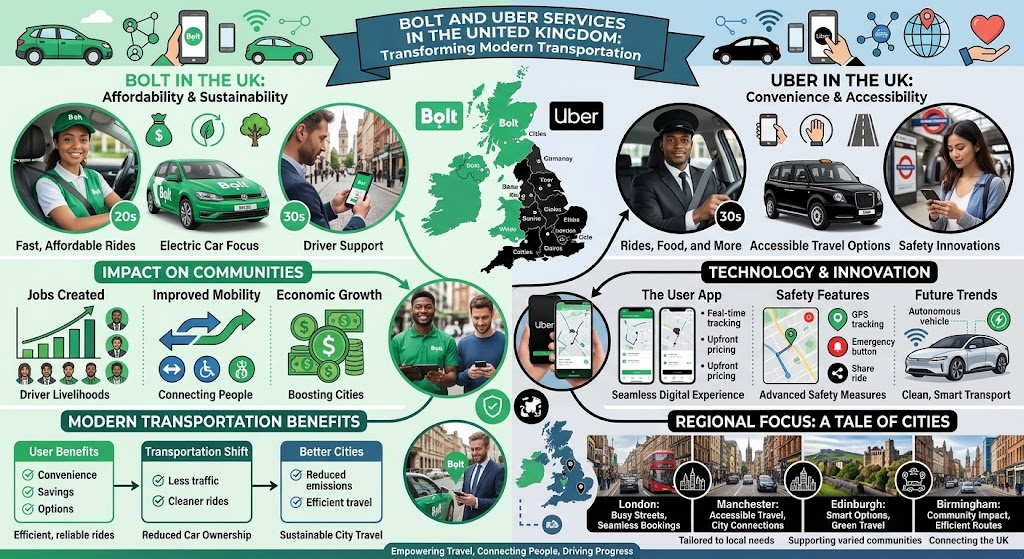
Uber was one of the first ride-hailing services to gain widespread popularity in the UK. Passengers can use the Uber app to book rides, estimate fares, track drivers in real time, and make cashless payments. The platform offers various service options, including standard rides, larger vehicles for groups, and premium services in some locations. Uber has become particularly popular in large cities such as London, Manchester, Birmingham, and Leicester due to its convenience and ease of use.
Bolt, originally established in Europe, has expanded rapidly across the UK and has become a strong competitor to Uber. Like Uber, Bolt allows users to request rides through a smartphone application, view driver details, monitor journey progress, and complete payments electronically. One of Bolt's major attractions is its competitive pricing, which often appeals to cost-conscious passengers. The company has also sought to attract drivers through lower commission rates compared to some competitors.
Both platforms provide significant benefits to passengers. Users can access transport services at any time of day, receive estimated arrival times, and review fares before confirming a booking. Safety features such as driver ratings, journey tracking, emergency assistance options, and trip-sharing functions contribute to user confidence and security.
For drivers, Bolt and Uber create flexible employment opportunities. Drivers can choose their working hours, accept rides based on availability, and earn income through the platforms. However, the growth of ride-hailing services has also generated discussions regarding driver employment rights, earnings, and industry regulation within the UK.
The introduction of ride-hailing technology has transformed urban mobility by improving accessibility and convenience. These services are particularly useful for individuals travelling to work, airports, social events, or locations with limited public transport options.
In conclusion, Bolt and Uber have significantly changed the transportation landscape in the United Kingdom. By combining digital technology, flexible booking systems, and real-time tracking, both companies continue to provide efficient and accessible transport solutions for passengers while creating economic opportunities for drivers.
Upvoted! Thank you for supporting witness @jswit.