Care Home Training: Building Competence, Compassion, and Quality Care
Care home training is an essential component of health and social care services, ensuring that care workers possess the knowledge, skills, and competencies required to provide safe, effective, and person-centred care. Through comprehensive training programmes, care home staff are equipped to meet the diverse needs of residents while maintaining high standards of professionalism, dignity, and respect.
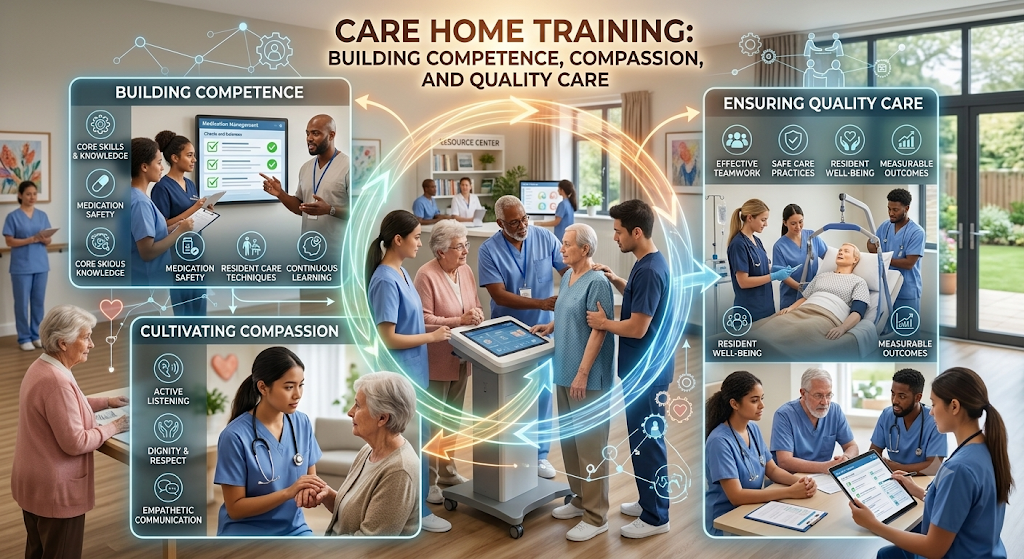
One of the primary objectives of care home training is to ensure the safety and well-being of residents. New and existing staff receive training in key areas such as safeguarding vulnerable adults, health and safety procedures, infection prevention and control, first aid, fire safety, and medication administration. These training programmes help employees understand legal requirements and best practices, enabling them to deliver care confidently and responsibly.
Care home training also focuses on developing person-centred care skills. Staff are trained to recognize and respect the individual needs, preferences, and values of residents. This includes learning effective communication techniques, supporting individuals with mobility challenges, promoting independence, and providing emotional support. Such training helps create a positive and supportive environment that enhances residents' quality of life.
Another important aspect of care home training is understanding specific health conditions commonly encountered in care settings. Staff often receive specialized training in dementia care, mental health awareness, palliative care, nutrition and hydration, and supporting individuals with physical disabilities. This knowledge enables caregivers to respond appropriately to residents' changing needs and deliver tailored support.
In addition to improving care quality, training contributes to professional development and career progression. Employees gain valuable qualifications, increase their confidence, and develop leadership skills that may lead to senior care or management roles. Continuous professional development ensures that staff remain informed about evolving regulations, policies, and care practices within the health and social care sector.
Effective care home training benefits not only employees but also residents, families, and care providers. Well-trained staff are better equipped to deliver compassionate care, reduce risks, and foster positive relationships with residents and their families. This contributes to higher levels of satisfaction, improved safety outcomes, and enhanced quality of care.
In conclusion, care home training is fundamental to the delivery of high-quality care services. By developing both practical skills and professional knowledge, training enables care workers to provide safe, compassionate, and person-centred support that promotes the health, dignity, and well-being of those living in care homes.