What Is the Cheapest Way to Swap Crypto? CEX vs DEX Aggregator vs Wallet Swap
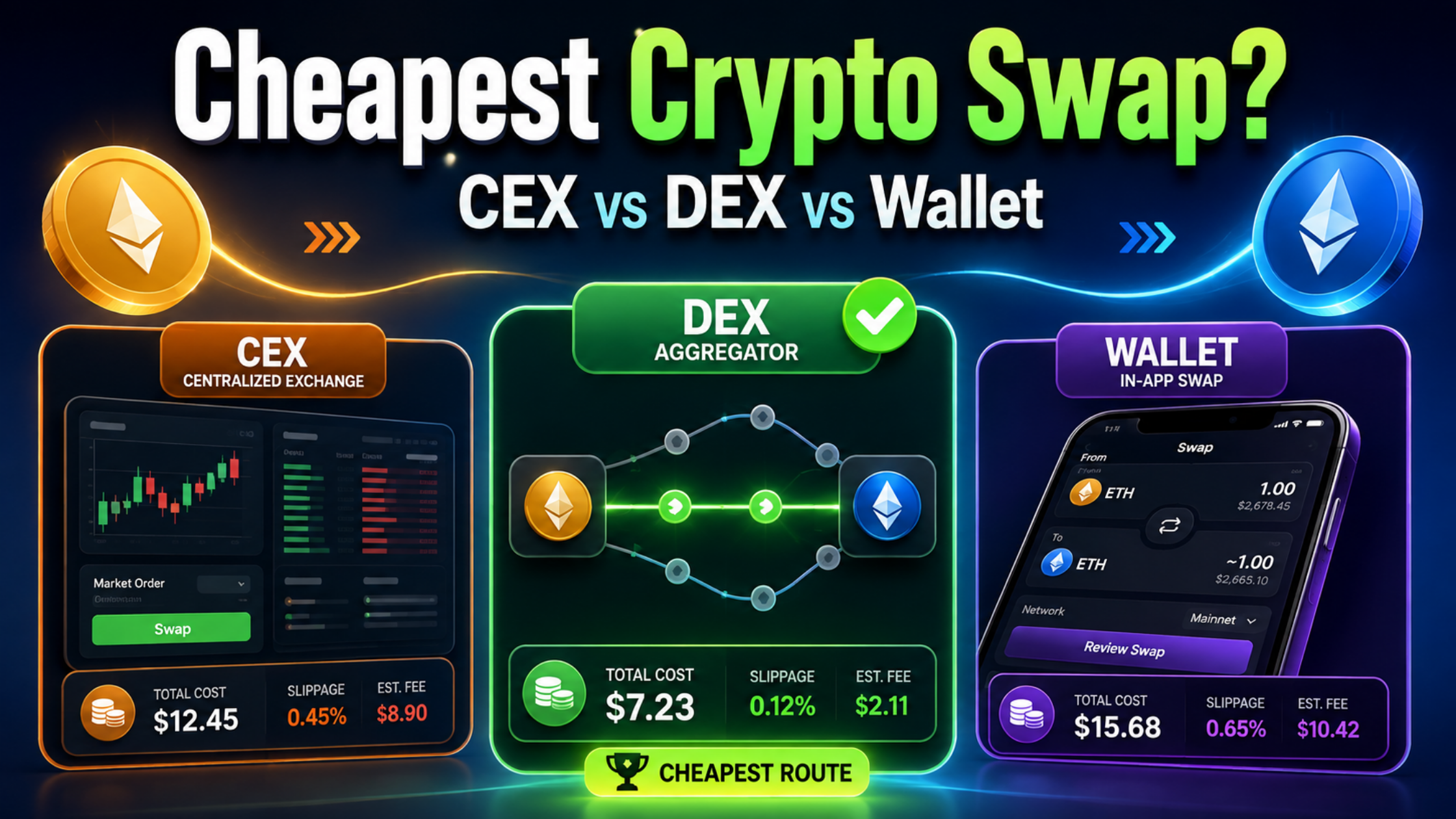
A crypto platform can advertise a 0% fee and still give you the worst swap.
Why?
Because the real cost of swapping crypto is:
Fee + Spread + Gas + Slippage + Deposit + Withdrawal + Bridge Cost
So we compared three execution routes:
- Centralized Exchange
- DEX Aggregator
- Wallet-Integrated Swap
using standardized:
$100, $1,000 and $10,000 swaps.
The results depend heavily on one factor most comparisons ignore:
Where are your assets already sitting?
If your crypto is already in self-custody on a low-cost chain, a DEX aggregator can often be the cheapest route.
If your assets are already on Binance, OKX, Kraken or another major exchange, moving them out just to make a DEX swap can actually increase the total cost.
And wallet swaps?
They are often the easiest.
But convenience can be expensive.
For example, a percentage-based wallet fee that looks harmless on a $100 trade becomes much more noticeable at:
$1,000
and especially:
$10,000+.
We also looked at:
• CEX trading fees
• Bid/ask spread
• DEX price impact
• Blockchain gas
• Token approval costs
• CEX withdrawal fees
• Cross-chain bridge costs
• MEV protection
• RFQ and intent-based routing
• Net tokens actually received
The key lesson:
Do not compare advertised fees. Compare final output.
That is why we built the DN Swap Route Calculator.
Enter the live quote from your exchange, aggregator and wallet and it calculates which route leaves you with the most crypto.
Because the cheapest swap is not always:
the lowest fee.
It is:
the highest net amount received.
Read the full 2027 comparison on Decentralised News: https://decentralised.news/what-is-the-cheapest-way-to-swap-crypto
#Crypto #DeFi #DEX #CryptoTrading #Web3 #Bitcoin #Ethereum #Solana #MetaMask #Jupiter #1inch #Binance #OKX #CryptoWallet #DigitalAssets
Mencionás que el wallet swap cobra una tarifa fija de 0.2 % y que el mercado muestra un spread menor en el agregador DEX; ¿tomaste en cuenta cómo la congestión on‑chain podría inflar el slippage y reducir el volumen neto? Además, ¿qué soporte de liquidez tenés para pares de menor capitalización en esas plataformas?