Toyota's Next-Gen Hybrid: A Strategic Bet on Multi-Pathway Powertrains
Toyota's recent announcement regarding its next-generation hybrid system marks a significant development in the automotive industry's electrification journey, underscoring a pragmatic, diversified approach to future mobility. While many manufacturers commit aggressively to a pure battery-electric vehicle (BEV) future, Toyota continues to invest heavily in advanced hybrid powertrains, specifically designed for what it terms "multi-pathway vehicle platforms." This strategy acknowledges the varied global market demands, infrastructure limitations, and evolving energy landscapes, positioning Toyota for resilience amidst technological shifts. The focus is on creating power units that are not only highly efficient but also adaptable to a broader spectrum of sustainable fuels, including hydrogen, e-fuels, and biogas, thereby extending the lifecycle and relevance of internal combustion engines.
Source: newsroom.toyota.eu
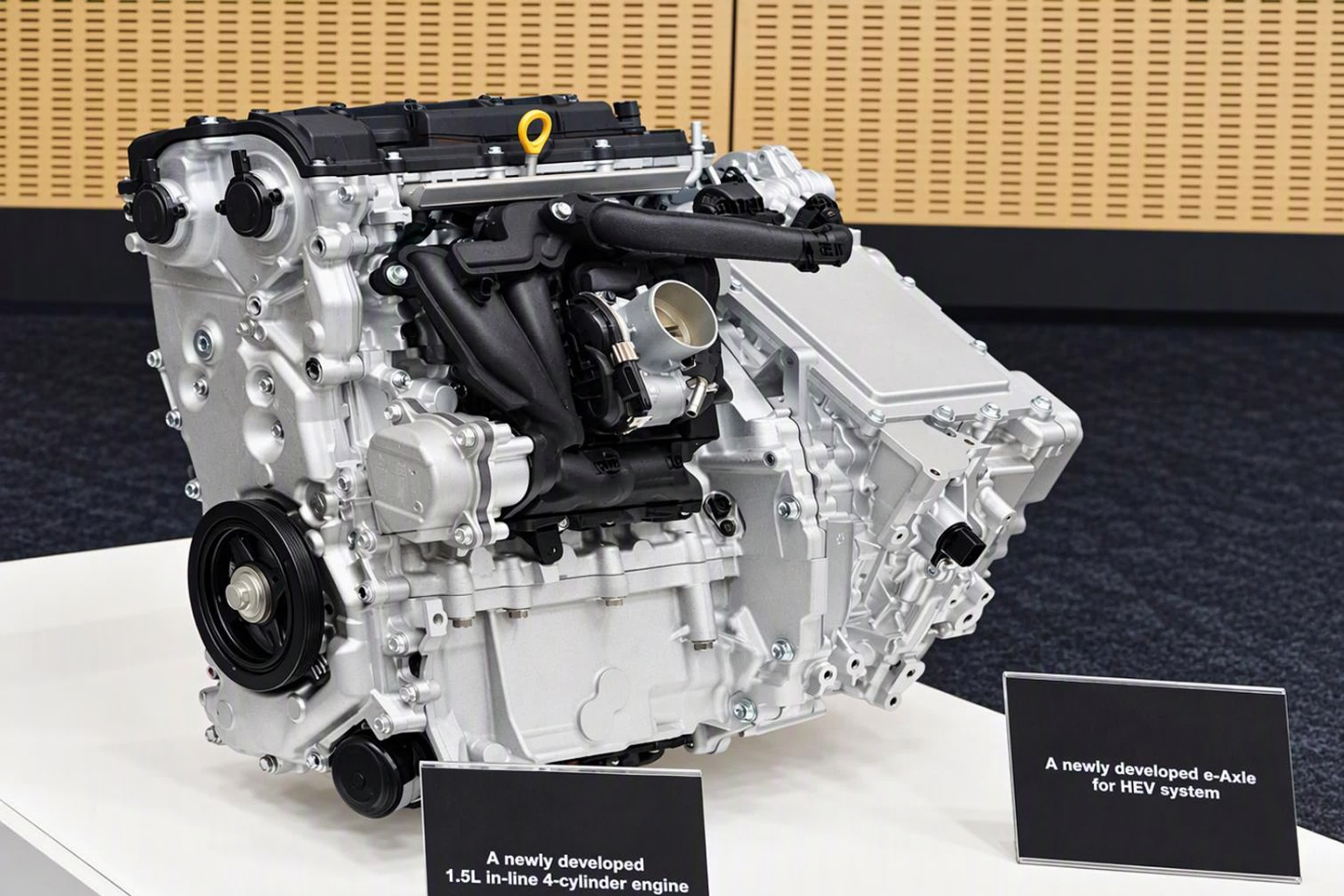
The technical advancements within this new hybrid system are notable. The engineering teams have concentrated on a compact, lightweight design with an emphasis on high power density. This involves a fundamental re-evaluation of the internal combustion engine's thermal efficiency, alongside the integration of a newly developed transmission and hybrid unit. The modularity of the system is evident in its adaptability to different engine displacements, with initial configurations showcasing a 1.5L in-line 4-cylinder engine and a 2.0L in-line 4-cylinder engine. Such flexibility is critical for deployment across a diverse range of vehicle segments, from compact cars to larger SUVs, without compromising performance or fuel economy targets.
From a strategic perspective, this multi-pathway development represents a calculated hedge against the singular focus on BEVs. While BEVs offer a zero-emission solution at the tailpipe, their overall environmental impact, particularly concerning battery manufacturing and charging infrastructure, remains a complex issue. Toyota's investment suggests a belief that sustainable internal combustion, powered by alternative fuels, will play a crucial role in reducing global carbon emissions, especially in regions where renewable electricity grids are less developed or where BEV adoption faces significant hurdles. This approach could offer consumers greater choice and alleviate concerns over range anxiety and charging availability, thereby facilitating a more gradual and inclusive transition to sustainable transportation globally. This dual-track development ensures Toyota can cater to a wider array of consumer preferences and regulatory environments, potentially strengthening its competitive standing in a highly dynamic market.
Inspired by: https://newsroom.toyota.eu/toyota-develops-next-generation-hybrid-for-future-multi-pathway-vehicle-platforms/