The Fraud Model Problem Nobody Warns Nomads About
Traditional card fraud detection works on a simple premise: learn what normal looks like for this cardholder, then flag departures from it. That premise quietly assumes the cardholder has a normal — a home country, a set of familiar merchants, a stable geographic pattern.
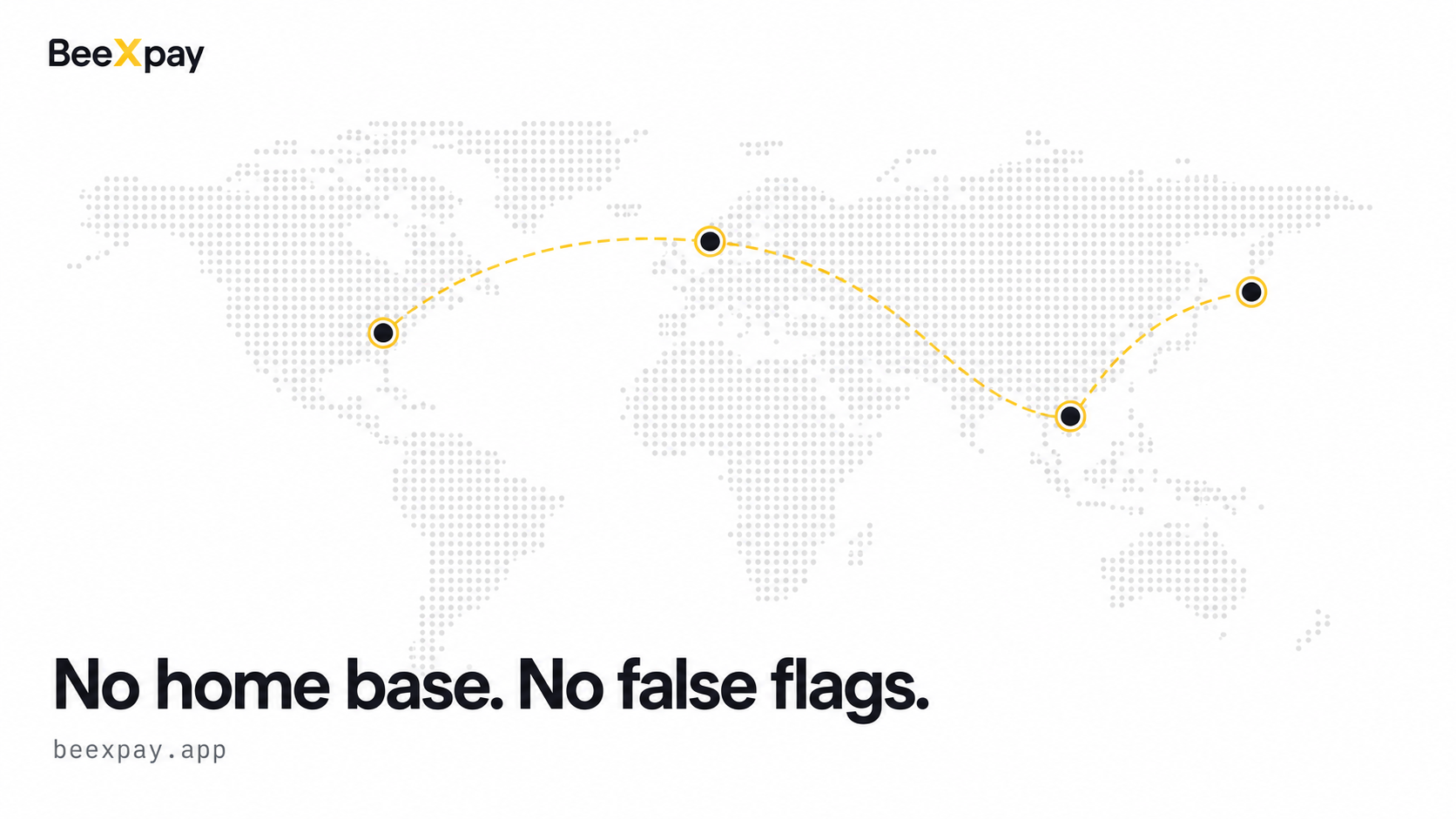
For someone working from a different country every few months, that assumption never holds. The model never accumulates enough stable history to establish a baseline, which means it spends its entire life treating legitimate activity as anomalous. The result is a card that fails most reliably at exactly the moments it's most needed.
A crypto-funded card avoids this by not carrying a domestic transaction history in the first place. There's no baseline for a foreign charge to contradict, because there's no baseline. Practically, the virtual card issues within minutes — workable even for a move decided last week — while the physical card needs roughly two weeks of lead time and should be ordered before departure rather than after. The eSIM sits in the same app, which makes pre-move setup a single task instead of two. One caveat worth taking seriously: coverage isn't universal, so checking the restricted-country list against an actual route is a five-minute step worth doing before booking anything.
Learn more: https://beexpay.app · Telegram Mini App: https://t.me/Beexpay_bot
#CryptoCard #BeeXpay #Fintech #DigitalPayments