Wallet Address, Network, Amount: The Three Funding Fields That Must Match
When crypto becomes a spending asset, the practical questions change: network, balance, merchant rules and timing start to matter more than the asset narrative. That is the context for wallet address, network, amount: the three funding fields that must match.
The crypto-native view
The key is to separate the crypto leg from the card leg. On the crypto side, the user controls the asset, network, address and amount being sent. On the card side, the merchant, card program and transaction currency introduce a different set of rules. The product sits between those two systems.
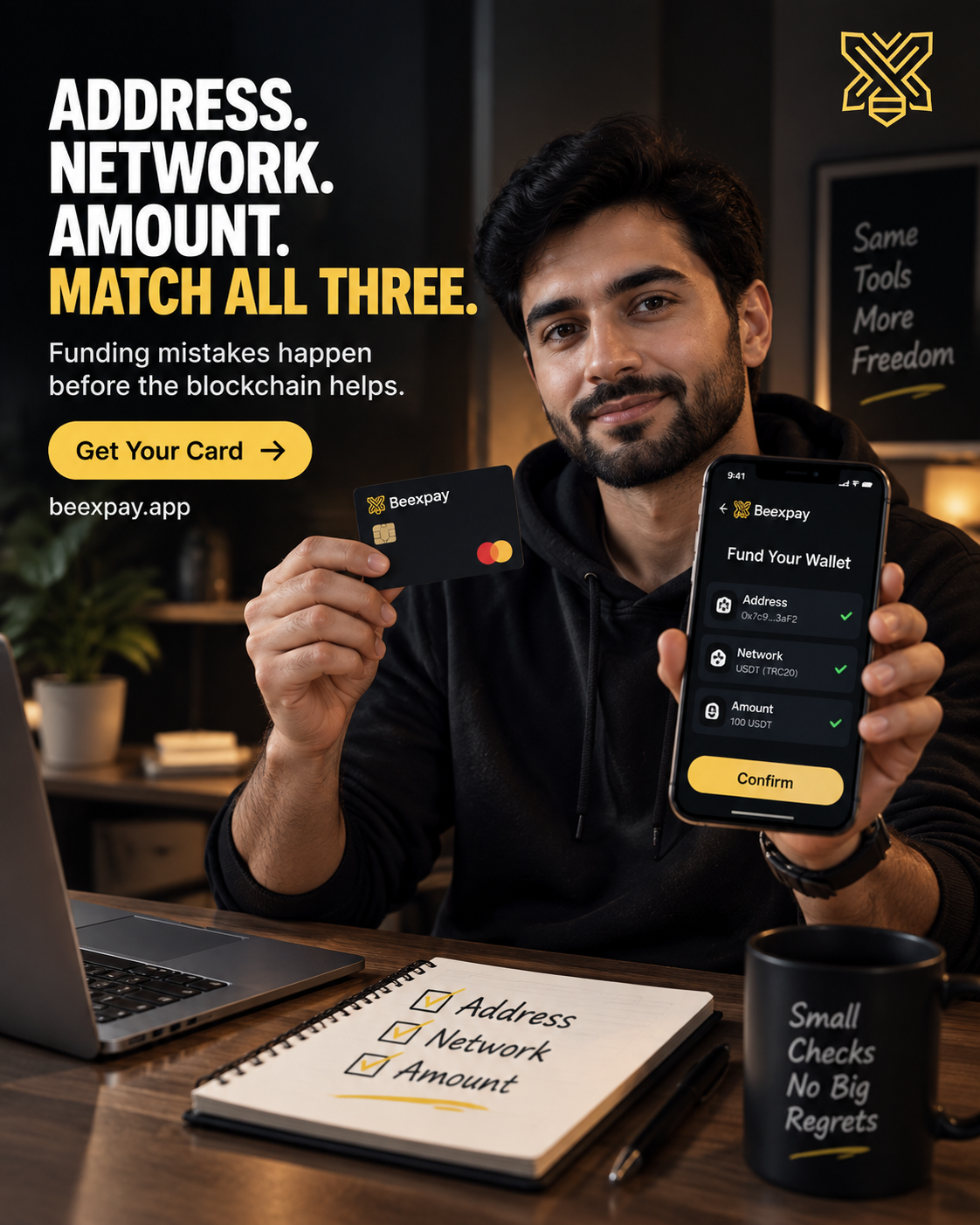
For this use case: BeeXpay's terms place responsibility on the client for the amount, network and wallet address used for crypto payments. Blockchain transfers are difficult or impossible to reverse after broadcast. Copy the address, confirm the network, then verify the amount before sending. Do not assume the same asset ticker means the same network.
What to do before funding
- Confirm the live card or service requirement in BeeXpay.
- Check the network and address before broadcasting crypto.
- Leave time or balance margin when the purchase is deadline-sensitive.
- Verify the merchant's own payment rules when the use case is unusual or critical.
- Keep the transaction reference until the payment has settled.
USDT can exist on more than one network. The asset name alone is not enough information to route a transfer safely.
What this does not mean
The platform cannot reliably recover funds sent to an unsupported network or incorrect address. Crypto-native users are usually comfortable with network risk, but card-network and merchant rules are a separate layer. The safest assumption is not that one layer overrides the other.
Three questions before the transaction
- What can I verify now? Usually the amount, network, address, balance, currency, access level or merchant requirement.
- What changes after broadcast? Once crypto is sent, the funding leg may be irreversible and confirmation speed becomes network-dependent.
- What is outside the card provider's control? Merchant acceptance, some card-network rules, delivery carriers, local mobile coverage and device compatibility are common examples.
USDT can exist on more than one network. The asset name alone is not enough information to route a transfer safely. Thinking in those three layers is especially useful for crypto users because blockchain transactions train us to focus heavily on the sending side. Card payments add another system with different rules. A successful workflow needs both sides to be correct.
Keep a usable record
For any payment that matters, keep the wallet transaction ID, the BeeXpay order or card reference available in the app, the merchant name, amount, currency and time. That is enough context to investigate most operational issues without sharing private wallet credentials.
Bottom line
Use a three-field check every time: asset/network, address, amount. The practical advantage of a crypto-funded card is the bridge from digital assets to normal checkout. The bridge works best when the user checks the conditions on both sides.
Learn more: https://beexpay.app
Mini App: https://t.me/Beexpay_bot