If a transaction is flagged: what the 3-day SumSub window applies to: A Practical CCE Cash Guide
Why this deserves a clear explanation
No-account onboarding and transaction-level compliance are different parts of the product, and users should know where each one applies. Account-free onboarding and transaction-level compliance are not opposites. A service can let users create an ordinary swap without registration while still screening the transaction itself for fraud or compliance risk. That distinction is easy to lose when the entire product is reduced to a single 'no signup' or 'no KYC' label.
The useful question is not whether the feature sounds fast or convenient. It is what the user needs to verify, what the exchange controls, and what still depends on the sending wallet or blockchain. For this topic, the practical focus is crypto exchange KYC verification 3 days.
What the documented flow says
First: CCE Cash says its automated system may flag a suspicious transaction and suspend it. This is the starting point for the topic because it defines the documented behavior rather than a marketing assumption.
Second: The FAQ names SumSub as the identity-verification provider. In practice, this affects what the user should verify before funding the order.
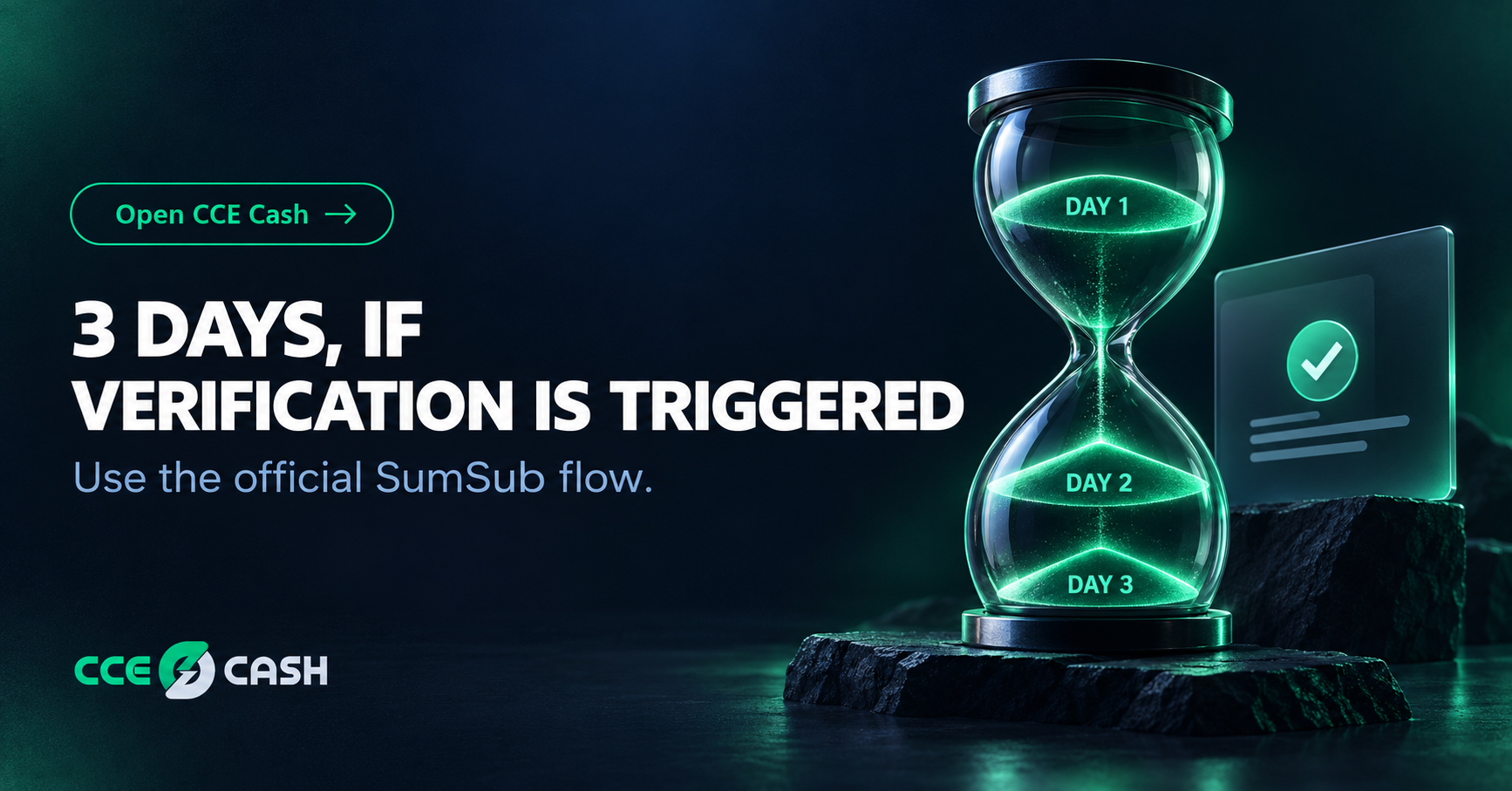
Another useful detail: The user is given 3 days to complete verification, according to the snapshot. It also changes how the order should be interpreted if the market or network moves while the transaction is in progress.
Finally: If required information is accepted, the exchange can then be completed and sent to the designated receiving wallet. Keeping that boundary visible helps avoid overclaiming what the service can control.
A practical sequence
- Confirm that the verification request appears in the official order flow.
- Use the SumSub link provided by the official interface.
- Complete the requested steps within the stated 3-day window if you choose to proceed.
- Keep the order inquiry code and support correspondence.
- If you do not want to verify, use the documented decline/refund route instead.
This sequence is intentionally simple. The aim is to make the irreversible part of the transaction the final step, after the network, address, amount and rate conditions have been checked. It also gives the user a record that can be used later if the order needs to be reviewed.
Why the distinction matters
The practical value of explaining the process is predictability. Users should know what is routine, what is exceptional, what happens when an order is paused, and what options exist if they do not want to proceed with verification. Precision is more useful than trying to make the compliance layer disappear from the marketing.
The main boundary is equally important: Do not treat any unsolicited message claiming 'urgent KYC' as proof. Start from the official order page and support channel. This is not a minor disclaimer. It is the difference between describing a working process and turning a product feature into a promise the system cannot always keep.
What to keep after you send
Keep the order inquiry code until the payout is complete. If a transaction ID is available, keep that as well. Those two references connect the exchange order with the public blockchain record without requiring a permanent user account. If support is needed, start from the official CCE Cash channel and share only the information required to identify the order.
Takeaway
If a transaction is flagged: what the 3-day SumSub window applies to becomes much easier when the mechanics are separated from the slogan. Check the asset and network, understand the rate mode, verify the destination, keep the order record, and let the published workflow complete before drawing conclusions from one screen or one delay.