Product Clarity and PGP keys can change: verify the current one: A Lesson for Crypto UX
The design question
Trust in a transaction product often comes down to operational clarity rather than the number of features on a roadmap. PGP keys can change: verify the current one is a practical example. It shows why implementation details, interface wording, support processes and the user’s own wallet arrangements must be understood together. Conversion, support burden and trust do not sit in separate departments once an irreversible financial action is involved. They meet at the moment the user confirms the order.
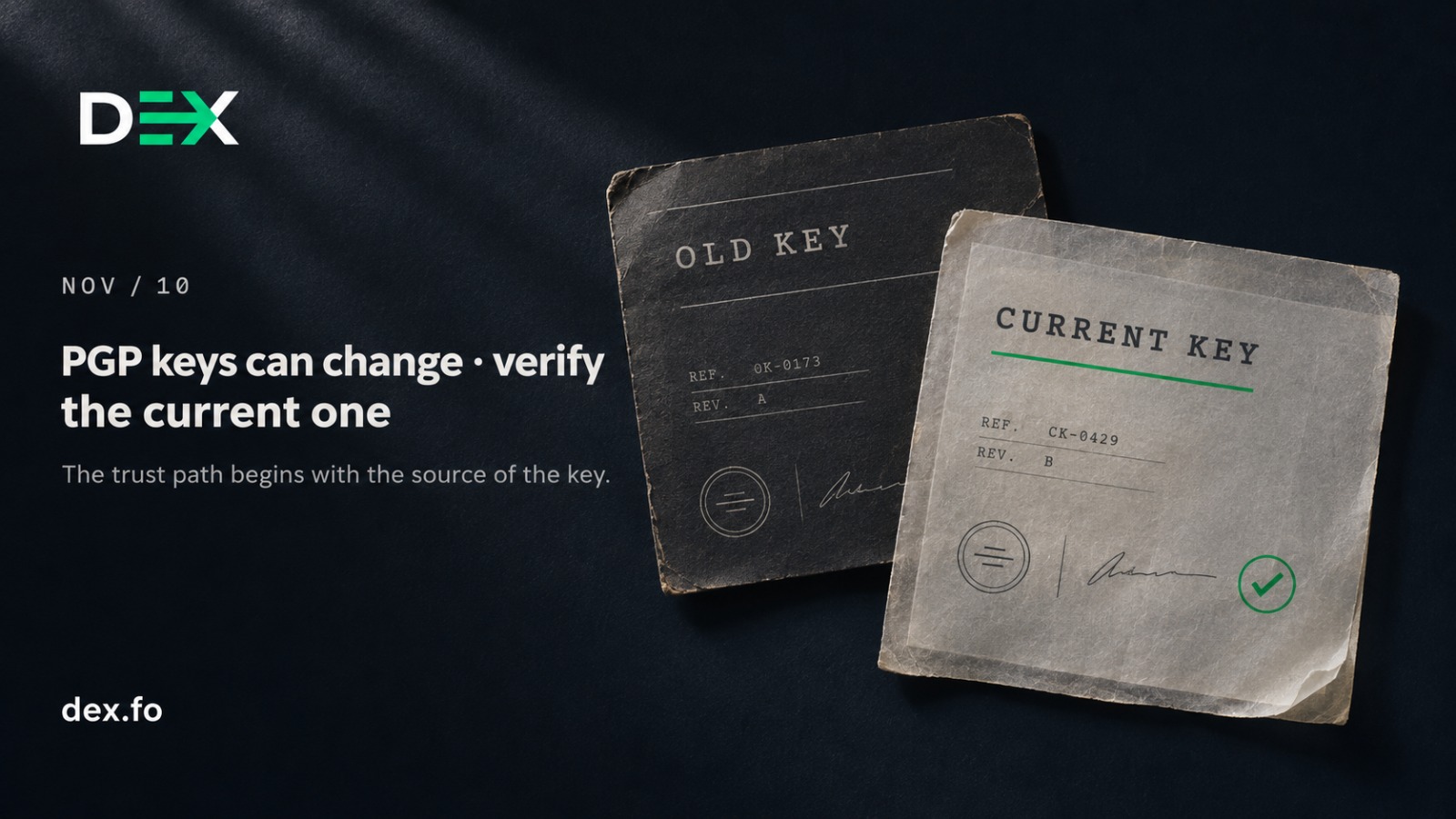
Operational detail before brand language
DEX.fo’s public materials give a concrete example: The DEX.fo system-status log records a public signing key replacement and indicates that the newer key was signed by the previous one. Key rotation is normal operational hygiene, but an old screenshot or downloaded key can mislead if treated as permanently current. Product teams can learn from that level of specificity. A user does not need another abstract reassurance; they need to understand what the system will do, which information is current and what part of the decision remains theirs.
What the interface can and cannot solve
Find the active key through the official PGP page and review the published transition note before verifying new receipts. An interface can display limits, labels, verification resources and expected processing states. It cannot make a third-party wallet behave differently or force a network to confirm a transaction at a predetermined minute. Communicating those boundaries reduces both unnecessary support cases and unrealistic expectations, while improving the quality of an informed conversion.
Support is part of the transaction design
Consider how a person might ask for help when the expected result is delayed. The useful support path begins with a verified contact point and an order reference, not a public exchange of private wallet details. A signature proves little if the user has not established which key they are trusting. The design challenge is to connect a simple order experience with trustworthy escalation. That includes describing delays without inventing certainty or encouraging workarounds in direct messages.
A practical communications test
A strong post or help article should answer four questions. What is the verified product behavior? What must the user check? What can vary outside the service? Where should the user go for a legitimate next step? The trust path begins with the source of the key. Teams that can answer those questions in accessible language generally create material that is easier to maintain when the product changes.
One additional point worth remembering
From a communications perspective, this is an argument for keeping knowledge-base copy and marketing claims aligned. If the order screen changes but a help article remains frozen, users may receive two inconsistent explanations. A small content-governance process can prevent that failure: one source of truth, a dated change log, a review of high-risk language and a clear owner for each operational statement. Crypto exchange pgp key rotation is exactly the type of topic that benefits from that discipline.
Closing view
The broader lesson is not to add more warnings to every screen. It is to prioritize the warnings that change decisions and make them understandable before funds are sent. Find the active key through the official PGP page and review the published transition note before verifying new receipts.
For source details, review the current DEX.fo order form and published service information at https://dex.fo.