The 'Invalid Address' Error Is a Feature, Not a Bug
It's tempting to read an 'invalid address' rejection as friction, one more thing standing between a user and completing their exchange. In practice, it's one of the more protective checks a cross-chain exchange can run, because the failure mode it prevents is genuinely bad: sending funds to an address that's syntactically valid but formatted for the wrong network, which can mean funds that are simply unrecoverable.
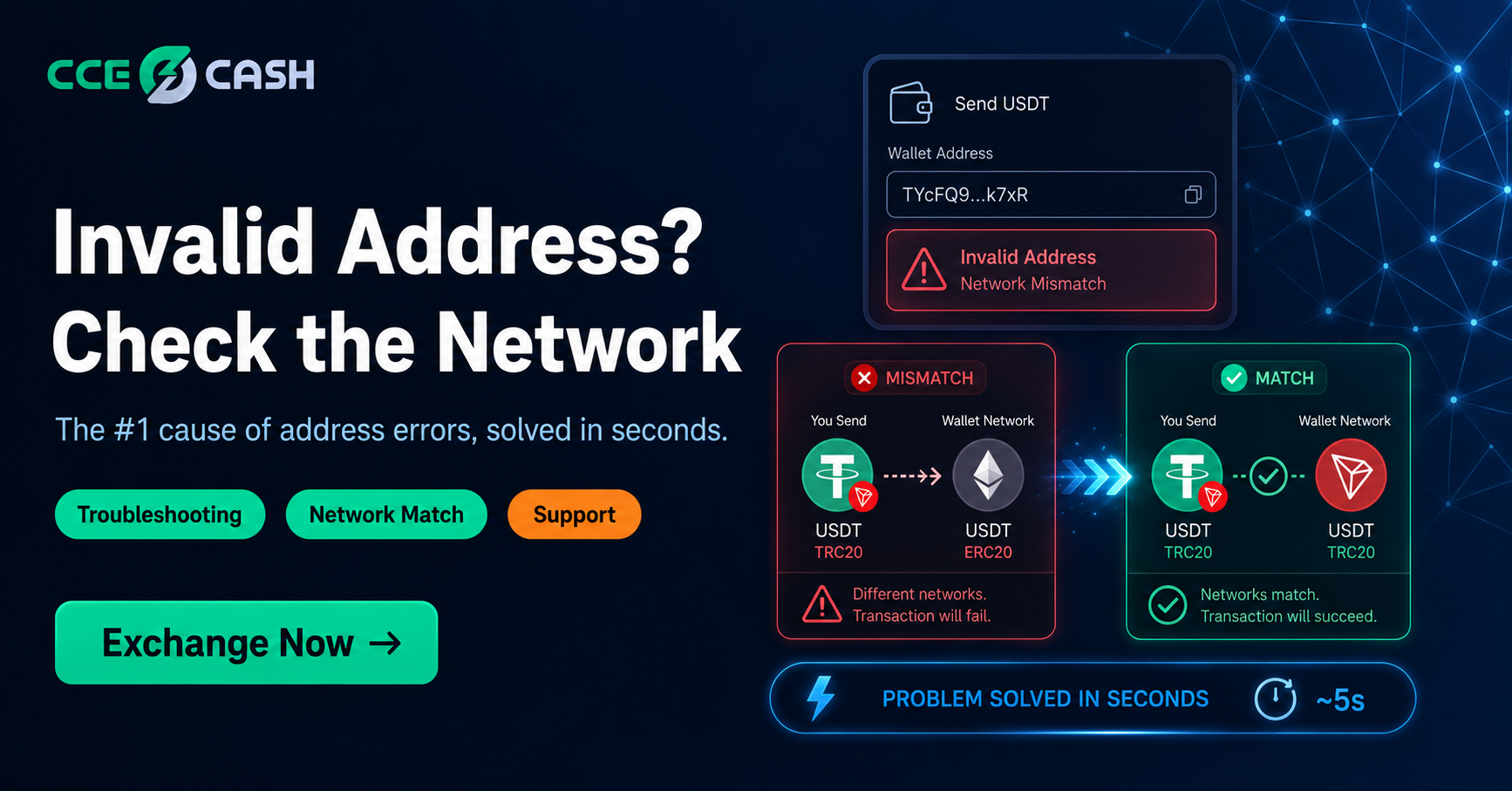
Multi-network assets like USDT make this error more common than it should be, precisely because the same ticker symbol spans several incompatible address formats. A user copying an address without checking which network it's tied to is an easy mistake to make, and one that's expensive to make.
Treating this validation step as protective rather than obstructive is the right frame, it's catching exactly the kind of error that would otherwise be silent and irreversible.