Ticker is not network: BTC, ETH and USDT fields need chain context: A Practical CCE Cash Guide
Why this deserves a clear explanation
The safest exchange habits are usually small checks made before the transaction becomes irreversible. A fast exchange flow can look simple on screen while still depending on several systems outside the interface. The wallet controls the outgoing transaction, the blockchain controls confirmation, and the exchange controls its own processing. Good product communication separates those responsibilities instead of compressing them into one speed claim.
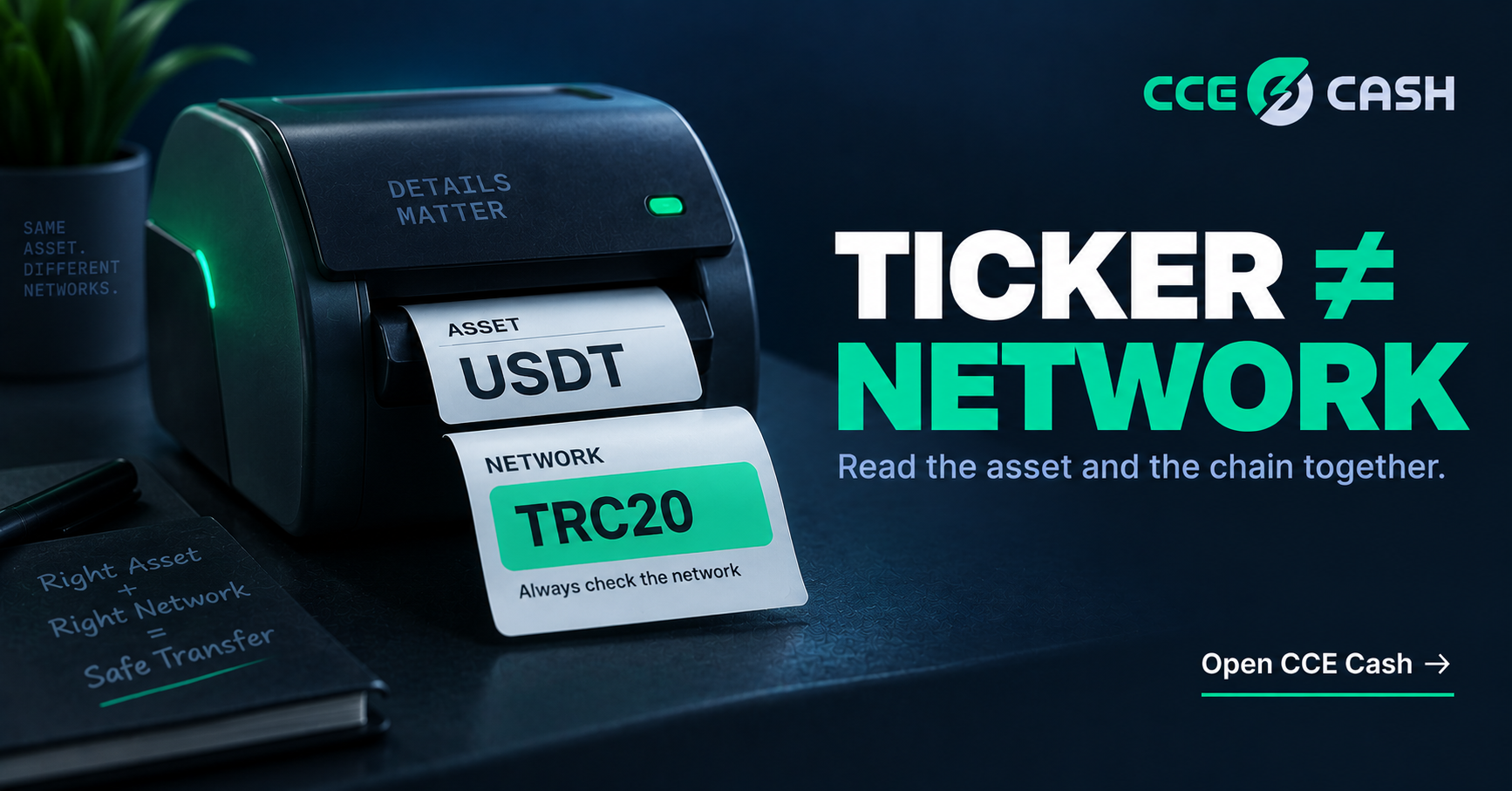
The useful question is not whether the feature sounds fast or convenient. It is what the user needs to verify, what the exchange controls, and what still depends on the sending wallet or blockchain. For this topic, the practical focus is crypto token network difference.
What the documented flow says
First: CCE Cash distinguishes assets and networks in the exchange interface. This is the starting point for the topic because it defines the documented behavior rather than a marketing assumption.
Second: The FAQ says an invalid receiving address may indicate that the address network does not match the selected currency network. In practice, this affects what the user should verify before funding the order.
Another useful detail: USDT is available on multiple networks in the site's published routes. It also changes how the order should be interpreted if the market or network moves while the transaction is in progress.
Finally: Network selection affects which receiving address is valid. Keeping that boundary visible helps avoid overclaiming what the service can control.
A practical sequence
- Read both the asset name and network label before sending.
- If a token exists on multiple chains, do not rely on the ticker alone.
- Generate or copy a receiving address from the exact destination network.
- Check the network again on the wallet confirmation screen.
- If the form rejects an address, investigate the network mismatch before trying random alternatives.
This sequence is intentionally simple. The aim is to make the irreversible part of the transaction the final step, after the network, address, amount and rate conditions have been checked. It also gives the user a record that can be used later if the order needs to be reviewed.
Why the distinction matters
The practical advantage of this approach is that users know what to check before they send and what to inspect if something does not move as expected. Clear mechanics reduce avoidable support cases and make the exchange easier to evaluate on its actual behavior.
The main boundary is equally important: A familiar ticker can hide a different settlement network. Treat 'asset + network' as the full destination. This is not a minor disclaimer. It is the difference between describing a working process and turning a product feature into a promise the system cannot always keep.
What to keep after you send
Keep the order inquiry code until the payout is complete. If a transaction ID is available, keep that as well. Those two references connect the exchange order with the public blockchain record without requiring a permanent user account. If support is needed, start from the official CCE Cash channel and share only the information required to identify the order.
Takeaway
Ticker is not network: BTC, ETH and USDT fields need chain context becomes much easier when the mechanics are separated from the slogan. Check the asset and network, understand the rate mode, verify the destination, keep the order record, and let the published workflow complete before drawing conclusions from one screen or one delay.
Start or review the flow: https://cce.cash/faq