External CS2 Cheat Buyer Guide: Overlay, Latency, Configs
External CS2 Cheats in 2026: Overlay Quality, Latency and the Details Buyers Miss
External CS2 cheats are easy to misunderstand because the architecture label often becomes the entire sales pitch. One side says external is cleaner and safer, another says internal is more powerful, and users end up comparing theory instead of products.
In real use, an external client wins or loses on much more practical details: overlay stability, responsiveness, Aim consistency, TriggerBot feel, config management and how smoothly the software recovers after CS2 updates. Those are the details I would test before caring about any marketing slogan.
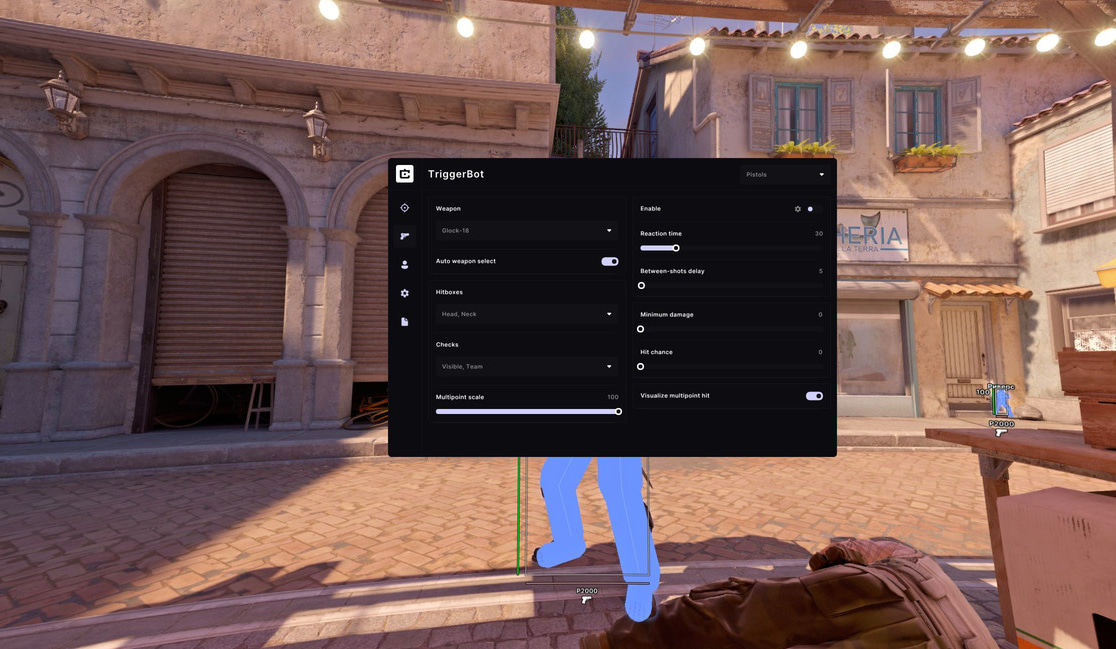
Overlay quality is not cosmetic
For an external client, overlay behavior is part of the core product. Boxes, labels, HUD elements and visual indicators need to stay aligned while the player moves, changes resolution or switches display state.
A screenshot can hide almost every overlay problem. Real gameplay exposes them immediately.
I would test:
- fast movement;
- crowded scenes;
- alt-tab behavior;
- resolution changes;
- different display modes;
- menu opening and closing.
If visuals remain stable across those conditions, that says more about engineering quality than a perfect product-page image. The overlay has passed a real workload test instead of a presentation test.
External Aim still needs a coherent mental model
Users sometimes assume external Aim is automatically simple. That is not always true.
A good system still needs clear FOV, smoothing, target selection, hitbox options and weapon profiles. The architecture may be different, but the user experience requirement is the same: one setting should produce one understandable effect.
When Aim feels inconsistent, users quickly start chasing random values instead of building a stable profile. A coherent Aim model prevents that cycle and makes tuning much faster.
TriggerBot latency becomes a product signature
In community discussions, TriggerBot reaction often becomes a surprisingly large topic. Small differences in perceived latency can make two otherwise similar clients feel completely different.
This is why I would never evaluate TriggerBot from a feature list. I would isolate it, use a single weapon profile and pay attention to consistency over several rounds.
A responsive system that behaves predictably is more valuable than ten advanced conditions nobody understands. Complexity only helps after the basic reaction model is already trustworthy.
External ESP should be judged by filtering
External products often focus heavily on ESP, radar and HUD, which makes visual organization critical. The best question is not “how much can the overlay show?” but “how quickly can I remove what I do not need?” A flexible overlay should work equally well as a minimal legit setup and as a denser information profile.
A useful visual system should let the user create both a very clean legit-style profile and a more information-heavy setup. If the client only looks good with everything enabled, the visual architecture is not flexible enough.
Why category-specific rankings are useful
Generic “best cheat” lists often compare completely different products. An external client built around Aim and ESP may be placed next to a feature-heavy internal suite with entirely different priorities.
A focused ranking of external cheats for CS2 is more useful because it keeps the comparison within one general product category. You can then compare overlay quality, core features, price and maintenance without mixing unrelated use cases.
The ranking still should not make the final decision. It should create a shortlist that you can test properly.
Config management is where external simplicity should pay off
One reason users like focused external clients is simplicity. That advantage disappears if profiles are difficult to save or if settings do not reload correctly.
I would expect a mature external product to make it easy to maintain:
- Clean;
- Main;
- Rifle;
- Pistol;
- Sniper;
- Visual Test.
The menu may be smaller than an internal suite, but the config system should still feel professional. Simplicity is only an advantage when settings remain reliable between sessions.
Performance matters because the overlay runs constantly
External software can appear lightweight while still creating annoying overhead if the overlay is poorly optimized. Performance should be judged in the same conditions you normally use for CS2.
I would watch frame consistency, menu responsiveness and how quickly visual elements update in busy situations. A polished external client should fit into your normal game setup rather than forcing you to redesign it.
The launcher is part of the architecture story
External products are often marketed around a clean technical model, so the distribution workflow should feel equally clean. The launcher should make versioning and product status obvious.
After a CS2 patch, the user should not be guessing whether the local build is current. A strong project communicates maintenance clearly and delivers the supported version through one predictable path.
This is a major difference between a commercial private product and a random public archive. The paid product is expected to provide a maintained workflow around the feature set, not only the feature set itself.
Public releases set a surprisingly high baseline
Community-driven CS2 releases demonstrate that many basic features are no longer rare. Aim, ESP, TriggerBot, config saving and basic humanizer systems appear frequently in public tools.
That changes what buyers should expect from paid software. A commercial external cheat needs to win on polish, stability, support and maintenance, not simply on the existence of core features.
The product should feel easier, cleaner and more dependable than the free baseline. Otherwise the subscription has little practical value beyond branding.
Why “current undetected” is a better product statement
Security matters to buyers, and sellers need strong positioning. The most defensible and useful statement is a current undetected status tied to an actively maintained private build.
That is still confident marketing. It tells the buyer what the current supported version is intended to deliver while acknowledging that live games and anti-cheat systems evolve.
Fresh information and fast maintenance create more trust than an eternal promise. They show that the seller is actively managing the product users are running today.
My external cheat trial checklist
I would use a short trial in this order:
- launcher and status;
- clean config;
- overlay stability;
- rifle Aim;
- TriggerBot;
- HUD/radar;
- restart and reload;
- performance in a busy match.
That sequence is designed to expose the strengths and weaknesses that matter specifically for an external client. It covers rendering, responsiveness, persistence and maintenance before secondary options distract from the result.
Read the comparison again after testing
After a trial, revisit the external CS2 cheat comparison. The same ranking becomes more useful once you know whether you personally care most about overlay quality, a minimal UI, richer visuals or better config tools.
At that point, the list stops being abstract and becomes a set of specific alternatives. You can compare each candidate against problems you actually noticed during the trial.
Red flags I would take seriously
Overlay instability
Visuals that flicker or lag undermine the main advantage of an external client. A focused product should make its core presentation feel stable.
Configs that reset
A focused menu should be easy to reproduce, not fragile. Reliable profiles are part of the expected polish.
Slow maintenance after patches
A private product is an ongoing service, so update behavior matters every month. A slow or confusing recovery after patches can outweigh a strong feature list.
Feature-count marketing with no UX discussion
External buyers usually care about a small number of core functions. Those functions need to be excellent.
FAQ
What matters most in an external CS2 cheat?
Overlay stability, Aim consistency, TriggerBot feel, reliable configs and active updates. Those are the areas I would score before looking at cosmetic extras or rarely used modules.
Is external automatically better for legit use?
Not automatically, but many external products align well with legit users who want a focused Aim/ESP/TriggerBot workflow. The final choice still depends on the quality of the specific client rather than the architecture label.
Why test alt-tab and resolution changes?
They can reveal overlay issues that are invisible in static screenshots. A real session is therefore a better rendering test than any gallery on a sales page.
Should I judge a product by detection status alone?
No. Current status is important, but maintenance history and update quality also matter.
Final thoughts
The external label is useful, but it is not the final verdict. A good external CS2 cheat still has to prove itself through engineering details the user feels every session.
Stable overlay, predictable Aim, responsive TriggerBot, clean profiles and a boring update workflow are what make the architecture valuable in practice. If those pieces are strong, the product feels focused. If they are weak, the word external becomes little more than branding.