Darjeeling: The Queen of the Hills — A Complete Guide to the Himalayan Paradise
Darjeeling: The Queen of the Hills — A Complete Guide to the Himalayan Paradise
What if a place could give you mountains, clouds, tea gardens, heritage trains and breathtaking sunrises—all in one trip?
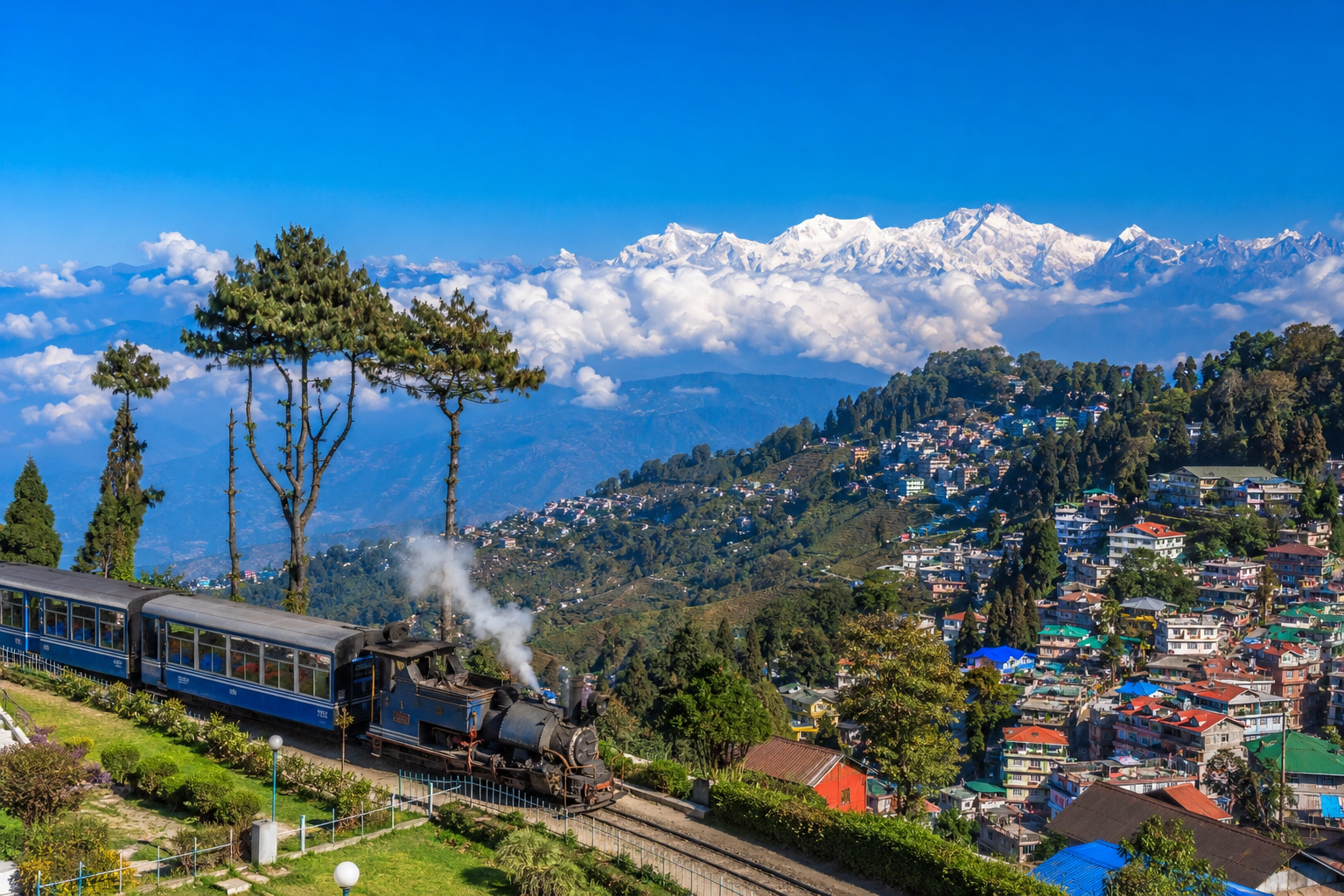
Imagine waking up early in the morning. The air is cold, clouds are floating between green mountain slopes, and as the first rays of sunlight appear, the mighty Kanchenjunga begins to glow.
Then, somewhere in the distance, you hear the whistle of a little mountain train.
This is Darjeeling.
Known as the “Queen of the Hills,” Darjeeling is one of India's most iconic mountain destinations. It is famous for its spectacular Himalayan scenery, world-renowned tea, the historic Darjeeling Himalayan Railway, colonial-era charm, monasteries, local culture and pleasant mountain climate.
But Darjeeling is much more than a tourist destination.
It is a place where nature, history, culture and tradition come together.
Where Is Darjeeling?
Darjeeling is a hill town and the headquarters of Darjeeling district in West Bengal, India.
It lies in the Lesser Himalayas, at an elevation of roughly 2,042 metres (about 6,700 feet) above sea level.
The district is in northern West Bengal, close to the Himalayan region and acts as an important gateway toward Sikkim, Nepal and Bhutan.
Its high-altitude location is one of the main reasons Darjeeling has a much cooler climate than India's plains.
And that cool mountain environment is exactly what attracted people to Darjeeling more than a century ago.
Why Is Darjeeling So Famous?
There isn't just one answer.
Darjeeling became famous because of several extraordinary things that exist together in the same region.
- Darjeeling Tea
When people hear the word “Darjeeling,” one of the first things that comes to mind is tea.
Darjeeling's tea is internationally recognised for its distinctive character and famous muscatel flavour. The region has numerous tea estates spread across its mountain slopes.
The combination of altitude, climate, soil and traditional cultivation gives Darjeeling tea its unique identity.
For tea lovers, visiting Darjeeling is therefore not simply a holiday—it can be an opportunity to see where one of the world's best-known teas is produced.
- The Mighty Kanchenjunga
Now comes the view that makes many visitors fall in love with Darjeeling.
On a clear day, the magnificent Mount Kanchenjunga dominates the Himalayan horizon.
At 8,586 metres, Kanchenjunga is the world's third-highest mountain.
The sight becomes particularly magical around sunrise, when the changing sunlight can transform the mountain landscape.
For photographers, nature lovers and anyone who simply enjoys beautiful scenery, this is one of Darjeeling's biggest attractions.
- The Famous Toy Train
Another reason Darjeeling is famous around the world is its historic Darjeeling Himalayan Railway, popularly known as the Toy Train.
The railway is a UNESCO World Heritage Site and is one of the most memorable ways to experience the mountain landscape.
The narrow-gauge railway passes through spectacular Himalayan scenery and famous engineering features such as Batasia Loop.
The train isn't just transportation.
It is part of Darjeeling's heritage.
For many visitors, hearing the old-fashioned train whistle echo through the hills is one of the most unforgettable experiences of the trip.
- Tiger Hill — The Sunrise Point
If there is one place that appears again and again on Darjeeling travel lists, it is Tiger Hill.
Located around 13 kilometres from Darjeeling, Tiger Hill stands at approximately 2,590 metres and is famous for its panoramic Himalayan views.
Visitors arrive before sunrise hoping to witness the mountains slowly emerge from darkness.
On clear days, the view can extend toward Kanchenjunga and even distant Himalayan peaks.
The real attraction isn't simply the viewpoint.
It is the experience of watching an entire mountain landscape wake up with the sunrise.
- Batasia Loop
Another iconic Darjeeling attraction is Batasia Loop.
This is a fascinating spiral railway section where the Toy Train negotiates the steep mountain terrain.
It also provides beautiful views of the surrounding mountains and Darjeeling landscape.
When the historic train moves around the loop against a Himalayan backdrop, it creates one of the most recognisable scenes associated with Darjeeling.
- Ghoom
Ghoom, also known as Ghum, is another famous destination near Darjeeling.
It is closely associated with the Darjeeling Himalayan Railway and its historic railway station.
The surrounding mountain scenery, cool weather and heritage atmosphere make Ghoom an important stop for travellers exploring the Darjeeling area.
- Happy Valley Tea Estate
Want to understand why Darjeeling became synonymous with tea?
Then a visit to a tea estate is a fascinating experience.
Happy Valley Tea Estate is one of Darjeeling's best-known tea estates and has a history dating back to the 19th century.
The sight of endless rows of tea bushes covering the mountain slopes is one of the defining landscapes of Darjeeling.
And there's something special about drinking Darjeeling tea while surrounded by the very hills where it is grown.
- Darjeeling Ropeway
If you want to see the hills from another perspective, the Darjeeling Ropeway offers aerial views of the mountainous landscape and tea gardens.
From above, the steep slopes, green plantations and valleys create a completely different picture of the region.
- Padmaja Naidu Himalayan Zoological Park
Darjeeling is also known for its Himalayan wildlife.
The Padmaja Naidu Himalayan Zoological Park is one of the region's important attractions and is particularly associated with high-altitude Himalayan species.
It is another side of Darjeeling that goes beyond tea gardens and mountain viewpoints.
- Himalayan Mountaineering Institute
Darjeeling has a strong connection with mountaineering history.
The Himalayan Mountaineering Institute is associated with the region's mountaineering heritage and the legacy of famous Himalayan expeditions.
For people interested in climbing, exploration and Himalayan history, it adds another dimension to a Darjeeling visit.
- Observatory Hill and Mahakal Temple
Darjeeling isn't only about nature.
It also has important religious and cultural places.
Observatory Hill, near Chowrasta, is associated with both Hindu and Buddhist traditions. The area includes the revered Mahakal Temple along with other religious structures.
This combination of different traditions reflects the multicultural character of the Darjeeling hills.
- Lloyd's Botanical Garden
For people interested in plants and nature, Lloyd's Botanical Garden is another interesting destination.
Established in 1878, the garden covers around 40 acres and contains a wide variety of Himalayan and exotic plants, including orchids and other species.
It offers visitors a quieter experience away from the busier tourist areas.
- Tibetan Refugee Self Help Centre
Darjeeling also has a significant Tibetan cultural influence.
The Tibetan Refugee Self Help Centre provides visitors with an opportunity to learn about Tibetan craftsmanship and traditions.
This is one of the places where visitors can experience a different cultural side of Darjeeling beyond sightseeing.
What Is Darjeeling's Climate Like?
One of the biggest attractions of Darjeeling is its mountain climate.
Unlike the hot conditions found across many parts of India's plains, Darjeeling generally remains cool and pleasant.
According to the Darjeeling district administration, temperatures on the ridge can average around 16–17°C during summer and fall to around 5–6°C during winter.
However, actual temperatures vary depending on the season, altitude, cloud cover and weather conditions.
Spring — March to April
Spring brings pleasant temperatures and clearer mountain views.
The hills become especially attractive as flowers begin to appear.
Summer — May to June
Summer is one of Darjeeling's most comfortable periods.
While many parts of India experience intense heat, Darjeeling generally remains much cooler.
This is one reason the hills have traditionally attracted visitors looking for relief from the heat.
Monsoon — July to September
The monsoon brings substantial rainfall, clouds and mist.
The mountains can become incredibly green, but heavy rain can also affect visibility and travel conditions.
Autumn — October to November
Autumn is often associated with pleasant weather and improved mountain visibility.
For travellers hoping to see the Himalayan panorama, clear weather can make this season particularly rewarding.
Winter — December to February
Winter brings colder temperatures.
The reward can be crisp mountain air and beautiful visibility when the sky is clear.
Who Comes to Darjeeling?
Darjeeling attracts a wide variety of travellers.
People arrive from different parts of India as well as from other countries.
You may find:
- Families enjoying a mountain holiday
- Couples looking for a peaceful getaway
- Students and young travellers
- Photographers
- Nature lovers
- Tea enthusiasts
- Trekking and adventure lovers
- History and railway enthusiasts
- Wildlife lovers
- International tourists
The official Darjeeling tourism information describes the region as attracting tourists, trekkers, photographers, botanists, ornithologists and artists.
That's one reason Darjeeling feels different from an ordinary tourist town.
Almost every type of traveller can find something interesting here.
How Do People Reach Darjeeling?
Darjeeling is a mountain destination, so reaching it is part of the journey.
By Air
The nearest major airport is Bagdogra International Airport.
From Bagdogra, travellers continue toward the hills by road.
By Train
The nearest major railway junction is New Jalpaiguri (NJP).
From NJP, travellers can continue toward Darjeeling by road or experience the historic Toy Train route where applicable.
By Road
Road travel is one of the most common ways to reach Darjeeling from the plains.
The journey itself can be beautiful, with mountain roads, forests, valleys and changing landscapes.
And then comes the moment when the landscape transforms completely—from the warmer plains into cool Himalayan hills.
What Makes Darjeeling Different?
Darjeeling isn't famous for just one attraction.
Its real magic comes from the combination of many things.
Tea gardens.
Snow-covered Himalayan peaks.
Mountain clouds.
Colonial architecture.
Buddhist monasteries.
Nepali and Tibetan cultural influences.
The historic Toy Train.
Himalayan wildlife.
Cool weather.
Beautiful viewpoints.
And above all, the feeling of being surrounded by mountains.
The Darjeeling district administration itself describes the region through its famous “six T's”: Tea, Teak, Tourism, Toy Train, Tiger Hill and Trekkers' paradise.
Darjeeling's People and Culture
Darjeeling is culturally diverse.
The hills have strong Nepali/Gorkha cultural influences, alongside Bengali, Tibetan and other communities.
Languages commonly encountered in the district include Nepali, Bengali and Hindi.
This cultural diversity can be seen in the food, festivals, architecture, music, markets and everyday life.
A walk through Darjeeling is therefore not only a journey through mountains—it is also a journey through different cultures.
What Food Is Darjeeling Famous For?
When you visit Darjeeling, don't expect the food experience to be exactly like the plains.
The mountain environment has its own culinary personality.
Some popular things travellers often associate with Darjeeling include:
Momos — a favourite Himalayan-style dumpling.
Thukpa — a warm noodle soup that is especially comforting in cool weather.
Darjeeling Tea — perhaps the most famous drink associated with the region.
Tibetan and Nepali-inspired dishes — reflecting the cultural diversity of the hills.
And of course, there is nothing quite like having a hot cup of tea while watching clouds move across the Himalayan landscape.
Is Darjeeling Only About Tourism?
No.
Tourism is extremely important, but Darjeeling's identity is much broader.
Tea cultivation, education, local businesses, agriculture, handicrafts and other activities contribute to the region.
The combination of tea and tourism is particularly important to the local economy.
Darjeeling has also historically been known for its educational institutions and colonial-era schools.
A Place Where History Meets Nature
Darjeeling's history is another reason the town is so fascinating.
Before British control, the region was associated with Sikkim. In the 19th century, the British developed Darjeeling as a hill station and sanatorium because of its cool climate.
Over time, Darjeeling developed into an important hill resort.
Its colonial buildings, old schools, churches, railway heritage and historic roads still form part of the town's character.
Today, modern tourism exists alongside this historical legacy.
The Best Things About a Darjeeling Trip
If you are planning a visit, the experience is not only about checking places off a list.
Try to experience Darjeeling slowly.
Wake up early.
Watch the sunrise.
Walk through the hills.
Visit a tea garden.
Ride the Toy Train.
Explore Chowrasta.
Look at the Himalayan skyline.
Try local food.
Talk respectfully with local people.
Visit cultural and historical places.
And leave some time simply to sit somewhere quiet with a cup of Darjeeling tea.
Because sometimes the best travel memories aren't created at the biggest tourist attraction.
They happen when you stop rushing.
Why Do People Keep Coming Back to Darjeeling?
Maybe because Darjeeling doesn't give you just one reason to visit.
It gives you hundreds.
One moment you're looking at Kanchenjunga.
The next, you're walking through a tea garden.
Then you hear the whistle of the Toy Train.
A few minutes later, clouds roll through the mountains.
And suddenly, you understand why this place earned the name:
“The Queen of the Hills.”
Darjeeling is not simply a destination on a map.
It is an experience of mountains, tea, clouds, history, culture and Himalayan beauty.
And perhaps that's why people come here from different corners of India and from around the world—not just to see Darjeeling, but to feel it.
Darjeeling is where the journey becomes part of the destination.
