How to Build a 10Gbps Intrusion Detection System using Suricata and AF_PACKET
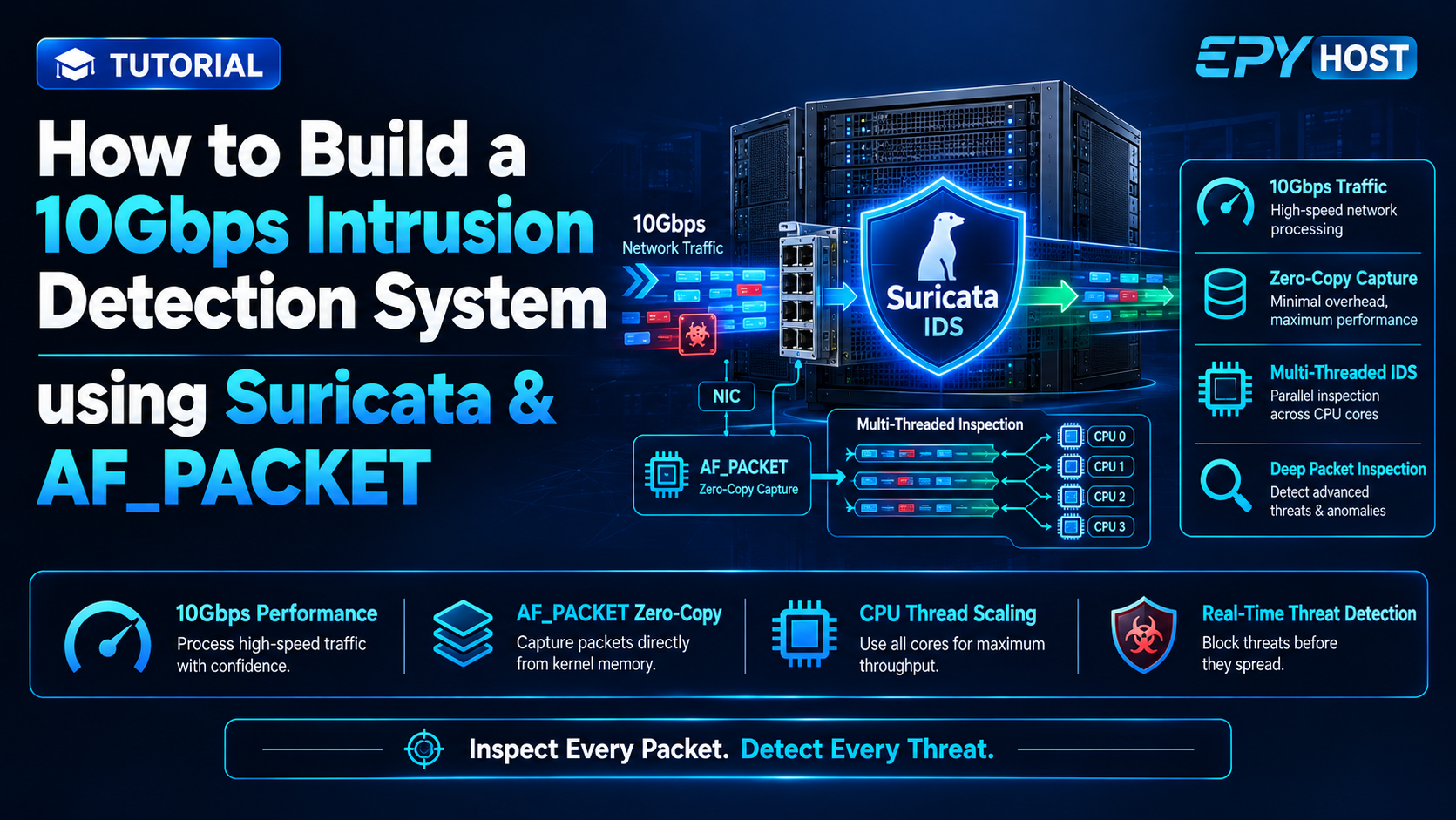
When securing high-traffic infrastructure, relying solely on stateful packet firewalls like iptables or nftables creates a major security vulnerability. While firewalls evaluate port numbers and IP headers, they do not inspect packet contents. Malicious payloads hidden inside encrypted or allowed traffic pass through unhindered.
The Challenge of High-Speed Packet Capture
Implementing Deep Packet Inspection (DPI) via an Intrusion Detection System (IDS) on a 10Gbps interface introduces severe performance bottlenecks. Traditional libpcap capture mechanisms copy every packet from kernel space memory into user space memory, leading to instant CPU exhaustion and dropped frames during traffic spikes.
High-Performance Security with Suricata & AF_PACKET
In this EPY Host engineering guide, we demonstrate how to build a zero-loss 10Gbps IDS node using a high-bandwidth bare metal server.
Key architecture optimizations include:
AF_PACKET Zero-Copy: Shared memory mapping (mmap) transfers frame references directly from the NIC driver to Suricata, eliminating kernel-to-user memory copying.
Disabling NIC Offloading: Turning off GRO/LRO ensures Suricata inspects pristine, unaggregated raw frames.
CPU Affinity & Thread Pinning: Mapping individual Suricata worker threads directly to physical CPU cores prevents expensive cache invalidations and context switches.
Inspect application payloads in real time across multi-gigabit connections while maintaining zero frame loss.
Read the complete technical tutorial on EPY Host:
🔗 https://www.epyhost.com/tutorials/howto/build-10gbps-ids-suricata/