Dengue Virus Disease: Causes, Symptoms, Classification, Diagnosis, Laboratory Findings, Treatment, and Prevention
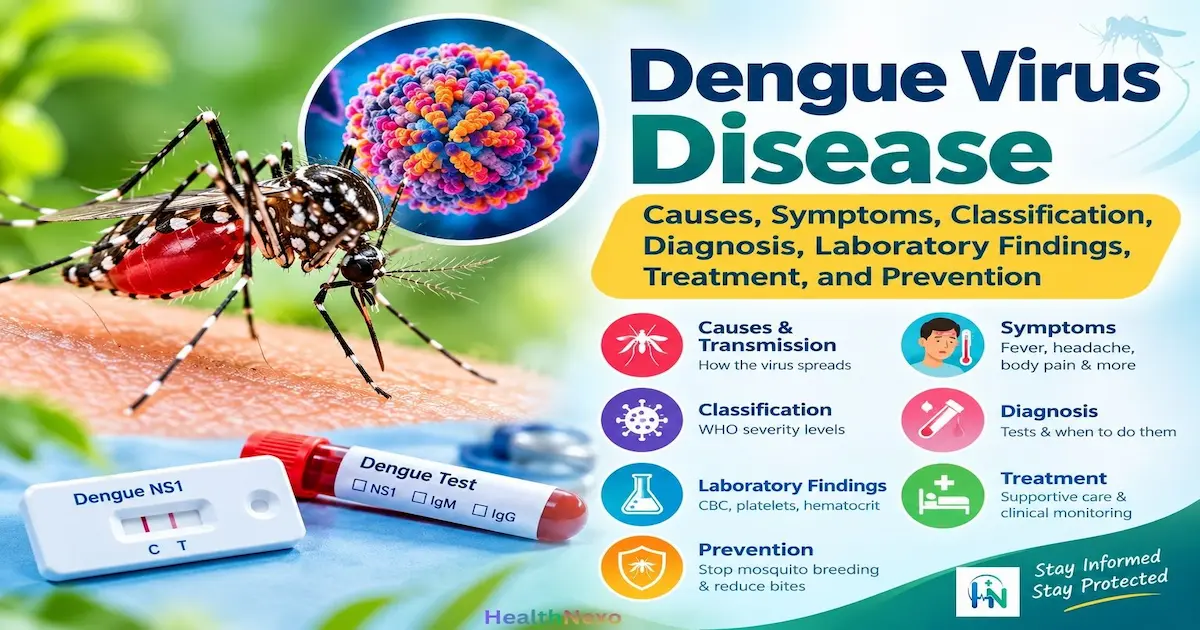
Dengue virus disease is an infection caused by the dengue virus that spreads to humans mainly through bites from infected Aedes mosquitoes. Dengue occurs in tropical and subtropical regions worldwide, including Bangladesh. Its severity ranges from a mild fever to severe disease that can cause plasma leakage, serious bleeding, shock, or organ damage. Early recognition is essential because complications may develop as the fever subsides, typically during the critical phase. Laboratory tests help confirm the infection and monitor changes that may indicate complications.
This article reviews the causes, transmission, symptoms, WHO classification, diagnostic tests, laboratory findings, treatment, and prevention of dengue virus disease.
Quick Summary
Cause: Dengue virus exists in four main serotypes: DENV-1, DENV-2, DENV-3, and DENV-4.
Transmission: The infection spreads primarily through bites from infected female Aedes mosquitoes.
Common Symptoms: Typical symptoms include fever, headache, pain behind the eyes, muscle and joint aches, nausea, and skin rash.
Warning signs: Severe abdominal pain, persistent vomiting, mucosal bleeding, fluid accumulation, and lethargy or restlessness.
Diagnosis: RT-PCR/NAAT, NS1 antigen, or IgM antibody testing, selected according to the day of illness.
Laboratory monitoring: Complete blood count (CBC), platelet count, hematocrit, and additional tests when clinically indicated.
Treatment: Dengue management focuses on adequate fluid intake, rest, and medical monitoring to detect complications early.
Prevention: Eliminate mosquito breeding sites and reduce exposure to mosquito bites.
Read full details about dengue virus disease: https://healthnexo.com/dengue-virus-disease/