A Detailed Description of the Mona Lisa: Unraveling Da Vinci’s Masterpiece
Painted by the Italian Renaissance polymath Leonardo da Vinci between 1503 and 1519, the Mona Lisa remains the most famous, studied, and enigmatic artwork in the world. Housed in the Musée du Louvre in Paris, this oil painting on a poplar wood panel continues to captivate millions of visitors annually.
At first glance, the portrait depicts a seated woman, traditionally identified as Lisa Gherardini, the wife of Florentine merchant Francesco del Giocondo. She is posed half-length, sitting in a visionary, mountainous landscape. Her posture is relaxed, with her hands elegantly folded over the arm of her chair, projecting a sense of serene confidence.
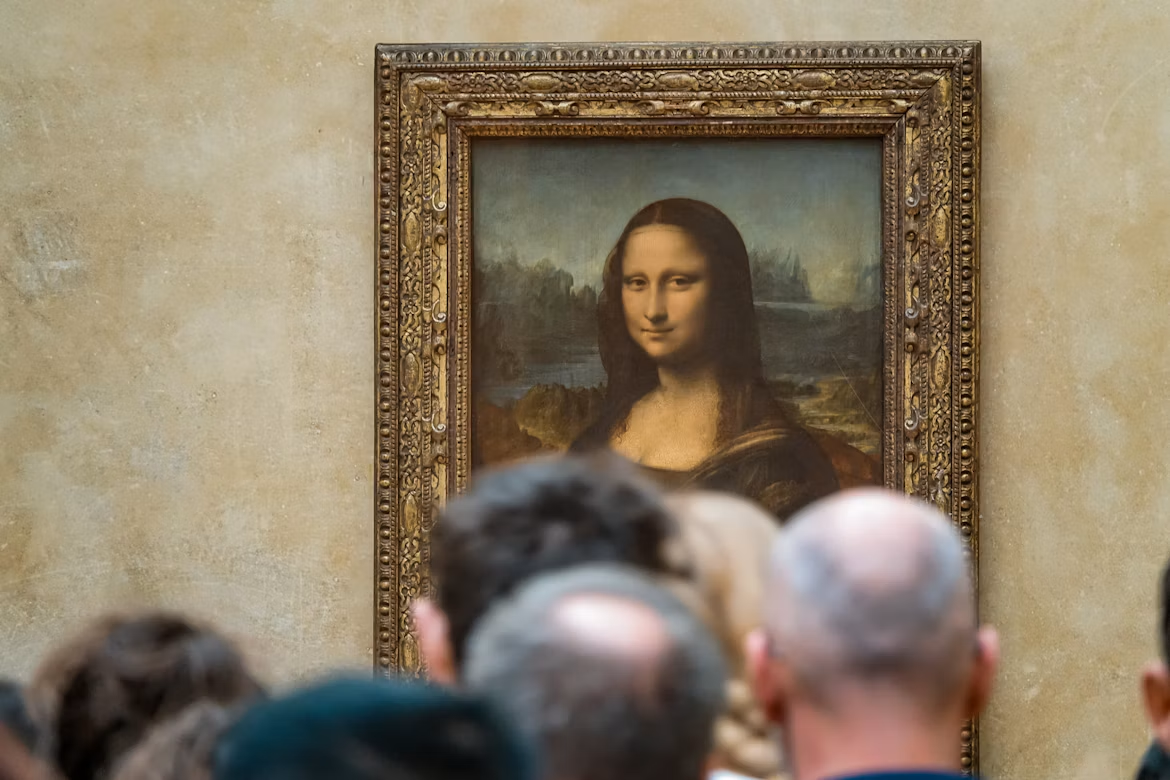
The most celebrated feature of the Mona Lisa is her ambiguous expression, particularly her subtle, elusive smile. Da Vinci achieved this effect through his mastery of sfumato—a painting technique that involves blending colors and tones so subtly that there are no perceptible transitions, creating a soft, hazy appearance.
Because the shadows around the corners of her mouth and eyes are deliberately blurred, her expression seems to shift depending on the viewer's angle, appearing to smile directly at you and then fading as you look away. Her eyes, painted with equal precision, seem to follow the observer across the room.
The Background Landscape
Behind the subject lies a striking, asymmetrical landscape divided by a winding river. On the left, the terrain is rocky and barren, while the right features a lush, lower valley with a bridge and distant mountains. This dreamlike setting highlights da Vinci's deep understanding of atmospheric perspective; distant elements are painted in cooler, paler blues to create a convincing illusion of three-dimensional depth.
Enduring Legacy
The Mona Lisa is a masterpiece of psychological depth and technical brilliance. By blending human anatomy with natural elements, Leonardo da Vinci created an immortal icon of art history that still holds endless secrets waiting to be discovered.