Hardware Masterclass: The Ultimate Guide to Set Screws, Point Profiles, and Tool-Less Upgrades
If you’ve ever repaired a wobbly door handle, tuned a 3D printer lead screw, or secured a pulley to a motor shaft, you’ve encountered a set screw (frequently called a grub screw in UK and traditional engineering workshops).
Unlike standard bolts that clamp two components together using through-holes and nuts, a set screw is designed to generate holding force through its tip, driving directly against an internal shaft or surface to keep rotating collars and knobs securely in place without protruding.
However, choosing the wrong size, thread pitch, or point profile can result in loose fittings, stripped threads, or permanent damage to your machinery shaft. In this guide, we break down everything you need to know about set screw drive styles, point profiles, and tool-less hardware upgrades!
- Drive Styles: Why Internal Sockets Rule
While slotted or square-head set screws exist for specialized machinery, modern precision hardware relies heavily on the socket set screw.
Featuring an internal hexagonal drive recess, a hex set screw allows mechanics and makers to apply strong clamping torque in tight, flush, or recessed spaces. Using a dedicated set screw with hex key tool set ensures you don't round out the internal socket during high-torque installations. - Choosing the Right Point ProfileThe tip (or point profile) of a set screw determines how it grips the mating surface. Selecting the correct point style is crucial for performance:
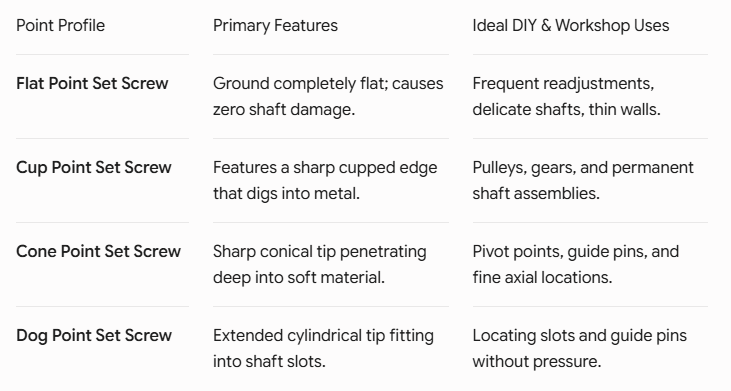
Point ProfilePrimary FeaturesIdeal DIY & Workshop UsesFlat Point Set ScrewGround completely flat; causes zero shaft damage.Frequent readjustments, delicate shafts, thin walls.Cup Point Set ScrewFeatures a sharp cupped edge that digs into metal.Pulleys, gears, and permanent shaft assemblies.Cone Point Set ScrewSharp conical tip penetrating deep into soft material.Pivot points, guide pins, and fine axial locations.Dog Point Set ScrewExtended cylindrical tip fitting into shaft slots.Locating slots and guide pins without pressure.
- Sizing, Thread Pitch, and Material SelectionAccurate sizing is essential to ensure a tight, reliable mechanical joint:
Thread Size & Pitch: Whether you’re replacing an m4 set screw on a motor coupler or working with custom hardware, pay close attention to the set screw thread pitch (the distance between thread peaks). Mis-matching coarse and fine metric pitches will strip internal threads instantly.
Length Selection: Always check a standardized set screw length chart so the screw sits perfectly flush with or slightly below the outer housing collar.
Material: For humid environments, outdoor gear, or water fixtures, opt for a stainless steel set screw to avoid galling, rust lock, and corrosion over time. - Workshop Essential: The Assortment KitThere is nothing more frustrating mid-project than stopping work to hunt down a single missing fastener. Keeping a comprehensive set screw assortment kit on your workbench ensures you have various set screw sizes and metric set screw options ready for unexpected repairs on everything from power tools to CNC machinery.
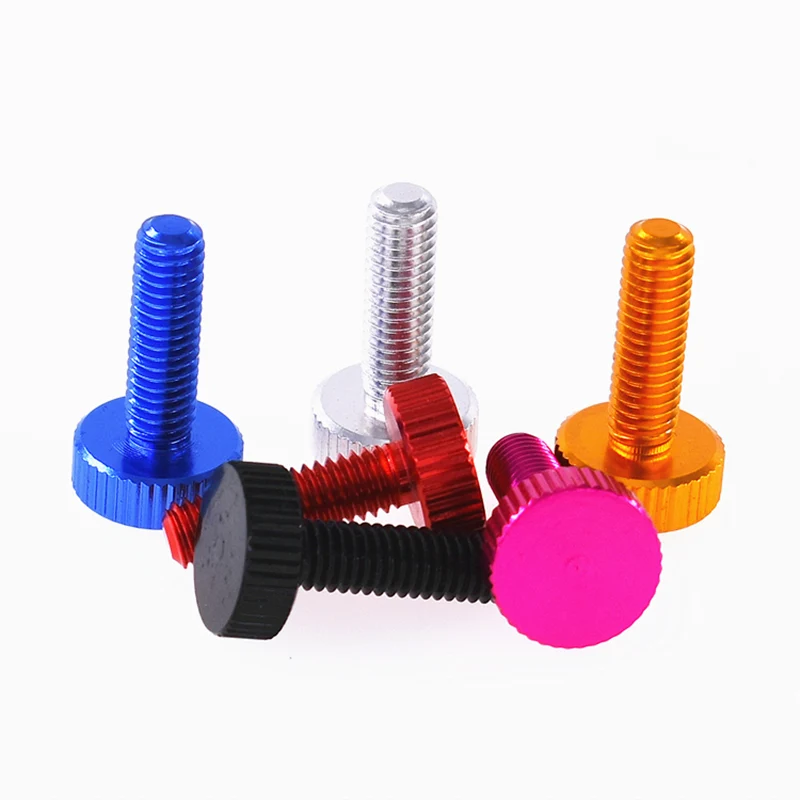
💡 Next-Level Upgrade: Tool-Less Aluminum Knurled Thumb ScrewsWhile set screws excel at low-profile, permanent clamping, constantly reaching for an Allen key during frequent adjustments, custom PC builds, or prototype testing can be time-consuming.
When you need quick, tool-less adjustments on panels, electronics enclosures, or adjustment knobs without sacrificing a clean, premium look, anodized aluminum hand-tightened fasteners are a game changer.
If you want to upgrade your equipment with vibrant, lightweight, and durable tool-less hardware, check out these colorful https://homediyer.com/products/m2-m6-aluminum-alloy-knurled-thumb-screws-knob-bolts?_pos=8&_sid=21bfa418d&_ss=r. They combine precise metric threads with an easy-grip knurled head, perfect for 3D printers, custom rigs, and DIY electronics.