Double Loop Wire Binding Wholesale Guide | Artiven
Double Loop Wire Binding for Consistent Bulk Orders
A shipment of binding wire can match the purchase order and still cause problems on the production floor. The pitch may be correct, but the cut length is wrong. The color may look acceptable in a photograph, but vary between batches. A sample may close neatly around plain paper, then perform differently when the customer adds laminated covers.
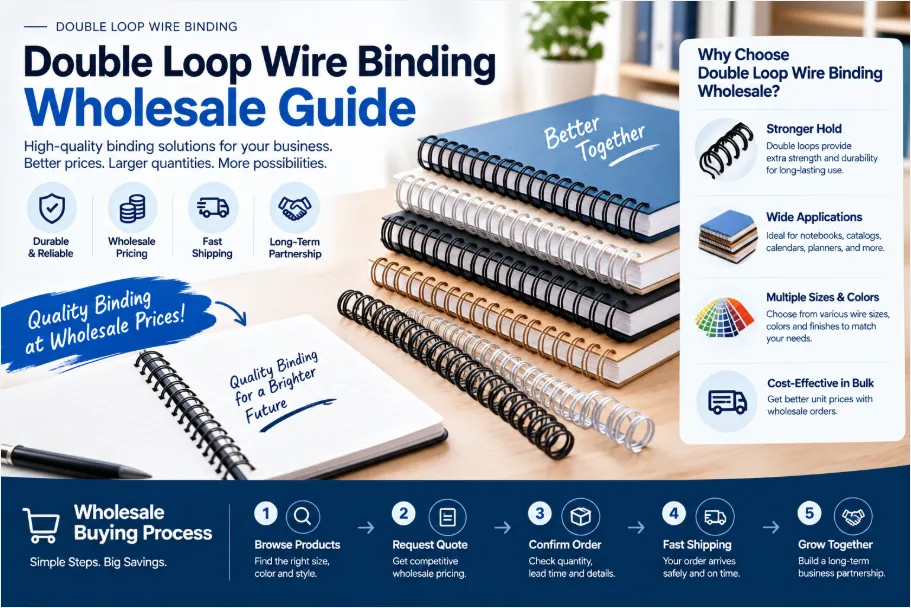
For printing companies, stationery brands and distributors, buying double loop wire binding means controlling these details before they become rework, rejected books or customer complaints. A useful purchasing specification connects the binding element to the finished document, the equipment and the next reorder.
Start With the Specifications That Determine Fit
Double loop wire binding, also commonly called twin loop wire binding, uses paired metal loops that are closed through punched sheets. Properly matched and closed, the binding allows documents to lie flat and pages to turn through 360 degrees. This makes it useful for reference materials that must stay open during use. RENZ binding overview
Pitch Comes Before Color
3:1 pitch means three holes per inch; 2:1 pitch means two. The wire must match the punched pattern. Changing the binding diameter does not correct a pitch mismatch.
While 3:1 is commonly associated with thinner documents and 2:1 offers options for thicker books, document thickness alone does not identify the right product. Start with the installed punch die, then check the available binding sizes and the closer’s operating range. RENZ technical glossary
Binding Diameter Is Different From Wire Thickness
The binding diameter describes the size of the formed binding element. The metal wire thickness describes the material used to form it. An enquiry that says only “wire diameter” can therefore be ambiguous.
Specify the nominal binding diameter clearly, and identify metal wire thickness separately if it is part of your quality requirement. Measure the finished document stack, including covers and dividers, and use the supplier’s sizing guidance before approving a sample.
Length and Loop Count Need Their Own Fields
“A4 wire” is an incomplete purchasing description. Confirm the binding edge, cut length and loop count, particularly for landscape documents, custom notebooks and calendars. Keep these details on the SKU record so a repeat order does not depend on interpreting a product photograph.
Choose Pre-Cut Wire or Spools Around Your Production Process
Pre-cut elements suit operations that insert individual binding pieces. They also give distributors a straightforward format for selling defined sizes in counted packs.
Spools serve compatible equipment that feeds and cuts continuous wire during production. Artiven lists twin loop wire spools in both 3:1 and 2:1 pitches for automatic and semi-automatic binding systems. Compatibility still needs confirmation against the actual production line.
Higher volume does not automatically make spools the better purchase. Consider the equipment, job changes and operator handling involved. A mixed-job print shop may need pre-cut elements for short runs, while a dedicated notebook line may benefit from spool-fed production.
For spool orders, also confirm spool dimensions, winding direction, quantity basis and handling requirements. A short wire sample can help assess appearance and closure, but it cannot establish how a full spool will feed.
Let the Finished Product Guide the Specification
Different applications place different demands on the same binding system:
Calendars: Check the binding edge, page rotation and hanger arrangement where required. Approve a complete calendar sample.
Branded notebooks and planners: Compare wire color and finish against the approved cover under consistent lighting.
Training manuals and reference books: Include tabs, dividers and heavier covers when checking stack thickness and page movement.
Reports and presentation books: Inspect closure alignment and exposed wire ends as part of the finished appearance.
Cover selection belongs in the same approval process. Review the binding covers range alongside the wire, especially when changing material or thickness between editions.
Why Buy Double Loop Wire Binding Wholesale
Wholesale purchasing can improve unit pricing, consolidate freight and simplify replenishment when demand is predictable. The larger operational benefit is establishing a repeatable specification that purchasing, production and warehouse teams can all use.
A distributor can label stock consistently by pitch, diameter, loop count and color. A print company can reserve approved sizes for recurring jobs. A stationery brand can define its finish and packaging requirements before requesting repeat production.
These benefits depend on inventory discipline. A lower carton price provides little value when slow-moving sizes remain in storage. Separate regularly used specifications from seasonal colors and custom lengths, then request quantities and delivery schedules that reflect actual consumption.
Compare landed cost per usable binding element, including freight, damaged stock and handling. A quote that appears cheaper per carton may contain fewer pieces or require more preparation.
Evaluate Suppliers With Evidence
Use the same assessment criteria for every double loop wire binding supplier. Ask for documents and samples that make the comparison measurable.
Evaluation area Evidence to request What to check
Specification accuracy SKU sheet or drawing Pitch, binding diameter, cut length and loop count
Machine compatibility Sample for your production setup Insertion, closing and page turning with the actual document
Finish consistency Approved color and finish sample Appearance before and after closing
Packaging Inner-pack and carton details Protection against crushing, tangling and surface damage
Order terms Itemized quotation Quantity basis, MOQ by specification and shipping terms
Delivery planning Production and dispatch schedule Approval milestones and realistic replenishment timing
Reorder control Retained sample and specification revision How substitutions and production changes are communicated
A supplier’s response to a specific question is often more useful than a general quality statement. For example, ask how a proposed finish change will be sampled and approved before it appears in the next shipment.
Approve a Finished Book Before Approving the Shipment
Build the sample using the intended paper, covers and equipment. Check that the loops align with the punched holes, the wire closes evenly, and pages turn without catching. Inspect the finish after closing and examine the ends for sharp or projecting sections.
If the sample fails, review the wire, punch pattern, stack thickness and closer settings together. A binding defect can originate in more than one part of the process.
Keep the approved book with the wire specification and packing instructions. This gives receiving staff and future buyers a physical reference for repeat orders.
Request a Quote With a Complete Binding Brief
Artiven’s double loop wire binding range includes 3:1 and 2:1 pitch options, pre-cut elements, multiple colors and finish choices. To identify the appropriate configuration, provide:
Binding pitch, nominal binding diameter, cut length and loop count.
Finished document size and stack thickness, including covers.
Machine model, required color and surface finish.
Quantity by specification, packing requirements and delivery destination.
Request confirmation of MOQ, sample arrangements and production timing for the selected configuration. These terms should be established for the actual order.
With an approved specification and finished-book sample, bulk purchasing becomes easier to compare, inspect and repeat. Contact Artiven for a wholesale quotation with your binding brief and sample requirements to discuss a suitable supply configuration.