Akai MPC-2000 Wave File Sample Set
Over 40 studio quality wave file samples
The Akai MPC2000 is one of the most respected hardware samplers ever created and remains a cornerstone in the history of modern beat production. Released in 1997 by Akai Professional, the MPC2000 helped bring the workflow and sound associated with the MPC lineage to a broader group of musicians. It followed earlier models such as the Akai MPC3000, which had already earned legendary status among producers, but the MPC2000 was designed to be more affordable and accessible while still maintaining the core philosophy of hands-on sampling and sequencing.
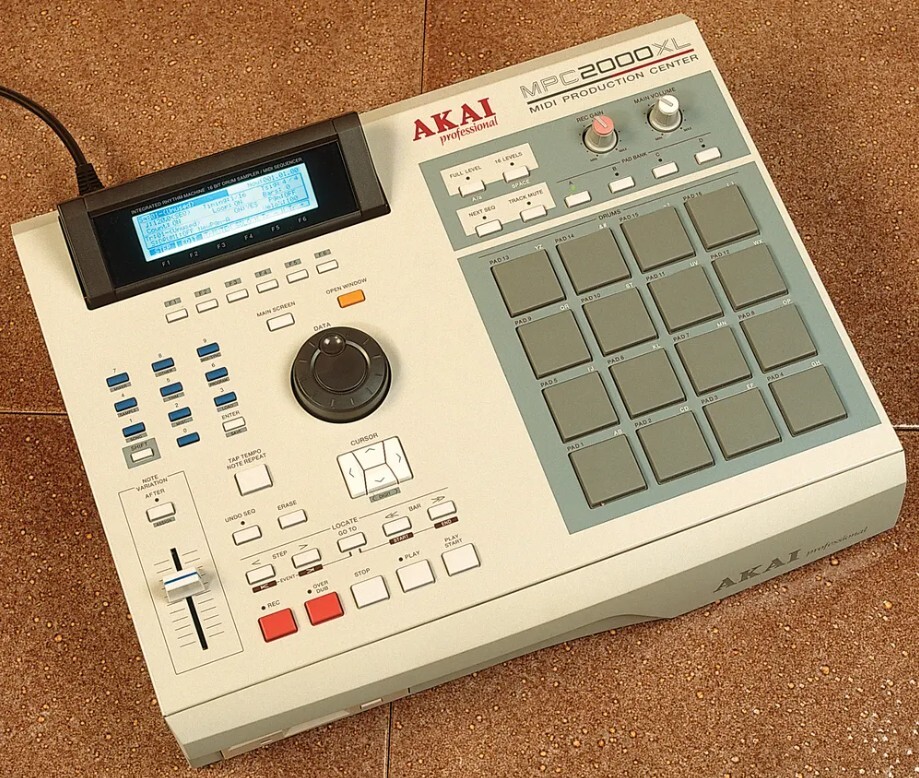
At the center of the MPC2000’s design is its combination of a digital sampler and a powerful MIDI sequencer. This integration allowed producers to both capture sounds and arrange them into complete musical compositions within a single piece of hardware. Instead of relying on computers, musicians could sample drum hits, bass notes, or fragments of records directly into the machine and assign them to its famous sixteen velocity-sensitive pads. These pads are arranged in a four-by-four grid that encourages a performance-based approach to beatmaking, allowing rhythms to be played live rather than programmed step by step.
Sampling on the MPC2000 became a defining part of its creative identity. Producers could record audio through the unit’s inputs, trim the recordings, adjust levels, and then map the resulting sounds to pads. Long musical phrases could be chopped into smaller pieces and rearranged to create entirely new rhythms and melodies. This technique became especially important in hip-hop production, where producers often transformed snippets of vinyl records into fresh compositions. The MPC2000’s editing tools allowed users to shape these samples precisely, making it possible to craft unique grooves from almost any source material.
Equally important to the MPC2000’s legacy is its sequencer. The machine’s sequencing engine enables users to build patterns and songs by recording pad performances in real time. Each track within the sequencer can control either internal samples or external MIDI instruments, making the MPC2000 a central hub for hardware-based studios. Producers frequently connected synthesizers, drum machines, and sound modules to the MPC2000 so that a single sequence could control an entire setup. Timing accuracy was a major strength of the machine, and its groove-based workflow encouraged experimentation with swing and subtle rhythmic variations.
The physical interface of the MPC2000 played a major role in shaping its workflow. Unlike many later software-based systems, the machine is designed around tactile interaction. Buttons, pads, and a data wheel provide immediate control over sampling, sequencing, and editing. This layout allows producers to move quickly between creative tasks without navigating complex menus. Many users describe the experience as more musical and intuitive than working with a computer mouse, since rhythms can be physically performed rather than drawn on a screen.
The development of the MPC series was closely associated with Roger Linn, whose earlier designs established the concept of combining drum pads with sampling and sequencing in a single instrument. Although the MPC2000 was released after his direct involvement with the series had ended, the design principles he introduced continued to shape the instrument’s workflow and influence the broader direction of beatmaking technology.
The MPC2000 was also designed with expandability in mind. Users could install additional memory to increase sampling time and add optional hardware upgrades such as effects processing and digital inputs. These features allowed producers to customize the machine according to their needs, extending its usefulness as studios evolved. Storage options, including removable media, made it possible to save large libraries of samples and projects, enabling producers to build extensive sonic collections over time.
Throughout the late 1990s and early 2000s, the MPC2000 became a staple in studios across multiple genres. While it is strongly associated with hip-hop, its capabilities made it equally valuable in electronic music, R&B, and experimental production. The machine’s ability to function as both a sampler and a MIDI command center meant that it could shape the entire structure of a track, from drum patterns to melodic arrangements.
The influence of the MPC2000 can still be felt in modern music production tools. Many contemporary controllers and digital instruments replicate the sixteen-pad layout and groove-oriented sequencing that the MPC popularized. Even modern standalone production systems continue to reflect the workflow principles refined by machines like the MPC2000, demonstrating how deeply its design has influenced the evolution of music technology.
Despite the rise of powerful computer-based digital audio workstations, the MPC2000 remains beloved by many producers. Its reputation comes not only from its sound and timing but also from the creative mindset it encourages. By focusing on sampling, rhythm, and performance, the machine invites musicians to experiment and build music piece by piece. For countless producers, the MPC2000 represents a period when hardware instruments defined the sound and process of beatmaking, and its legacy continues to inspire artists who value hands-on music creation.