7 Design Principles for Using a Fireplace Between Living and Dining Spaces
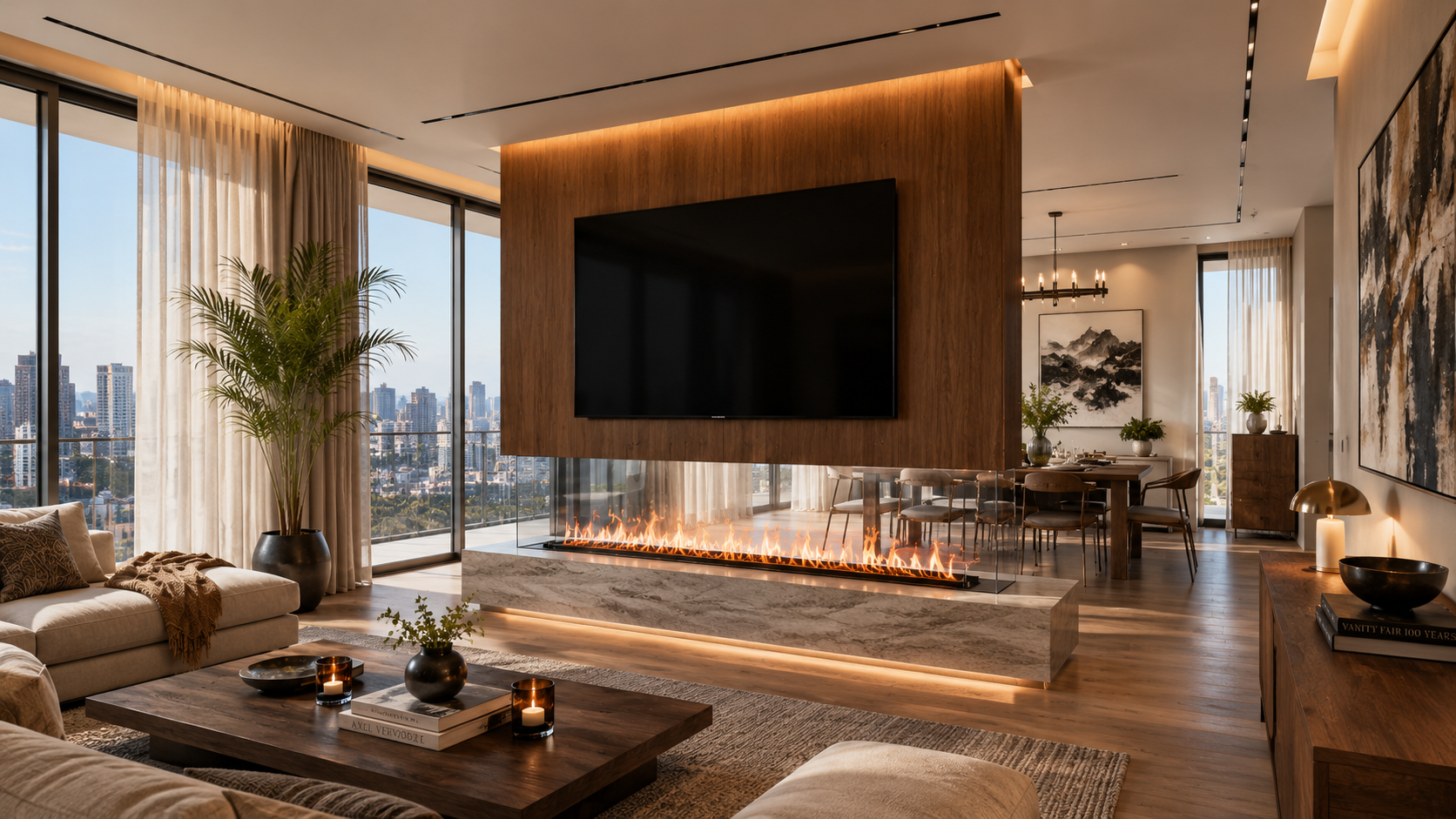
Using a fireplace as a partition looks simple, but successful examples depend on much more than placing a long fireplace between two rooms. The feature affects furniture, circulation, sightlines, materials, lighting and the overall proportion of the interior.
These seven principles help explain why some fireplace partitions feel completely integrated while others appear added afterwards.
Define Without Blocking
The purpose of the partition is to distinguish living from dining without losing the benefits of an open plan. Keeping sections transparent, open or visually light allows the eye to continue travelling through the room.Think About Both Sides
A central fireplace is experienced from several directions. The living-room view cannot be the only consideration. The dining side, entrance view and circulation paths matter too.Get the Flame Length Right
Long linear fireplaces can establish a strong horizontal axis, particularly beneath a television. However, length should respond to the partition, furniture and room scale rather than simply being maximised.Integrate the Television
A floating TV wall above the fireplace can reduce the need for bulky entertainment cabinetry. Timber or stone can visually connect the two elements while enough negative space prevents the composition from becoming crowded.Choose Technology for the Climate
Artificial fireplaces make particular sense where ambience is required without substantial heating. Water vapour models use illuminated mist instead of combustion and are primarily visual features.
In colder climates, a real fireplace may be more appropriate when genuine heat is required. The surrounding partition must then respond to the specific technical and safety requirements of the fireplace chosen.Limit the Material Palette
Stone, timber and glass are natural partners for a fireplace partition. Stone provides visual weight, timber adds warmth and glass preserves openness. Too many finishes can make the feature unnecessarily complicated.Design for the Evening
The fireplace becomes particularly atmospheric after sunset. Concealed lighting, decorative lighting and the fire effect should work together. Softer ambient illumination allows the flame to remain visible without making the room feel dark.
When these principles are considered together, the fireplace stops feeling like a product installed inside a partition.
It becomes the partition itself.
Read the detailed interior styling guide: