What Type of Furniture Wrap Should Movers Use for Upholstered Furniture?
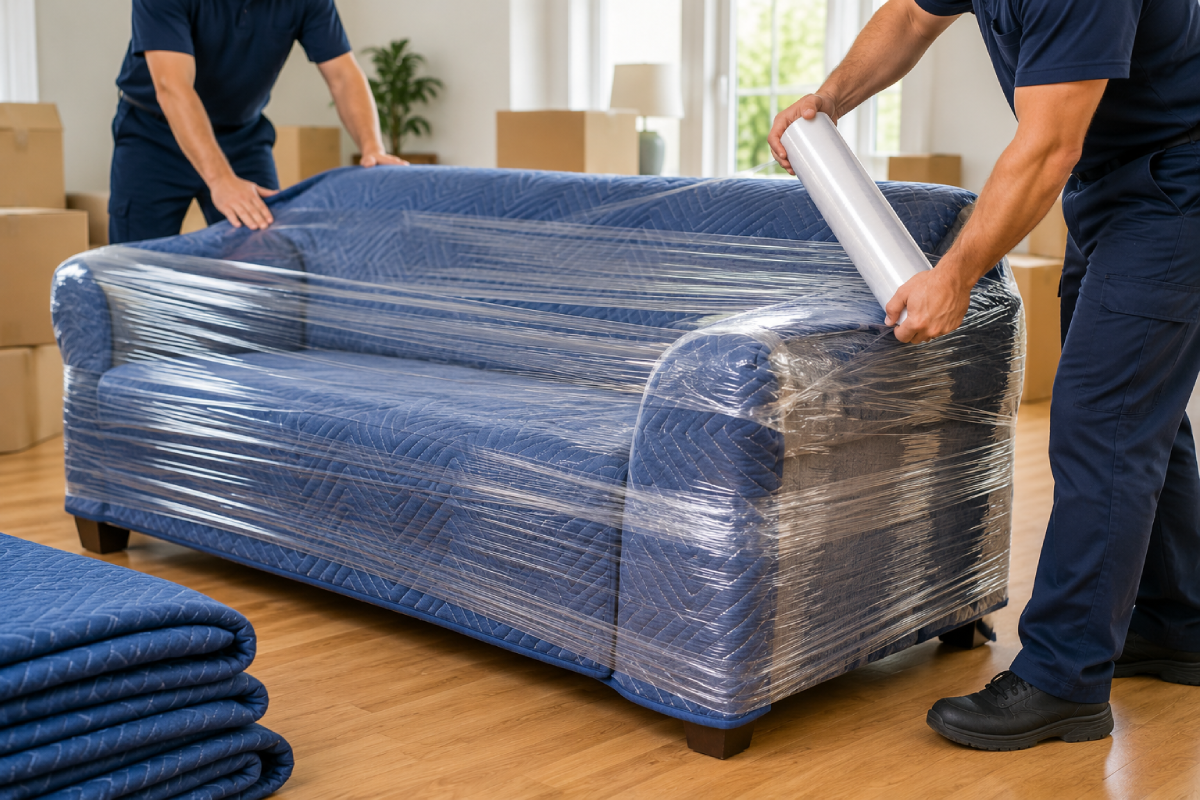
Moving upholstered furniture takes more care than moving many other household items. Sofas, armchairs, dining chairs, ottomans, and other fabric-covered pieces can easily pick up dirt, dust, moisture, stains, and damage during a move.
For professional movers, the right protection can make the difference between delivering a clean, undamaged couch and dealing with an unhappy customer.
So, what type of furniture wrap for moving should movers use on upholstered furniture?
For most upholstered pieces, the best approach is to use clear plastic stretch wrap combined with padded moving blankets. The blankets provide cushioning, while the stretch film helps hold everything securely in place and creates an additional barrier against dirt and moisture.
Why Upholstered Furniture Needs Extra Protection
Upholstered furniture presents challenges that wood, metal, and plastic furniture do not. Fabric can collect dust and grime while furniture is carried through hallways, elevators, loading areas, and trucks. Light-colored upholstery can be especially unforgiving.
There is also the risk of physical damage. A couch can rub against a doorway, another piece of furniture, or the inside wall of a moving truck. Even when the upholstery does not tear, friction and pressure can leave marks.
That is why moving wrap for upholstered furniture should do more than simply cover the surface. Movers need protection against both dirt and impact.
A combination of moving blankets and stretch wrap handles both jobs.
Why Movers Should Use Padded Moving Blankets
Moving blankets are the first layer of protection for most upholstered furniture. Their thick, padded construction helps cushion furniture against bumps, scratches, rubbing, and contact with other items.
Movers can place blankets over the arms, back, sides, and other exposed areas of a sofa or chair. For larger pieces, multiple blankets may be needed to provide full coverage.
Blankets are particularly useful when furniture will be packed tightly inside a moving truck. During transportation, furniture can shift slightly as the truck turns, stops, or travels over uneven roads. A padded barrier helps reduce the chance that these small movements will damage the upholstery.
However, blankets need to stay in place. That is where stretch film becomes important.
Why Clear Plastic Stretch Wrap Works Well
Stretch wrap for moving furniture is a flexible plastic film that stretches around furniture and clings to itself. Movers can wrap it around padded furniture to keep moving blankets securely positioned during handling and transportation.
Clear stretch film also makes it easier for crews to see the general shape of the item underneath. This can be useful when loading or unloading several wrapped pieces.
Another advantage is that stretch film does not require adhesive to hold the protective covering together. Packing tape should generally not be applied directly to upholstery because adhesive may leave residue or damage delicate surfaces.
With stretch film, movers can secure the protective layers without taping directly to the furniture.
Plastic Wrap Alone Is Usually Not Enough
Although plastic wrap for furniture moving provides useful surface protection, it should not be treated as a replacement for padding.
Stretch film is thin. It can help protect against dust, dirt, and minor moisture exposure, but it does not provide much cushioning against impacts.
If a wrapped sofa hits a doorway or another piece of furniture, plastic film alone will do little to absorb the impact. A padded moving blanket underneath provides the cushioning needed for better protection.
For professional moving jobs, think of the two materials as a team: moving blankets provide padding, while stretch wrap helps secure those blankets and adds another protective barrier.
How to Wrap a Couch for Moving
Knowing how to wrap a couch for moving correctly can help crews work efficiently while reducing the risk of damage.
Start by checking the couch for loose cushions, removable legs, or other detachable parts. Remove items that should be packed separately. Make sure the furniture is reasonably clean and dry before covering it.
Next, cover the couch with padded moving blankets. Pay particular attention to the arms, corners, back, and other areas likely to make contact with walls or other furniture.
Once the blankets are positioned, apply clear stretch wrap around the covered couch. Wrap firmly enough to hold the blankets in place, but avoid excessive tension that could compress soft upholstery or put unnecessary pressure on delicate furniture
components.
Work around the piece until the blankets are secure and unlikely to shift while the couch is being carried or loaded.
For specialty upholstery, antiques, leather furniture, or delicate finishes, crews should consider the material and manufacturer care recommendations before allowing plastic film to remain in direct contact with the surface for an extended period.
Choosing Stretch Film for Professional Moving Crews
Not every moving job requires the same roll of stretch film. Moving companies may benefit from keeping several sizes available.
Hand stretch wrap can be useful for chairs, ottomans, and smaller pieces. Wider rolls can make covering sofas and other large furniture faster. Crews should also choose film that is strong enough to stay secure during normal handling without constantly tearing.
Rolls should be easy for movers to handle and apply quickly. A practical furniture wrap for moving should help the crew protect furniture without slowing down loading and unloading.
Companies that handle frequent residential or commercial moves may also want to purchase moving stretch film in larger quantities so crews have enough material available for every job.
Better Protection Can Mean Better Moves
Protecting upholstered furniture is about more than keeping a couch clean. It is part of providing professional moving service and reducing avoidable damage claims.
For most upholstered furniture, movers should use padded moving blankets together with clear plastic stretch wrap. The blankets cushion the furniture, while the stretch film keeps the protective covering secure and helps shield the piece from dirt and moisture.
Using the right moving wrap for upholstered furniture gives crews a simple, practical system for protecting sofas, chairs, ottomans, and similar items from pickup through final delivery.
Frequently Asked Questions
What is the best furniture wrap for moving upholstered furniture?
The best furniture wrap for moving upholstered furniture is clear plastic stretch wrap used together with padded moving blankets. Moving blankets provide cushioning against bumps and rubbing, while stretch wrap holds the blankets securely in place and helps protect against dirt, dust, and moisture.
Can movers use plastic wrap directly on a couch?
Movers can use plastic wrap for furniture moving, but direct contact may not be suitable for every type of upholstery. For most moves, a safer approach is to cover the couch with padded moving blankets first and then secure the blankets with stretch wrap. Delicate fabrics, leather, antiques, and specialty finishes may require additional care.
How do you wrap a couch for moving?
When deciding how to wrap a couch for moving, start by removing loose cushions, legs, and detachable parts when appropriate. Cover the couch with padded moving blankets, paying extra attention to corners and arms. Then use clear stretch wrap around the blankets to keep them securely in place during carrying, loading, and transportation.
Is stretch wrap good for moving furniture?
Yes. Stretch wrap for moving furniture is useful because it clings to itself and can secure moving blankets without applying packing tape directly to the furniture. It also provides an additional barrier against dust, dirt, and minor moisture exposure during a move.
Are moving blankets or stretch wrap better for upholstered furniture?
Movers should generally use both rather than choosing one or the other. Moving blankets provide padding and impact protection, while stretch wrap helps keep the blankets from shifting. Combining the two provides more complete moving wrap for upholstered furniture than using stretch film alone.
What furniture should movers protect with stretch wrap?
Stretch wrap can help protect couches, upholstered chairs, ottomans, dining chairs, sectionals, and many other furniture pieces. Professional movers can also use stretch film to secure protective moving blankets around wood or other finished furniture, depending on the item's material and protection requirements.