Slot Casino Game-History Guide: Why the Animation and the Settled Record Are Different Layers
Slot Casino Game-History Guide: Why the Animation and the Settled Record Are Different Layers
A Philippines-focused consumer guide to round IDs, timestamps, status fields, settlement, balance movement, and interrupted sessions
A reel can still be slowing down while a game-history page already contains a completed entry. A browser can freeze after a request was accepted. A balance can change before a secondary dashboard refreshes. Those situations look contradictory only if every visible layer is assumed to update at the same moment. For readers using Slot Casino as an informational reference, the useful question is not which animation looked most convincing. It is which recorded fields describe the same round, in what status, and at what time.
This guide focuses on record reconciliation after the event. It does not try to infer how a particular operator implements its internal game engine, and it does not treat a short history as a forecast. The goal is narrower: identify the round, read the status, compare the money fields, and avoid turning a slow interface into a false conclusion.
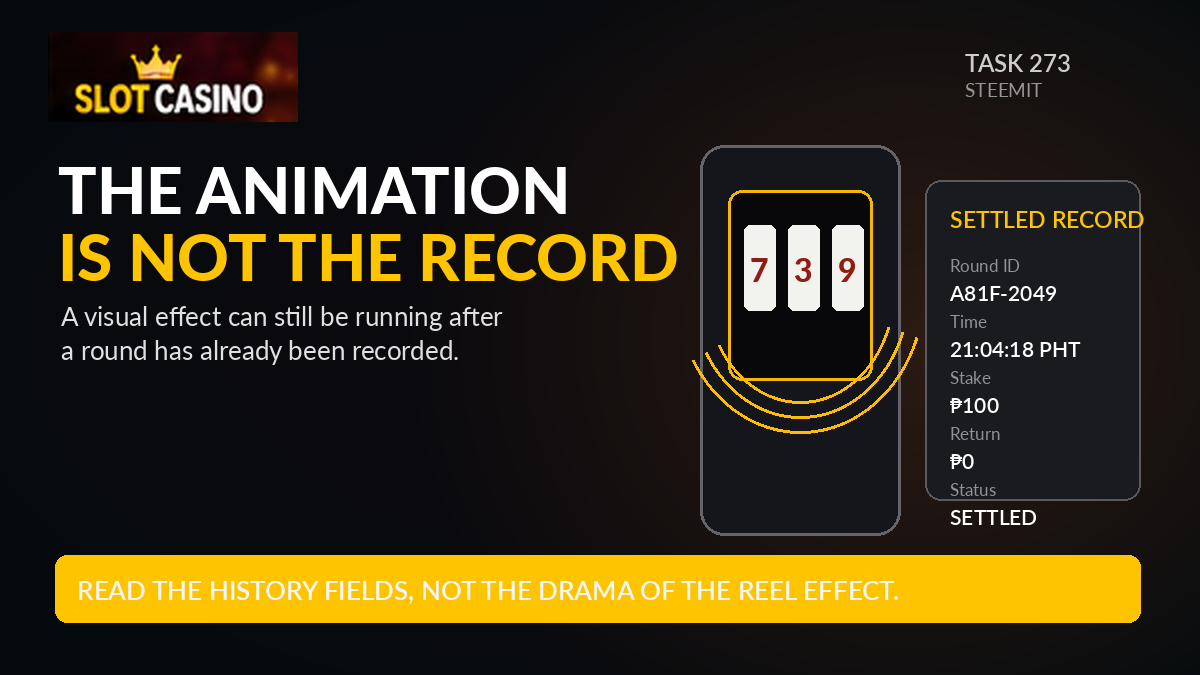
1. Separate presentation from the settled record
The game screen is a presentation layer. It can show reel motion, sound, feature effects, win counters, timers, or loading states. A history or transaction view is a record layer. It can show a round identifier, timestamp, stake, return, status, and sometimes the balance after settlement. Those layers can describe the same event without being synchronized frame by frame.
That distinction matters because visual completion is weak evidence. A smooth animation does not by itself prove that a record has settled, while a frozen animation does not prove that the action failed. The stronger question is whether an identifiable round exists and what the system says happened to it.
2. Start with the round or transaction ID
When two screens appear to disagree, compare identifiers before amounts. A row number, screen position, or sequence of animations can shift after sorting, refresh, or delayed loading. A round ID, game ID, or transaction ID is designed to distinguish one event from another. If the same identifier appears in both views, you are probably looking at the same round even when the timestamps or display order differ slightly.
If no unique identifier is visible, record the game name, visible time, stake, and result status before refreshing. Those fields create a stronger evidence set than a screenshot of a spinning reel. For repeated stakes of the same size, matching only the amount is particularly weak because several rounds can look identical financially.
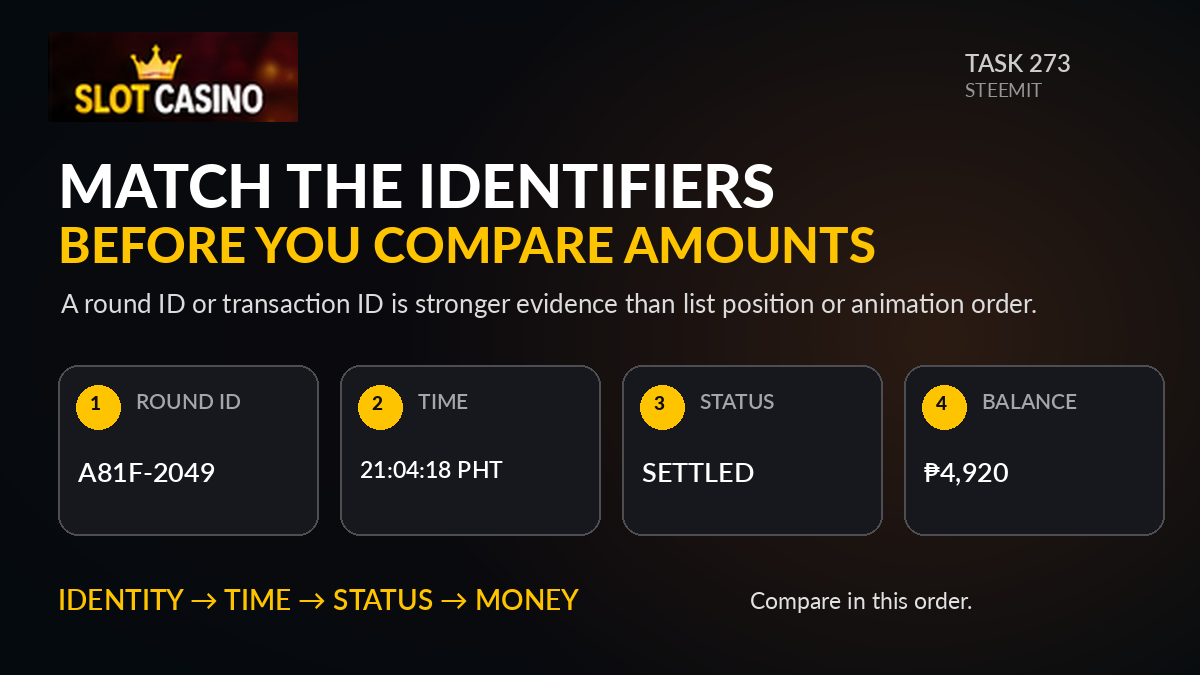
3. A timestamp needs a time zone and a meaning
A timestamp can represent different moments: when the request was received, when the result was generated, when settlement completed, or when the history row was written. Two correct systems can therefore differ by seconds without describing different activity. Time-zone presentation adds another source of confusion. One interface may show Philippine Time while another stores UTC or another server zone.
The practical check is to compare the date, clock time, stated time zone, and event identifier together. A consistent eight-hour offset between UTC and Philippine Time is a presentation difference, not a missing round. A one-off unexplained gap deserves more scrutiny, especially if the identifier or money fields also fail to match.
4. Read the status before reading the amount
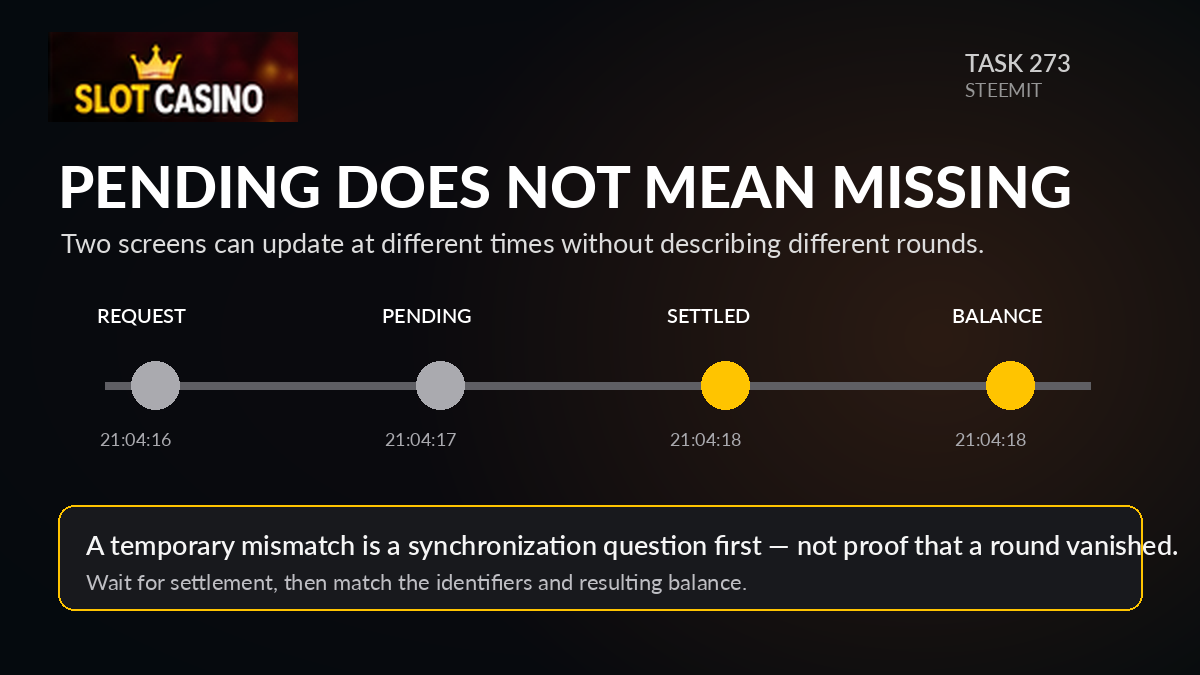
Status fields often explain apparent mismatches faster than arithmetic does. A record may be pending, processing, settled, voided, cancelled, or interrupted depending on the platform. A dashboard that counts pending activity can temporarily show one more event than an account-history page that lists only settled entries.
This is why “not visible here yet” is different from “missing.” The UK Gambling Commission’s remote technical standards are a useful external benchmark: licensed systems in Great Britain must give customers access to gambling and account history, while interrupted-play standards require fair treatment and sufficient information to recover or resolve events. Those rules are not Philippine licensing evidence for Slot Casino; they simply illustrate why traceable status and history fields matter in a remote-gaming system.
5. Reconcile stake, return, and balance movement
After the identifier and status match, compare the financial fields. The minimum useful set is the stake or amount committed, the gross return if any, and the resulting balance movement. A “win” label is not enough because the return can still be smaller than the stake, and a balance can include other activity that occurred close to the same time.
Work from the individual round outward. First confirm the round record. Then check whether its stake and return are internally consistent. Finally compare the account balance before and after, if that information is available. This order reduces the chance of attributing an unrelated deposit, withdrawal, bonus adjustment, or another game round to the wrong event.
6. If the connection drops, verify before repeating
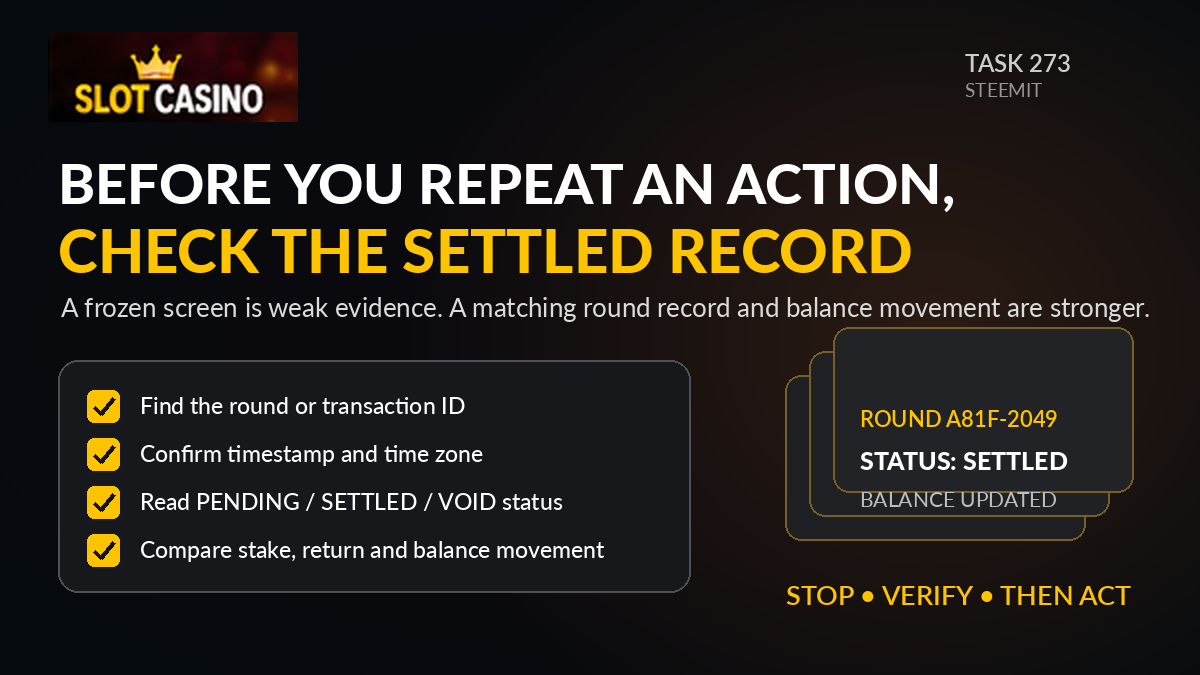
An interrupted screen is one of the easiest situations to misread. The browser may stop drawing after the server has already received the action. The opposite can also happen: a local interface can appear to respond before the request is fully confirmed. The safest troubleshooting step is therefore not to repeat the action immediately. Reconnect, open history, find the identifier or matching timestamp, and check whether the record is pending, settled, void, or absent.
The same principle appears in established technical standards. UK guidance says that when an interruption occurs after a gamble has been received and the customer can no longer influence the outcome, the result should stand; if a single-stage event is interrupted before an outcome is generated, any deducted stake should be returned. The exact implementation varies by jurisdiction and operator, but the consumer habit remains useful: verify the recorded state before creating a second action.
7. History is evidence about the past, not a forecast
A clean game history can help reconstruct what happened. It cannot establish what the next random result “should” be. Ten losses do not make a win due, and a run of wins does not create a hot state unless the published rules explicitly define a persistent feature. Record keeping is valuable precisely because it separates observation from prediction.
The same discipline applies when reading educational material in the Slot Casino guides hub: use rules, paytables, status labels, and recorded outcomes to understand the completed event. Do not convert a history table into a timing system or a reason to extend a session.
8. Use a five-field reconciliation check
When a screen and a history page seem inconsistent, write down five things: the round or transaction ID, the timestamp and time zone, the status, the stake/return pair, and the resulting balance movement. If those fields align, the visual delay is usually only a presentation issue. If they do not align, preserve the record and use the platform’s documented support or dispute process rather than guessing from the animation.
Final takeaway
The strongest evidence after a digital game round is not the reel animation, celebratory effect, or order in which cards and numbers appeared on screen. It is the traceable record that identifies the event and shows its status and financial effect. Treat presentation as presentation, history as history, and prediction as a separate claim that needs its own evidence.
For Filipino readers, that approach is also a practical way to reduce mistakes during slow connections: stop when the state is uncertain, verify the round, and only act after the record is clear. A careful history check will not change the mathematics of a game, but it can make troubleshooting more accurate and keep an interface delay from becoming a second problem.
Quick Reconciliation Table
SlotCasino.site — Casino Guides Philippines

Sources & Benchmark References
• UK Gambling Commission — RTS 1: Customer account information
• UK Gambling Commission — RTS 10: Interrupted gambling
• UK Gambling Commission — Remote gambling equipment / transaction records
• UK Gambling Commission — Remote technical standards overview