The Gift Doesn't Have to Be Expensive. It Just Has to Mean Something.
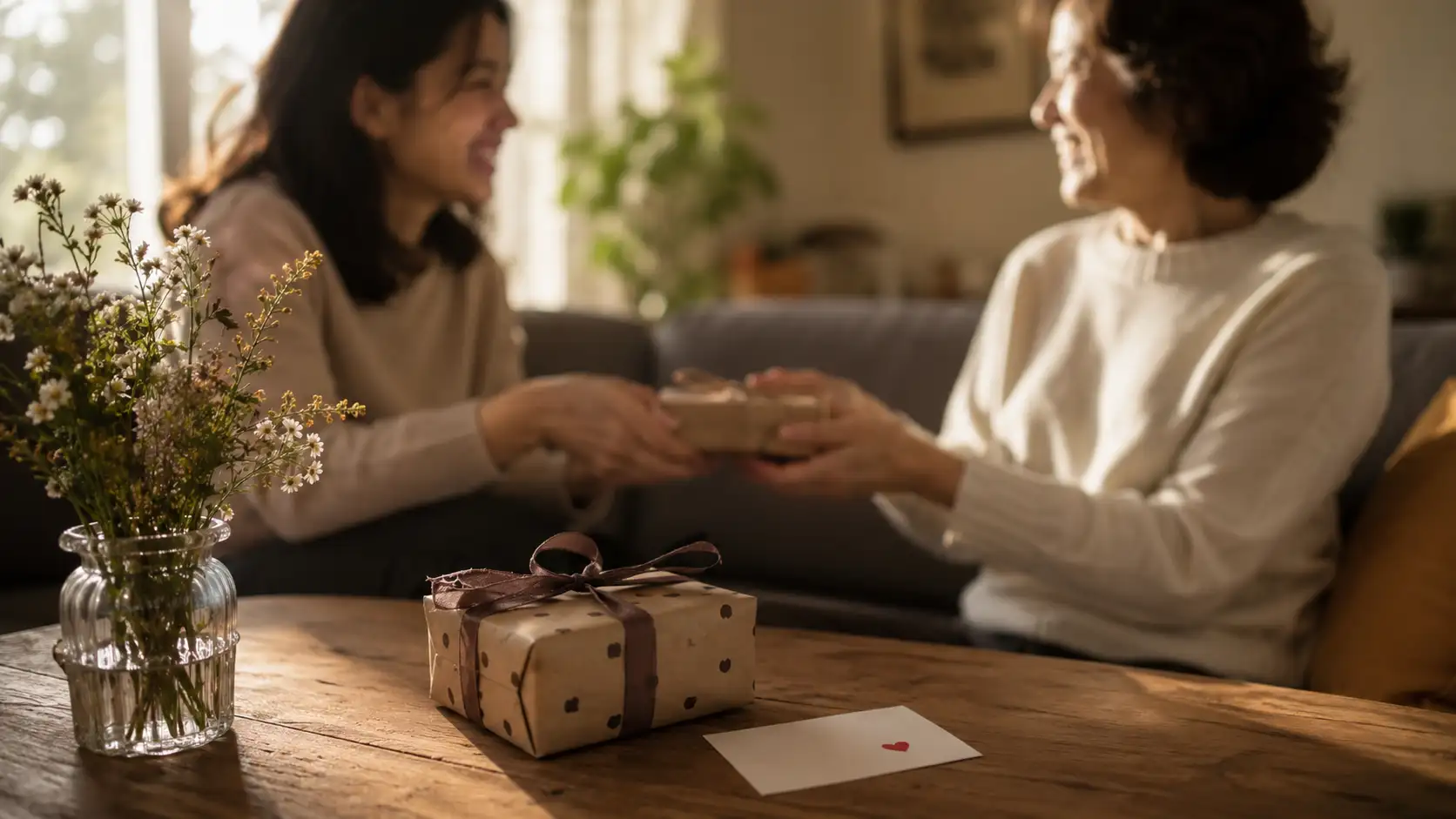
I have started to think that we have made gift-giving much harder than it needs to be.
We compare prices. We search for the perfect packaging. We wonder whether a gift looks expensive enough. We scroll through pages of products, convinced that there must be something more impressive around the next corner.
And then I think about the gifts I actually remember.
Interestingly, they aren't always the expensive ones.
Some were small. Some were homemade. Some were simply things someone noticed I liked and remembered later.
That is when it occurred to me: perhaps we have confused the value of a gift with its price.
A gift can be expensive and still feel completely impersonal.
Another can be simple and stay in your memory for years.
The price tag isn't the whole story
Imagine someone gives you an expensive gift because they felt they had to give you something.
Now imagine someone gives you something modest because they remembered a conversation you had months ago.
Which one would you rather receive?
For me, the answer is obvious.
The second gift carries a story.
It tells me that the person wasn't simply shopping. They were paying attention.
That's what makes thoughtful gifts different. They contain a little piece of the relationship.
Maybe it's your favorite flavor. Maybe it's a reference to an old joke. Maybe it's something you've mentioned wanting but never bought for yourself.
The object itself might be ordinary.
The reason behind it isn't.
Sometimes the smallest details matter most
We tend to think personalization means engraving someone's name on something or ordering an elaborate custom package.
It can, but it doesn't have to.
Personalization can be incredibly simple.
If your friend loves dark chocolate, remember that when you're choosing a gift.
If your sister prefers practical things, don't buy her something decorative just because it looks impressive.
If your parents enjoy sitting together after dinner, choose something they can share.
The thought doesn't have to be complicated.
It just has to belong to the person receiving it.
That's a surprisingly powerful distinction.
Why chocolate makes an interesting gift
There is a reason chocolate appears so often in celebrations.
It's easy to share.
It can mark a birthday, an anniversary, a thank-you, a festival, a promotion, or simply a “I was thinking about you” moment.
And unlike a decorative object that may eventually disappear into a cupboard, food creates an experience.
You open the box.
You choose a piece.
Someone asks which one you picked.
You try it.
Maybe you share the rest.
The gift becomes a small moment rather than just another possession.
That is one reason I find chocolate gifting interesting. It doesn't necessarily have to be grand to feel special.
For example, a gift box such as the ZOROY Assorted Delite Chocolate Gift Box of 12 combines different chocolate confections in a relatively compact gift. What makes an option like this interesting isn't simply the number of chocolates in the box. It's the possibility of choosing it because you know the person will actually enjoy sharing and eating them.
And that distinction matters.
A thoughtful gift answers a quiet question
Every gift, whether we realize it or not, answers a question.
“What do I think you'll like?”
Sometimes we get that answer right.
Sometimes we don't.
But when we choose something based on what we actually know about someone, the gift becomes more meaningful.
Think about the person you're buying for.
What do they talk about all the time?
What makes them happy?
What little habit do they have?
What do they never buy for themselves?
What memory do the two of you share?
These questions are often more useful than asking, “What's the most impressive gift I can afford?”
Because impressive isn't always personal.
Expensive can still be thoughtful
I don't think expensive gifts are bad.
If you can comfortably afford something and you know the recipient genuinely wants it, go for it.
A costly gift can absolutely be thoughtful.
The problem is when the price becomes a substitute for knowing the person.
Buying the most expensive option doesn't automatically make a gift more meaningful.
Sometimes it simply makes the receipt more impressive.
And nobody frames a receipt and hangs it on the wall.
What people remember is usually the moment.
They remember who gave it to them.
They remember why.
They remember the feeling.
My favorite test for choosing a gift
Here's a simple test I like.
Before buying something, finish this sentence:
“I chose this because…”
If your answer is:
“Because it was expensive.”
“Because it looked luxurious.”
“Because everyone seems to like it.”
I would pause.
But if your answer is:
“Because she loves this.”
“Because he mentioned wanting one.”
“Because this reminded me of our trip.”
“Because I know they will share it together.”
Now you have something.
You have a reason.
And a gift with a reason usually feels different from a gift chosen simply to tick a box.
We don't need to make every gift perfect
There's another lesson here that I think is easy to forget.
A thoughtful gift doesn't have to be perfect.
We aren't professional gift buyers.
We don't know exactly what someone wants every single time.
Sometimes we get it wonderfully right.
Sometimes we miss.
That's okay.
The purpose of giving isn't to prove that we understand someone perfectly. It's to make an effort to show that they matter.
Even a small handwritten note can change the feeling of a gift.
So can a shared memory.
So can saying, “I saw this and immediately thought of you.”
Those words can sometimes carry more emotional weight than the thing inside the box.
Maybe we're asking the wrong question
When we're shopping for gifts, the question is often:
“How much should I spend?”
Maybe a better question is:
“What would make this person feel remembered?”
That changes everything.
It makes us look at the person rather than the price.
It makes us think about memories rather than trends.
It makes us choose with intention rather than pressure.
And sometimes, the answer will be something expensive.
Other times, it might be a book, a favorite snack, a handwritten letter, a photograph, or a small box of chocolates that you know someone will enjoy.
The cost isn't what makes the gesture meaningful.
The connection does.
The gifts we remember
Years from now, I doubt most of us will remember the exact price of every gift we've received.
We'll remember the people.
We'll remember the occasions.
We'll remember the unexpected moments when someone made us feel understood.
That's probably why the simplest gifts can sometimes become the most memorable ones.
They remind us that somebody was paying attention.
So the next time you're trying to find the “perfect” gift, perhaps don't ask whether it looks expensive enough.
Ask something simpler:
Does it say something about the person I'm giving it to?
If it does, you may already have found the right gift.
And perhaps that's what a good gift has always been.
Not a demonstration of how much we can spend.
Just a small, tangible way of saying:
I remembered you.