Halloween Film Essays #2: Pulse (Kairo, 2001) 🎃👻🕸️
Kiyoshi Kurosawa, the afterlife, and the loneliness of the connected world
Director: Kiyoshi Kurosawa
Year: 2001
Starring: Kumiko Aso, Haruhiko Kato, Koyuki
Screenplay: Kiyoshi Kurosawa
Warning: This essay contains major spoilers.
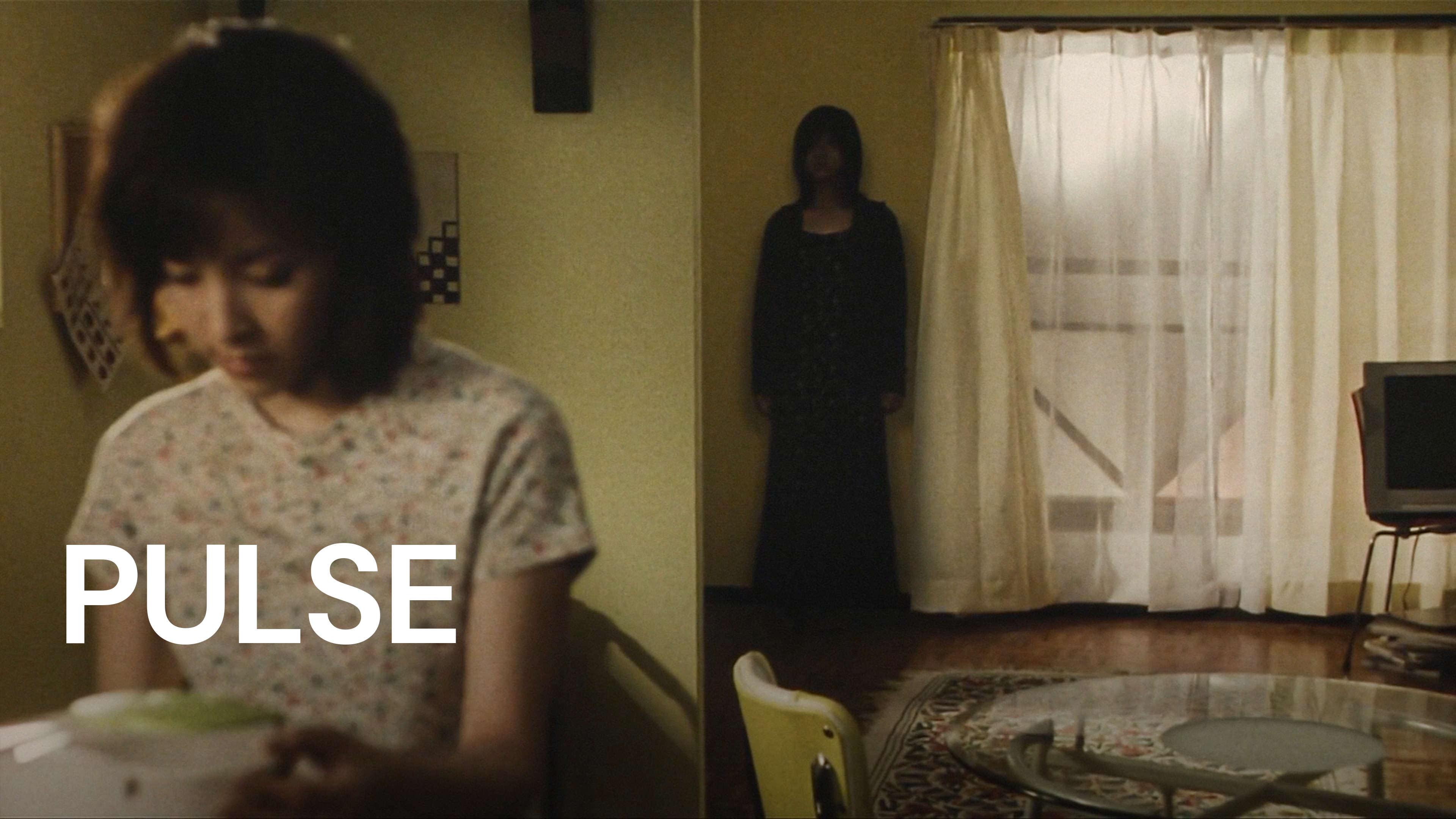
Yesterday I wrote about a film in which fiction swallows reality. Today's film imagines something quieter, and in many ways worse: a world in which the dead have run out of room, and come looking for us through the wires.
Kiyoshi Kurosawa's Pulse (original title Kairo) is often filed alongside Ringu and Ju-On as part of the J-horror wave around the turn of the millennium. That label is accurate but misleading. There are ghosts, yes, and a handful of the most unnerving images ever put on film. But Pulse is less interested in making us jump than in making us feel something colder. It is a film about the soul's terror of being alone, and about a technology that promised to cure that loneliness and instead gave it a permanent address.
The Japanese title is worth pausing on. Kairo means "circuit". A circuit is a closed path through which current flows. It connects everything to everything else, and yet, by definition, it goes nowhere.
The Forbidden Room
The film follows two loosely connected threads. Michi, who works at a small rooftop plant nursery in Tokyo, loses a colleague who has quietly hanged himself in his apartment. Ryosuke, an economics student who barely knows how to use his new computer, finds it connecting by itself to a website that asks whether he would like to meet a ghost. On the screen, grainy webcam images show people sitting alone in dim rooms, motionless, sometimes with plastic bags over their heads.
Gradually both threads lead to the same strange discovery. Across the city, doors are being sealed with red packing tape. Behind these doors, the ghosts are waiting.
The red tape is one of the film's most quietly brilliant symbols. In Japanese religious practice, sacred or dangerous spaces are marked off: the twisted rope of the shimenawa around a shrine, the paper talisman (ofuda) pasted over a doorway to keep spirits in or out. A threshold is never just a door. It is a boundary between orders of being.
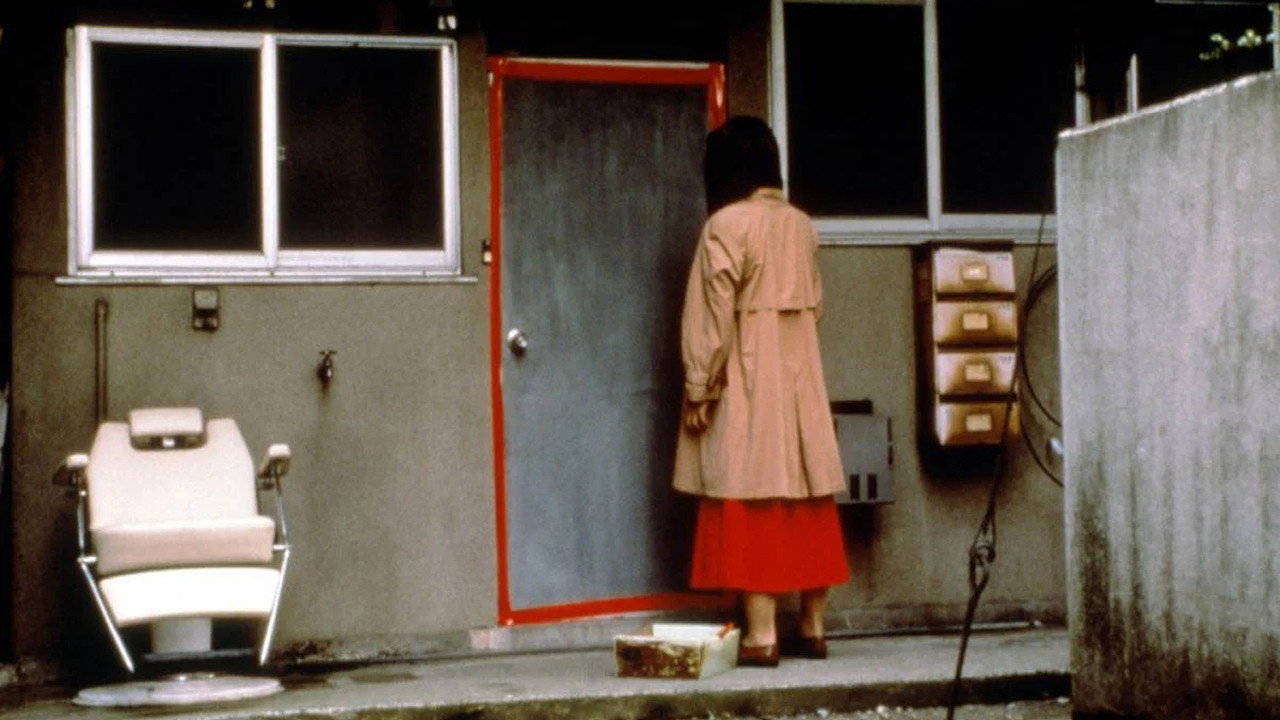
In Pulse, that ancient gesture survives in a debased, modern form. No priest seals these rooms. Someone simply grabbed whatever tape was at hand. The ritual has been forgotten, but the instinct remains: something on the other side must not be let through. And, of course, people keep opening the door anyway. Curiosity, loneliness, a friend who has gone in and not come out. The seal is broken not by malice but by the ordinary longing to see what is there.
What waits inside is not a monster. It is a figure who moves with a slow, wrong, dancer-like hesitation, as if it has forgotten how bodies work. When one ghost finally speaks to a terrified young man, its message is not a threat. It is simply this: death was eternal loneliness.
The Machine as Séance
It is tempting to read Pulse as a simple warning about the internet, a dated piece of millennial technophobia with dial-up modems and chunky monitors. I think that misses what Kurosawa is doing. The film is not really about the internet. It is about the very old human desire to speak with the dead, and the way every new medium has been drawn into that desire.
The history here is striking. Modern Spiritualism was born in 1848, when the Fox sisters in upstate New York claimed to communicate with a spirit through a code of knocks. This happened just as the electric telegraph was spreading across America, and the connection was not lost on anyone. Spiritualists spoke openly of a "spiritual telegraph". Later, photography produced "spirit photographs", radio pioneers listened for voices in the static, and enthusiasts recorded the hiss of empty rooms hoping to catch the dead on tape. Every time humanity has built a new way to send signals across distance, someone has asked whether the signal might also cross the final distance.
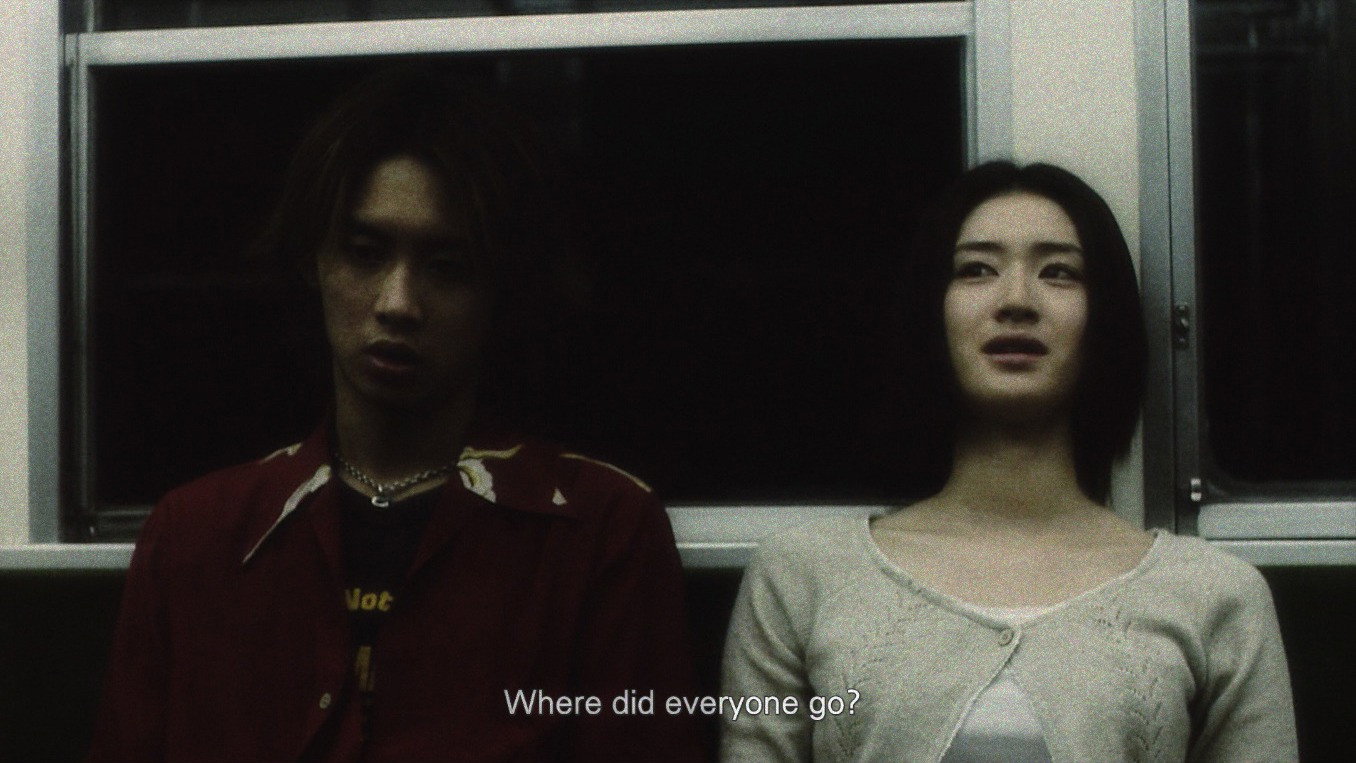
Pulse takes that question seriously, and answers yes.
The film's most chilling idea is put into words by Yoshizaki, a researcher in the university computer lab where Harue works. His theory is that the world of the dead has a finite capacity. It has become full, and the dead are now spilling back into our world, using the network as their passage. The machine has become what the ancient world would have recognised as a nekyia, a rite for calling up the dead, except that no one performed the rite. It simply runs, unattended, all night.
There is an esoteric principle at work here, one found in many traditions: that every opening works in both directions. To call out is also to be heard. Ancient necromancers drew circles and spoke names precisely because they understood that a channel to the dead is not a window but a door. Ryosuke's computer connects by itself. He never asked. He only turned it on.
An Afterlife with No One In It
Most ghost stories assume that the dead want something from us: revenge, justice, a proper burial, the truth to be told. Sadako in Ringu is rage given form. Kurosawa's ghosts want nothing so specific. They simply do not want to be alone, and they cannot help pulling the living into the same condition.
This connects to a very old strand of Japanese religious thought. In folk Buddhism, the dead depend on the living. Ancestors are fed, remembered and spoken to at the household altar and during Obon. A spirit with no one to perform these rites becomes a muenbotoke, literally a Buddha "without ties": a soul with no relationships, wandering, unsettled. The worst fate is not punishment. It is to be unconnected.
Kurosawa makes a terrible irony out of this. His characters live in a city of millions, joined by phone lines and modems, and yet they are already muenbotoke before they die. They eat alone, live alone, stare at screens alone. The ghosts on Ryosuke's monitor are not so different from the living who watch them. Death in Pulse is not a transformation. It is a continuation.
There is a beautiful and unsettling scene in the computer lab, in which a program displays small dots drifting across a screen. When two dots come too close, they die. When they drift too far apart, they are drawn back together. It is offered as a simulation, but it is clearly the film's model of the human soul: we cannot bear to be alone, and we cannot bear to be truly close.
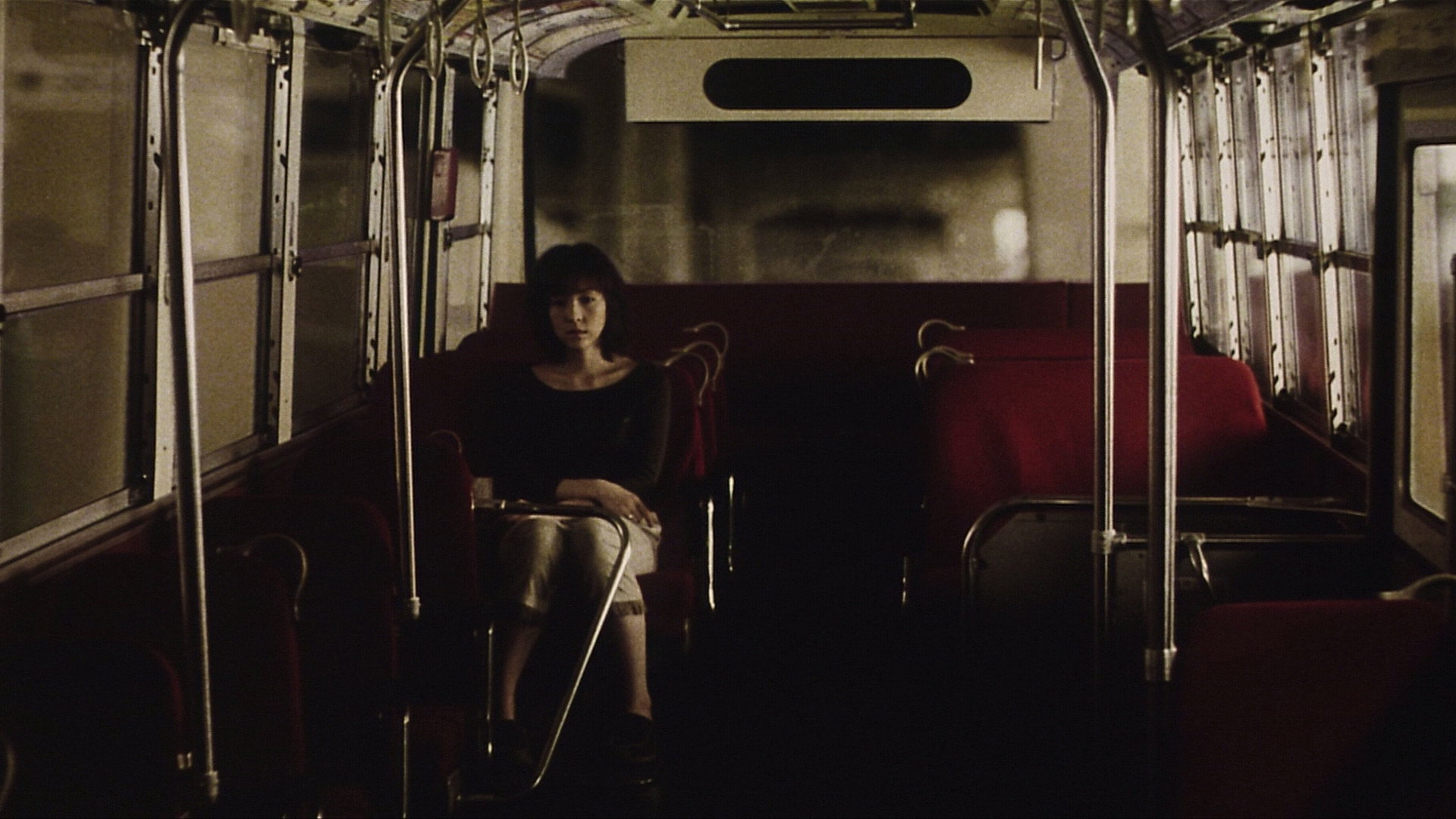
I'm reminded of C. S. Lewis's The Great Divorce, where hell is pictured as a grey, endless town in which the inhabitants keep quarrelling and moving further away from one another, until the nearest neighbours are light years apart. Sartre famously wrote that hell is other people. Lewis, and Kurosawa, suggest the opposite: hell is the final absence of other people, a solitude so complete that it can no longer even be called a choice.
From a Christian perspective, this is precisely the inversion of what the soul was made for. If God is a communion of persons, and human beings are made in that image, then personhood is inherently relational. To be is to be-with. The ghosts of Pulse are what remains when that relational dimension is stripped away. They are not evil, exactly. They are persons who have lost the very thing that made them persons.
Shadows on the Wall
The film's signature image is not a ghost's face. It is a stain. People who have been touched by the other world do not die in the ordinary way. They fade, and then they simply dissolve, leaving behind a dark, human-shaped smudge on the wall, like soot.
For Japanese audiences, the image carries an unavoidable echo of Hiroshima, where the flash of the bomb burned the shadows of people into stone steps and walls. Those shadows are the most haunting of all memorials: a person reduced to the outline of their absence.
But the stain also recalls a much older image. In Plato's allegory of the cave, prisoners chained in the dark mistake shadows on the wall for reality itself. The philosopher's task is to turn around, climb out, and see the light that casts them. Pulse reverses the journey. Its characters are not ascending from shadow into light. They are descending from flesh into shadow, becoming the flat, two-dimensional images they spent their lives staring at.
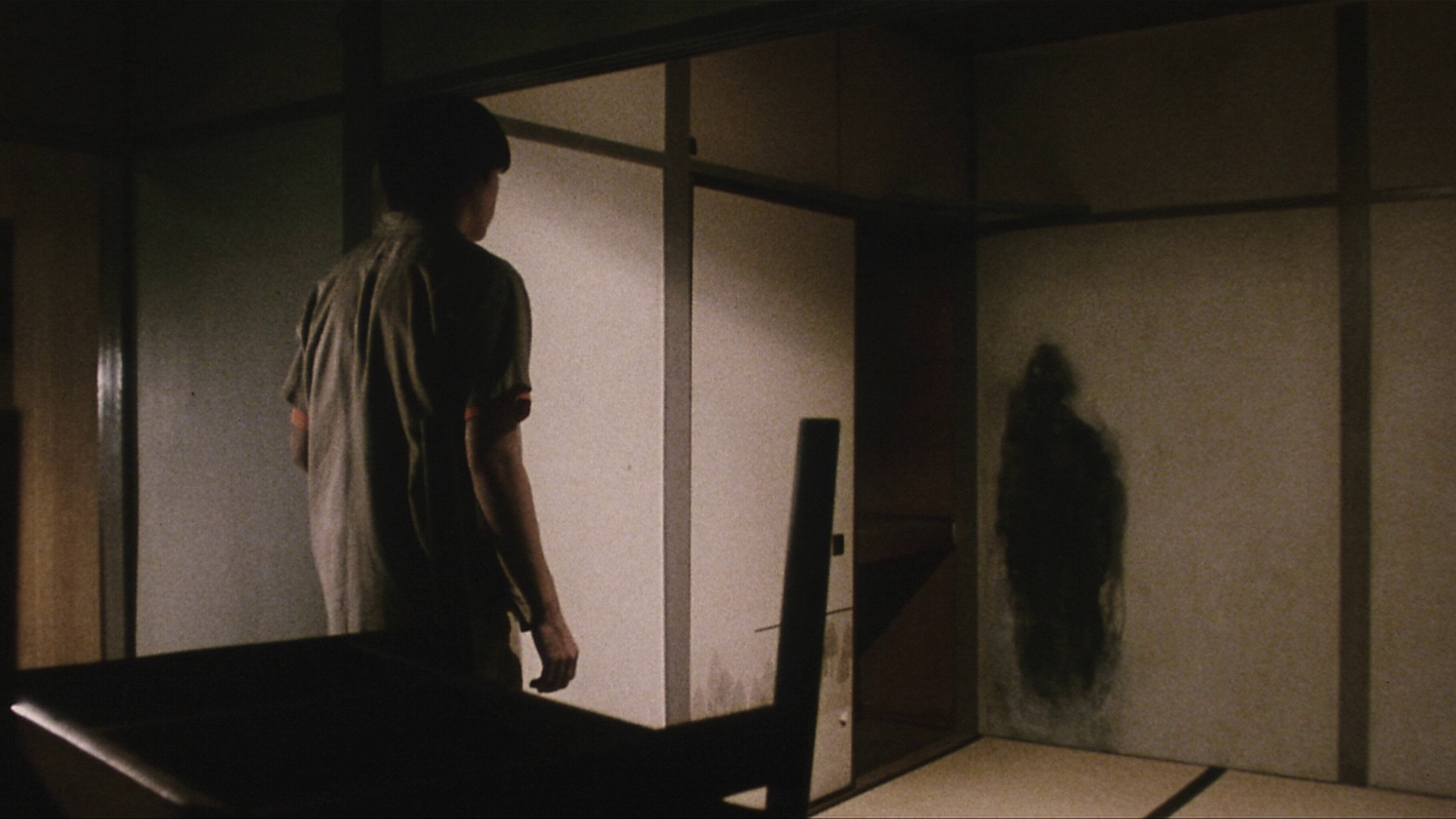
The ancient Greeks and Hebrews both pictured the dead as shades. In Homer's Odyssey, the dead in Hades are flickering, witless shadows who must drink sacrificial blood before they can even speak. In the Hebrew Scriptures, Sheol is a place of silence and dimness, where no one gives praise. These were not images of torment, but of diminishment: existence thinned out until almost nothing is left.
That is exactly what the stains in Pulse are. Not annihilation, but a person reduced to the faintest trace. And the screen, glowing in a dark room, is the cave wall of our age. The question the film leaves us with is uncomfortable: how much of our own life is already lived as a shadow on a wall?
The Last Boat
By the final act, Tokyo is emptying. The streets are deserted, a plane comes down in the background without anyone remarking on it, and the few survivors drift through the city like sleepwalkers. Michi and Ryosuke find each other and try to escape by sea. They board a ship heading south, where rumour says some people are still alive.
The imagery here is almost mythological. The boat crossing dark water is one of the oldest images of passage between worlds: Charon ferrying souls across the Styx, the ship of the dead in countless traditions. And yet Kurosawa leaves it deliberately ambiguous whether the boat carries Michi away from death or into it. Ryosuke fades on board. Michi, in her closing narration, speaks of having found happiness with her last friend in a world of the dead.
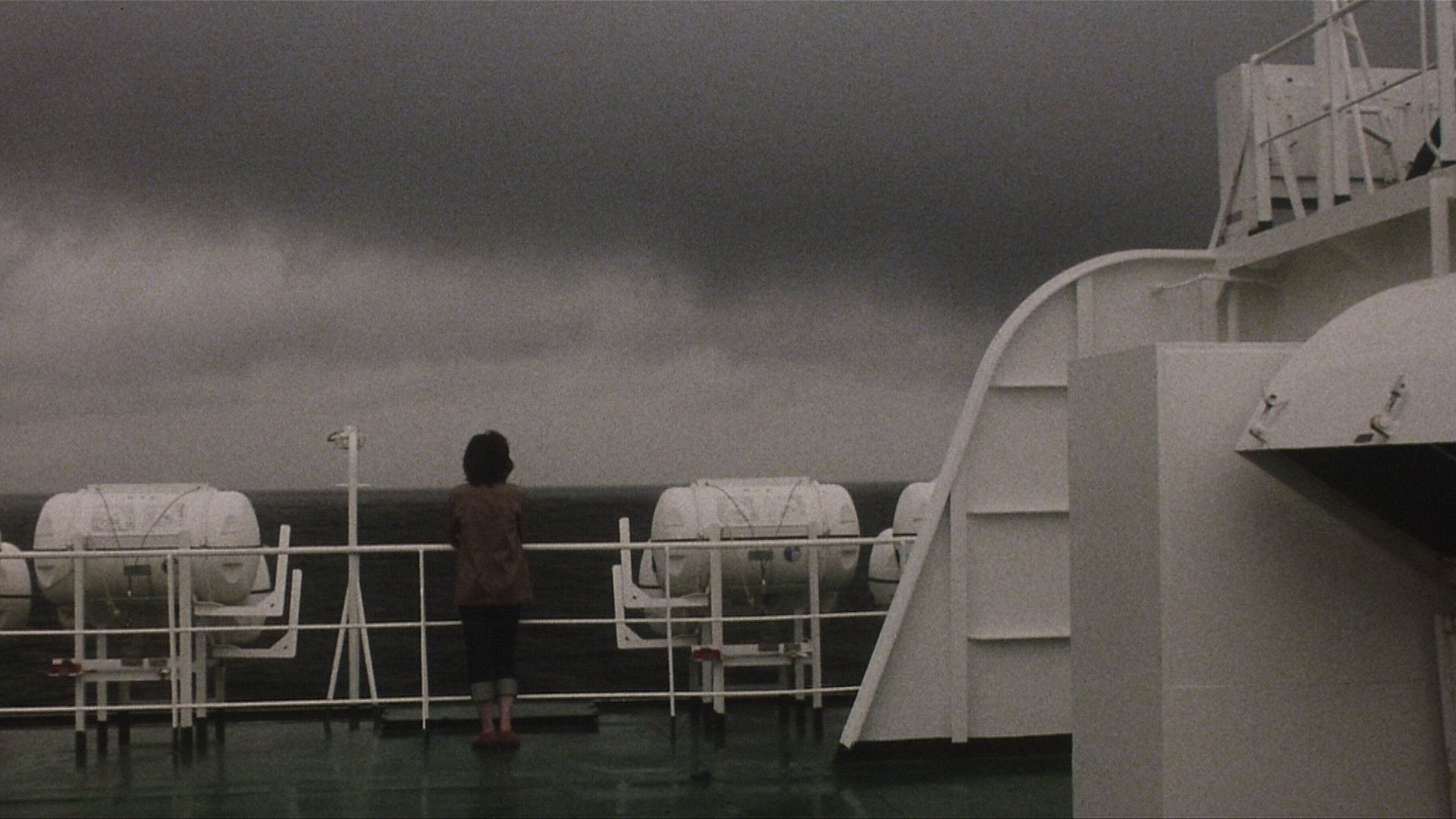
It is one of the most quietly devastating endings I know. There is no victory over the ghosts, no ritual that seals the door again. What remains is a small, fragile act of companionship at the end of the world. Two people, briefly, were not alone. In a film about eternal loneliness, that is the only salvation on offer, and Kurosawa refuses to tell us whether it is enough.
A Few Reservations
Pulse is not an easy film, and it will not suit everyone. The pacing is slow, sometimes deliberately frustrating, and the two storylines take a long time to connect. The characters are sketched rather than developed, which serves the theme but makes it harder to care about them. Some of the internet imagery has aged, and the logic of the ghosts' rules is never fully clear.
Yet I suspect most of this is intentional. The vagueness is part of the dread. Kurosawa is not explaining a mechanism. He is describing a mood that he saw spreading through modern life, and that mood has only deepened in the twenty-five years since.
Final Thoughts
In the Mouth of Madness asked what happens if a story becomes powerful enough to replace reality. Pulse asks something more intimate: what happens if we finally get the connection we longed for, and discover it was never communion at all?
The film was made before smartphones and social media. It seems to have seen them coming anyway. Its ghosts are not demons from outside. They are what we become when we are linked to everyone and known by no one.
The most frightening line in the film is not a scream. It is a ghost's quiet confession that death is simply loneliness without end. And perhaps that is why Pulse stays with me. It suggests that the afterlife we should fear is not fire, but solitude, and that some of us may already be rehearsing for it.
Happy Halloween, and welcome to the second instalment of my Halloween film series. 🎃
Have you seen Pulse? Do you read its ghosts as a warning about technology, or about something far older in the human soul? I'd be interested to hear your thoughts.