Science Without Conscience: Progress or a Threat to Humanity?
in Popular STEMyesterday

Science Without Conscience: Progress or a Threat to Humanity?


Souce


Technology ultimately affects us all, and we all have a say in—and a role to play in deciding—how those technologies will be applied, of course with the guidance of experts. But since we’ll all be affected in the end, we’ll have to make these decisions because we may all end up participating in the following. That’s exactly what it sounds like—it’s a study published on July 27 titled “Researchers Are Building Computers That Run on Brain Organoids, But They’ve Overlooked an Important Ethical Issue,” specifically regarding the people who are donating their biological tissue to create these brain organoids.


They’re like mini-brains that are connected to create these computers; they’re also called brain-organoid-based biocomputers. These aren’t brains per se—they’re clusters of human neurons cultivated in a lab from stem cells or reprogrammed adult cells, often from volunteer donors, but the issue raised by this article is that not all voluntary donors know what will be done with their donations—that is, they donate for one purpose, but their donations end up being used for another.


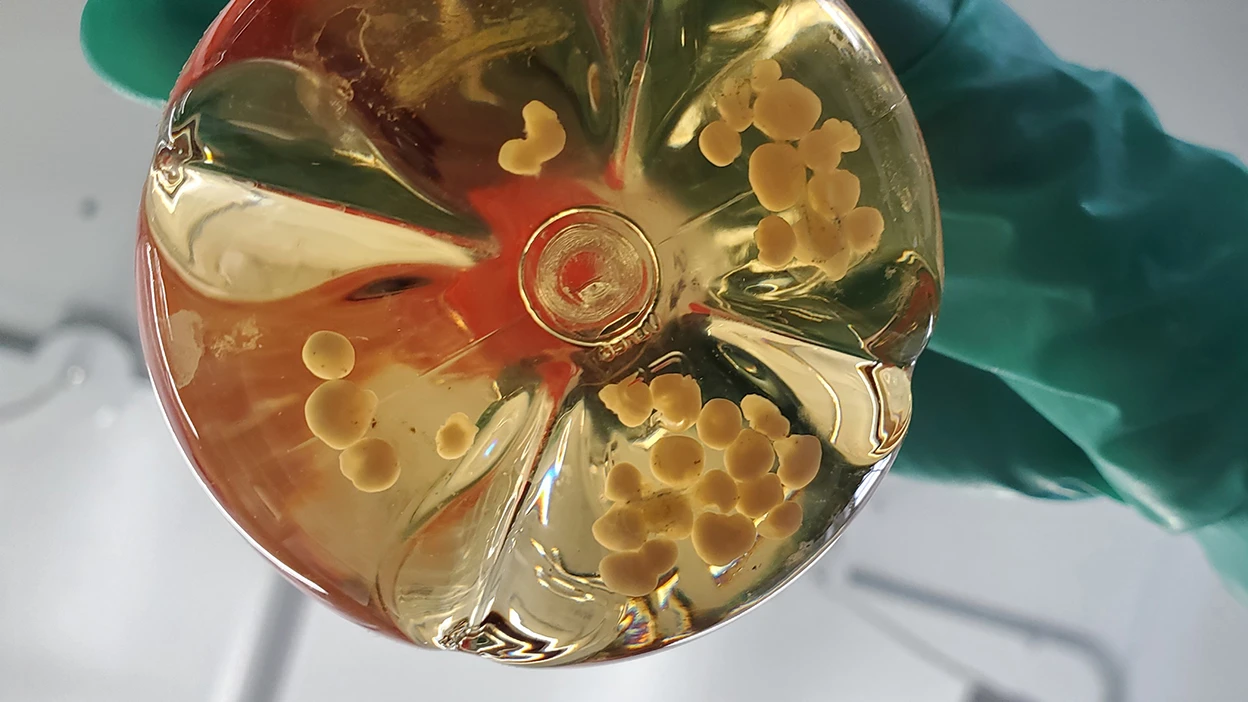
These neurons are spherical in shape—they’re those little balls you see in the images—and can develop structures that mimic regions of the human brain with human neurons. What they do next is stimulate them electrically and record the responses using microelectrodes to perform simple computational tasks, such as pattern recognition and basic predictions—tasks inspired by the functioning of human neural networks, unlike what you’d find in a normal computer like the ones we have at home.


Why are they doing this? Because researchers want to take advantage of two things. First, the way human neurons work, which is different from how the electronic systems of a normal computer work—or even those of quantum computers. The second, and very interesting, aspect is our brain’s energy efficiency: our brain has enormous computing power while consuming a ridiculously small amount of energy and without having to expend huge amounts of energy on cooling systems. Some compare the human brain to a quantum computer that operates at room temperature and needs only an apple as its energy source. In terms of computational potential, any computer outperforms the brain; when it comes to calculating numbers and data, yes, they beat us there. But the real power of the human brain lies elsewhere—something that no artificial intelligence is currently capable of achieving—and that is the ability to control our body, this biological machine, and navigate it within the real world.


Not only interpreting what we see, what we breathe, everything around us, but also even anticipating events—predicting, to some extent, what’s going to happen. I’m talking about things like if I throw a stone into a pond, I can anticipate whether, if I aim at the right angle, it will create ripples or bounce in some way; or if I’m playing soccer, I can anticipate my opponent’s next move.


We also have empathy, which allows us to communicate and anticipate other people’s feelings and understand them—these are things that AI and ordinary computers can’t do, yet these synthetic brains, organoids, or biobrains might eventually be able to. All of this is discussed in the article, but it’s not new; there are experimental examples that are already working. There are emerging commercial platforms; in fact, not long ago, researchers succeeded in cultivating human neurons and teaching them to play games like Ping Pong or Doom—the famous Doom—and they can play and complete levels perhaps even better than I can.


The point is that there is a heated ethical debate; the central issue of the article is the problem of consent, because donors typically give consent for specific biomedical research, but as I mentioned earlier, sometimes the samples they donate end up being used as biological material in other fields, such as computer engineering or commercial applications. For example, a donor who wants to help with cancer treatments may find that their cells end up being used for something entirely different, such as research into biocomputers.


“The most important endeavor is the pursuit of morality in our actions. Our inner balance and even our very existence depend on it.” Albert Einstein


Study Source


The images without reference were created with AI
Thank you for visiting my blog. If you like posts about #science, #planet, #politics, #rights #crypto, #traveling and discovering secrets and beauties of the #universe, feel free to Follow me as these are the topics I write about the most. Have a wonderful day and stay on this great platform :) :)


! The truth will set us free and science is the one that is closest to the truth!