Basic Knowledge In Agriculture #107
In the name of Allah the most beneficial the most merciful.
Aslamalikom Everyone 💕 hopefully you are all fine and well by the grace of Allah. I am also fine by the grace of Allah.I have a challenge for the entire Steemit community: if you want to make your knowledge fertile, subscribe to the SteemAgro community and help your knowledge grow and flourish. Let's go to the topic:
What is Regenerative Agriculture?
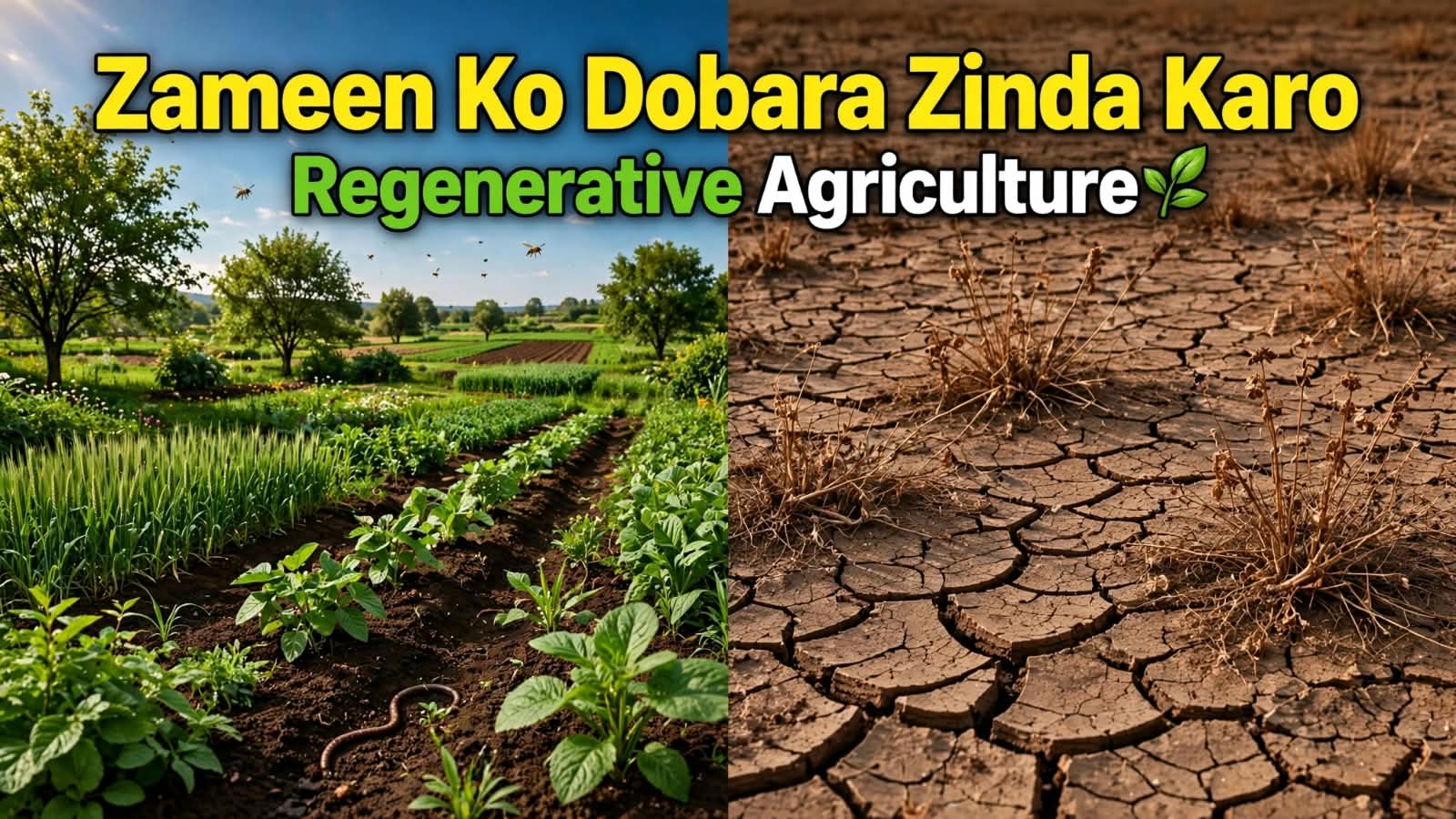
Regenerative Agriculture means "farming that restores the land to life."
In conventional farming, we primarily take from the land—extracting nutrients, water, and crops—often leaving the soil depleted.
In contrast, Regenerative Agriculture focuses on giving back to the land. The goal is to make the soil more fertile, healthier, and more vibrant than it was before.
Simply put, it is a method of farming that improves soil health, conserves water, and captures carbon from the atmosphere, returning it to the soil.
This is not a new concept; our ancestors practiced farming in this very way. Science has simply given it a new name.
Core Principles:
1. Minimizing Soil Disturbance:
Frequent tilling (plowing) kills the beneficial organisms and microbes that live in the soil. Therefore, this approach involves minimal tilling.
2. Keeping the Soil Covered:
The soil should never be left bare; it should always be covered by crops—such as clover (berseem), mustard, or wheat—to protect it from the damaging effects of sun, wind, and rain.
3. Maintaining Living Roots:
Keeping plant roots alive in the soil ensures a continuous supply of nutrients, preventing the soil from becoming "dead."
4. Crop Diversification:
Avoid growing the same crop repeatedly. Rotating crops each season prevents the depletion of soil vitality and helps reduce the incidence of diseases.
5. Integrating Livestock:
Allowing animals—such as cows, goats, and chickens—to graze on the land. Their manure acts as a natural fertilizer, further enhancing the fertility of the soil.
6. Farming tailored to the region:
The methods used by a farmer in Pakistan cannot be the same as those used by a farmer in America, because the soil, climate, and water conditions vary from place to place.
What practices are involved?
- Planting cover crops: Growing specific crops to protect the soil.
- Crop rotation: Growing a different crop each season.
- Creating natural fertilizer: Producing compost from animal manure and plant waste.
- Planting trees: Planting trees around the farmland to help retain water and provide shade.
- Rotational grazing: Moving livestock between different grazing areas to allow the grass time to regrow.
- Avoiding chemical sprays: Controlling pests using natural methods.
What are the benefits?
1. For the soil: The soil becomes loose, dark, and nutrient-rich. It gains a greater capacity to retain water and nutrients.
2. For the climate: Healthy soil captures carbon from the atmosphere and stores it. This helps mitigate global warming and climate change.
3. For the farmer: There is less need for expensive chemical fertilizers, and water consumption is reduced. Crops become more resilient against droughts and floods.
*4. For Food: Food grown in such soil is more nutritious, richer in vitamins, and healthier.
5. For the Environment: Birds, butterflies, and beneficial insects return to the farmland. Water also remains clean, as it is free from chemical contamination.
What are the challenges?
- Results are not immediate; it can take 3 to 5 years for the land to recover.
- Farmers require new training.
- Yields may be slightly lower initially, but they increase over time.
- There is currently no single, universally recognized certification for this practice.
"Conclusion"
Regenerative Agriculture is more than just a farming method; it is an expression of love for the land.