Steemit Challenge Season 34 - Week 6 Question 2 : Let’s Talk Business
I have selected question-2 as I remember every detail of my only business that I started based on my experience but I had to give up. Now I answer all your questions:
Have you ever wanted to set up your own business?
During mid 1990s I established my own business in the cement manufacturing sector by setting up a mini cement plant. I already knew all about cement plant designing, manufacturing, machinery, and the complete production process including marketing with good dealers network. This technical knowledge gave me the idea to set up my own mini cement plant of 50tpd capacity. Incidentally 50 tons means 1000 bags per day of 50 kg each.
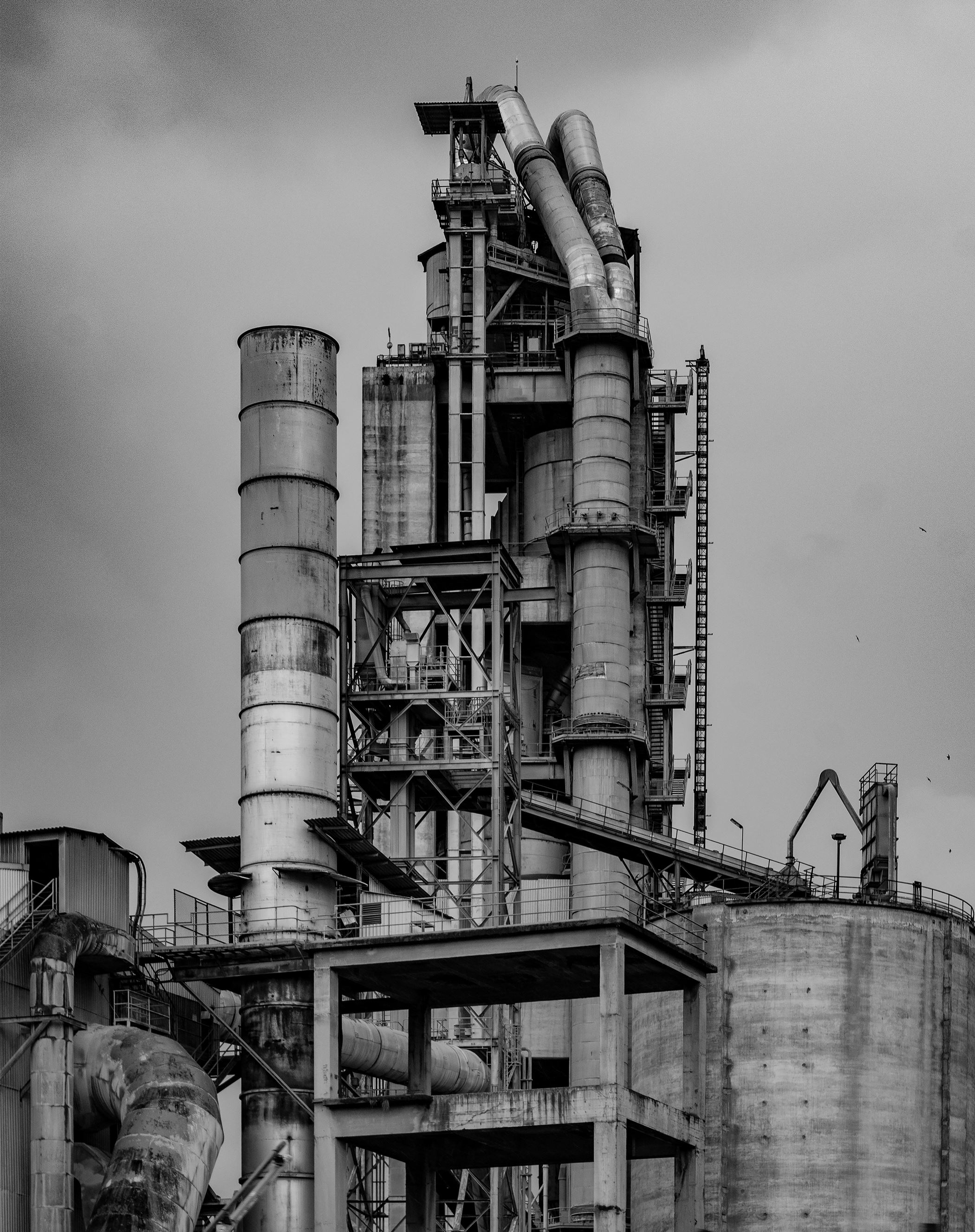
By that time there were only big cement plants and the growing demand for cement in construction and infrastructure development made cement a rare commodity which was hard to get in open market so my idea was to enter into production with lower initial investment, and the opportunity to serve nearby markets efficiently. Before starting the project, I knew all about raw materials, machinery, land, transportation, manpower, electricity, and markets.
At that time, our government was providing small-scale industries in this sector several incentives to encourage industrial development and investment. These included subsidies for buying a generator as standby power, discounted electricity, excise tax holiday, and exemptions or concessions on certain government levies and most of all land on cheaper price in industrial areas where pollution based industries were allowed to setup.
These incentives were important factors in my decision to enter the cement manufacturing plant because I was in the plant manufacturing industry as a project manager and at that point my co-brother was ready to be a partner on equal terms.
What sort of business would it be? Would it have physical premises or would you work from home or would it all be online?
It was a project that needed a grinding plant, an industrial plot about 100x100 meters in pollution NOC area away from public areas. The government was providing such plots on outright sale or on long term lease at subsidized rates.
The main reason behind choosing a mini cement plant was that I already knew all about cement plants manufacturing being in such projects, so I could get it on lesser than market price besides I knew everything about how to get clearance from over 25 government departments before one could start a plant in this sector.
I am giving you a list of some of the departments and if you know about the red tapes in our work culture it was not easy to get them. To be frank establishing a plant was not a problem for me but getting those NOCs took me almost 11 months even when I was ready to pay their official fees plus you know what it takes to get them.
- Industrial land on lease
- Pollution certificate
- Clearance from small scale industry department
- License from excise department
- Registration in trade tax department.
- ISI/ISO certificate
- License from labor department
- Trade mark
- Bank loans which was must to save taxes, etc etc.
- The most tiresome job was getting the project report approved and arrangement of collateral securities because third parties were involved.
Try making a basic business plan to test out the feasibility of the business - start up costs, competitor analysis, price setting, operating costs, cash flow forecasts etc.
You know the cement is manufactured basically by using limestone and few other minerals but mini cement plants could bye the raw material in the form of clinker from bigger cement plants which have their own clinker manufacturing by heating grounded mix of limestone and clay to a temperature of 1,400°C to 1,500°C in a rotary kiln so the materials chemically fused and converted into small size nodules. The bigger plants manufacture in the range of thousands of tonnes daily so they sold some of their clinker to smaller units with no kiln.
The mini cement plants used to buy that readymade clinker and grinded that to sell it in the surrounding markets. I knew the market inside out as I was already helping some of them with installation and marketing their product once they were ready.
- In middle 1990s the basic cost of a mini cement plant of 50tpd was around INR 1 million/US$10000/Steem 225000
- The price of land on lease INR 120000/US$1200/Steem 6000
- We bought a generator for power backup at INR 30000/US$300/Steem6000
- Shades for plant, clinker and material storage and offices
- Accessories
Material for making 1000 bags cement per day:
- Clinker 40 tones
- Silica/additive 08 tonnes
- Gypsum 02 tonnes
- Bags 1000
- Labor - 15-20 people on contract basis for unloading and loading ready material.
- Electricity bill
- Diesel (In case power failure)
- 3 clerical staff
- 2 Maintenance staff
We bought clinker from bigger manufacturing companies, paid labor for filing the grinder and packing the bags and then loading the bags in the trucks on per bag basis. There were labor contractors that arranged and managed all this in two shifts.
At that time the market price of a cement bag was about INR 120-130/$1.3-1.4/Steem 25 apx compared to today's price of INR500/$5.3/Steem100.
We saved about INR 10-12/Steem2-2.5 per bag
So all this prompted me to establish a business and take the advantage of skilled and semi-skilled workers, technicians, transporters, suppliers, and administrative staff I knew all about. As I said the government was offering so many facilities for first five years so the competition was tough but since I knew the market inside out and maintained the quality and profit reasonable we were always overbooked.
If you already have your own business, tell us about it
We don't have that business anymore as it was closed in 1998 even before the government subsidies ended.
With my technical knowledge, careful planning, and the support of government incentives, I was able to establish a mini cement plant and I thought it would be successful business opportunity for a long time.
I wanted to ensure that the plant operated efficiently, maintained consistent product quality, and followed all environmental and safety regulations. But that was not to be. I was in plant manufacturing and liaison for other manufacturers of cement industry as well for the last few years so my co-brother was looking after manufacturing and I was managing the market and payments.
He then started doing something which was against the business ethics. He started mixing extra silica to make extra profit by making a few extra bags so I started getting complaints even if they were minor. I checked with the contractor in charge of manufacturing the cement and what he told me was shocking. He was asked to add 5% extra silica for extra profit. There were couple of other irregularities like not filing excise and tax returns in time, despite my repeated warnings so I ended my partnership and later I heard that business suffered financial loses as well as statuary penalties.
How long have you been running the business? How do you market your business? What plans do you have to grow your business?
As far as I was concerned, I was involved for the first 11 months during installation and completing the formalities of the plant, loans, registrations and commissioning and then 7 more months after commencing the production, but I ended my partnership and came out of that business and back to corporate world. I never started any other business of my own but I consider all the marketing management jobs as my own business to whom I gave my all.
The business was finally closed within one year once I left. I believe if my partner had run the business ethically and followed all the rules, it would make us good money but thankfully I was able to get my investment back.
Note: This was almost 40 years ago but now the prices have gone up by 6-10X
Saludos, amigo. Un verdadero gusto leer su experiencia en el mundo empresarial, montar esta planta requiere de grandes esfuerzos y conocimientos. Que pena que su socio tomó estás medidas poco éticas solo para incrementar el número en las ganancias de forma "fácil" que al final terminó dando muchas más pérdidas que ganancias. Lo mejor que pudo hacer fue separarse del negocio en cuanto supo de esto. Saludos y éxito!
#s34engagement
0.00 SBD,
0.02 STEEM,
0.02 SP
Thanks mate! I have never done anything against the ethics through out my life weather in career or in personal matters and that I consider my secret of success. I could have let him make more profit and share it but that was cheating with my valued customers as well as from myself. I didn't want to get caught which was bound to happen and in a product like cement which could harm life of other people. Thanks for your wise views.
#s34engagement
0.00 SBD,
0.02 STEEM,
0.02 SP
https://x.com/Dev_11au/status/2104825505656811662?s=20
High-Yield Curation by @steem-seven
Your content has been supported!
Maximize your passive income!
Delegate your SP to us and earn high rewards
Click here to see our Tiered Reward System
We are the hope!
Greetings, friend @dove11
There is a maxim of biblical wisdom stating that the end of a matter is better than its beginning; however, that was not the case for you. As you rightly point out, your partner's lack of ethics made it impossible to continue with the cement factory a project into which you had invested your effort, wisdom, and capital.
A partnership that could have endured over time fell apart completely. What I value about your story is the moral stance you took; it demonstrates the solid foundation needed to sustain a business in the market for the long haul: if ethics fail, everything collapses.
Wishing you great success.
#s34engagement
That's right my friend, I have never kept my personal interest in anything that I started in my life. We all start something to earn money but I trust in honest which is the basic of a long lasting business model. If you have satisfied customers they tell it to 5 others but if you have one unsatisfied one they tell it to 10 others. I felt it was better to quit rather stay in something that was against my personal rules. Thanks for your wise views.
#s34engagement
Greetings, friend @dove11
This is the key to success in any business arena: honesty. It is the foundation of a lasting business model that keeps human connections and all aspects of life thriving.
I wish you great success.
#s34engagement
Wow, this was such an interesting business journey to read about. I was especially impressed by how much technical knowledge and preparation went into setting up the mini cement plant. Getting so many approvals and NOCs sounds like it must have been a huge challenge, even with your experience in the industry.What stood out to me most was your decision to leave the business when you discovered that your partner was compromising the quality of the cement for extra profit. It shows how important honesty and ethics are when running a business. Money can be earned again, but maintaining trust and quality is much more valuable in the long run.
I also found the old prices and investment figures fascinating. It’s amazing to compare them with today's costs and see how much things have changed over the decades. Thank you for sharing such a detailed story,it was like getting a glimpse into the business world of the 1990s.
#s34engagement..
You see o businnes will flourish without ethics and that's not limited to busiess but one must apply them in all walks of life. For instance as a project manaage durig my tenure with Indian army's steel girder bridge building I could have earned millions but I never did against my own set rules.
As far rates of cement in 90s, if I tell you dring our first house building in 70s I as a boy used to go and carry one bag at a time on my bkes carrier because the suppy department at time never gave us permit of 2-5 bags at a time. The cost of cement bag of 50 kg was INR 6 or 1 Steem then. Cheers.