The Raptors of August in Southeastern Pennsylvania: Vultures on the Rise, Eagles and Hawks Returning, and Feather Identification
TL;DR: A round-up of raptor photography and observations from southeastern Pennsylvania in the month of August. Photos and observations include Bald Eagles, Black Vultures, Red-shouldered Hawks, Red-tailed Hawks, and Turkey Vultures. Highlights include determining the age of a Turkey Vulture (juvenile vs. adult); tools for feather identification; and my first Bald Eagle sighting since May.
Welcome to the last post covering my wildlife photography and observations in August.
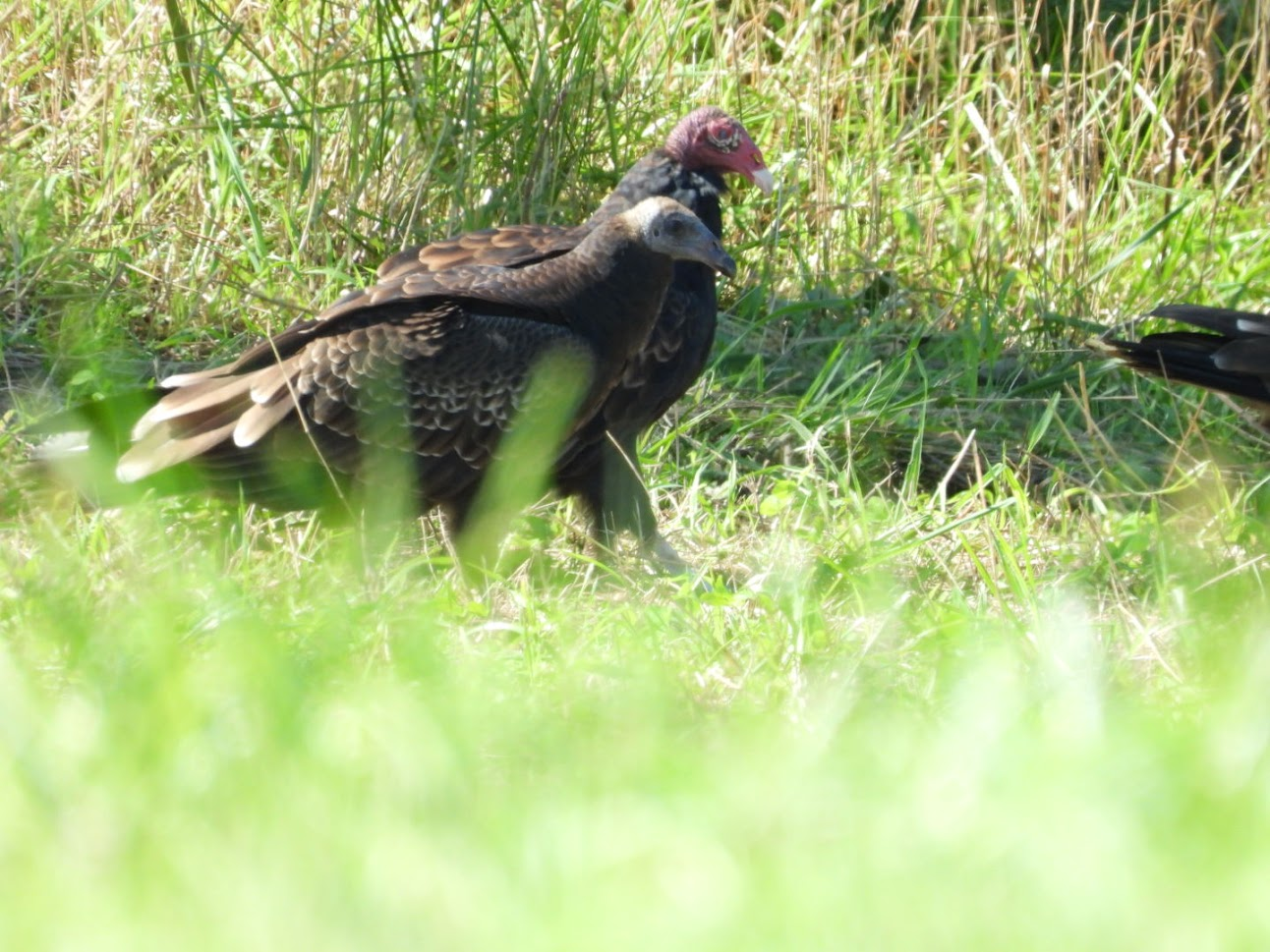
Following the practice from previous months, this post covers August's raptor photos and observations. The raptor of the month was definitely the Turkey Vulture, but I also managed to photograph a Bald Eagle, Black Vultures, Red-shouldered Hawks, and Red-tailed Hawks. Highlights from this month are:
- The first Bald Eagle appearance since mid-May
- Learning to distinguish between adult and juvenile Turkey Vultures
- Scratching the surface of feather identification, including a couple of useful websites.
All of the birds in today's post are listed as Least Concern conservation status, and Pennsylvania classifies the Bald Eagle as "apparently secure" in the state. Conservation status notwithstanding, it still feels exciting to me when I see a Bald Eagle in the wild after their 20th century close encounter with extinction.
In the first section, we have the summary table of iNaturalist observations covering these 5 species and 13 observations. In the sections that follow, each species is discussed and photographs are displayed. Since I don't report every sighting to iNaturalist, some of the dates of the photographs and the dates of the submitted observations may differ.
| Common Name | All Observations | First Observed | August Count | Dates |
|---|---|---|---|---|
| Red-tailed Hawk | 36 | 03/19/26 | 4 | 08/02/26, 08/06/26, 08/18/26, 08/30/26 |
| Turkey Vulture | 38 | 03/24/26 | 4 | 08/06/26, 08/09/26, 08/18/26, 08/25/26 |
| Black Vulture | 11 | 03/17/26 | 2 | 08/06/26, 08/26/26 |
| Red-shouldered Hawk | 3 | 05/30/26 | 2 | 08/21/26, 08/25/26 |
| Bald Eagle | 5 | 03/26/26 | 1 | 08/30/26 |
Most of these observations and photographs were taken from my backyard in Chester County, PA. Others (noted below) were made at the Stroud Preserve in West Chester.
Red-tailed Hawk
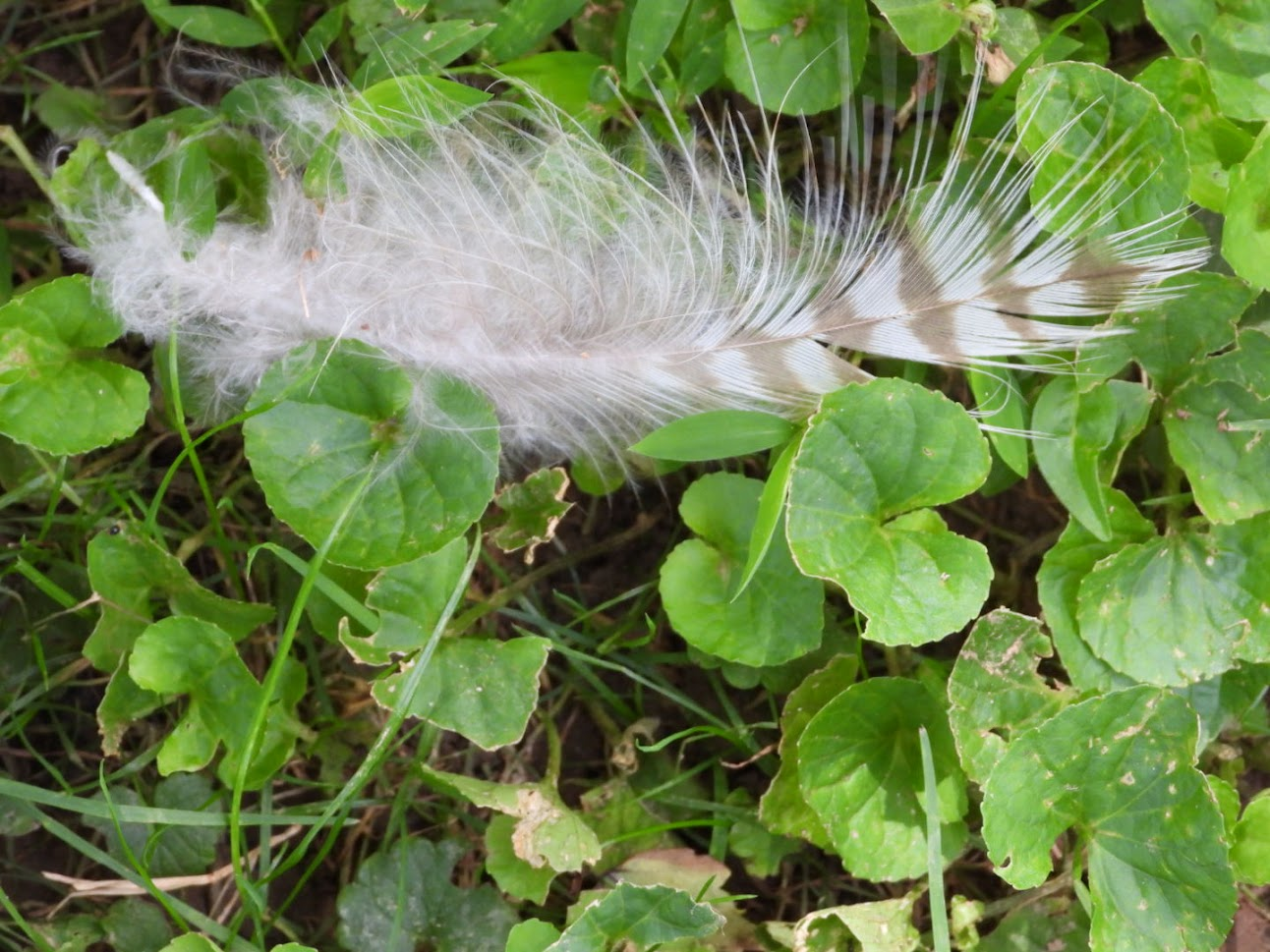
The story of the August 2nd Red-tailed Hawk feather was already posted in my challenge for Steemit to help with identification of a second feather (from June). The AIs told me it was a Great Horned Owl feather, so I posted it on iNaturalist as an owl feather. However, the iNaturalist identifiers corrected that ID to Red-tailed Hawk. Side note: in recent days, I also learned of two good websites for feather identification of all species -
The Feather Atlas even lets you filter by feather characteristics such as length, colors, and patterns. This turns out to be very helpful.
Red-tailed Hawks live year-round in Pennsylvania and most of the continental United States, with the species extending north into Canada and south into Central America during the respective migration seasons. They are one of just two raptor species that I have observed every month since I started this initiative in March.
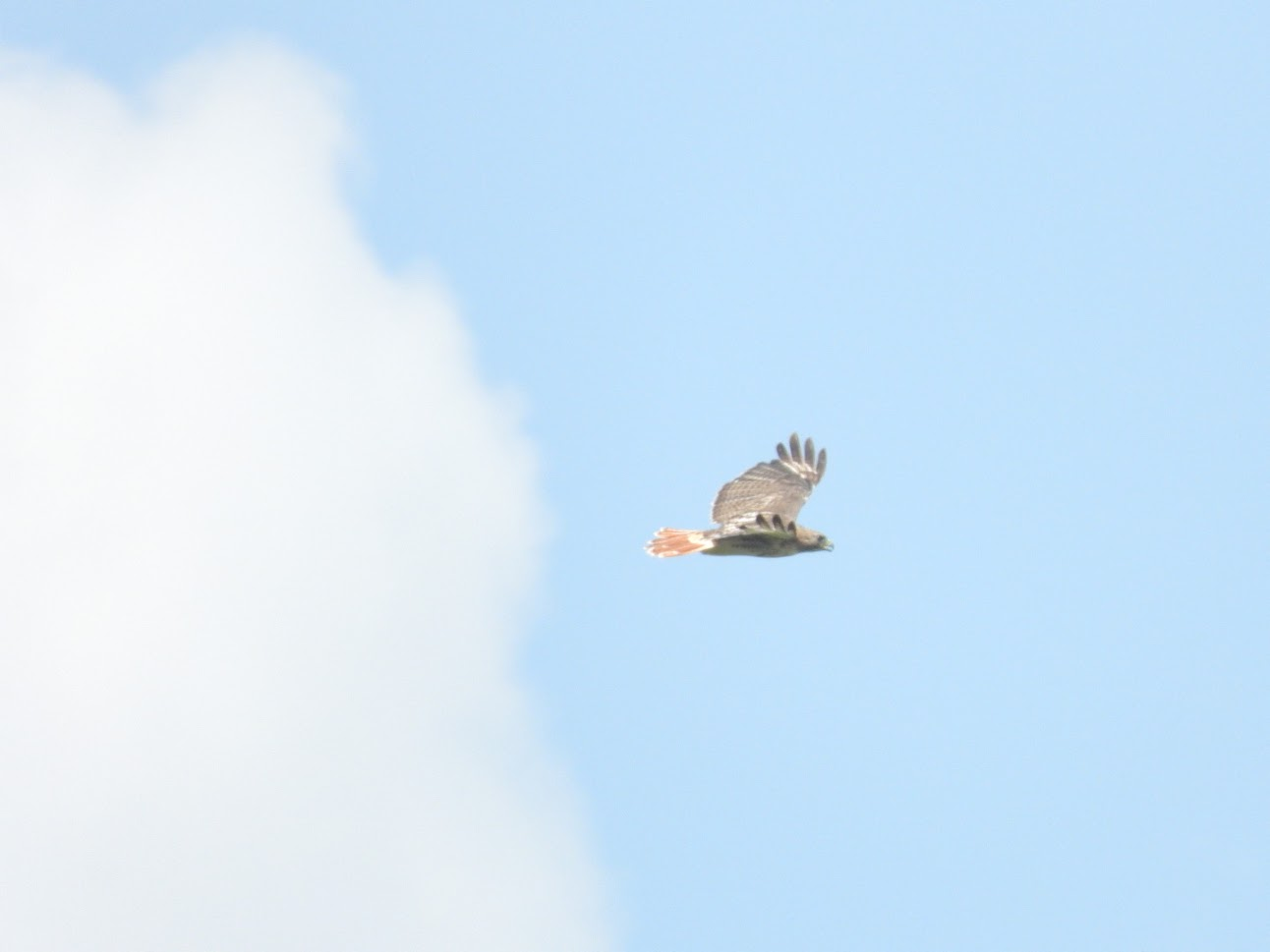
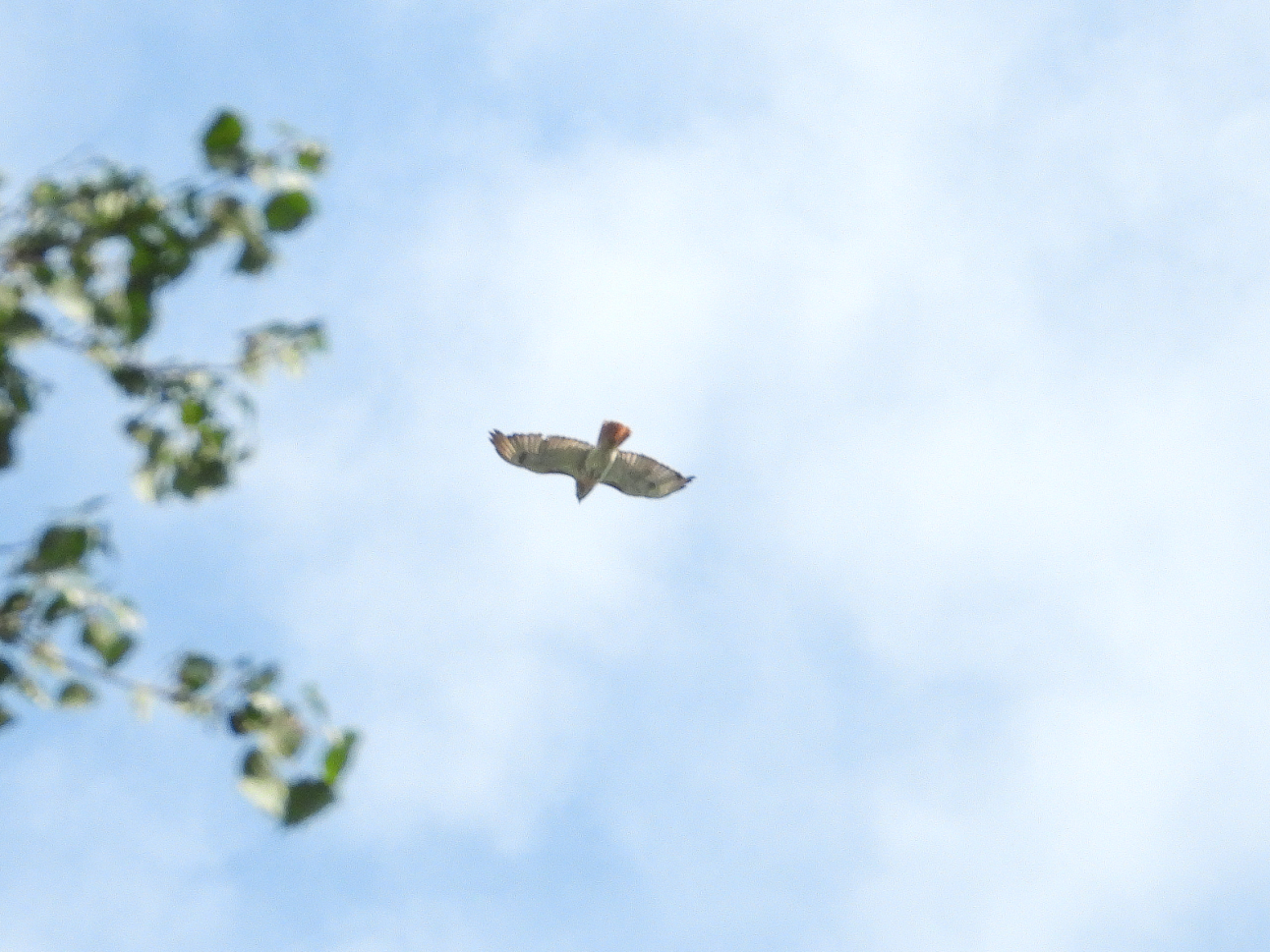
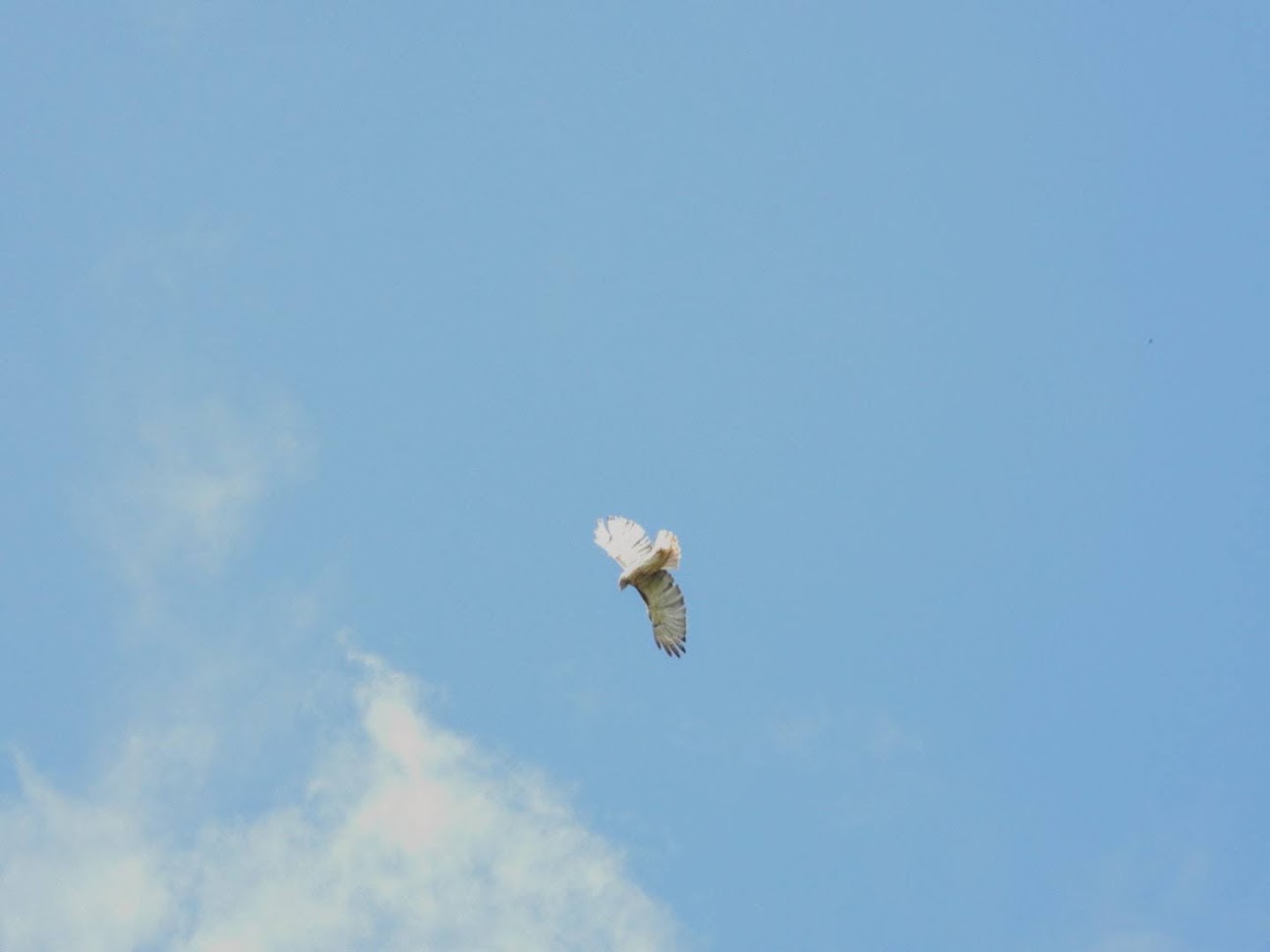
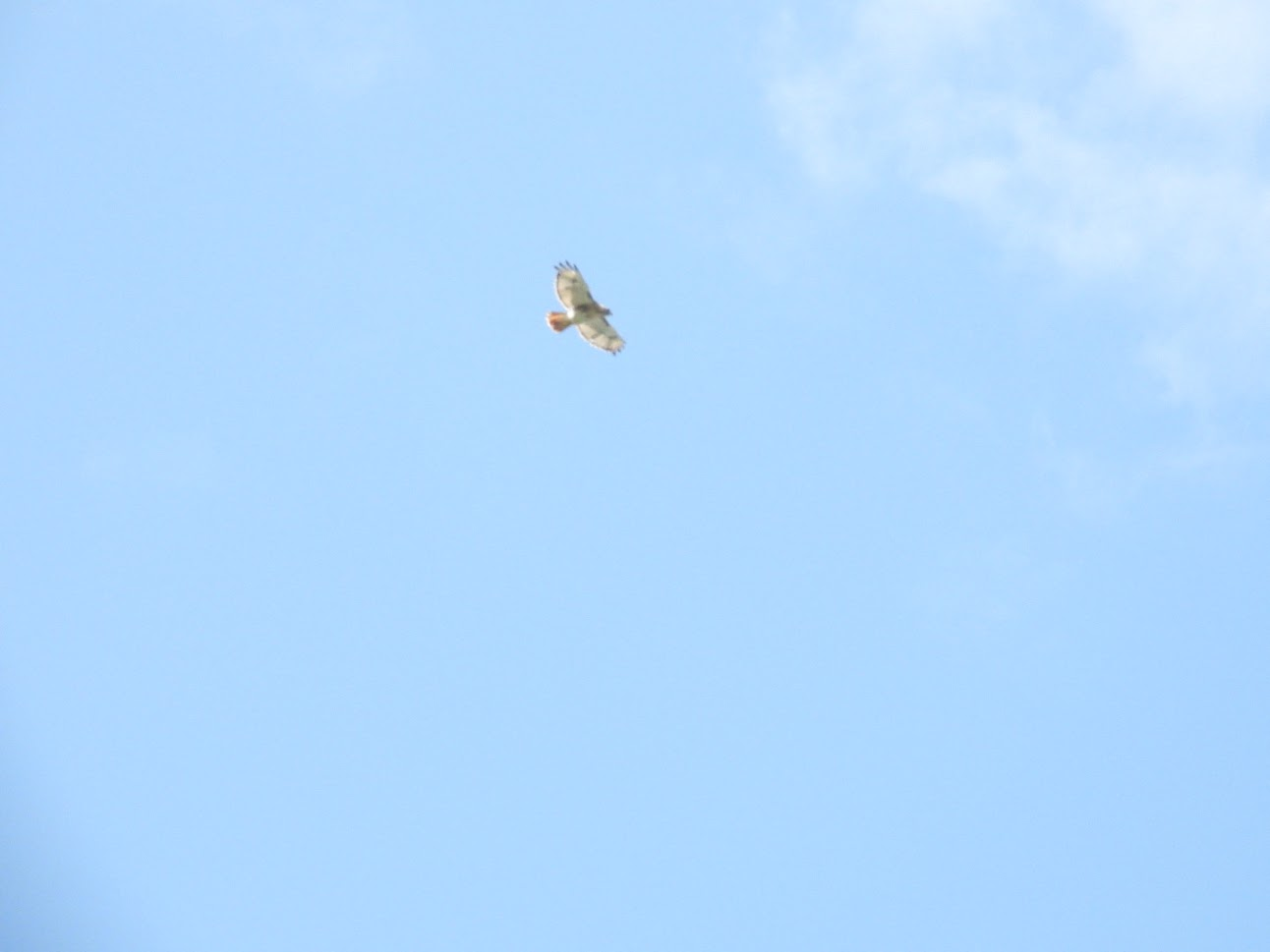
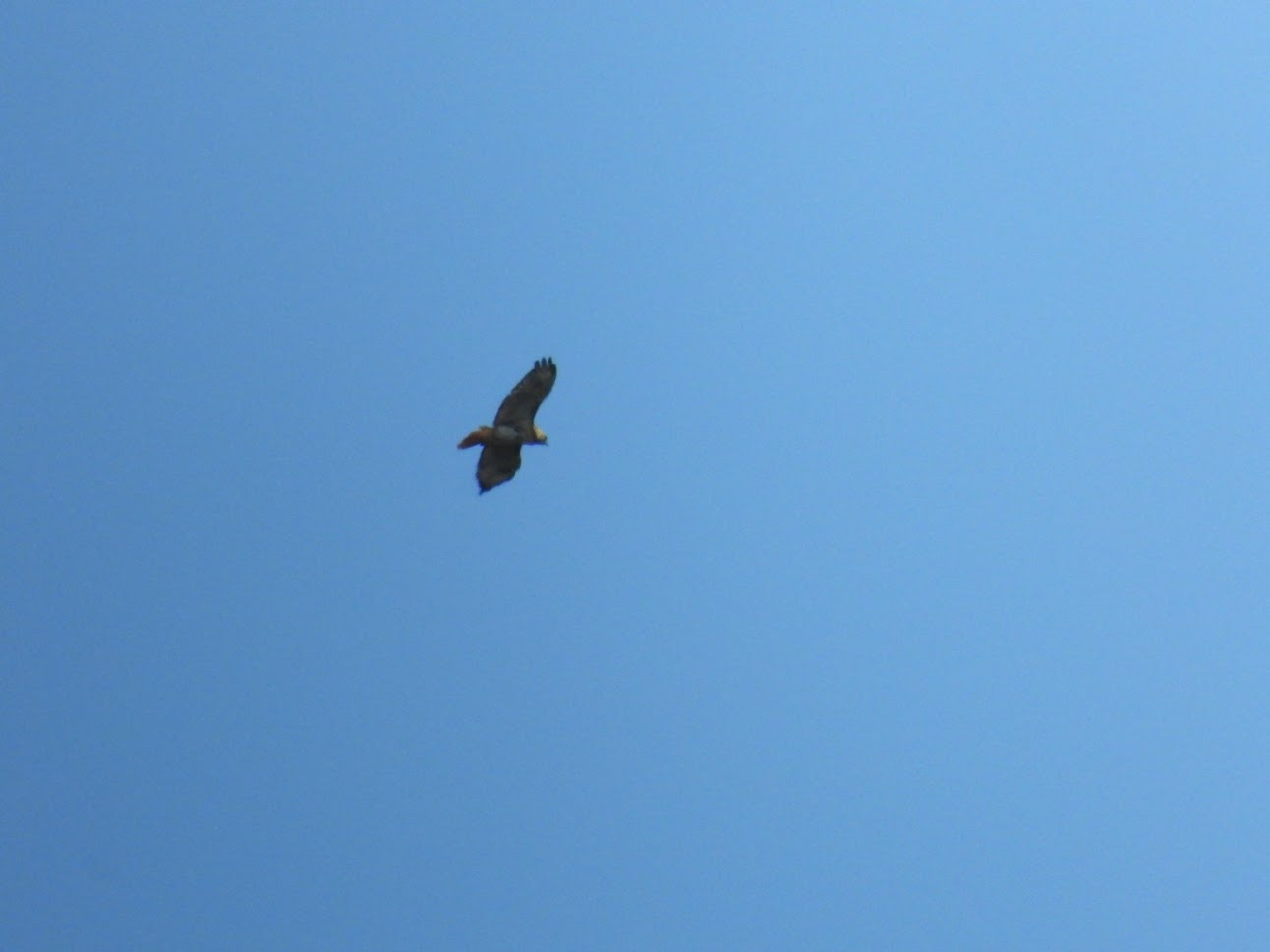
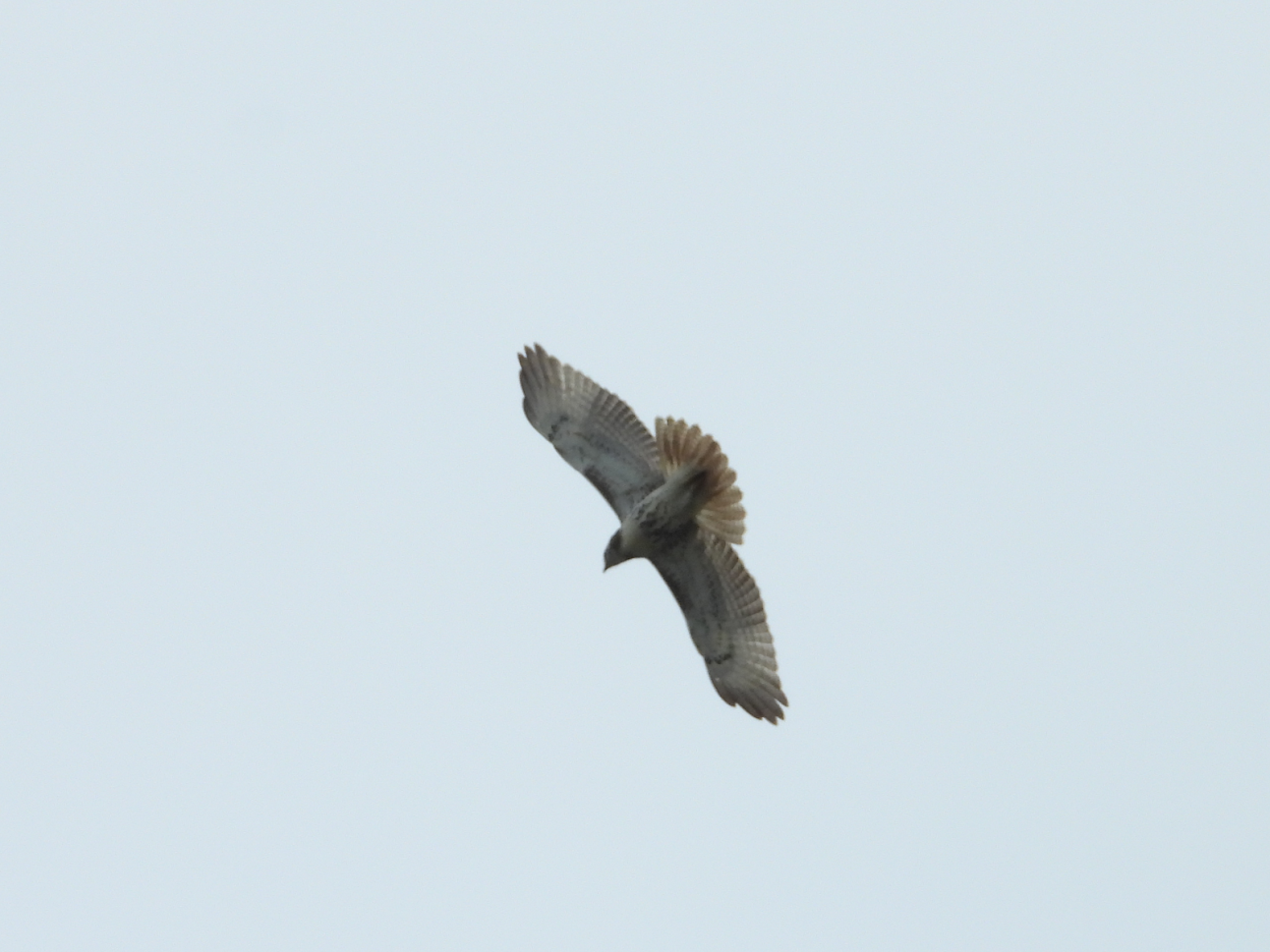
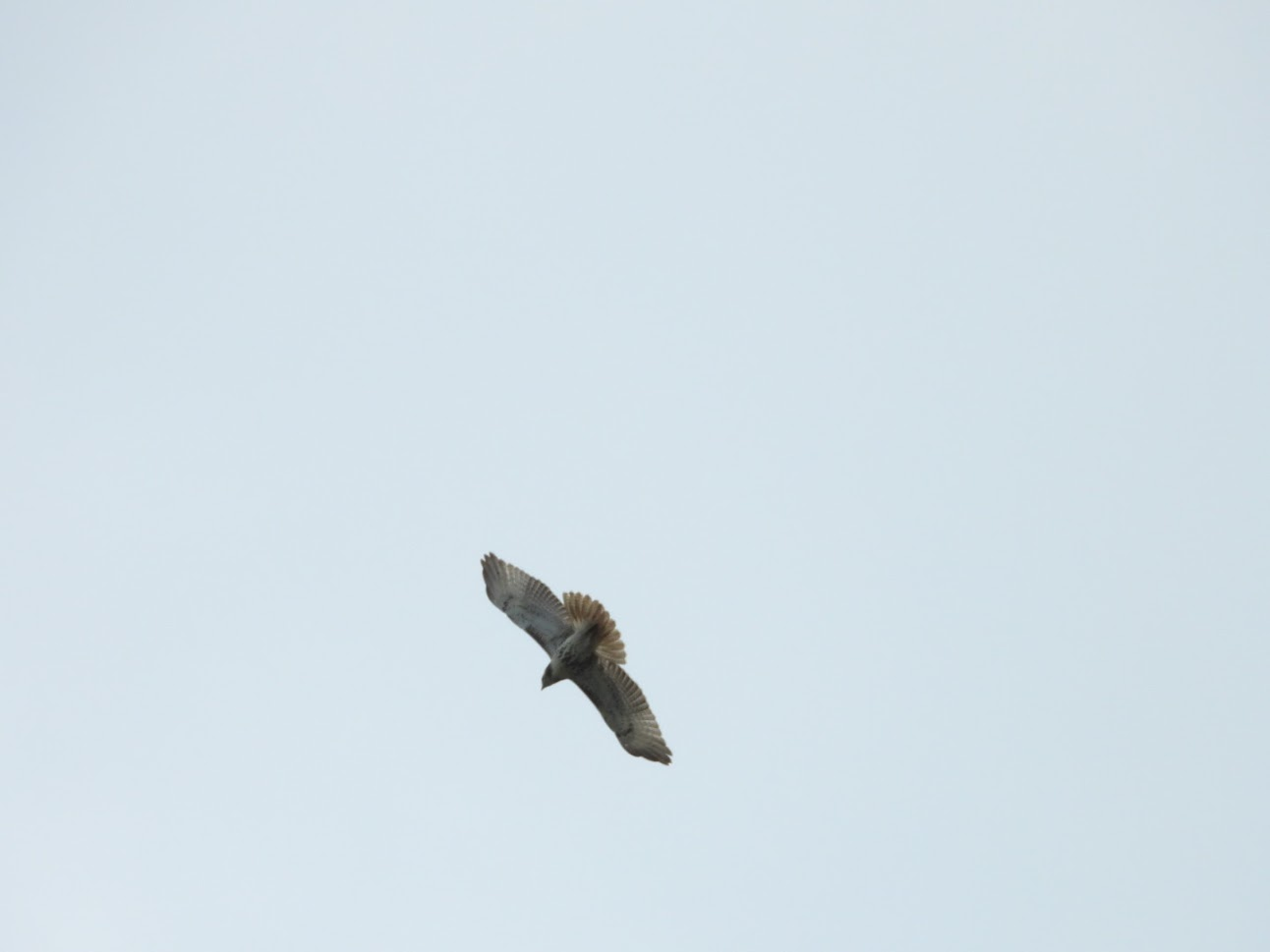
Quality-wise, this month's Red-tailed Hawk photos were all disappointing. The birds were either too far away or they came and went too quickly for me to optimize the zoom, shutter speed, and focus.
The August 30th encounter was noteworthy because I saw the hawk at the same time as a juvenile Bald Eagle. I assume the hawk was one of our local residents and it was giving the eagle some "encouragement" to move on to a different location.
The hawk on August 6th was seen flying in a group with Black Vultures and Turkey Vultures. On August 18th, the hawks in the photos were seen with some Turkey Vultures. There were at least two Red-tailed Hawks on the 18th, but I don't know if these pictures show one of them or both.
| August 2 | August 6 |
 |  |
| ƒ/4.5, 1/125, ISO400, 53.9mm (300mm equiv, 12.5X) | ƒ/7.1, 1/1250, ISO640, 395mm (2199mm equiv, 91.6X) |
| August 18 | August 18 |
 |  |
| ƒ/5, 1/1600, ISO560, 71.9mm (400mm equiv, 16.7X). Cropped in LibreOffice | ƒ/5, 1/1600, ISO800, 71.9mm (400mm equiv, 16.7X) |
| August 18 | August 21 |
 |  |
| ƒ/5, 1/1600, ISO800, 71.9mm (400mm equiv, 16.7X) | ƒ/8, 1/2500, ISO800, 539mm (3000mm equiv, 125.0X) |
| August 30 | August 30 |
 |  |
| ƒ/5.6, 1/1250, ISO220, 144mm (801mm equiv, 33.4X). Cropped in LibreOffice | ƒ/5.6, 1/1250, ISO220, 144mm (801mm equiv, 33.4X) |
Turkey Vulture
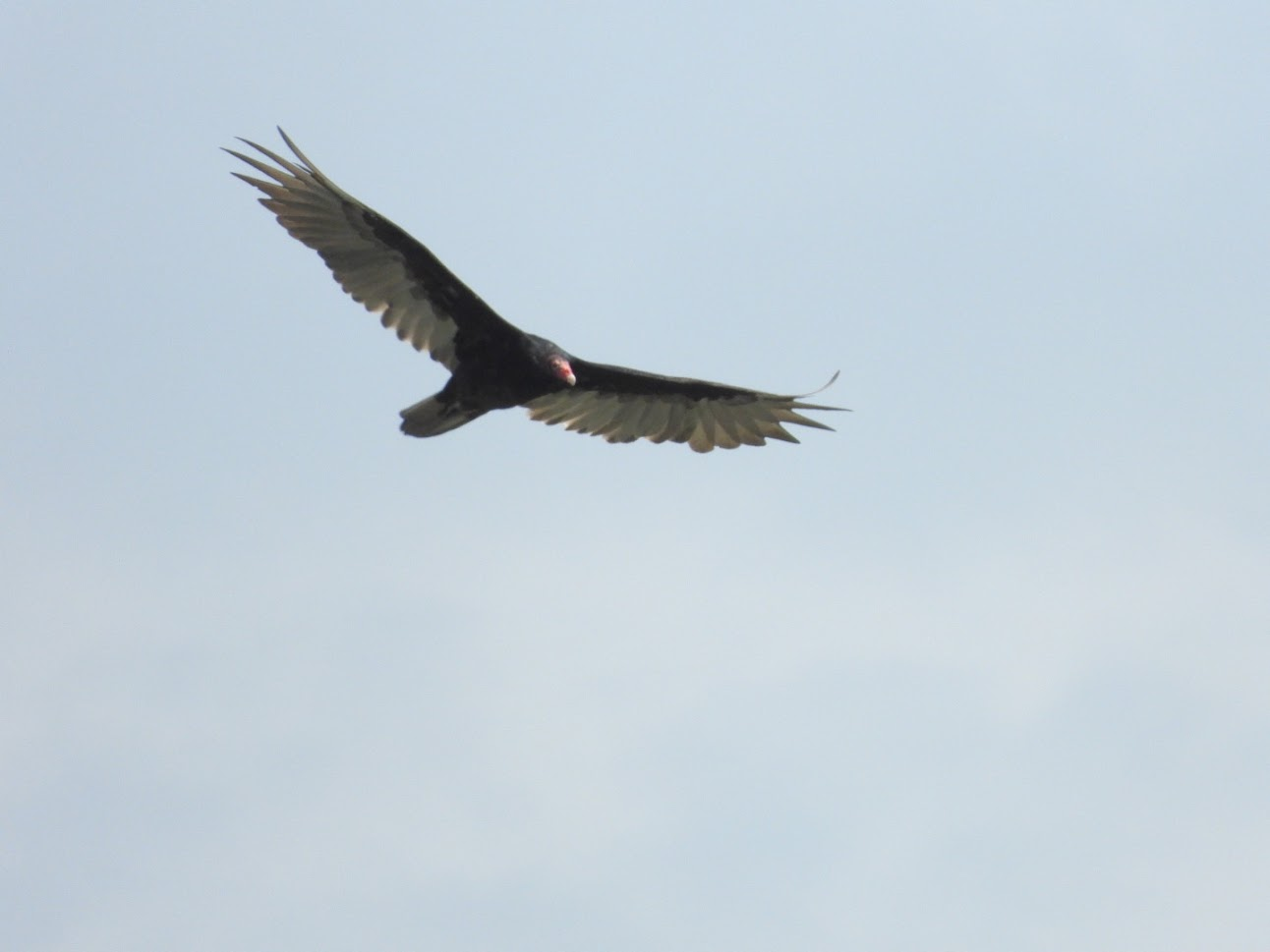
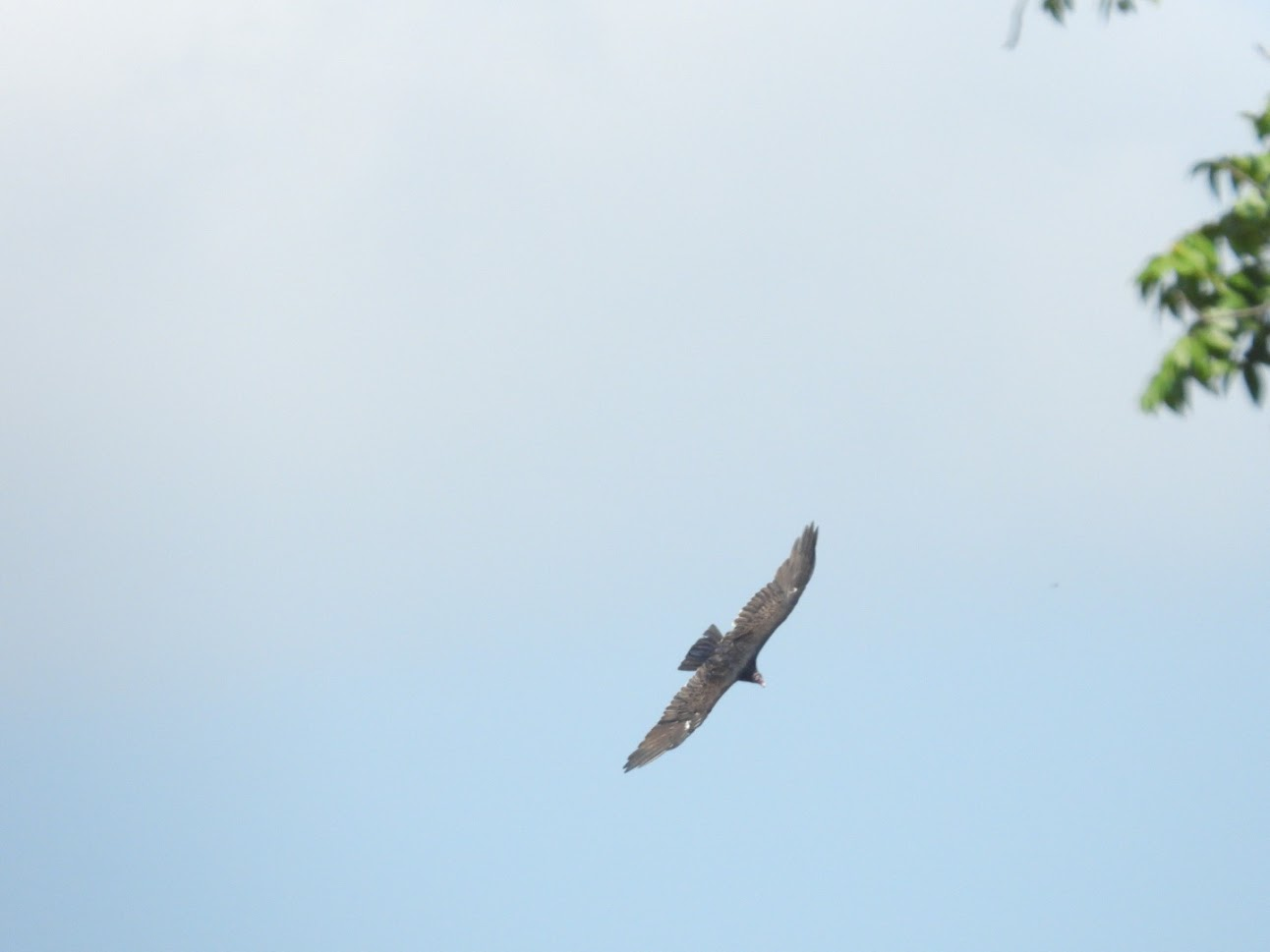
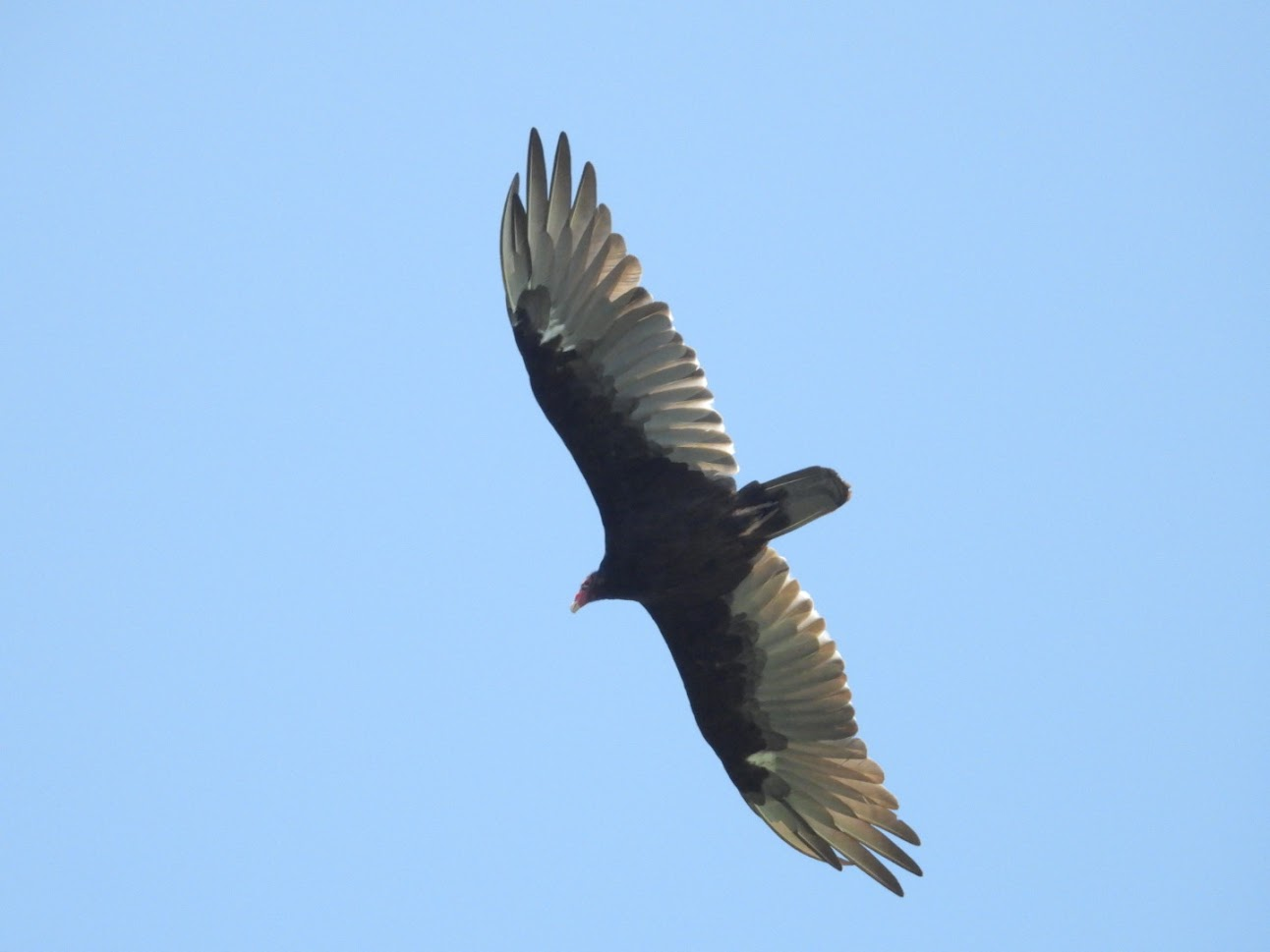
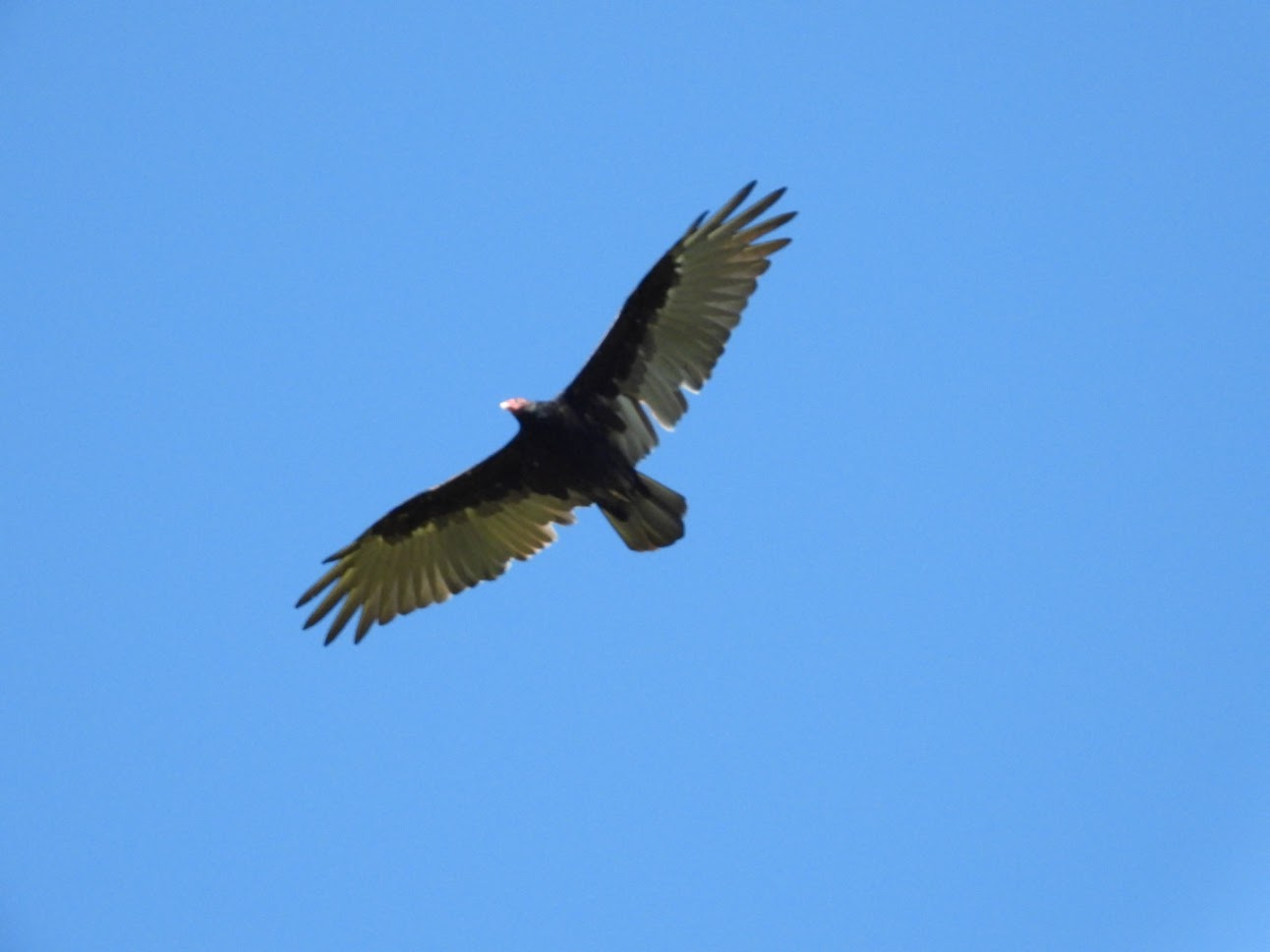
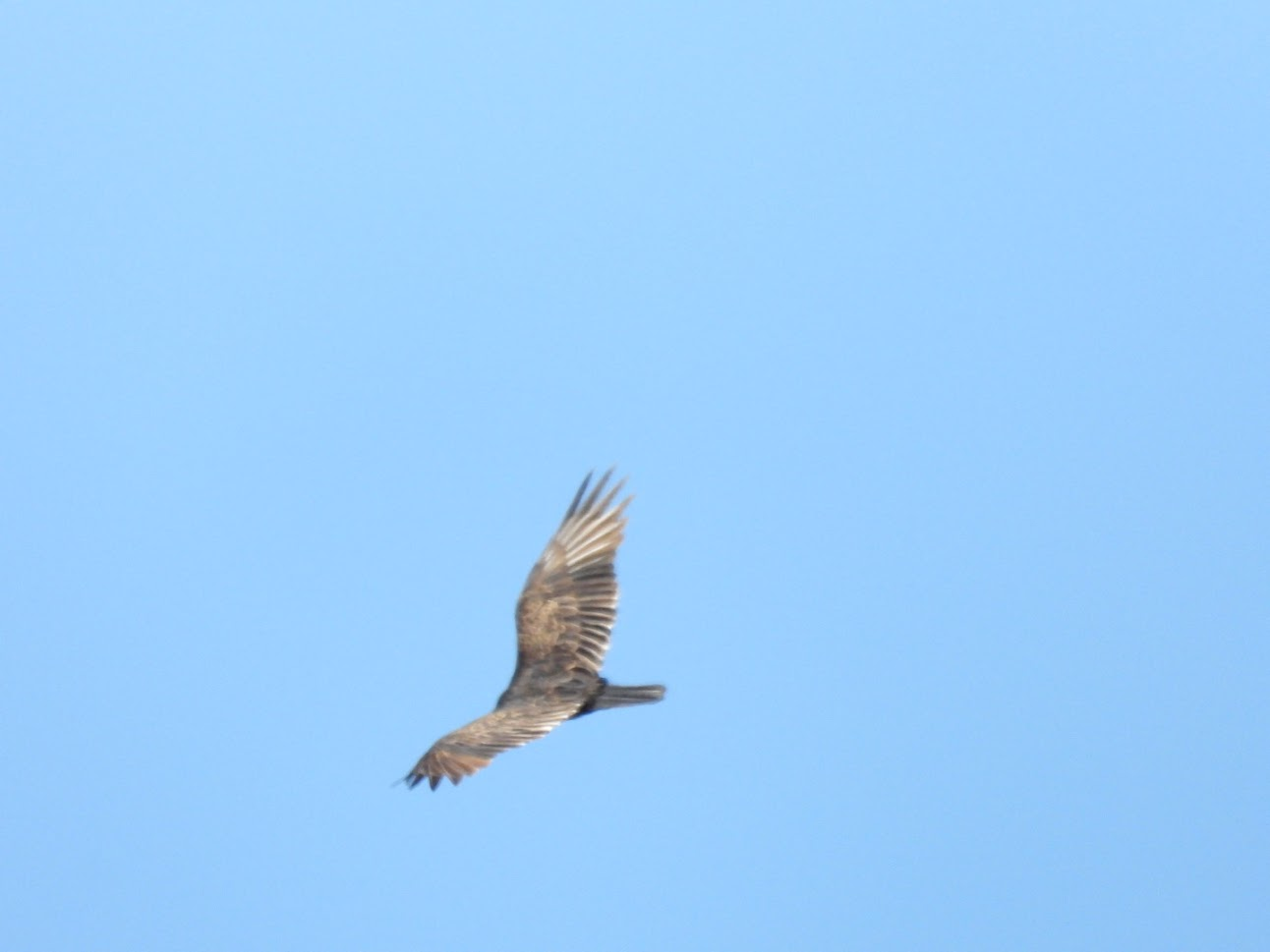
The "raptor of the month" for August was definitely the Turkey Vulture. This is the second of the two raptors that I have observed every month since I began this activity. I'm pretty sure they were most common during July and August, and they're the only raptors that flew close enough for me to have time to adjust zoom, shutter, and focus for some better photographs.
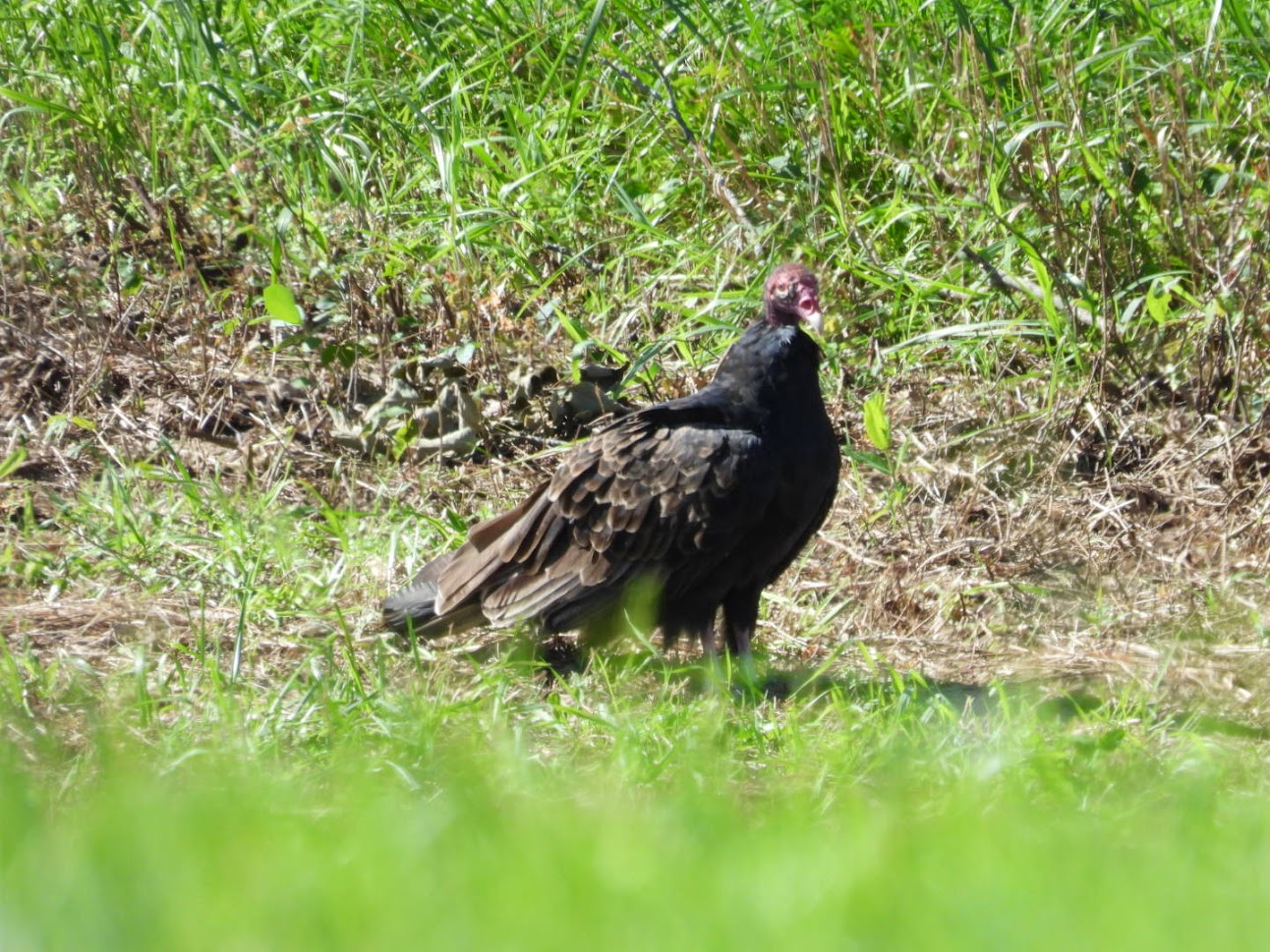
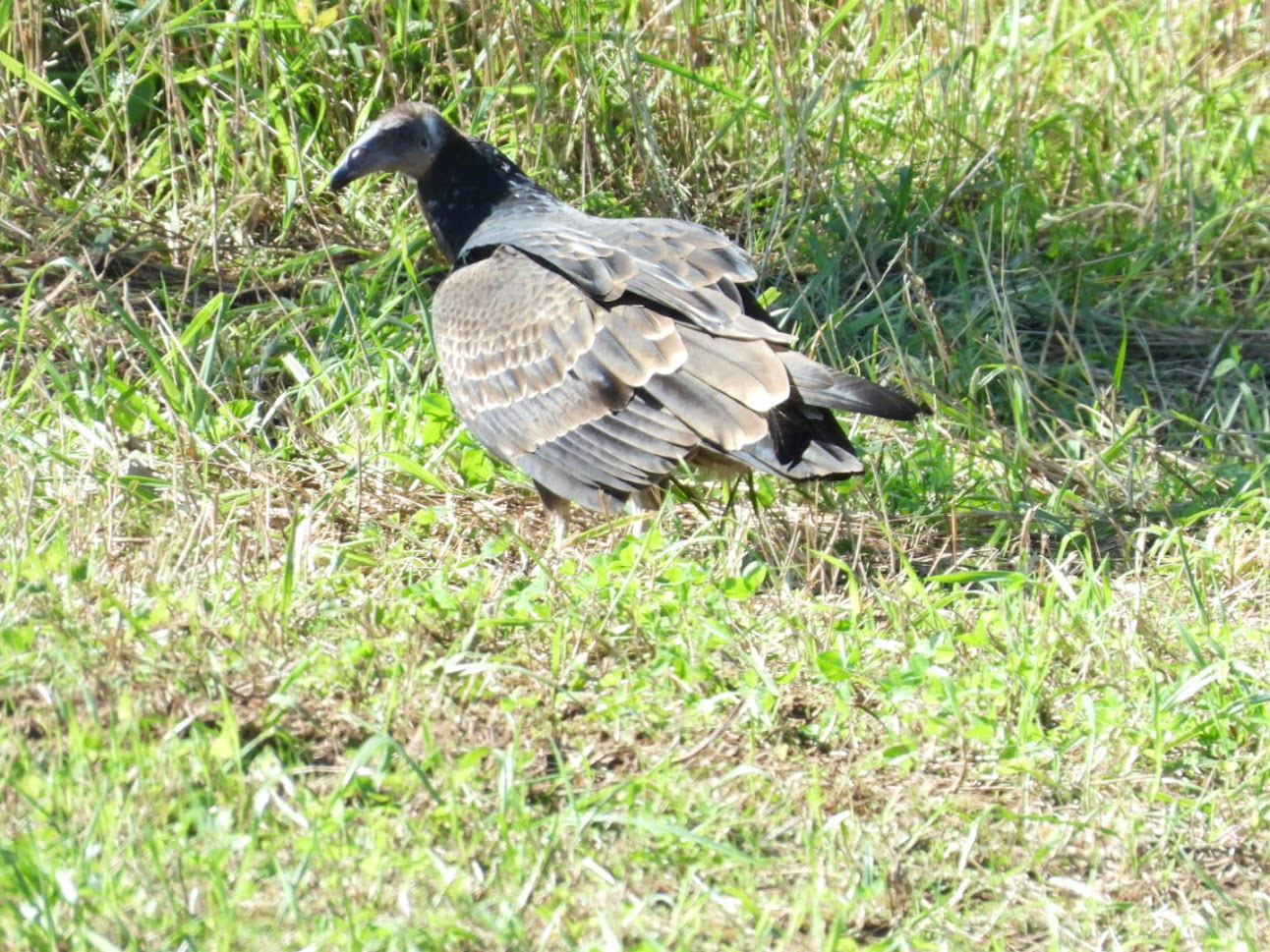
Sometimes I observed them in the company of Black Vultures, and even Red-tailed Hawks. Other times, I saw them solo or in groups with other Turkey Vultures. Something that I learned this month is that we can tell the juveniles from the adults by the color of their heads. The adults have red heads and ivory bills. The juveniles have grey heads with black bills.
I learned this after a trip to the Stroud Preserve with @cmp2020. We came across an adult on the ground with two juveniles. These can be seen in the August 25 photos. At one point, the adult and one of the juveniles flew away, and the second juvenile seemed a bit distressed at being left behind. Eventually, a gust of wind came up, and it flew off to meet them. My assumption was that it was still learning to fly and needed a little bit of a boost from the wind to get itself off the ground. This led me to suspect that the grey-headed birds were juveniles, and I was able to confirm that later with some web searches.
In previous months, I have struggled to get good shots of the Turkey Vultures in flight because of their dark coloring. For August, in contrast, these were the only raptors where I managed to get some better photos. One of the things that has frustrated me in the past is that I had difficulty bringing out the red coloring in their heads in my photographs. Now, I wonder if some of those birds were actually juveniles, and I was trying to do the impossible.
I'm curious to see how many of these I continue to see, because Pennsylvania is right at the northern tip of the Turkey Vulture's year-round range, though it migrates well into Canada during the summer. Its year-round range also covers all of South America, the southeastern US, and the Caribbean region.
Like their rare larger cousin, the California Condor, Turkey Vultures can fall victim to lead poisoning if they eat carcasses or gut piles with lead shot that were left behind by hunters.
| August 2 | August 9 |
 |  |
| ƒ/7.1, 1/2000, ISO640, 395mm (2199mm equiv, 91.6X) | ƒ/5.6, 1/1600, ISO640, 252mm (1403mm equiv, 58.5X) |
| August 9 | August 9 |
 | 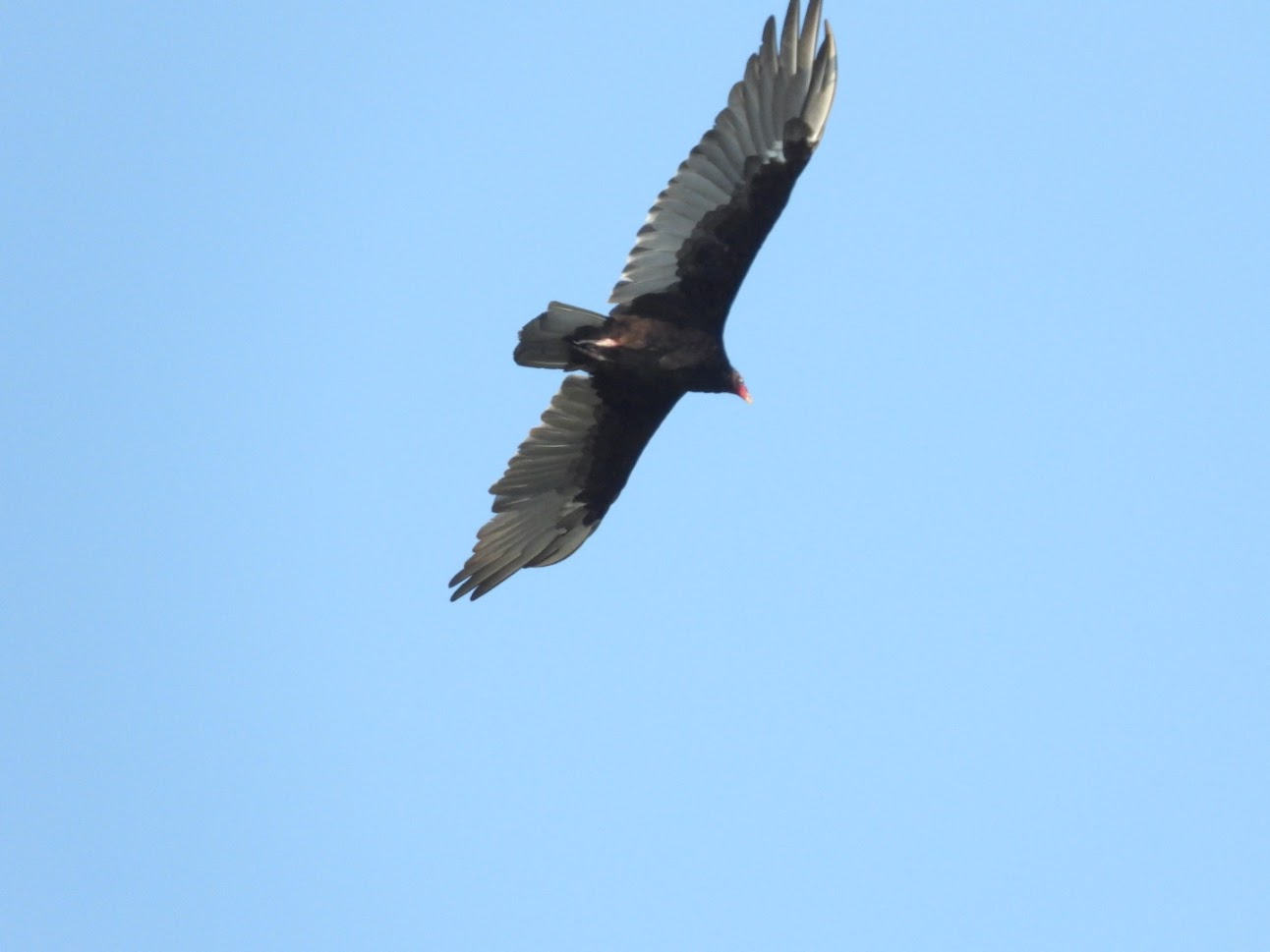 |
| ƒ/5.6, 1/1600, ISO800, 144mm (801mm equiv, 33.4X) | ƒ/5.6, 1/1600, ISO800, 252mm (1403mm equiv, 58.5X) |
| August 23 | August 23 |
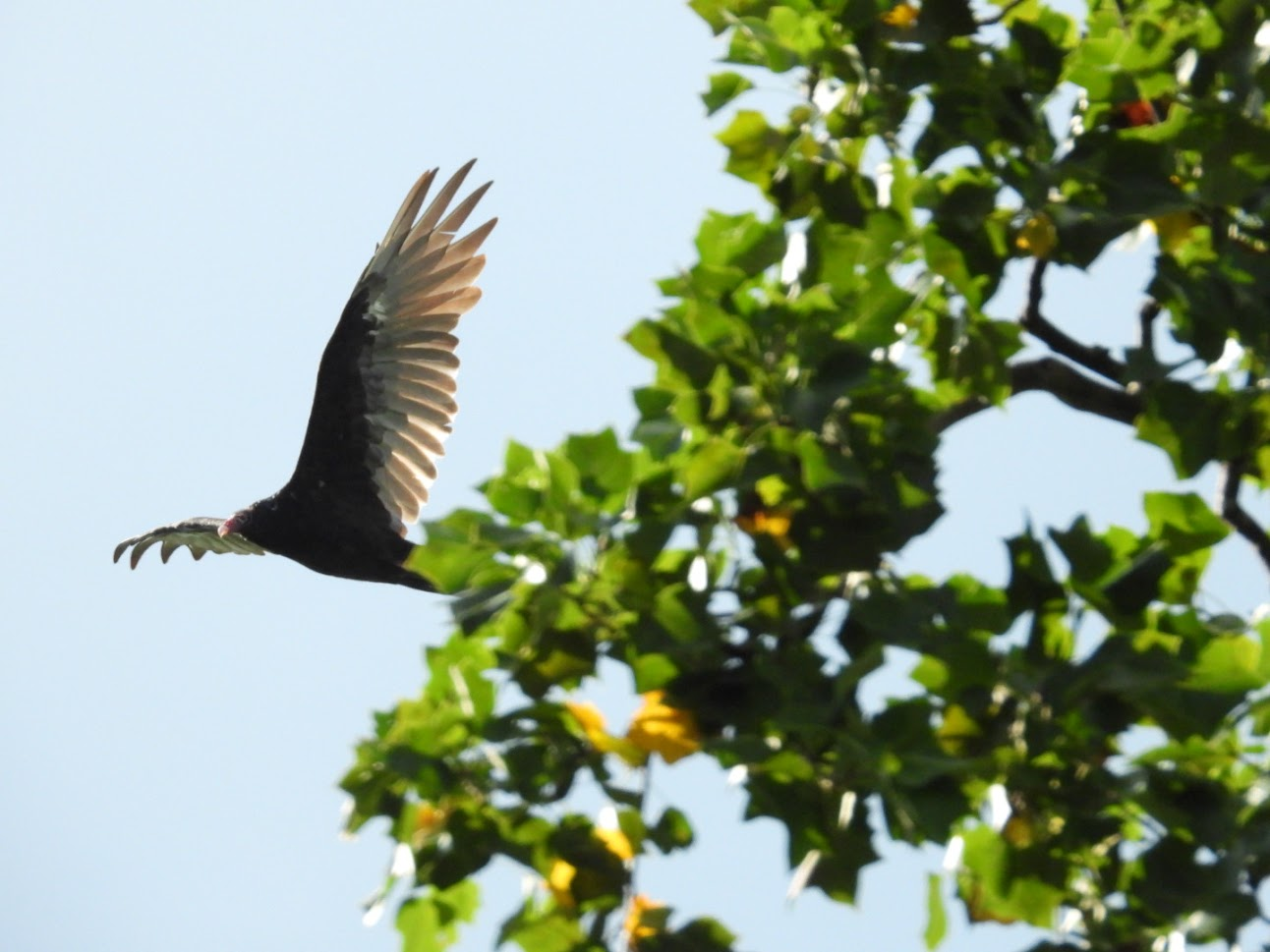 | 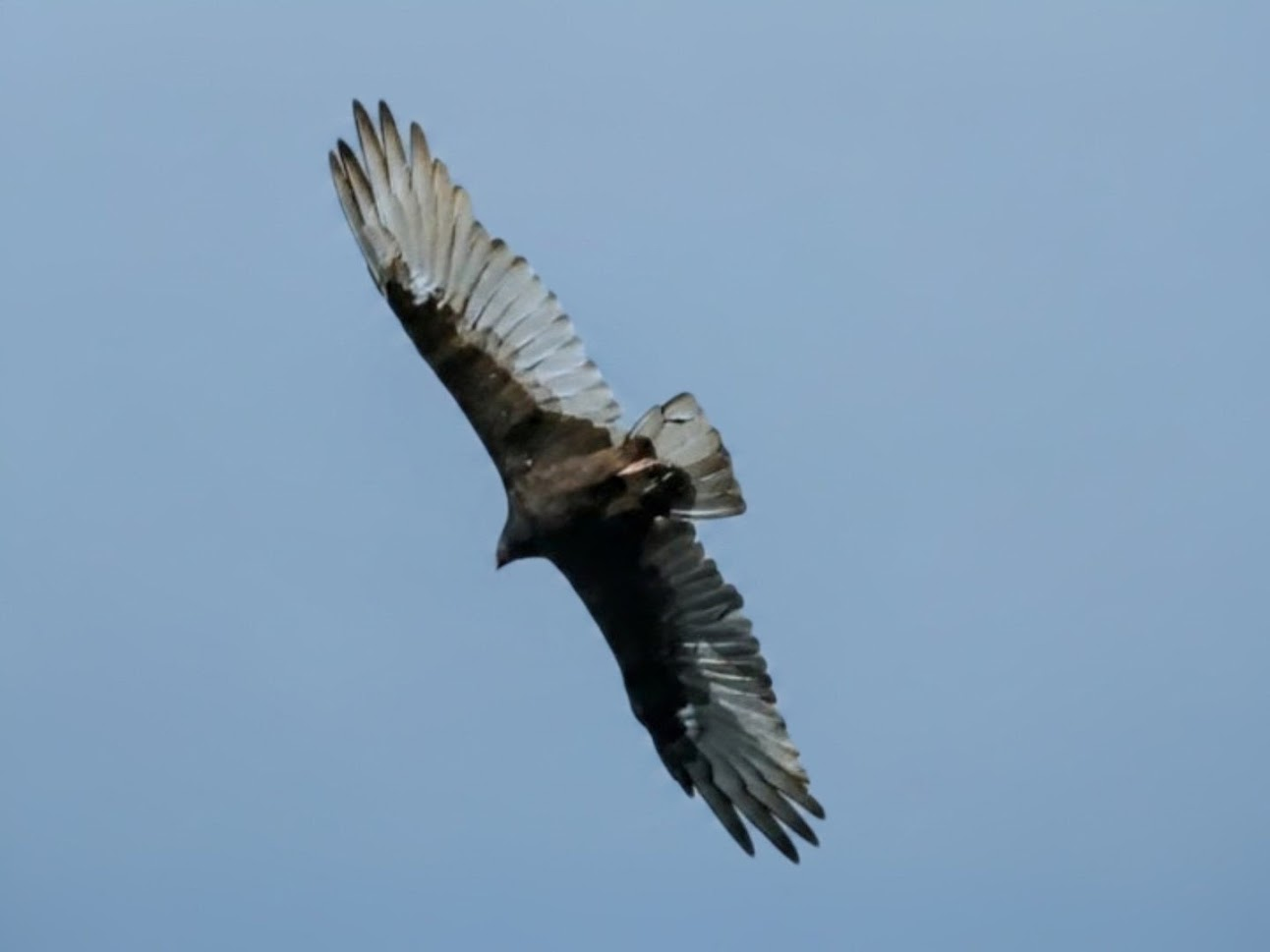 |
| ƒ/5.6, 1/1600, ISO800, 144mm (801mm equiv, 33.4X) | ƒ/5.6, 1/1600, ISO800, 144mm (801mm equiv, 33.4X) |
| August 25 | August 25 |
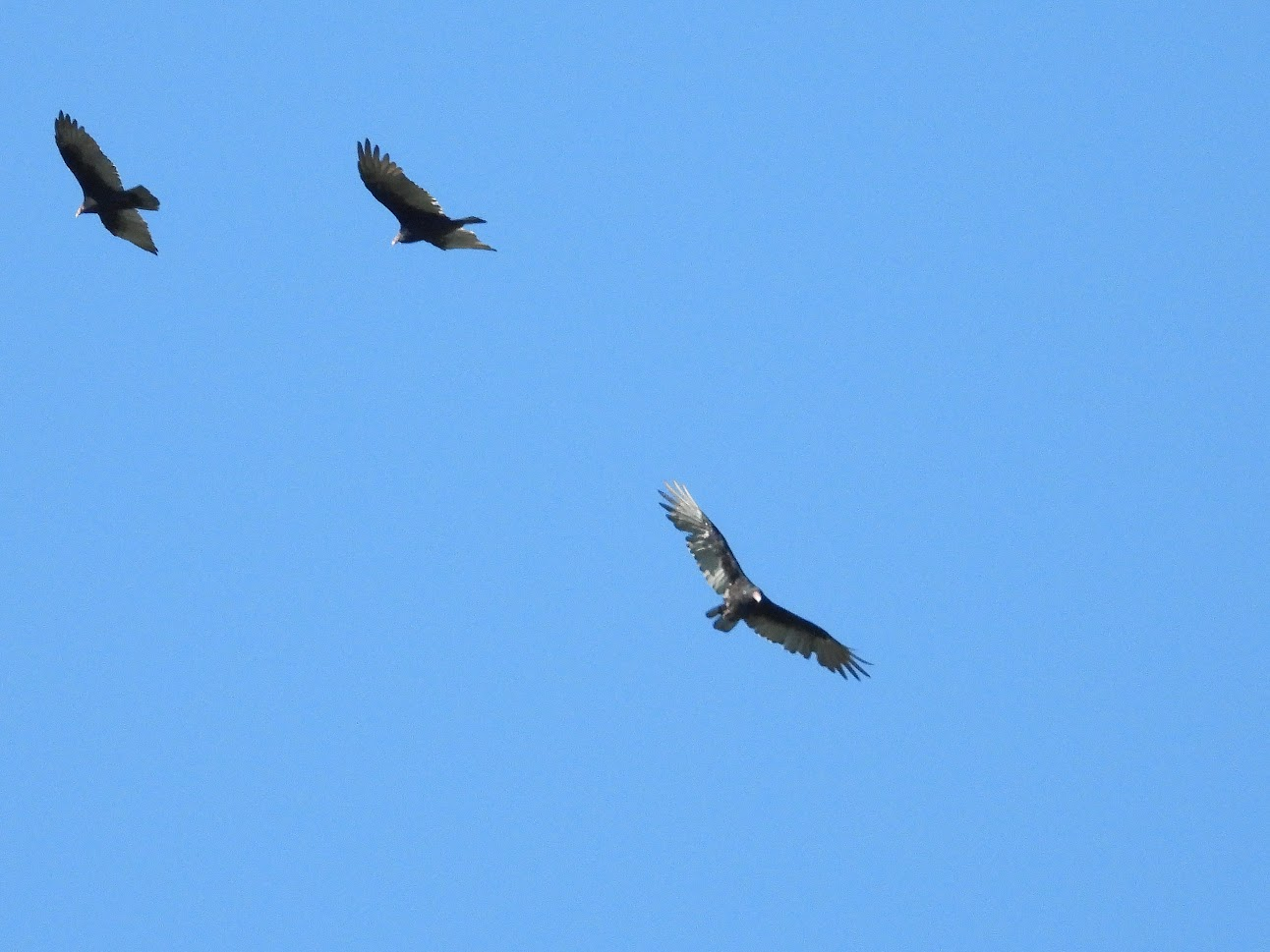 |  |
| ƒ/5.6, 1/2000, ISO800, 144mm (801mm equiv, 33.4X). Cropped in LibreOffice | ƒ/5, 1/2000, ISO800, 71.9mm (400mm equiv, 16.7X) |
| August 25 | August 25 |
 | |
| ƒ/6.3, 1/500, ISO320, 306mm (1703mm equiv, 71.0X) | ƒ/6.3, 1/320, ISO400, 359mm (1998mm equiv, 83.2X) |
| August 25 | August 29 |
 |  |
| ƒ/6.3, 1/400, ISO400, 359mm (1998mm equiv, 83.2X) | ƒ/7.1, 1/1600, ISO800, 395mm (2199mm equiv, 91.6X) |
| August 29 | |
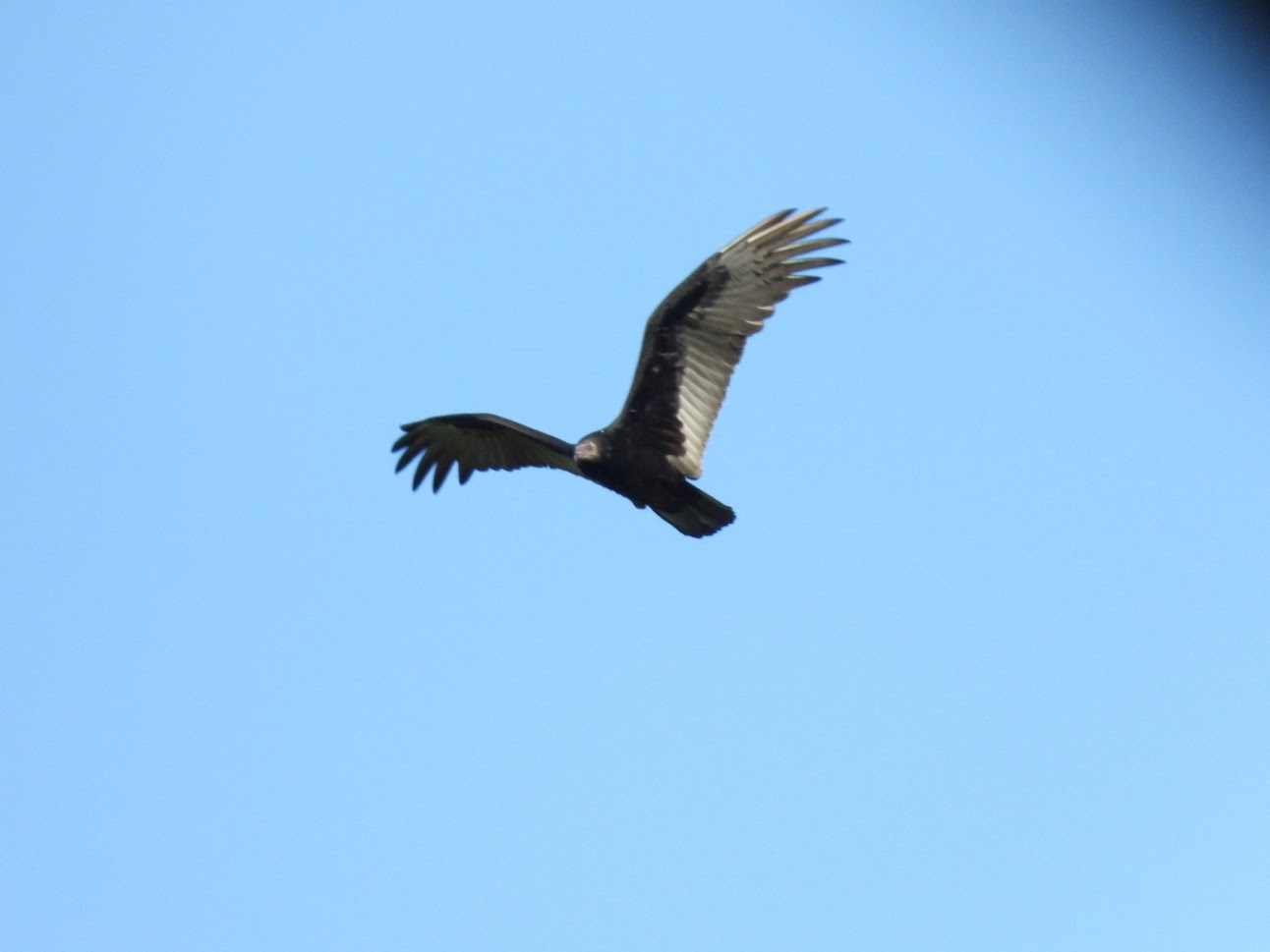 | |
| ƒ/7.1, 1/1250, ISO560, 395mm (2199mm equiv, 91.6X) | |
Black Vulture
The Black Vulture is the only non-migratory species in this post. After seeing one in March, I didn't observe any in April, but starting in May, I've seen them every month. They tend to fly higher than the Turkey Vultures, which makes them a bit harder to photograph. Their range extends through most of South America, with some small gaps in the south and west. As with the Turkey Vulture, Pennsylvania is at the northern tip of their range. Unlike the Turkey Vulture, their range only extends to the central US. It does not extend to the northern US, western US, or to Canada at any time of the year.
In flight, they are easily identified by the white patches of feathers on the edge of their wings. I don't think I've seen one on the ground or in the trees, so I'm not actually sure what their distinguishing characteristics are when the wingtips are hidden. (Though I'm sure the AIs will tell me when I ask them to proofread this.)
The bald heads on Black Vultures and Turkey Vultures are thought to be an evolutionary adaptation that serves hygienic purposes. The birds survive by picking through meat carcasses, so the bald head can help prevent bacteria from accumulating in the feathers near the mouth and nostrils.
| August 6 | August 6 |
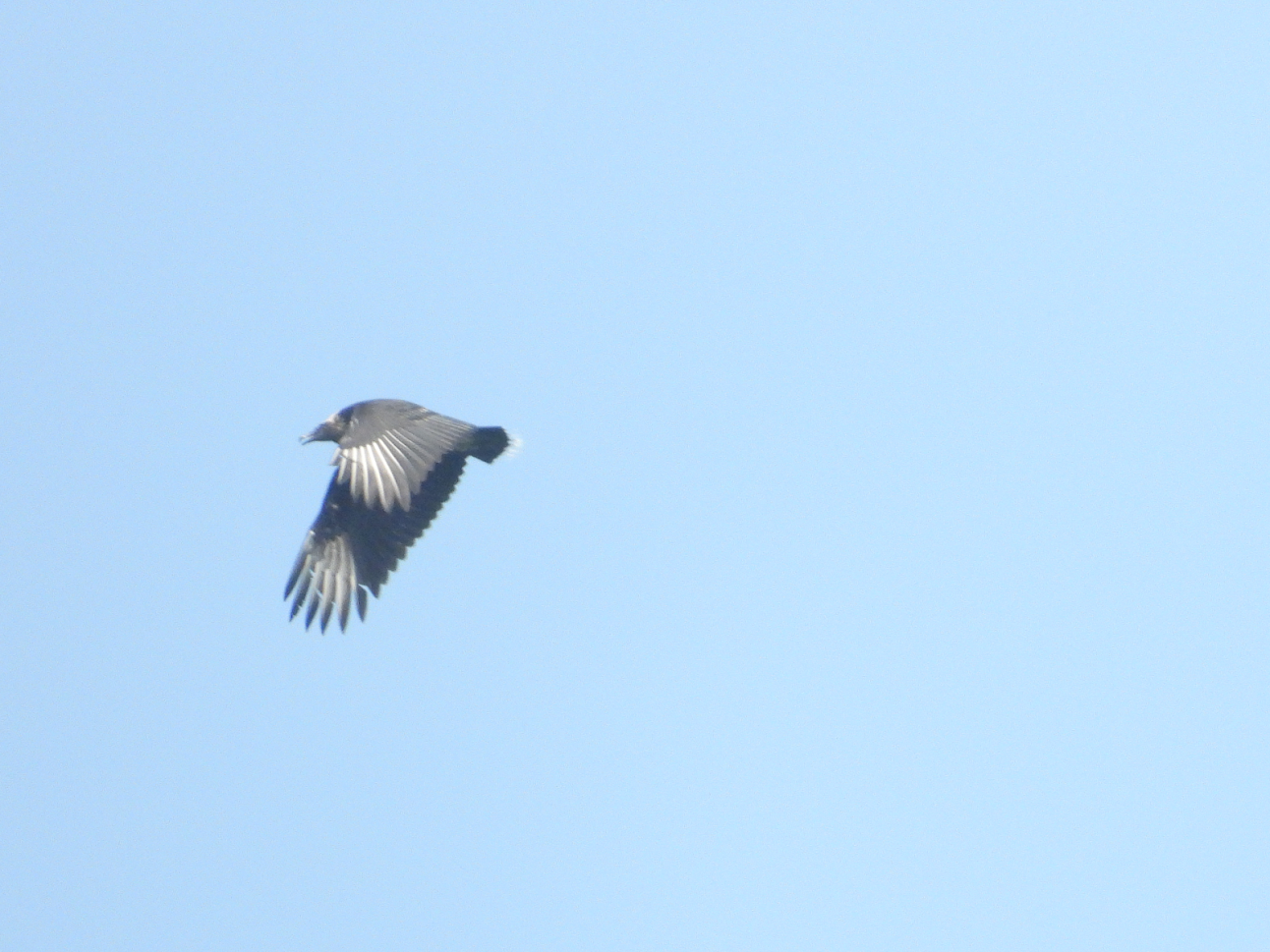 | 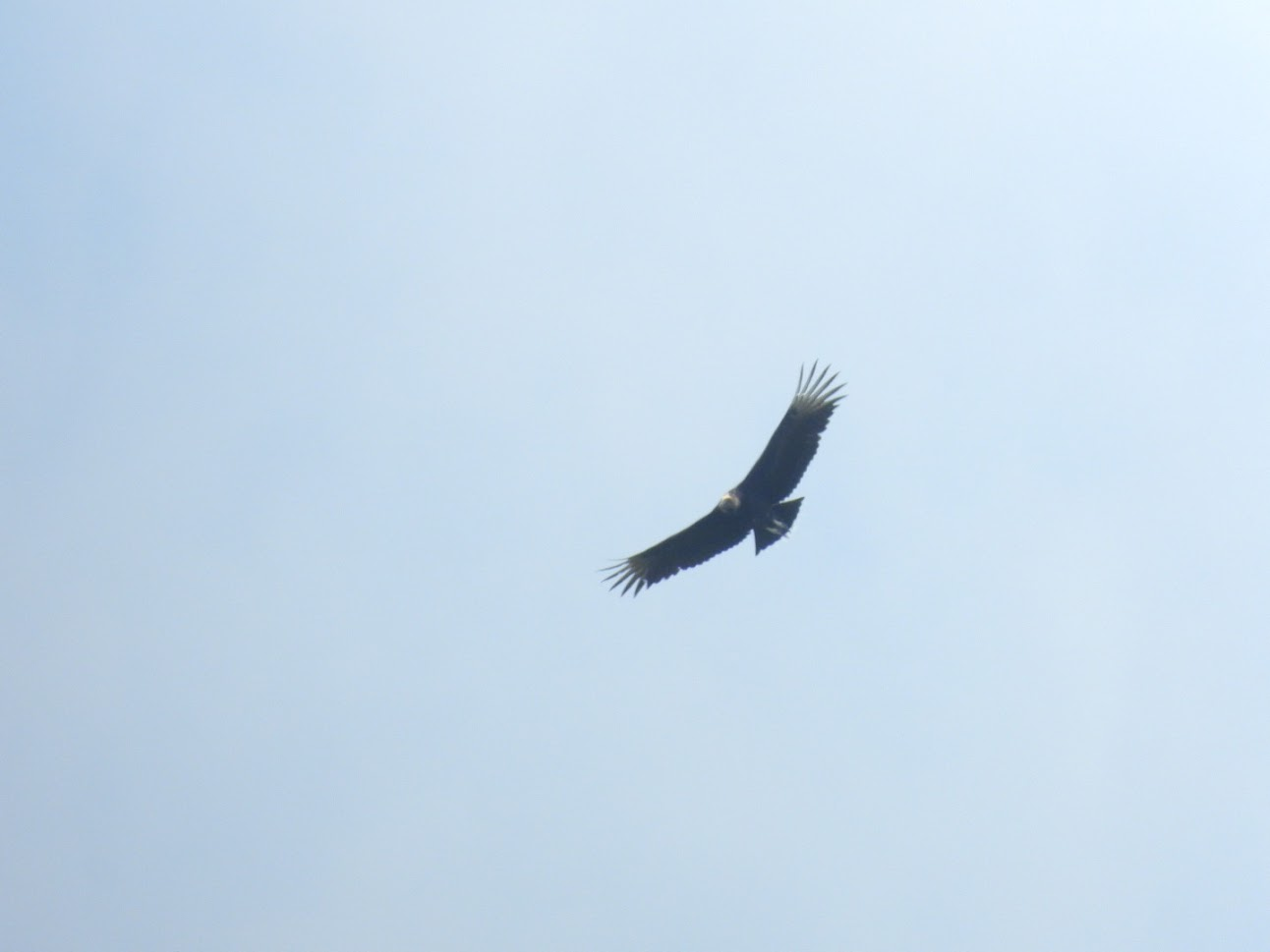 |
| ƒ/7.1, 1/1250, ISO720, 395mm (2200mm equiv, 91.7X). Cropped in LibreOffice | ƒ/7.1, 1/1250, ISO560, 395mm (2200mm equiv, 91.7X) |
| August 26 | August 26 |
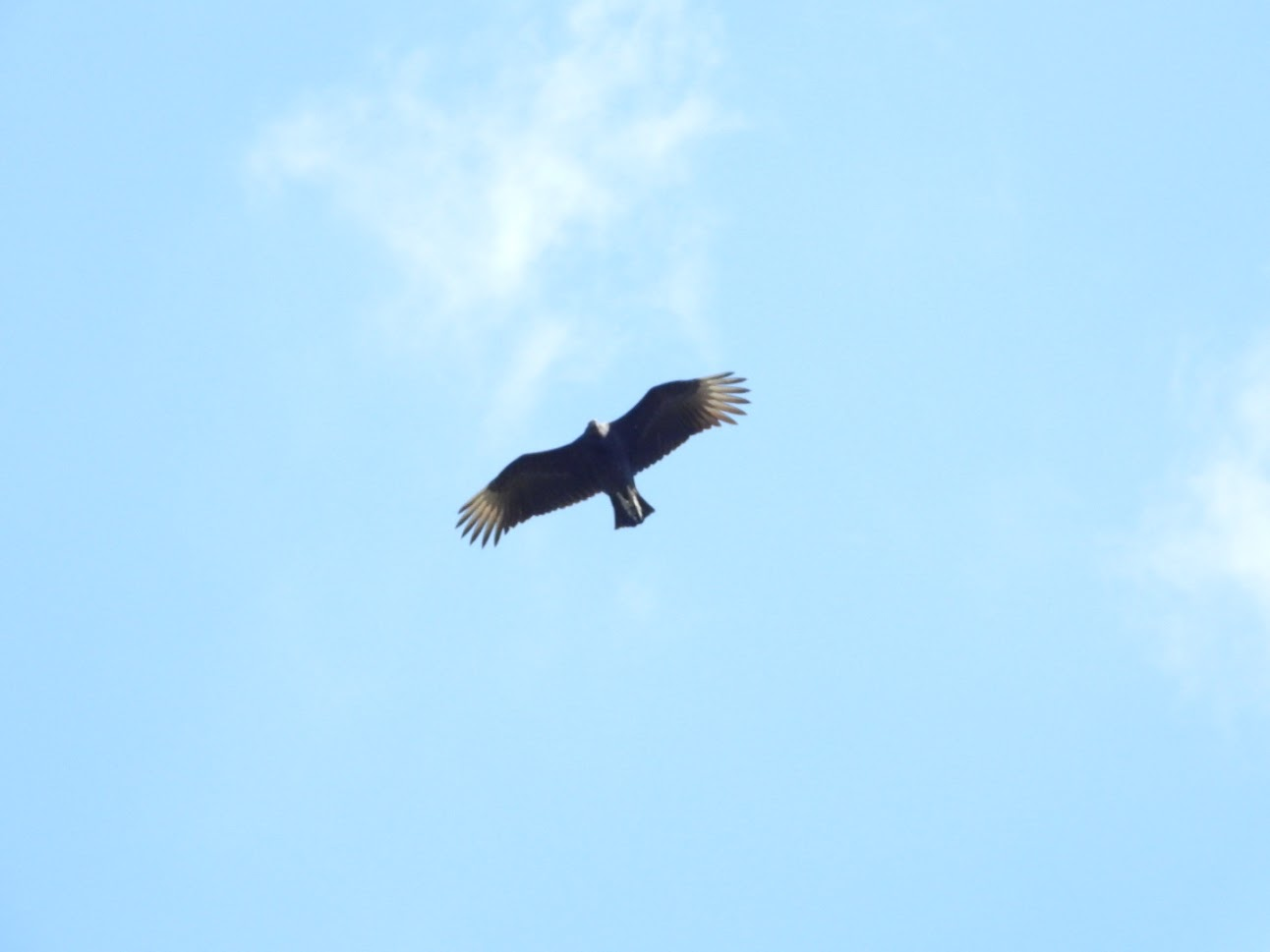 | 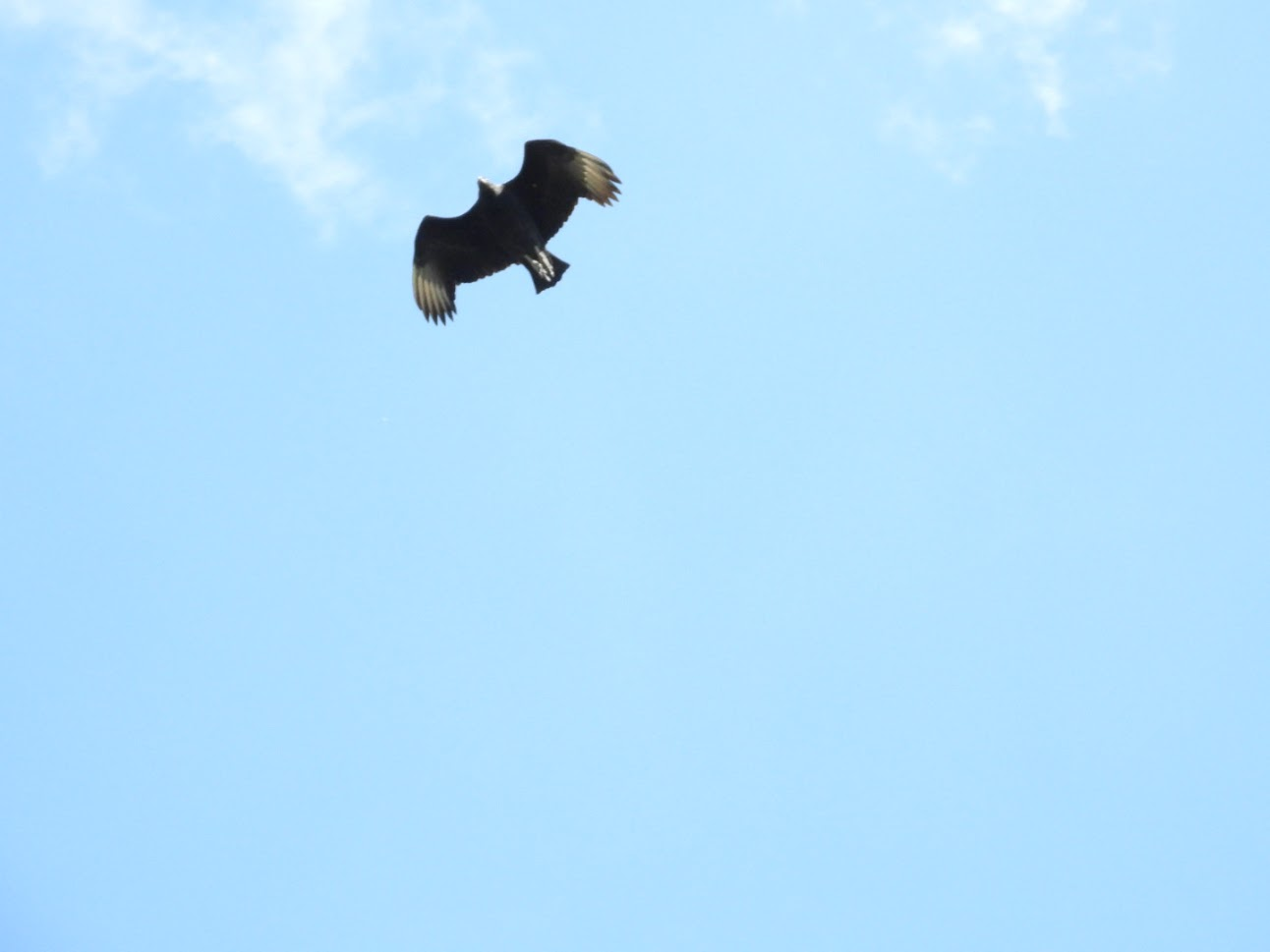 |
| ƒ/5, 1/1600, ISO800, 71.9mm (400mm equiv, 16.7X) | ƒ/5, 1/1600, ISO800, 71.9mm (400mm equiv, 16.7X) |
Red-shouldered Hawk
August 21 and August 25 were my first and second times photographing a Red-shouldered Hawk in flight, and both times were in suboptimal conditions. The bird arrived and departed very quickly. The only way I could even identify the birds was to crop the full-res photos.
After cropping, the photos aren't terrible, though. At least they're in focus. ;-)
As with other species, Pennsylvania is on the very tip of the northern year-round range, so many of these birds could now be leaving the state for warmer climates, though some might hang around through the winter, and some that leave could be replaced by others from the north. In general, even during the summer months, seeing these has been much less common than the other raptor species.
Interestingly, these birds can be found in the east and on the west coast of the US, but not in the Great Plains or Rocky Mountains. This huge separation in populations is probably caused by glaciation, more than 20,000 years ago. Assuming they remain separate, they might eventually diverge into two distinct species.
| August 21 | August 21 |
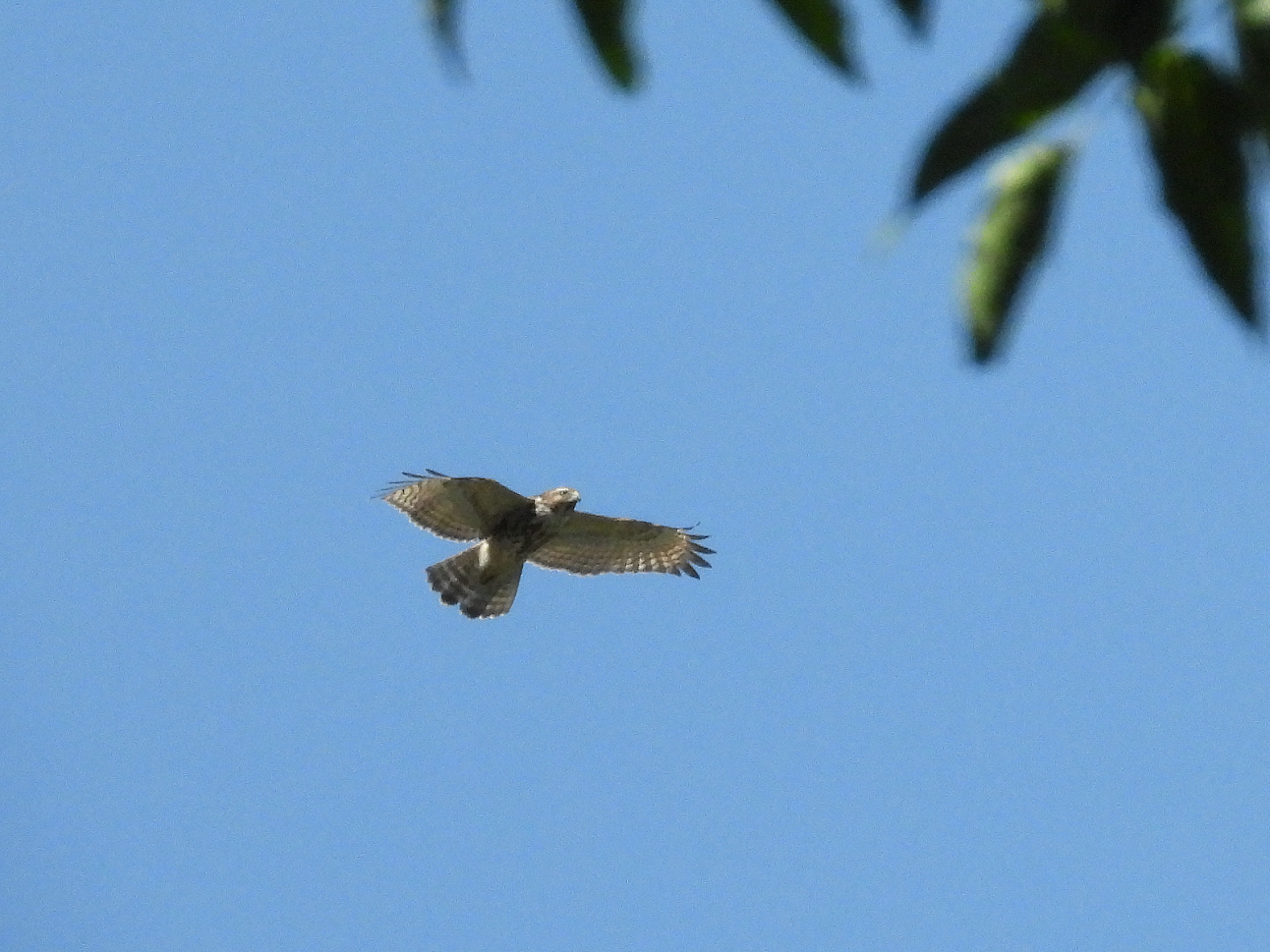 | 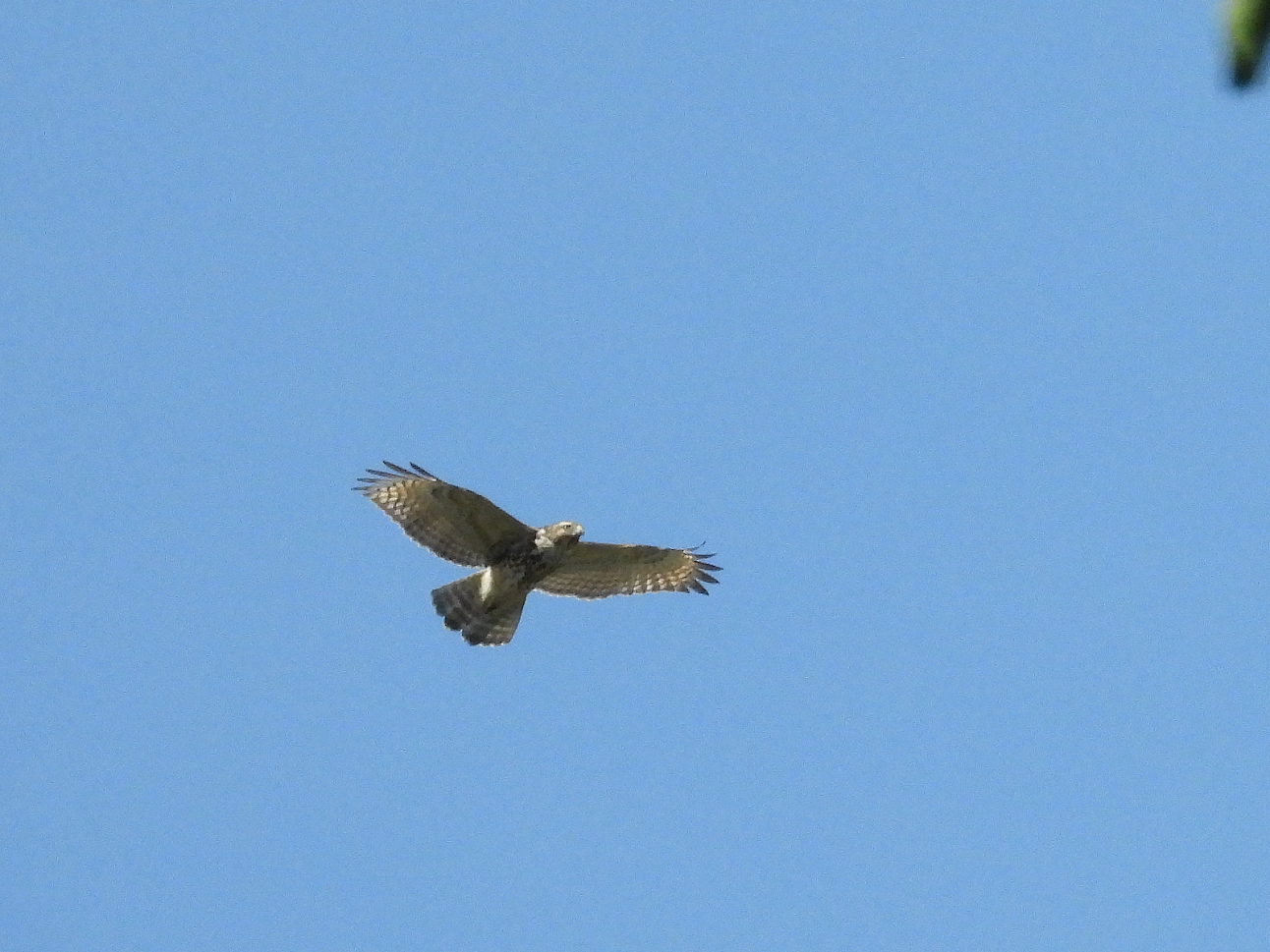 |
| ƒ/7.1, 1/2500, ISO800, 144mm (802mm equiv, 33.4X). Cropped in LibreOffice | ƒ/7.1, 1/2500, ISO800, 144mm (802mm equiv, 33.4X). Cropped in LibreOffice |
| August 25 | August 25 |
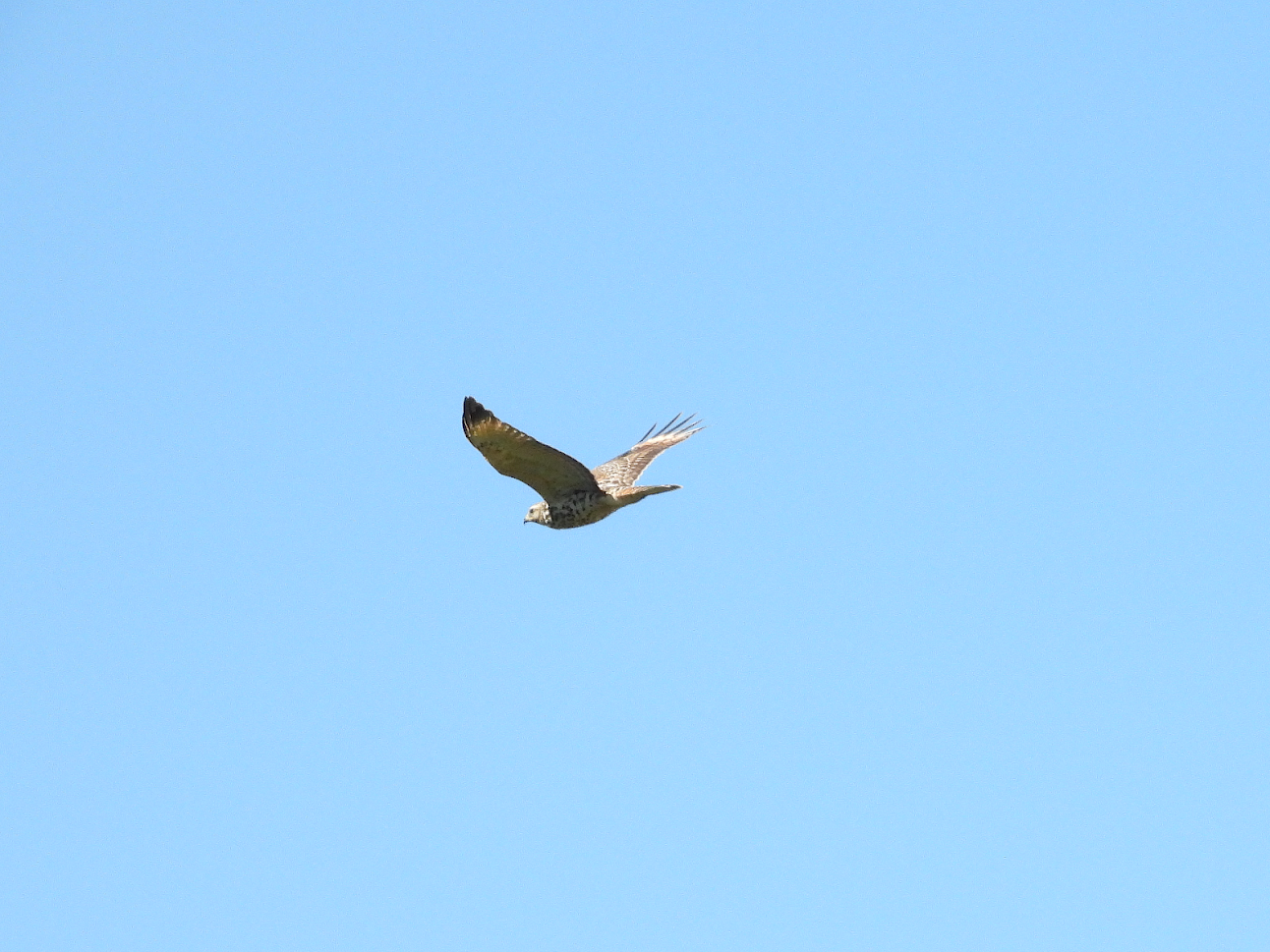 | 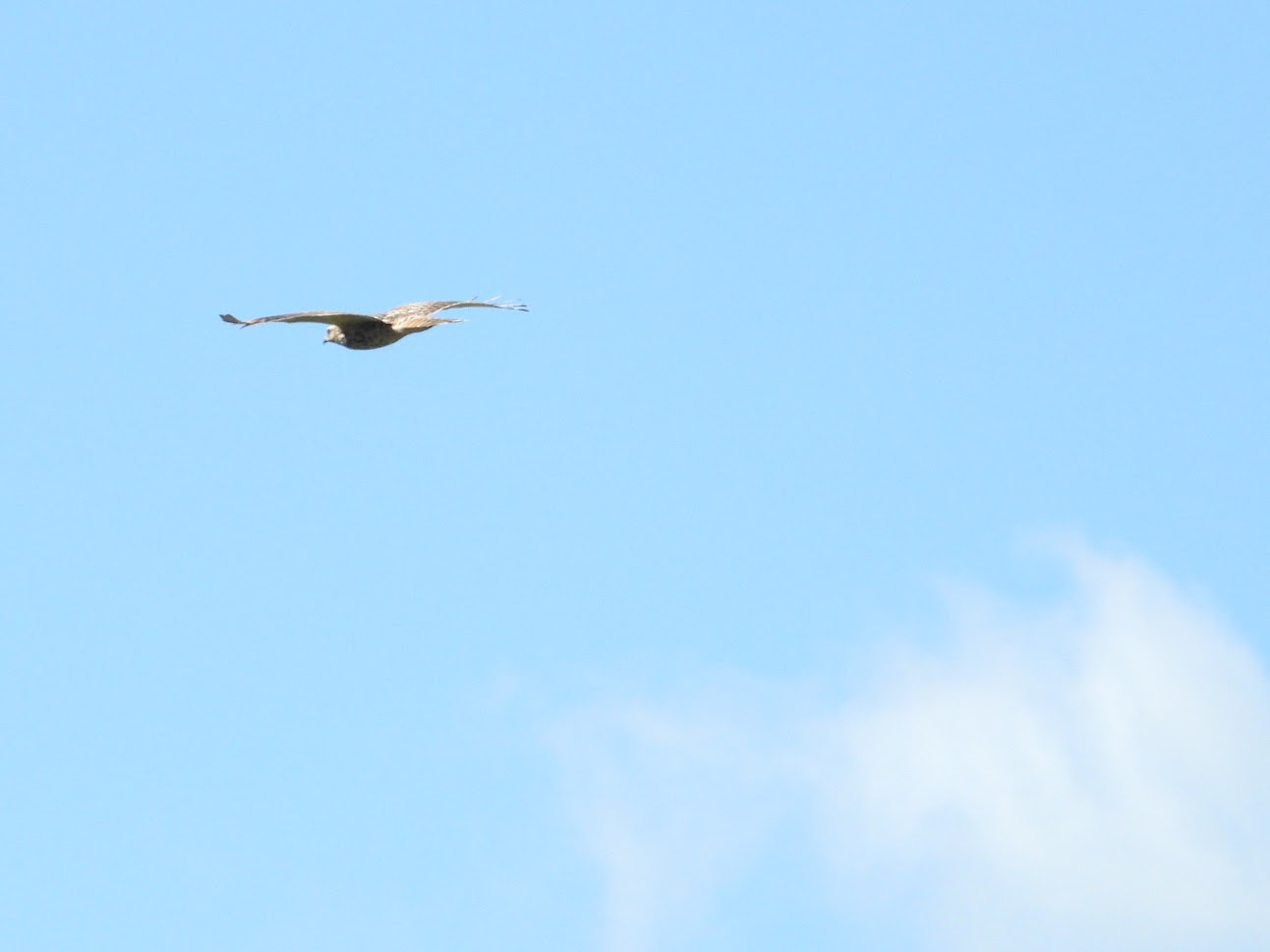 |
| ƒ/5, 1/2000, ISO560, 71.9mm (400mm equiv, 16.7X). Cropped in LibreOffice | ƒ/5, 1/2000, ISO560, 71.9mm (400mm equiv, 16.7X). Cropped in LibreOffice |
Bald Eagle
As mentioned in the Red-tailed Hawk section, I saw this juvenile Bald Eagle at the same time as seeing a Red-tailed Hawk. My assumption was that the hawk was a resident protecting its territory, and the eagle was just passing by. This was also the first Bald Eagle I had seen since my May raptor photography update. Coincidentally, the one in May was also a juvenile.
As we learned last year, some of the Bald Eagles from the northern states and Canada spend their winters in this region, so if I keep this activity up in the fall and winter, maybe I'll see them more frequently for a while.
At the risk of getting ahead of this blog series, I've already seen them four times in September, and Hawk Mountain reported their largest ever Bald Eagle migration count back on September 4. The previous record was 48, set in 1950. The new record is 64.
| August 30 | August 30 |
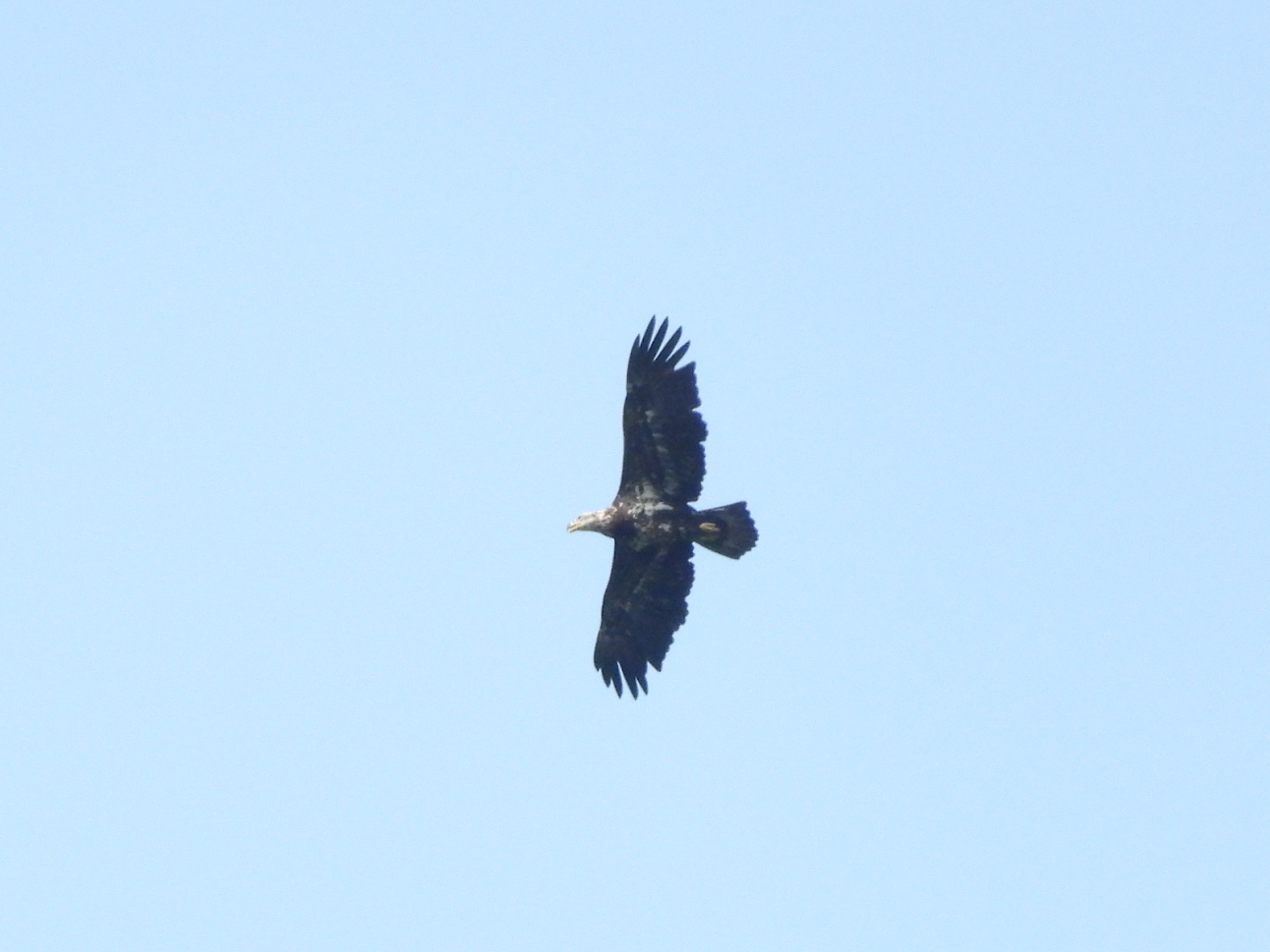 | 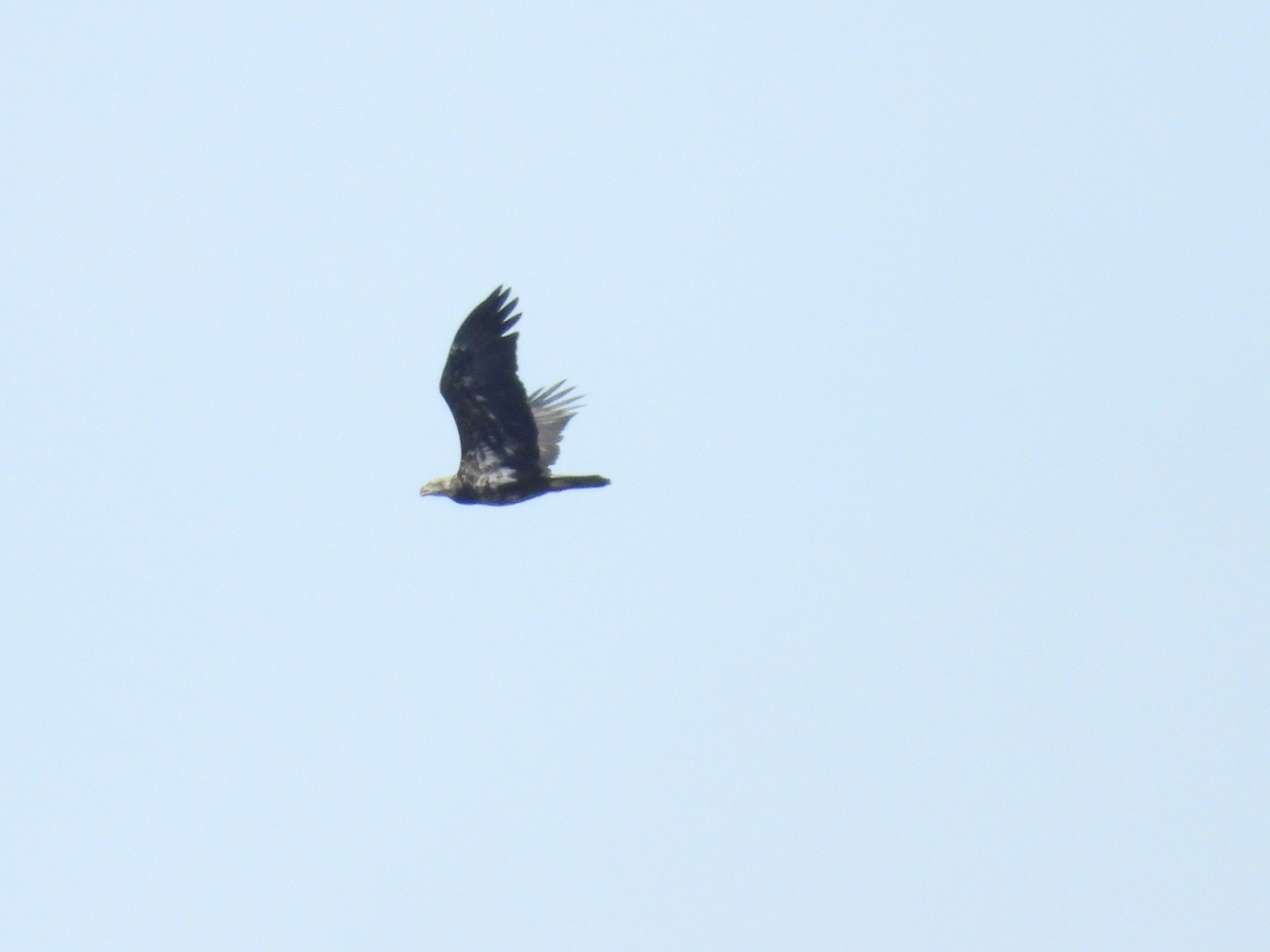 |
| ƒ/7.1, 1/1250, ISO640, 395mm (2200mm equiv, 91.7X). Cropped in LibreOffice | ƒ/8, 1/1250, ISO800, 539mm (3000mm equiv, 125.1X). Cropped in LibreOffice |
| August 30 | August 30 |
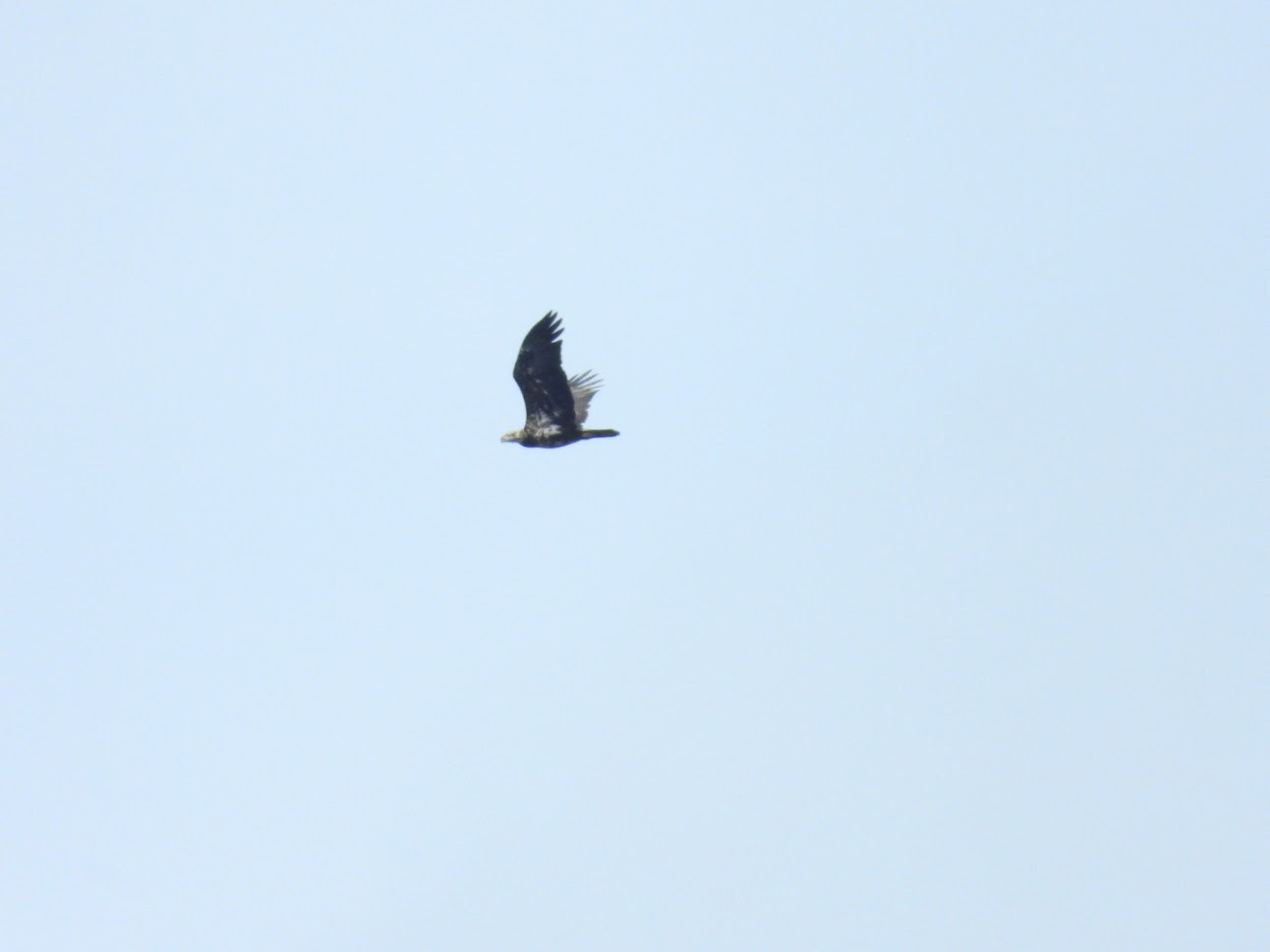 | 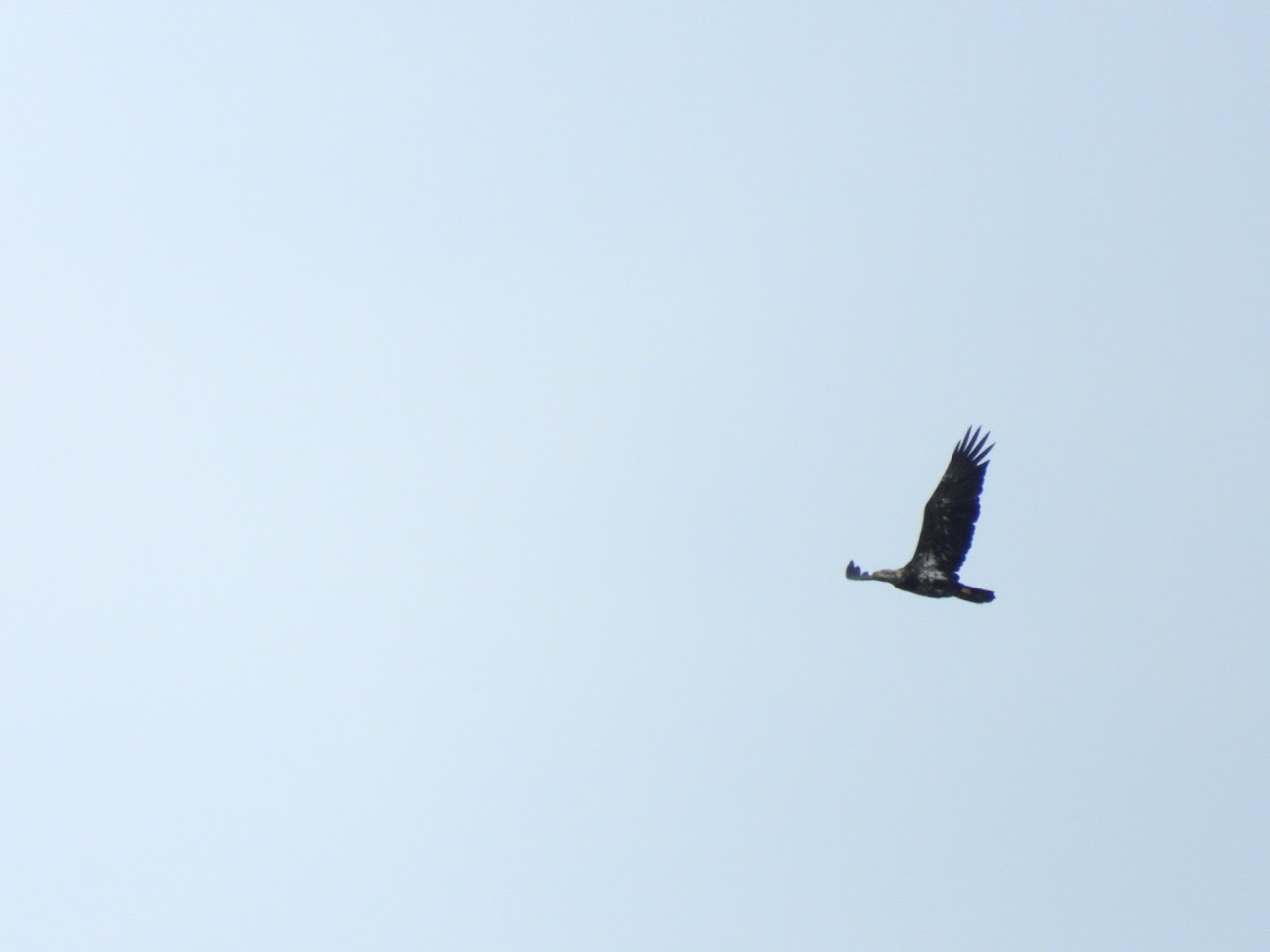 |
| ƒ/8, 1/1250, ISO800, 539mm (3000mm equiv, 125.1X) | ƒ/8, 1/1250, ISO640, 539mm (3000mm equiv, 125.1X) |
Wrap-up
The August raptor observations were definitely dominated by Turkey Vulture encounters in terms of sheer numbers, photographic quality, and the newly acquired knowledge that adults and juveniles can be distinguished by their head and bill colors.
Beyond the Turkey Vulture, the first encounter in three months with a Bald Eagle was also a big highlight and so was my first time photographing a Red-shouldered Hawk in flight. Additionally, this was the sixth consecutive month submitting iNaturalist observations for the Red-tailed Hawk and the Turkey Vulture.
Finally, a new twist this month was the addition of feather identification. I learned about the FeatherBase and Feather Atlas websites for the first time and began exploring them.
With the August round-up now complete, stay tuned for coverage of my September activities as the fall migration season shifted into gear.
Appendix
A full index of my posts about wildlife photography is here: wildlife photography index
Notes on the use of AI
As previously noted, I use AI for the following purposes in creating this series:
- Wildlife identification (Merlin, iNaturalist, Meta AI, Claude, Gemini)
- Formatting iNaturalist observations, photographs, dates, and camera settings into markdown tables (Claude)
- Proof-reading and editorial advice (Claude, Gemini, Meta AI, ChatGPT, Grok)
Thank you for your attention!
Unless otherwise specified in the text, all photos above were taken by me with a (handheld) Nikon P1000 camera. I'm sharing them under the CC BY 4.0 license (share & adapt freely with attribution to the original source).
The breakdown of iNaturalist observations combined with specific reference tools like Feather Atlas makes this a strong citizen science entry. Tracking juvenile versus adult Turkey Vultures adds great field detail.
Thank you for sharing on steem! I'm witness fuli, and I've given you a free upvote. If you'd like to support me, please consider voting at https://steemitwallet.com/~witnesses 🌟
Thank you, @sergeyk.
Each and everything you describe in your post very informative and appreciable, i really liked it that you made a very meaningful post for us. keep it up.
#s34engagement