Jeff Bezos, AI and the Three-Day Workweek: Who Benefits?
Hello everyone and welcome back!
While we wait for the conclusion of Matchday 10 of Serie A and the historic record that will see Italian driver Kimi Antonelli take centre stage, today we will be discussing an important topic: work.
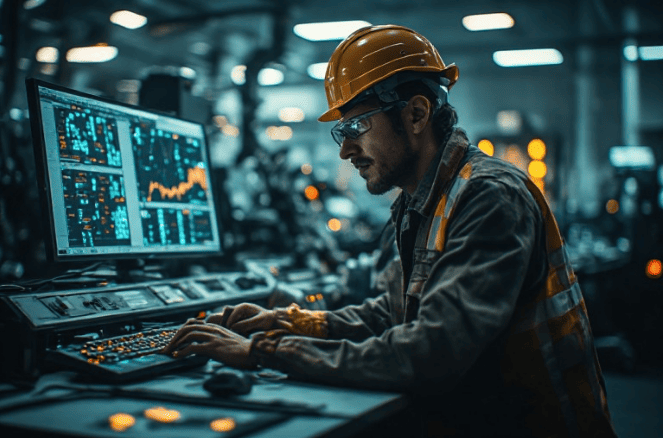
Imagine being able to work just three days a week while still earning enough to support your family and live comfortably. Having more time to spend with your children, less stress, fewer exhausting mornings and, above all, the opportunity to enjoy life outside the workplace. Does it sound like a dream? According to Jeff Bezos, the founder of Amazon, it could become a reality thanks to artificial intelligence. During an interview with Fox News, broadcast on October 7, 2026, Bezos outlined a scenario in which advances in artificial intelligence could increase productivity to such an extent that some people might be able to support their families while working just three days a week. He even imagined a future in which a single income could be enough to support an entire household. It is certainly an interesting prospect, especially considering how much of our lives is taken up by work. But are we really sure that artificial intelligence will allow us to work less? Let's start with one fundamental point: AI is already changing the world of work. It can help us write, conduct research, summarise documents, analyse data and speed up numerous repetitive tasks. In some industries, the time saved is significant. However, there is a substantial difference between having technology capable of increasing productivity and actually turning that advantage into more free time for workers. And this is precisely where the problem begins.

Amazon, for example, has recently gone through major workforce restructuring. The company confirmed another round of job cuts affecting fewer than 1,000 corporate positions, following a much larger reduction of around 30,000 jobs, which began earlier and continued through January. Bezos linked part of the earlier cuts to the company's rapid expansion during the pandemic. It would be unfair to claim that all these job losses were caused by artificial intelligence, as there is insufficient evidence to support that conclusion. Nevertheless, the contrast is difficult to ignore: on the one hand, we are being told to imagine a future in which we can work less and live better; on the other, there are people facing the very real consequences of losing their jobs. For someone who has just received a redundancy notice, imagining a three-day working week is probably the last thing on their mind. Their concerns are very different: how to pay the bills, how to find another job and, above all, whether the skills they have developed over the years will still be in demand in the future. The real issue, therefore, should not simply be whether artificial intelligence represents an opportunity or a threat. We should be asking who will actually benefit from its progress. When a company manages to produce more while spending less time on certain activities, it can decide to use that advantage in several ways. It can keep working hours unchanged and ask employees to complete more tasks. It can increase profits, invest in new products, lower prices or improve salaries. Alternatively, it could negotiate a shorter working week with employees while maintaining their pay. Technology, however, does not decide which path to take. That choice belongs to people, businesses and institutions.
Research published by the International Labour Organization in June 2026 also encourages us to remain realistic. Its findings show that productivity improvements linked to artificial intelligence do exist, but they are uneven. Furthermore, the time saved through these tools has not yet generally translated into measurable increases in output, wages or employment. After all, producing a first draft in just a few seconds does not mean that a task has automatically been completed. Someone still needs to check the result, correct possible mistakes and make sure the information is appropriate. Artificial intelligence can be a valuable tool, but it does not eliminate the need for human responsibility and expertise. There is another risk worth considering: even when a company becomes more efficient, there is no guarantee that it will decide to give its employees more free time. It might simply expect them to complete more work within the same number of hours. Customers may demand faster responses, while managers could fill the time saved with additional responsibilities. In other words, technology that could potentially free us from certain tasks might instead become a tool for increasing expectations placed on workers. To better understand this mechanism, we can look back at an Italian episode connected to the introduction of the euro. For years, a famous sentence has circulated, attributed to Romano Prodi, according to which the new currency would allow Italians to work one day less while earning as if they had worked one day more. If true, it would certainly have been an appealing promise. There is, however, one important detail: there is no reliable evidence that Prodi ever actually said those words. A fact-check published in July 2026 identified the quotation as a false attribution.
This does not mean that we cannot discuss the expectations surrounding the transition to the single currency. The introduction of the euro involved significant economic changes, sacrifices associated with meeting the entry criteria, the introduction of the so-called euro tax and a lengthy public debate over rising prices after euro banknotes and coins entered circulation in 2002. Of course, the euro and artificial intelligence are two very different phenomena. The former concerns a monetary integration project, while the latter involves technologies capable of transforming the way we carry out numerous activities. Nevertheless, both stories remind us of something important: when a major economic transformation takes place, expectations can be much easier to communicate than to fulfil. With artificial intelligence, we are tempted to imagine that greater productivity will automatically mean more free time. But things do not necessarily work that way. Achieving this outcome requires concrete decisions concerning salaries, working hours, professional training and the distribution of economic benefits. Consider two companies adopting exactly the same artificial intelligence system. In the first, employees are simply expected to complete more tasks within the same working hours. In the second, managers and workers agree to use the time saved to reduce the working week without cutting salaries. The technology is identical, but its impact on people's lives is completely different.

We must also consider that a three-day working week would not be easy to implement across every profession. Sectors such as healthcare, education, transport, maintenance and many personal services require a constant human presence. Even in office environments, someone will still need to take responsibility for decisions and monitor whether automated systems are working properly. The future of work will therefore probably look very different depending on the industry and the responsibilities involved. Nevertheless, one fundamental question remains: if technology allows us to produce more while investing less time and effort, why should our only objective be to keep producing more and more? Perhaps part of this progress could be used to give people back something that seems increasingly valuable today: time. And this is precisely the most interesting aspect of Bezos's vision. Beyond the predictions, which remain far from certain, many people do not necessarily want to stop working altogether. They simply want a decent job, a fair salary, a sense of fulfilment and the opportunity to devote more time to their families, friends and personal interests. For now, therefore, a three-day working week remains a possibility rather than a certainty. Artificial intelligence could help make it happen, but the final outcome will depend above all on the decisions made by businesses, governments and workers.
So, what do you think? Do you genuinely believe that artificial intelligence could allow us to work just three days a week while keeping the same salary? Or do you think companies will mainly use these technologies to increase profits and demand even greater productivity from their employees? And one more question: if you had the choice tomorrow, would you prefer to work fewer days for the same salary, or stick to the traditional working week? Let us know what you think in the comments! Everyone's opinion and perspective are essential if we are to understand how the future of work might change. Keep following us and, if you appreciate what we do, support Commenta La Notizia by sharing our content and taking part in the discussions. See you next time!
Remember to support FREE INFORMATION!

Full article and project information
👉 Read the full “Jeff Bezos, AI and the three-day working week” article on Commenta La Notizia
👉 What is Commenta La Notizia?
If you found this article interesting, share your opinion in the comments and follow the project for future updates.
⚠️ Disclaimer
This Steemit post is an original version created exclusively for Steem. Although the subject has also been covered on the author’s website, this text has been newly written specifically for Steemit and is not a copy of the content published elsewhere.
⚠️ Legal notice
The images included in this publication may have been generated, in whole or in part, using artificial intelligence, created for the exclusive editorial use of © CommentaLaNotizia.com and published on Steem with the author’s authorization.
This article is the original work of the author.
Copying, reproducing, distributing, republishing or modifying this article and its related images, in whole or in part, on any platform is not permitted without prior written authorization from the author.
© CommentaLaNotizia.com — All rights reserved.
👤 Author: @condividisulweb
Me llamó la atención la entrevista de Fox News del 7 de octubre de 2026 donde Bezos sugiere una semana de tres días gracias a la IA; la diferencia se nota comparada con los recortes de menos de 1 000 puestos que anunció Amazon. Esto es genial porque plantea un escenario práctico, pero ¿quién realmente se beneficiará si la productividad no se traduce en tiempo libre?
Muchas gracias por tu reflexión. Has señalado uno de los aspectos más importantes de este debate: el aumento de la productividad no garantiza necesariamente una mejora en la calidad de vida de los trabajadores. Todo dependerá de cómo las empresas decidan distribuir los beneficios de la inteligencia artificial.
Si la tecnología permite producir más en menos tiempo, también debería servir para trabajar menos y vivir mejor, y no únicamente para aumentar los beneficios empresariales.
Al final, la cuestión es sencilla: no se trata solo de cuánto puede hacer la IA, sino de cómo puede mejorar nuestra vida.
Recuerda apoyar la información libre y el proyecto Commenta La Notizia, y seguir nuestros próximos análisis y approfondimenti.
Buena continuación y hasta la próxima. @condividisulweb