🚨 AI and the End of Traditional Emergencies: When Algorithms Take Command of Crisis Response 🤖📉 [ENG/GER/KOR]
ENGLISH VERSION:
🚨 AI and the End of Traditional Emergencies: When Algorithms Take Command of Crisis Response 🤖📉
Have you ever imagined a world where the initial panic of an emergency is replaced by a cold, calculated, and instant response? 🤔
For decades, crisis management—whether natural disasters, financial collapses, or critical infrastructure failures—relied on human intuition, rigid hierarchies, and, unfortunately, slow bureaucracy. Today, we are on the verge of a paradigm shift: the era of Algorithm-Coordinated Automatic Responses.
But can we blindly trust machines when everything is going up in flames? 🔥 Let’s analyze the data, the risks, and the opportunities of this new reality. 👇
1. The Speed of Light vs. Human Speed ⚡🧠
In a traditional emergency, the time between problem detection and action is the biggest enemy.
- Human: Detects ➡️ Informs supervisor ➡️ Crisis meeting ➡️ Approval ➡️ Action. (Time: Hours or Days)
- AI: Detects ➡️ Analyzes historical patterns ➡️ Executes optimized protocol. (Time: Milliseconds)
Machine Learning algorithms can predict failures in power grids before they happen or redirect ambulance routes in real-time, avoiding fatal traffic jams. It’s not magic; it’s predictive data analysis in its purest form. 📊
2. The End of "Guesswork" in Crisis Management 🎯
Intuition has its place, but in high-stress situations, it fails. Cognitive bias leads us to make decisions based on fear, not facts.
Coordinated AI systems eliminate emotional noise. They process thousands of variables simultaneously:
✅ Real-time weather conditions.
✅ Resource availability (beds, teams, supplies).
✅ Historical success rates of previous interventions.
The result? Evidence-based decision-making, not assumptions. For corporate leaders and public managers, this means maximum efficiency and a drastic reduction in costs associated with operational errors. 💼💰
3. The Dark Side: What If the Algorithm Fails? ⚠️🚫
It’s not all smooth sailing. Total automation brings serious risks that we must consider with caution:
- Algorithmic Bias: If training data is biased, the emergency response may privilege certain areas or groups over others. 📉
- Cascading Failure: A single error in the main code could paralyze the entire response system, creating chaos greater than the original emergency.
- Loss of the Human Touch: In humanitarian crises, empathy is crucial. A drone delivering supplies doesn’t comfort a frightened victim. 🤝
4. The Hybrid Future: AI as Co-Pilot, Not Autopilot 🛩️👨✈️
True innovation isn’t about replacing humans, but about augmenting our response capacity.
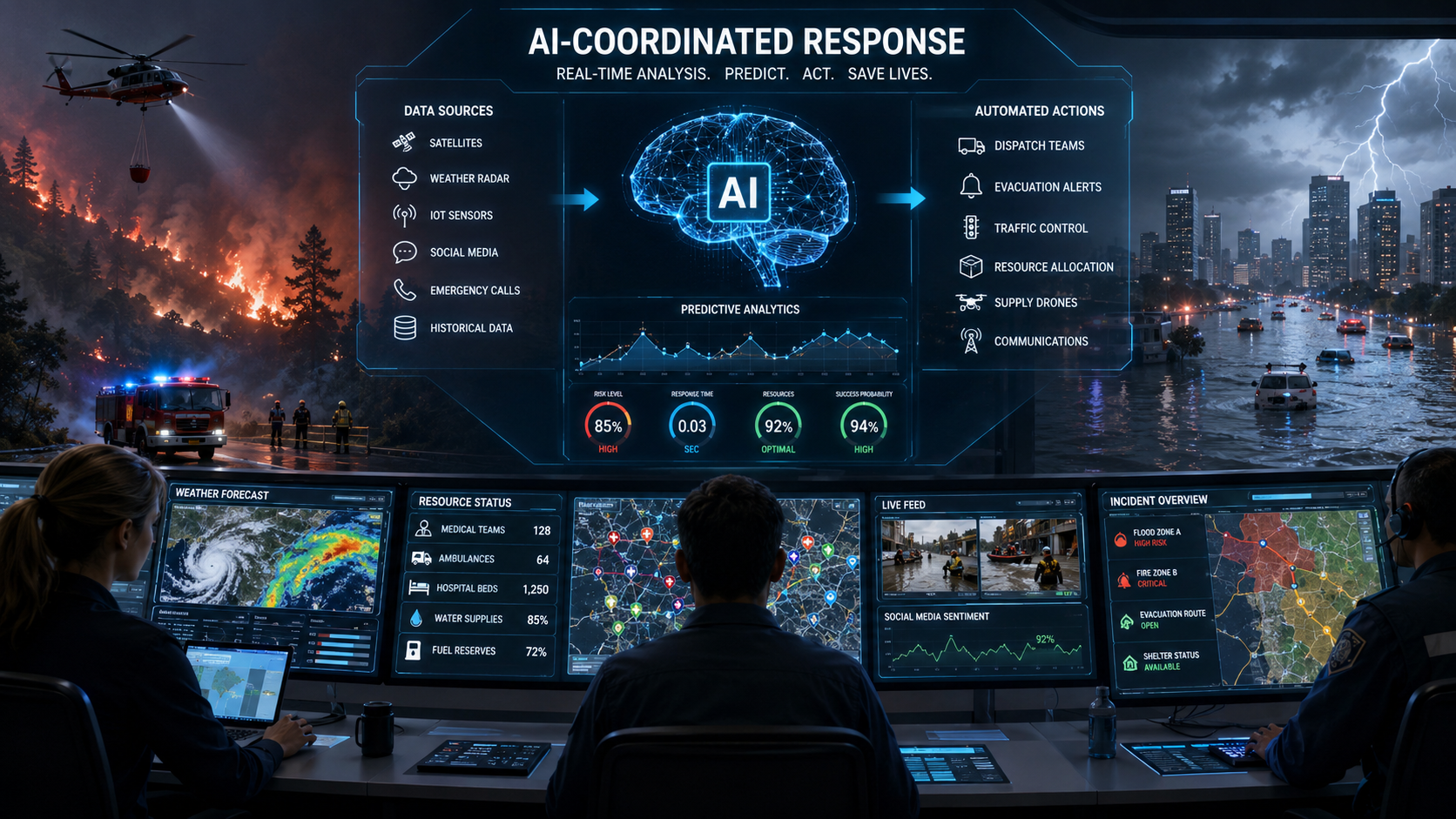
Imagine a command center where AI filters out 90% of irrelevant data and presents only the three most viable options for the human manager to choose from. This combines the speed of the machine with the ethics and contextual intuition of the human.
For companies and governments, investing in this technology is no longer a futuristic option; it’s an operational resilience necessity.
💡 Conclusion: Ready for the New Normal?
The end of "traditional" emergencies doesn’t mean the end of crises, but the end of disorganized improvisation. AI offers us the chance to transform chaos into coordinated order.
But remember: technology is a powerful tool, but we are still the ones who define ethical values and priorities. Use the data, trust the analysis, but never abandon critical human supervision.
And you? Would you trust your safety to an algorithm in a life-or-death situation? Leave your opinion in the comments! 👇💬
Liked this content? Share it with your network and debate the future of crisis management! 🚀
#ArtificialIntelligence #CrisisManagement #Technology #Innovation #DataScience #FutureOfWork #Automation #BusinessIntelligence
GERMAN VERSION:
🚨 KI und das Ende traditioneller Notfälle: Wenn Algorithmen das Kommando in Krisensituationen übernehmen 🤖📉
Haben Sie sich schon einmal eine Welt vorgestellt, in der die anfängliche Panik eines Notfalls durch eine kühle, kalkulierte und sofortige Reaktion ersetzt wird? 🤔
Jahrzehntelang hing das Krisenmanagement – sei es bei Naturkatastrophen, finanziellen Zusammenbrüchen oder kritischen Infrastrukturausfällen – von menschlicher Intuition, starren Hierarchien und leider auch von langsamer Bürokratie ab. Heute stehen wir am Rande eines Paradigmenwechsels: der Ära der algorithmuskoordinierten automatischen Reaktionen.
Aber können wir Maschinen blind vertrauen, wenn alles in Flammen steht? 🔥 Lassen Sie uns die Daten, die Risiken und die Chancen dieser neuen Realität analysieren. 👇
1. Lichtgeschwindigkeit vs. Menschengeschwindigkeit ⚡🧠
In einem traditionellen Notfall ist die Zeit zwischen der Erkennung des Problems und der Maßnahme der größte Feind.
- Mensch: Erkennt ➡️ Informiert Vorgesetzten ➡️ Krisensitzung ➡️ Genehmigung ➡️ Maßnahme. (Zeit: Stunden oder Tage)
- KI: Erkennt ➡️ Analysiert historische Muster ➡️ Führt optimiertes Protokoll aus. (Zeit: Millisekunden)
Machine-Learning-Algorithmen können Ausfälle in Stromnetzen vorhersagen, bevor sie eintreten, oder Krankenwagenrouten in Echtzeit umleiten, um fatale Staus zu vermeiden. Das ist keine Magie; es ist prädiktive Datenanalyse in ihrer reinsten Form. 📊
2. Das Ende des „Bauchgefühls“ im Krisenmanagement 🎯
Intuition hat ihren Platz, aber in Stresssituationen versagt sie. Kognitive Verzerrungen führen dazu, dass wir Entscheidungen basierend auf Angst treffen, nicht auf Fakten.
Koordinierte KI-Systeme eliminieren emotionales Rauschen. Sie verarbeiten Tausende von Variablen gleichzeitig:
✅ Wetterbedingungen in Echtzeit.
✅ Verfügbarkeit von Ressourcen (Betten, Teams, Vorräte).
✅ Historische Erfolgsraten früherer Interventionen.
Das Ergebnis? Evidenzbasierte Entscheidungsfindung, keine Annahmen. Für Führungskräfte in Unternehmen und im öffentlichen Sektor bedeutet dies maximale Effizienz und eine drastische Reduzierung der Kosten durch operative Fehler. 💼💰
3. Die Schattenseite: Was, wenn der Algorithmus versagt? ⚠️🚫
Nicht alles ist eitel Sonnenschein. Die totale Automatisierung bringt ernste Risiken mit sich, die wir mit Vorsicht betrachten müssen:
- Algorithmische Verzerrung: Wenn die Trainingsdaten voreingenommen sind, kann die Notfallreaktion bestimmte Gebiete oder Gruppen gegenüber anderen bevorzugen. 📉
- Kaskadenartiger Ausfall: Ein einzelner Fehler im Hauptcode könnte das gesamte Reaktionssystem lahmlegen und ein größeres Chaos verursachen als der ursprüngliche Notfall.
- Verlust der menschlichen Note: In humanitären Krisen ist Empathie entscheidend. Eine Drohne, die Hilfsgüter liefert, kann ein verängstigtes Opfer nicht trösten. 🤝
4. Die hybride Zukunft: KI als Co-Pilot, nicht als Autopilot 🛩️👨✈️
Wahre Innovation besteht nicht darin, Menschen zu ersetzen, sondern unsere Reaktionsfähigkeit zu erweitern.
Stellen Sie sich ein Leitzentrum vor, in dem die KI 90 % der irrelevanten Daten herausfiltert und nur die drei vielversprechendsten Optionen zur Auswahl für den menschlichen Manager präsentiert. Dies kombiniert die Geschwindigkeit der Maschine mit der Ethik und der kontextuellen Intuition des Menschen.
Für Unternehmen und Regierungen ist die Investition in diese Technologie keine futuristische Option mehr, sondern eine Notwendigkeit für operative Resilienz.
💡 Fazit: Bereit für die neue Normalität?
Das Ende „traditioneller“ Notfälle bedeutet nicht das Ende von Krisen, sondern das Ende der desorganisierten Improvisation. KI bietet uns die Chance, Chaos in koordinierte Ordnung zu verwandeln.
Aber denken Sie daran: Technologie ist ein mächtiges Werkzeug, aber wir sind es immer noch, die ethische Werte und Prioritäten definieren. Nutzen Sie die Daten, vertrauen Sie der Analyse, aber geben Sie die kritische menschliche Aufsicht niemals auf.
Und Sie? Würden Sie Ihre Sicherheit in einer Lebens-oder-Tod-Situation einem Algorithmus anvertrauen? Hinterlassen Sie Ihre Meinung in den Kommentaren! 👇💬
Hat Ihnen dieser Inhalt gefallen? Teilen Sie ihn mit Ihrem Netzwerk und diskutieren Sie über die Zukunft des Krisenmanagements! 🚀
#KünstlicheIntelligenz #Krisenmanagement #Technologie #Innovation #DataScience #ZukunftDerArbeit #Automatisierung #BusinessIntelligence
KOREAN VERSION:
🚨 AI와 전통적 비상사태의 종말: 알고리즘이 위기 대응을 지휘할 때 🤖📉
비상사태 발생 시 초기 당황함이 차갑고 계산된 즉각적인 대응으로 대체되는 세상을 상상해 본 적 있으신가요? 🤔
수십 년 동안 재난 관리(자연재해, 금융 붕괴, 주요 인프라 장애 등)는 인간의 직관, 엄격한 위계질서, 그리고 느린 관료주의에 의존해 왔습니다. 하지만 오늘날 우리는 패러다임의 전환점에 서 있습니다. 바로 알고리즘 기반 자동 대응 시스템의 시대입니다.
하지만 모든 것이 혼란스러울 때 기계에게 맹목적으로 신뢰를 보낼 수 있을까요? 🔥 이 새로운 현실의 데이터, 위험 요소, 그리고 기회를 분석해 봅시다. 👇
1. 빛의 속도 vs 인간의 속도 ⚡🧠
전통적인 비상사태에서 문제 인식과 조치 사이의 시간 간격은 가장 큰 적입니다.
- 인간: 문제 인식 ➡️ 상급자 보고 ➡️ 위기 대책 회의 ➡️ 승인 ➡️ 조치 실행 (소요 시간: 수시간 또는 수일)
- AI: 문제 인식 ➡️ 과거 패턴 분석 ➡️ 최적화된 프로토콜 실행 (소요 시간: 밀리초 단위)
머신러닝(Machine Learning) 알고리즘은 정전 사태가 발생하기 전에 전력망의 고장을 예측하거나, 실시간으로 구급차 경로를 재조정하여 치명적인 교통 체증을 피할 수 있습니다. 이는 마법이 아니라 순수한 형태의 예측 데이터 분석입니다. 📊
2. 위기 관리에서 '감'에 의한 판단의 종식 🎯
직관은 그 자리가 있지만, 고스트레스 상황에서는 종종 실패합니다. 인지 편향은 우리가 사실이 아닌 공포에 기반한 결정을 내리게 만듭니다.
조율된 AI 시스템은 감정적 노이즈를 제거합니다. 동시에 수천 개의 변수를 처리합니다.
✅ 실시간 기상 조건
✅ 자원 가용성(병상, 팀, 물자 등)
✅ 이전 개입 사례의 역사적 성공률
그 결과? 추측이 아닌 증거 기반 의사결정이 가능해집니다. 기업 리더와 공공 부문 관리자에게 이는 최대의 효율성과 운영 실수로 인한 비용의 극적인 감소를 의미합니다. 💼💰
3. 어두운 면: 알고리즘이 오류를 범하면 어떻게 될까? ⚠️🚫
장점만 있는 것은 아닙니다. 완전 자동화는 신중하게 고려해야 할 심각한 위험을 수반합니다.
- 알고리즘 편향: 학습 데이터에 편향이 있을 경우, 긴급 대응 시스템이 특정 지역이나 집단을 다른 곳보다 우대할 수 있습니다. 📉
- 연쇄적 장애: 메인 코드의 단일 오류가 전체 대응 시스템을 마비시켜, 원래의 비상사태보다 더 큰 혼란을 초래할 수 있습니다.
- 인간적 온기의 상실: 인도적 위기 상황에서는 공감이 필수적입니다. 구호 물자를 배달하는 드론은 두려움에 떨던 피해자를 위로할 수 없습니다. 🤝
4. 하이브리드 미래: 오토파일럿이 아닌 코파일럿으로서의 AI 🛩️👨✈️
진정한 혁신은 인간을 대체하는 것이 아니라 우리의 대응 능력을 증강시키는 데 있습니다.
AI가 관련 없는 데이터의 90%를 필터링하고 인간 관리자가 선택할 수 있는 가장 실행 가능한 3가지 옵션만 제시하는 명령 센터를 상상해 보세요. 이는 기계의 속도와 인간의 윤리 및 맥락적 직관을 결합합니다.
기업과 정부에게 이 기술에 대한 투자는 더 이상 미래지향적인 선택 사항이 아니라, 운영 회복 탄력성을 위한 필수 조건입니다.
💡 결론: 새로운 정상성에 준비되었는가?
'전통적' 비상사태의 종말은 위기의 끝을 의미하는 것이 아니라, 무질서한 즉흥 대응의 끝을 의미합니다. AI는 혼란을 조율된 질서로 변환할 기회를 제공합니다.
하지만 기억하십시오. 기술은 강력한 도구이지만, 윤리적 가치와 우선순위를 정의하는 것은 여전히 우리 인간입니다. 데이터를 활용하고 분석을 신뢰하되, 비판적인 인간의 감독을 결코 포기하지 마십시오.
여러분이라면 생사가 갈리는 상황에서 자신의 안전을 알고리즘에 맡기겠습니까? 댓글로 의견을 남겨주세요! 👇💬
이 콘텐츠가 유용하셨나요? 네트워크와 공유하고 위기 관리의 미래에 대해 토론해 보세요! 🚀
#인공지능 #위기관리 #기술 #혁신 #데이터사이언스 #미래의일터 #자동화 #비즈니스인텔리전스