West Chester Wildlife, September 2026: 5 Bald Eagles and 4 New Species
TL;DR: This post provides an overview of my backyard wildlife photography and citizen science activities in West Chester (Chester County), PA, during the month of September. The month included four species that I hadn't previously encountered during the seven months I've been doing this. It also featured five sightings of Bald Eagles in flight.
Overview
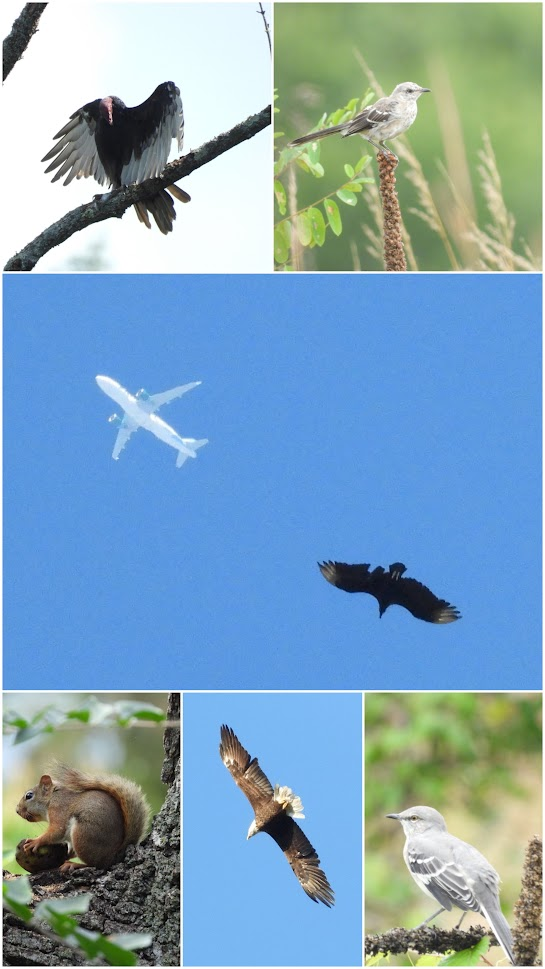
The emerging convention is that each month's first wildlife post provides an overview of the iNaturalist submissions along with some representative photographs. This round of posts will follow the same structure.
Later posts in the month will include whatever details I remember from encounters with specific species, along with some more photos of the specific species. Over the coming weeks, I'm expecting to have four posts after this overview (these are subjects, not titles; titles TBD):
- Small birds and other animals
- Small birds part one
- Small birds part two
- Raptors
In total, since I began this activity, I have submitted 382 observations to the iNaturalist website, and those observations have covered 58 species of animals.
During the month of September, I saved 1,372 photos in my Google Photos album. I also submitted 51 iNaturalist observations covering 30 species. Four of these species were new (to me).
First time observations
Here are the new species:
| Species | Post | First Seen | September Sightings | Total Sightings | Most Recently Seen | Observed Dates |
|---|---|---|---|---|---|---|
| Pileated Woodpecker | Small Birds and Other Animals | 2026-09-17 | 1 | 1 | 2026-09-17 | 2026-09-17 |
| Red-spotted Admiral | Small Birds and Other Animals | 2026-09-12 | 1 | 1 | 2026-09-12 | 2026-09-12 |
| Sharp-shinned Hawk | Raptors | 2026-09-04 | 1 | 1 | 2026-09-04 | 2026-09-04 |
| Wilson's Warbler | Small Birds and Other Animals | 2026-09-23 | 1 | 1 | 2026-09-23 | 2026-09-23 |
My September observations from iNaturalist
And here is the overall summary table.
| Species | First Seen | September Sightings | Total Sightings | Most Recently Seen | Observed Dates |
|---|---|---|---|---|---|
| Bald Eagle | 2026-03-26 | 5 | 10 | 2026-09-28 | 2026-09-04, 2026-09-12, 2026-09-18, 2026-09-25, 2026-09-28 |
| Turkey Vulture | 2026-03-24 | 4 | 42 | 2026-09-25 | 2026-09-04, 2026-09-11, 2026-09-18, 2026-09-25 |
| Blue Jay | 2026-03-21 | 3 | 21 | 2026-09-28 | 2026-09-07, 2026-09-17, 2026-09-28 |
| Mourning Dove | 2026-03-21 | 3 | 18 | 2026-09-28 | 2026-09-07, 2026-09-18, 2026-09-28 |
| Red-tailed Hawk | 2026-03-19 | 3 | 39 | 2026-09-24 | 2026-09-04, 2026-09-13, 2026-09-24 |
| American Goldfinch | 2026-08-23 | 2 | 4 | 2026-09-28 | 2026-09-18, 2026-09-28 |
| American Red Squirrel | 2026-03-22 | 2 | 18 | 2026-09-19 | 2026-09-08, 2026-09-19 |
| Black Vulture | 2026-03-17 | 2 | 13 | 2026-09-16 | 2026-09-08, 2026-09-16 |
| European Starling | 2026-05-12 | 2 | 7 | 2026-09-25 | 2026-09-22, 2026-09-25 |
| Gray Catbird | 2026-05-01 | 2 | 17 | 2026-09-28 | 2026-09-15, 2026-09-28 |
| House Finch | 2026-04-26 | 2 | 17 | 2026-09-30 | 2026-09-18, 2026-09-30 |
| Northern Flicker | 2026-03-25 | 2 | 15 | 2026-09-28 | 2026-09-10, 2026-09-28 |
| Red-bellied Woodpecker | 2026-03-01 | 2 | 12 | 2026-09-30 | 2026-09-18, 2026-09-30 |
| American Crow | 2026-04-28 | 1 | 6 | 2026-09-15 | 2026-09-15 |
| American Robin | 2026-04-10 | 1 | 13 | 2026-09-23 | 2026-09-23 |
| Canada Goose | 2026-08-17 | 1 | 2 | 2026-09-17 | 2026-09-17 |
| Carolina Wren | 2026-04-27 | 1 | 2 | 2026-09-23 | 2026-09-23 |
| Cedar Waxwing | 2026-05-12 | 1 | 2 | 2026-09-22 | 2026-09-22 |
| Cooper's Hawk | 2026-04-26 | 1 | 4 | 2026-09-04 | 2026-09-04 |
| Downy Woodpecker | 2026-04-03 | 1 | 4 | 2026-09-28 | 2026-09-28 |
| Eastern Bluebird | 2026-04-28 | 1 | 4 | 2026-09-05 | 2026-09-05 |
| Eastern Wood-Pewee | 2026-08-16 | 1 | 3 | 2026-09-14 | 2026-09-14 |
| House Sparrow | 2026-06-26 | 1 | 2 | 2026-09-28 | 2026-09-28 |
| Northern Mockingbird | 2026-07-25 | 1 | 4 | 2026-09-28 | 2026-09-28 |
| Pileated Woodpecker | 2026-09-17 | 1 | 1 | 2026-09-17 | 2026-09-17 |
| Red-spotted Admiral | 2026-09-12 | 1 | 1 | 2026-09-12 | 2026-09-12 |
| Sharp-shinned Hawk | 2026-09-04 | 1 | 1 | 2026-09-04 | 2026-09-04 |
| White-breasted Nuthatch | 2026-03-29 | 1 | 5 | 2026-09-15 | 2026-09-15 |
| White-tailed Deer | 2026-05-29 | 1 | 7 | 2026-09-23 | 2026-09-23 |
| Wilson's Warbler | 2026-09-23 | 1 | 1 | 2026-09-23 | 2026-09-23 |
Impressions and Highlights from September
Most of the activity continues to happen in my backyard. I mean, really, why drive places when I see many of the same animals from my own yard? As with August, though, I did make a couple trips to the Stroud Preserve and the Robert G. Gordon Natural Area.
Impressions
Overall, I had been hoping that the pace would pick up a bit as the fall migration season got underway, but that didn't really seem to happen. Instead, September had a lot of rainy days where I couldn't even venture outside and still more days where cloudy skies made photography challenging.
So, the overall observation count for September was down to 51 from 68 in August. The number of species stayed the same, with 30 species each month.
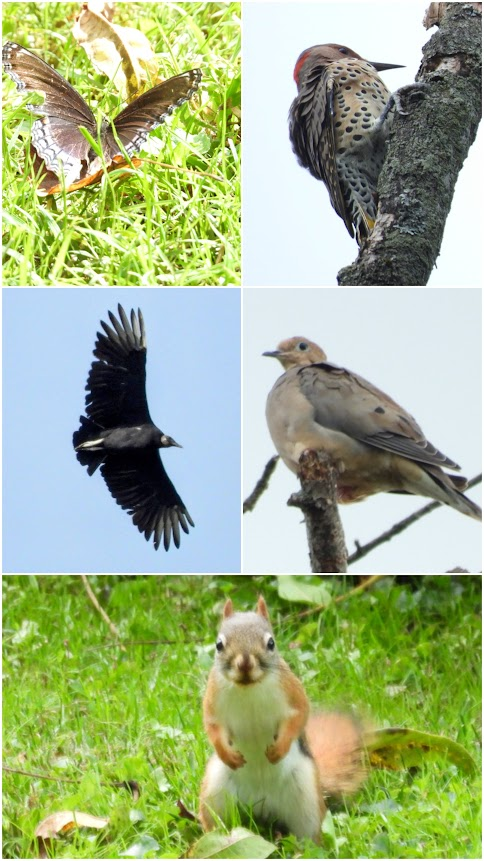
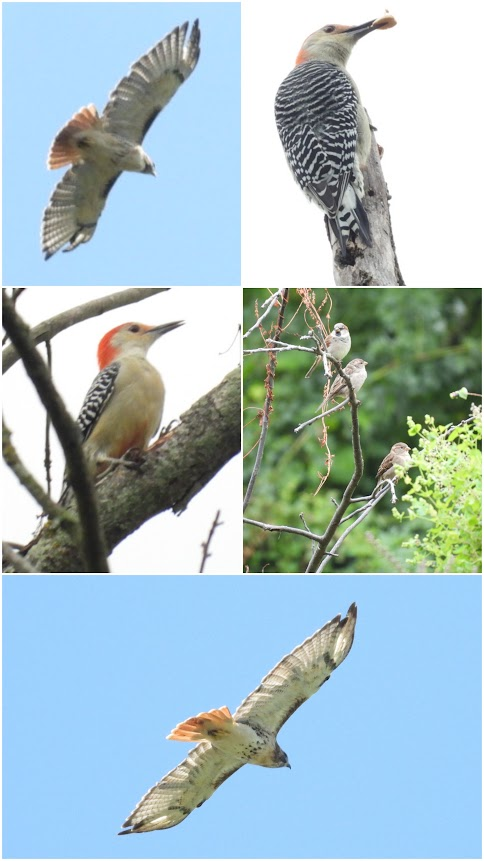
Highlights
Despite the reduced observation count, I did see four new species, two or three of which can probably be attributed to the fall migration.
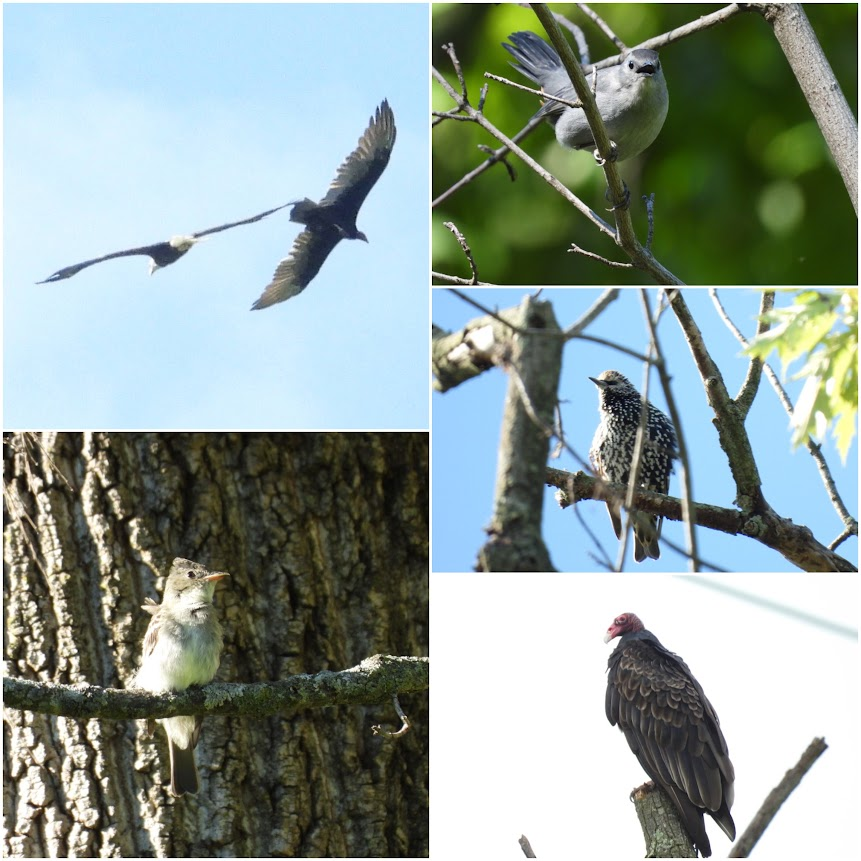
Another highlight included five sightings of the Bald Eagle. A year ago, I had never seen a Bald Eagle in the wild. Over the course of my wildlife photography activity this year, I'm pretty sure that I've never seen more than one Bald Eagle per month. So, five sightings in a month feels almost surreal. In some of these sightings, the eagles were flying in the company of Turkey Vultures or Black Vultures.
A third highlight of the month was that I was able to get a number of tight photos of Turkey Vultures sitting in trees from the Stroud Preserve, the Gordon Natural Area, and even from my own backyard.
A final highlight of September, which is probably not captured in any of the photos, is that I started seeing more flocking behavior (and this is continuing into October). In July and August, for example, I had seen European Starlings in groups of 10 or 20. In September, I've seen them in groups of 100 or more.
Wrap-up
Before closing, let me also mention that there are six animals that have made an appearance every month since I began this initiative. They are the American Red Squirrel, the Blue Jay, the Mourning Dove, the Northern Flicker, the Red-tailed Hawk, and the Turkey Vulture.
Let me also address a topic that I have recently learned might be controversial: Apparently, some people object to the use of the term "raptor" to include vultures (specifically "New World Vultures") because vultures are not predators that hunt live prey. I understand the concern, but these birds clearly have many characteristics in common with the hawks, eagles, etc. so "raptor" is a convenient category. Also, in plain English, Webster's defines a raptor like this:
| 1: a carnivorous medium- to large-sized bird (such as a hawk, eagle, owl, or vulture) that has a hooked beak and large sharp talons and that feeds wholly or chiefly on meat taken by hunting or on carrion: bird of prey 2 : a usually small-to-medium-sized predatory dinosaur (such as a velociraptor or deinonychus) |
|---|
So, I will continue using the term "raptor" to describe vultures. That usage should be understood as a convenient grouping in common English, and not as any kind of a scientific claim.
With this overview now complete, stay tuned for four more posts covering September's animal sightings.
Appendix
| A full index of my posts about wildlife photography and citizen science is here: WILDLIFE PHOTOGRAPHY INDEX |
|---|
Notes on the use of AI
As previously noted, I use AI for the following purposes in creating this series:
- Wildlife identification (Merlin, iNaturalist, Meta AI, Claude, Gemini)
- Formatting iNaturalist observations, photographs, dates, and camera settings into markdown tables (Claude)
- Proof-reading and editorial advice (Claude, Gemini, Meta AI, ChatGPT, Grok)
Thank you for your attention!
Unless otherwise specified in the text, all photos above were taken by me with a (handheld) Nikon P1000 camera. I'm sharing them under the CC BY 4.0 license (share & adapt freely with attribution to the original source).