What is Schema and Microformats Markup? A Comprehensive Guide to Structured Data
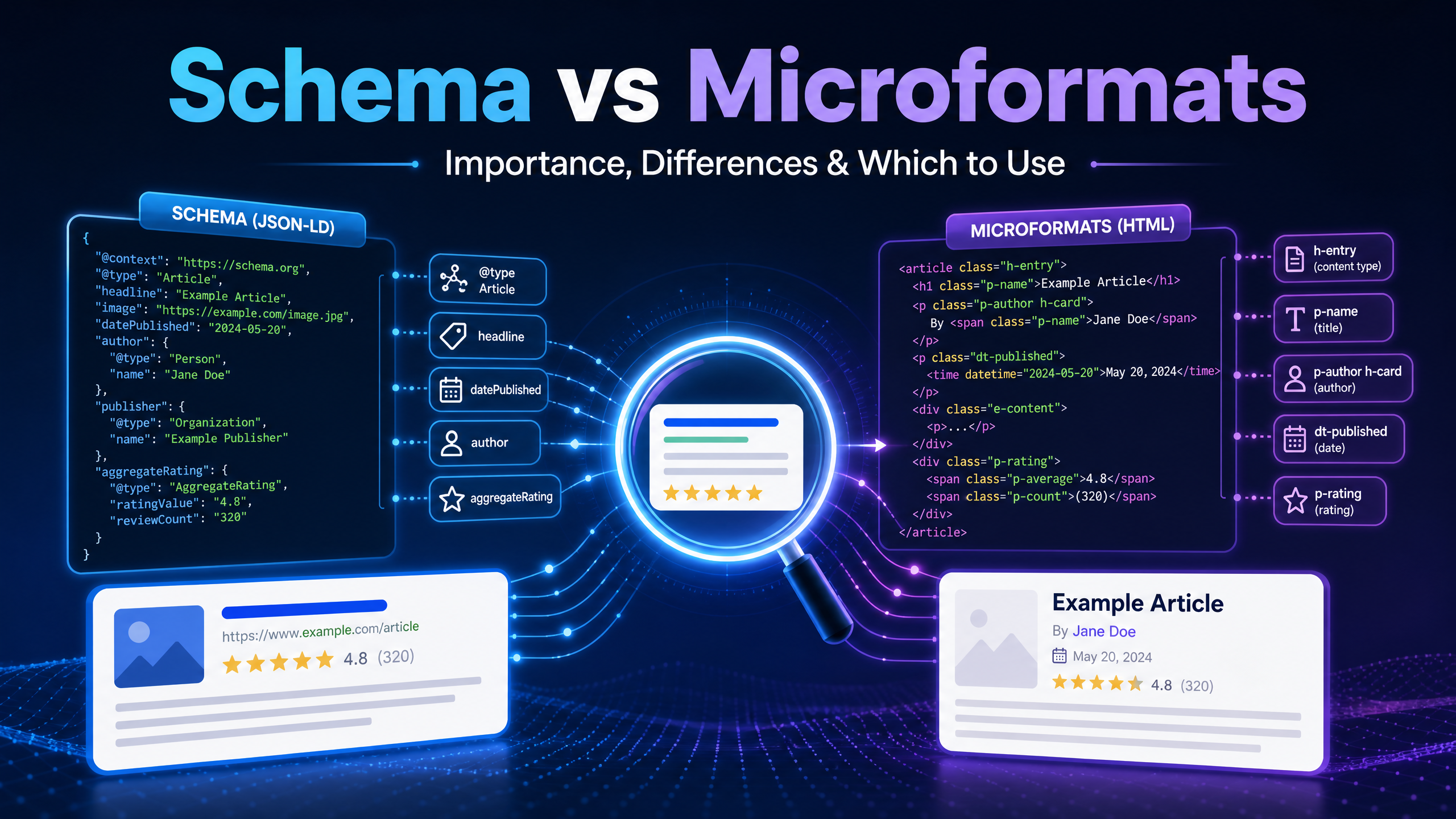
In the world of Search Engine Optimization (SEO), simply filling your website with relevant keywords is no longer enough. Search engines like Google and Bing are sophisticated enough to understand the context and meaning behind the words you use.
To help search engines understand your content, you need to speak their language: Structured Data Markup.
If you’ve heard the terms "Schema" and "Microformats," you know that structured data is critical, but the difference between these two terms can be confusing.
This article will break down what Schema and Microformats are, explain their differences, and provide clear guidance on which one you should use today.
🏛️ The Foundation: What is Structured Data?
Before diving into the specifics, let's understand the concept:
Structured Data is code written into the HTML of your webpage that explicitly tells search engines what your content is, who it belongs to, and how it relates to other entities.
Think of it this way: If a typical webpage is a novel, structured data is the index, the table of contents, and the metadata that instantly tells the search engine: "This section is the 'Author,' this paragraph is the 'Date,' and this whole article is a 'Recipe.'"
By implementing structured data, you have a much higher chance of achieving Rich Snippets (those visually enhanced results—like star ratings, prices, and cooking times—that appear directly in the search results page).
✏️ Deep Dive 1: What is Microformats Markup?
Microformats (often abbreviated as "Micro") represent an older, pioneering effort in the structured data space. They were one of the first major standards designed to allow web developers to mark up common types of online content.
How They Work
Microformats don't use a single vocabulary; rather, they use a system of common classes and elements (like vcard for contact info, or hcard for a business card). They aim to make content "machine-readable" by standardizing common web patterns.
Example: Marking up an author’s contact card might involve wrapping elements in a vcard class.
Pros and Cons
| ✅ Advantages | ❌ Disadvantages |
|---|---|
| Simple Concept: Very easy to grasp the core idea of identifying content parts. | Limited Scope: They struggle to handle complex, modern data structures (e.g., detailed product specifications, complex event schedules). |
| Pioneering: Helped set the groundwork for modern structured data standards. | Outdated: Many of the specifications have been updated, superseded, or abandoned due to the rise of more robust frameworks. |
| Fragmentation: Because they are a collection of many small, specialized standards, they lacked a single, comprehensive authority. |
🌐 Deep Dive 2: What is Schema Markup (Schema.org)?
Schema Markup is the modern, industry-standard solution for structured data. It is not a single code; rather, it is a massive, collaborative vocabulary built by Google, Microsoft, and other major web entities to describe almost everything that exists on the internet.
The backbone of this system is Schema.org.
How It Works
Instead of using simple classes like Microformats, Schema.org uses specific, machine-readable vocabulary types (called schemas) to define an entity and its properties.
Every time you implement Schema, you are essentially telling the search engine: "Hey Google, this entire chunk of data is a 'Product,' and here are its properties: name, price, rating, and sku."
Developers typically implement this vocabulary using two methods:
- JSON-LD (JavaScript Object Notation for Linked Data): This is the preferred, clean, and modern way to implement Schema.
- Microdata: An older method that embeds the structured data directly into the HTML tags.
Key Benefits
- Scope: Schema is incredibly vast. It has types for almost every entity—from
RecipeandBooktoLocalBusinessandFAQPage. - Standardization: It provides a consistent set of properties and relationships, making it reliable and future-proof.
- Authority: Because it is championed by Google and the major tech players, it is the recognized industry standard.
🆚 The Head-to-Head Comparison: Schema vs. Microformats
While both methods share the goal of making content machine-readable, their approaches, scope, and relevance are vastly different.
| Feature | Microformats | Schema.org Markup |
|---|---|---|
| Goal | To mark up common, simple web content patterns (e.g., basic contacts). | To define and describe complex, real-world entities and relationships (e.g., a product listing). |
| Vocabulary | A collection of smaller, specialized classes (vcard, hcard, etc.). | A massive, unified, and highly organized vocabulary of standardized types (Product, LocalBusiness, etc.). |
| Complexity | Simple but limited in functionality. | Highly sophisticated, allowing for complex nested data and relationships. |
| Modern Relevance | Low; largely considered superseded and insufficient for modern SEO needs. | High; it is the definitive, current industry standard for structured data. |
| Implementation | Class-based CSS approach. | Uses structured code formats (primarily JSON-LD). |
The Core Difference Summary
The critical takeaway is that Schema.org is the modern, expanded, and superior solution that fulfills the original goals of Microformats while adding immense power and scope.
If Microformats were a toolkit for basic measurements, Schema.org is a comprehensive engineering blueprint for an entire city.
🚀 Which One Should You Use? (The Definitive Answer)
Always use Schema.org Markup.
Attempting to implement Microformats today will leave you using outdated tools for a job that requires the power of modern structured data.
Quick Action Guide:
| Scenario | Recommendation | Why? |
|---|---|---|
| General Website Markup | Schema.org | For products, local business details, recipes, and articles, Schema provides the necessary depth and structure for rich snippets. |
| Developing a Modern Site | Schema.org (JSON-LD) | JSON-LD is the clean, preferred, and most future-proof implementation method for Google. |
| Studying Historical Standards | Microformats | Use this only for academic understanding; do not rely on it for modern SEO success. |
Best Practices Checklist
- Prioritize JSON-LD: When implementing Schema, use the JSON-LD format. It is cleaner, easier to manage, and preferred by major search engine developers.
- Be Specific: Don't just say "This is data." Say "This is a
Productand here is itsprice." The more specific you are, the better Google understands your page. - Validate Everything: Always use Google's official Rich Results Test tool. This tool will check your implementation and tell you exactly what worked, what needs fixing, and which rich snippets you are eligible for.
💡 Conclusion
Structured data markup is not an optional feature—it is an essential component of modern web development and SEO.
While Microformats helped pioneer the concept, Schema.org is the robust, comprehensive, and necessary standard. By correctly implementing Schema, you move beyond simply writing content; you are creating a clear, labeled map for search engines, significantly improving your visibility and authority in search results.