Beyond the Dirt: The Technologies and Secrets Behind Modern Excavations
Hello Steemit community! As an archaeologist and the creator behind Athaar Atheer, I am often asked if my everyday work is just about shovels, brushes, and dusty trenches. While patience and manual precision remain core to what we do, the truth is that our field has entirely transformed.
Modern archaeological excavations are no longer just about digging blindly. Today’s digs combine advanced technology, environmental science, digital surveying, and deep historical analysis to uncover the past with unprecedented accuracy.
Here is a look behind the scenes at how technology is rewriting history.
The Digital Revolution in Archaeology
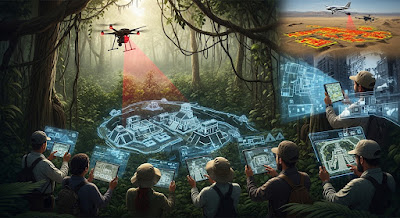
Tools like LiDAR (Light Detection and Ranging), AI image analysis, and thermal scanning now allow experts to detect hidden structures buried beneath dense forests, vast deserts, or even modern cities. Entire lost civilizations—such as the massive Mayan jungle cities—have been mapped and discovered entirely thanks to these non-invasive tools.
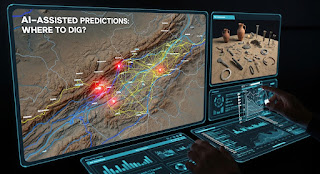
AI-Assisted Predictions: Where to Dig?
Artificial intelligence has become an archaeologist's trusted advisor. By analyzing massive data patterns from previous excavations, geological formations, and ancient trade routes, AI can predict exactly where artifacts or structures might be buried. This minimizes unnecessary ground damage and maximizes discovery efficiency.
Non-Invasive Technologies: Seeing the Past Without Digging
Before breaking the ground, modern teams rely heavily on advanced scanning techniques to build underground maps:
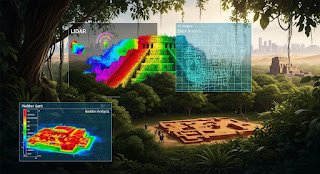
LiDAR: Penetrates thick vegetation from above to reveal surface topography.
Ground-penetrating radar (GPR): Sends radar pulses into the soil to map subsurface structures.
Satellite imaging and Geophysical scans: Detect changes in soil composition and moisture that indicate buried walls or roads.
These tools help researchers decide the safest and most promising locations before the physical work even begins.
Robotic and Drone Excavation Tools
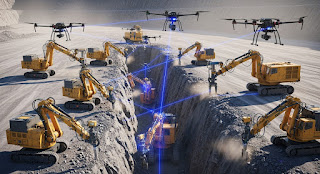
Robotic arms assist in reaching delicate, unstable, or dangerous areas where human hands cannot safely go. Meanwhile, high-flying drones capture high-resolution aerial images and create precise 3D terrain models. This significantly reduces human error and speeds up the documentation process.
Environmental Archaeology: Reconstructing Ancient Ecosystems
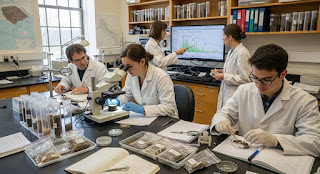
Archaeology isn't just about gold and pottery; it's about context. Soil samples collected from excavation sites reveal past climate changes, ancient agricultural practices, and even prehistoric diets. This allows researchers to understand not just what ancient civilizations built, but how they adapted—or collapsed—due to environmental shifts.
Challenges Behind Modern Excavations
Even with advanced technological tools, field archaeology faces real-world hurdles:
Environmental restrictions and extreme weather.
Political instability in historically rich regions.
Constant threats of looting and illegal black-market digging.
Funding limitations and climate-related site degradation.
Overcoming these factors requires meticulous planning and strong international cooperation.
Preserving Context: The Heart of Archaeology
At the end of the day, technology is a powerful tool—but human interpretation remains essential. Preserving the exact context of where and how an artifact is found ensures it keeps its historical meaning. Without context, an artifact is just an object; with it, it is a piece of human history.
Conclusion
Modern excavation methods show how archaeology is evolving—from manual digging to digital reconstruction—unlocking deeper insights into humanity’s past.
I would love to hear your thoughts! Which of these technologies surprised you the most? Let's discuss in the comments below, and stay tuned for more historical journeys from
Athaar Atheer!