Finding the Best Machine for Tight Access and Multi-Purpose Site Tasks
Choosing construction machinery becomes more complicated when a project involves narrow access routes, limited working space, and several different tasks. Contractors may need to dig trenches, prepare foundations, move soil, load materials, and level surfaces without having room for multiple large machines.
In these situations, selecting equipment that combines practical dimensions with useful versatility can make a noticeable difference. Compact excavators and backhoe loaders are two common options, but each has strengths that suit particular working conditions. Understanding their differences helps contractors choose machinery that supports the project's needs without adding unnecessary costs or complications.
Understanding the Challenges of Restricted Construction Sites
Construction work in developed areas often takes place around existing buildings, boundary walls, utility lines, roads, and pedestrian routes. The available space may be limited, making it difficult to position and manoeuvre conventional heavy equipment.
A machine that works well on an open construction site might not be suitable for a narrow residential plot or a commercial property with restricted access. Contractors must consider the entrance width, turning space, overhead clearance, ground conditions, and distance between the working area and nearby structures.
The type of work also matters. A project involving mainly trench excavation may require different equipment from one that combines digging, loading, and material movement.
Before arranging machinery, project managers should list the tasks that need to be completed and assess the site's limitations. This initial assessment helps identify which machine offers the most practical balance between size, performance, and versatility.
What Is a Mini Excavator?
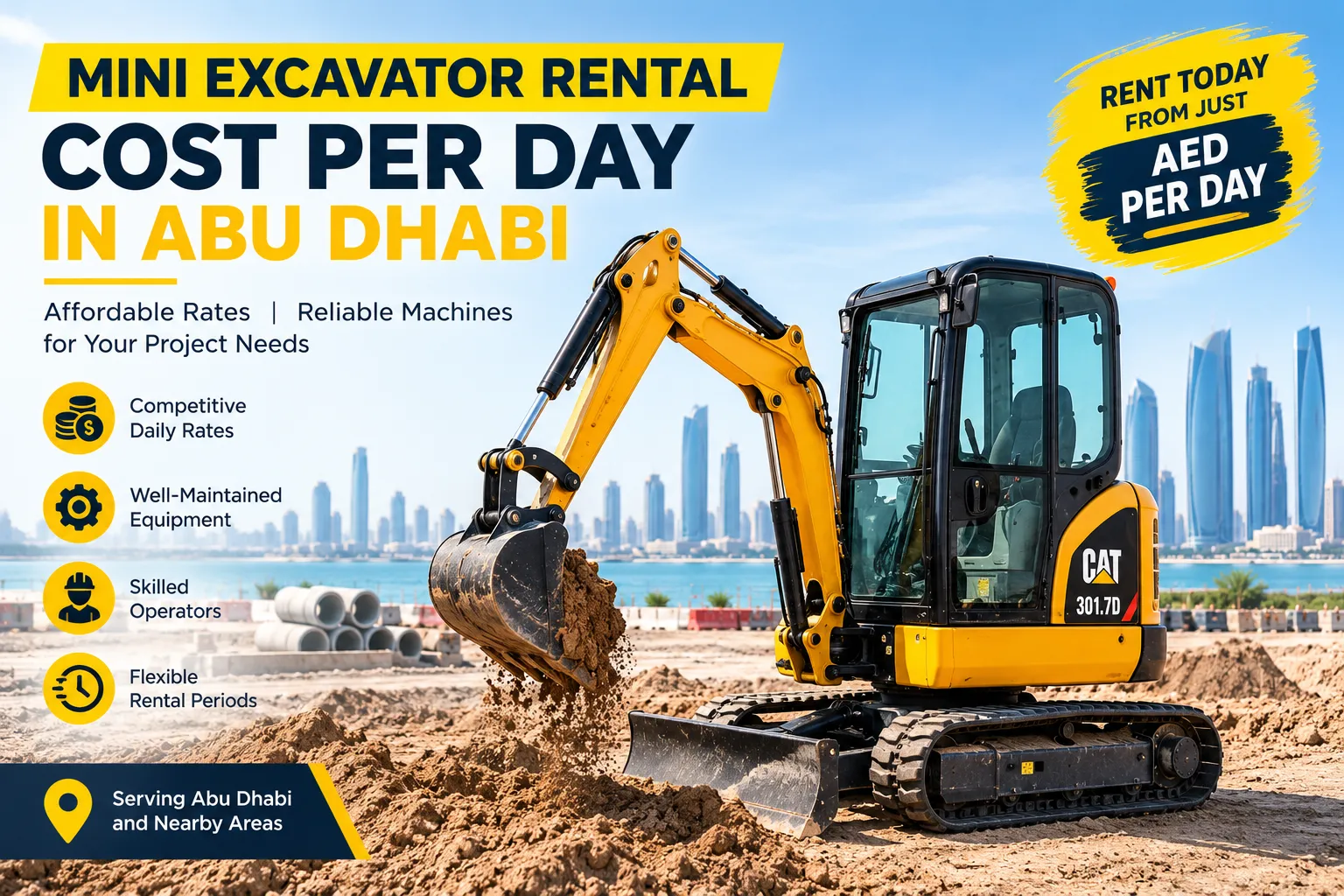
A mini excavator is a compact tracked or wheeled machine designed primarily for digging and related earthmoving tasks. Its boom, arm, and bucket allow operators to excavate soil, create trenches, prepare foundations, and perform selected grading activities.
Mini excavators are especially useful in areas where a larger excavator cannot operate comfortably. Depending on the model, they may be suitable for landscaping, drainage installation, garden improvements, small foundation projects, and underground utility work.
Their compact dimensions can make transportation and positioning easier, although the actual requirements depend on the machine's size and configuration.
Different models offer different digging depths, operating weights, bucket capacities, and working reaches. Contractors should compare these specifications with the project's requirements rather than assuming that every mini excavator can perform the same tasks.
Some models also support compatible attachments that expand their capabilities. However, attachment availability and hydraulic compatibility should always be confirmed before hiring.
What Is a JCB or Backhoe Loader?
A backhoe loader combines two main working functions in one machine. The front loader bucket is designed for tasks such as moving soil, handling loose materials, and loading transport vehicles. The rear backhoe arm is used for digging trenches, foundations, and other excavations.
The term JCB is often used informally to refer to backhoe loaders because of the brand's association with this type of machinery. However, JCB is a manufacturer, and backhoe loaders are also produced by other companies.
This combination of digging and loading capabilities can be useful on construction sites where several activities need to be completed with limited equipment. Instead of arranging separate machines for every task, a contractor may be able to use one backhoe loader for much of the work.
Backhoe loaders are generally larger than the smallest mini excavators. They may therefore require more room for movement and stabiliser deployment. Site access, ground conditions, and the space needed to operate both the front and rear equipment should be assessed before making a selection.
Mini Excavator vs JCB: Which One Should You Rent for Your Mussafah Project?
For a project in Mussafah, Abu Dhabi, the choice between a mini excavator and a JCB backhoe loader should depend on the work involved and the available space.
A mini excavator may be the better option when the main requirement is precise digging in a narrow or confined area. It can be useful for small trenches, landscaping, selected drainage tasks, and excavation close to existing structures, provided the site conditions and safety requirements allow it.
A backhoe loader may be more practical when the project involves several types of work, including digging, loading, and moving material. Its two working ends can reduce the need to bring separate machines to a site where access and equipment storage are limited.
Before choosing Mini Excavator vs JCB: Which One Should You Rent for Your Mussafah Project?, contractors should compare the required digging depth, trench dimensions, material volume, turning space, and daily work schedule. They should also confirm the machine's transport dimensions and whether its stabilisers or loader bucket can be used safely in the available working area.
The best option is not necessarily the machine with the greatest power. It is the one that can complete the required tasks safely and efficiently within the site's physical limitations.
Comparing Digging Performance
Excavation is the main task for many construction projects, so digging performance should be a priority when selecting equipment.
A mini excavator is designed around the rear digging system. Its boom and arm provide flexibility for trenching and foundation work, while the compact chassis can help it operate in areas where space is restricted.
A backhoe loader also offers substantial digging capability, but its performance depends on the model, rear attachment, operating configuration, and ground conditions. It can be especially useful when excavation is only one part of a broader work plan.
Contractors should check the maximum digging depth, reach, bucket size, and machine operating weight. They should also consider the material being excavated. Soft soil, compacted ground, gravel, and rocky material may place different demands on the equipment.
If the job requires precise excavation along a narrow route, a suitable mini excavator may provide the most practical solution. If digging is combined with frequent material handling, a backhoe loader could offer greater overall flexibility.
Manoeuvrability and Working Space
Working space can be the deciding factor when selecting machinery for urban projects. A compact excavator may fit through a narrow entrance and operate in a limited area, depending on its dimensions and the surrounding obstacles.
Some mini excavators feature a reduced tail swing, allowing the rear of the machine to remain within a smaller operating envelope during rotation. This can be useful near walls and other structures, but the specific model must be checked before assuming that clearance is sufficient.
Backhoe loaders typically need more room for positioning, turning, and operating their front and rear attachments. Their stabilisers may also require additional ground space during excavation.
Contractors should measure entrances and working areas before arranging delivery. They should also consider the position of transport vehicles, material stockpiles, and workers.
Even a compact machine can create hazards if it is operated too close to pedestrians, unstable edges, or underground services. Good site planning remains essential regardless of the equipment selected.
Versatility and Attachment Options
Versatility is particularly important when a project includes several different tasks. A machine that can perform multiple functions may reduce equipment movements and simplify scheduling.
Mini excavators can support compatible attachments for tasks such as grading and specialised digging. Their usefulness depends on the model's hydraulic capacity, attachment connections, and manufacturer-approved operating limits.
Backhoe loaders provide versatility through their combined front loader and rear digging systems. They can excavate, load loose material, and assist with moving soil around the site. This combination is helpful when the project requires regular changes between digging and material handling.
However, versatility should not be confused with suitability for every job. Neither machine should be used beyond its rated capacity or for tasks that require equipment specifically designed for the application.
A practical approach is to identify the most frequent tasks first, then determine which machine can complete them with the least disruption.
Hire Costs and Project Scheduling
Equipment hire costs include more than the daily rental rate. Transport, fuel, operator arrangements, attachments, and the length of the booking can all affect the total expense.
A mini excavator may be economical for a small digging project, especially when a larger machine would be unnecessary. A backhoe loader may offer better value when the job involves excavation and repeated loading tasks that would otherwise require separate equipment.
Contractors should request written quotations that clearly explain the hire period, delivery and collection charges, fuel arrangements, operator costs, and any overtime fees.
Scheduling also affects the final cost. If the machinery arrives before the site is ready, or workers are unavailable when excavation begins, valuable hire time may be wasted.
Coordinating excavation with drainage installation, material removal, and other construction activities can help the selected machine remain productive throughout the booking period.
Safety and Ground Conditions
Safe equipment selection requires an assessment of the working environment. Narrow access, uneven ground, overhead obstructions, nearby structures, and underground utilities can all affect how a machine should be operated.
Before digging begins, contractors should arrange the required checks to identify buried cables and pipes. Excavation near existing services may require controlled methods and additional supervision.
The ground must also be suitable for the machine's weight and operating movements. Backhoe loader stabilisers should be deployed according to the manufacturer's instructions, and excavators must remain a safe distance from unstable excavation edges.
Operators should be trained for the selected machine and follow site-specific safety procedures. Workers should remain outside the operating radius unless an approved safe system allows them to enter.
Equipment inspections are equally important. Faulty controls, damaged hydraulic components, worn tyres or tracks, and defective warning devices should be addressed before the machine is used.
Making the Right Choice for Your Site
A mini excavator and a backhoe loader can both be valuable on construction sites, but they serve different priorities. Mini excavators are often better suited to confined digging work, while backhoe loaders offer a useful combination of excavation and material-handling functions.
The final decision should reflect the project's main tasks, available space, ground conditions, required capacity, and budget. Contractors should also confirm machine specifications, transport arrangements, operator availability, and safety requirements before hiring.
By assessing these factors in advance, project managers can choose equipment that fits the site rather than adjusting the entire work plan around an unsuitable machine. This helps make construction activities more organised, limits avoidable delays, and supports efficient use of hired machinery.