The Psychology Behind Everyday Decisions We Make
Everyday decision-making is rarely a purely logical process; it is heavily shaped by cognitive shortcuts, emotional states, and environmental cues. To conserve mental energy, our brains rely on heuristics—mental rules of thumb that allow us to process complex information rapidly. However, these shortcuts often introduce predictable biases.
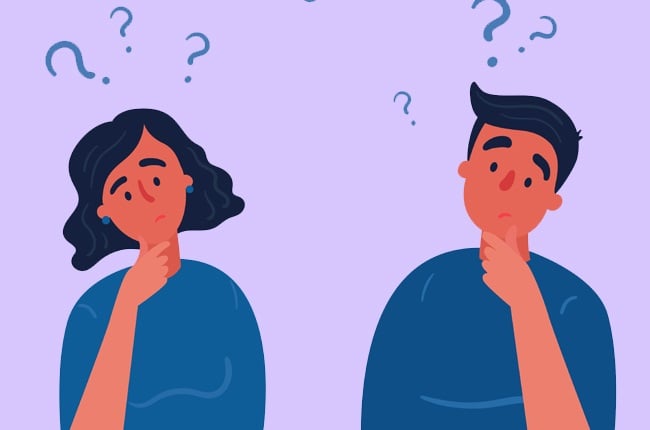
Confirmation bias leads us to favor choices that align with existing beliefs, while loss aversion makes the threat of losing something feel twice as impactful as the pleasure of gaining an equivalent reward.
Furthermore, continuous decision-making drains our finite supply of mental energy—a phenomenon known as decision fatigue—leading us to default to impulse buys, passive choices, or status-quo options by the end of the day. Ultimately, understanding these hidden psychological drivers helps us pause, spot our own blind spots, and make far more intentional everyday choices.
In a world increasingly defined by cynicism and broken commitments, keeping your word has become a rare and transformative act. A promise is more than a casual agreement; it is a direct reflection of your character and personal integrity. When trust is fragile, reliability becomes a quiet form of leadership.
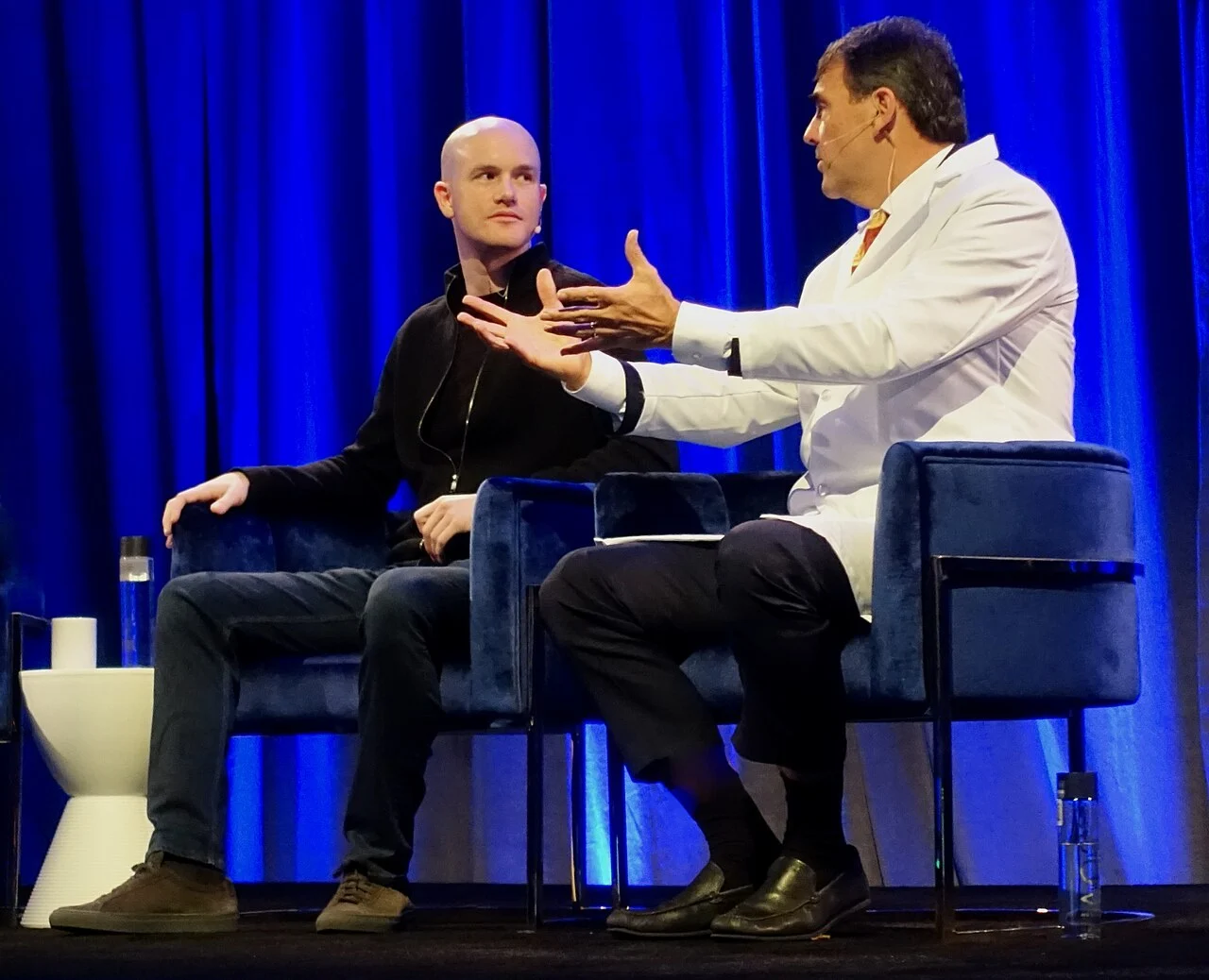
Fulfilling commitments—especially when inconvenient—builds an unshakeable foundation of credibility in both personal and professional relationships. It signals to others that your word holds tangible value in a noisy, fast-paced society. While broken promises instantly erode confidence, steadfast reliability creates emotional safety and deep mutual respect.
Ultimately, in an environment saturated with doubt, consistency is your strongest asset. Keeping promises restores trust, solidifies your reputation, and anchors meaningful connection.
Chasing success without purpose is like sprinting toward a moving finish line—you may achieve speed and momentum, but the victory feels hollow once reached.
When success is defined purely by external metrics like wealth, status, or title, it creates a phenomenon known as the hedonic treadmill: the momentary high of an achievement quickly fades, demanding ever-greater accomplishments to feel fulfilled. Over time, this purposeless drive exacts a heavy toll—manifesting as chronic burnout, emotional disconnection, and profound existential fatigue.
High achievers often discover too late that they sacrificed their relationships, well-being, and authentic values for goals they never truly cared about. Without an underlying "why" to anchor your efforts, success becomes a gilded trap—leaving you professionally accomplished yet personally bankrupt. Ultimately, true success is not measured by how high you climb, but by whether the ladder is leaning against the right wall.
Shared values form the invisible bedrock of every strong community, turning isolated individuals into a unified whole. While diversity of background and thought enriches a society, core principles like empathy, mutual respect, and accountability provide the common framework needed for cooperation.
When a community anchors itself in shared values, trust develops naturally. Members feel a collective sense of responsibility, driving them to support one another during crises and collaborate on long-term goals. Shared values simplify conflict resolution, as disputes are handled through agreed-upon principles rather than raw self-interest.
Ultimately, infrastructure and resources build a town, but shared values build a community. Alignment in core beliefs fosters the safety, resilience, and belonging required for lasting collective progress.
Curiosity is the engine of lifelong learning, driving continuous intellectual and personal growth. Rather than accepting the world at face value, a curious mind asks questions, explores alternatives, and actively seeks out new knowledge. This intrinsic desire to understand keeps the brain adaptable, sharp, and open to fresh perspectives throughout life.
When driven by curiosity, learning shifts from a tedious obligation to an engaging journey of discovery. It dismantles the fear of failure, transforming mistakes into valuable insights rather than obstacles. Embracing new ideas fosters adaptability in an ever-changing world.
Ultimately, intellect alone does not guarantee growth; curiosity does. By maintaining an inquiring mindset, you ensure that personal evolution never stops, unlocking endless opportunities for lifelong development.
Smart people often make remarkably poor decisions because high intelligence does not guarantee good judgment—it merely provides superior computing power.
Intelligence operates primarily through technical reasoning, whereas decision-making depends heavily on rationality, emotional regulation, and self-awareness. High cognitive capacity can actually backfire due to the bias blind spot: intelligent individuals are frequently better at rationalizing bad choices using sophisticated logic to defend opinions driven by ego, emotion, or cognitive shortcuts like confirmation bias.
Furthermore, smart people are particularly susceptible to overconfidence bias, assuming their expertise in one domain seamlessly carries over into unrelated areas where they lack intuition or experience. Combined with environmental triggers like stress, severe decision fatigue, and social pressure, even brilliant minds fall back on flawed heuristics. Ultimately, making sound decisions requires humility, structured decision frameworks, and active self-reflection—qualities that raw IQ simply cannot provide.
Small daily habits act as the compound interest of self-improvement—tiny, almost imperceptible choices that yield massive results over time.
Because the daily impact of a single habit seems negligible, it is easy to overlook its long-term trajectory.
Reading ten pages a day, saving a few dollars, or taking a fifteen-minute walk creates no immediate visible transformation; however, extended across months and years, these micro-actions accumulate into extraordinary outcomes.
Conversely, small negative habits compound just as quietly, imperceptibly steering you toward burnout, financial strain, or poor health. The critical realization is that your current life is simply a lagging measure of your past routines.
You do not rise to the level of your sudden ambitions; you fall to the level of your daily systems. Ultimately, small habits are not just actions you perform—they are the architectural vote you cast every single day for the person you wish to become.
The fundamental difference between being busy and being productive comes down to activity versus achievement.
Being busy is characterized by motion: a crowded calendar, a flooded inbox, and a constant, chaotic rush to clear an endless task list. It relies on reactive urgency, where every incoming ping feels like a priority, leading to a state of cognitive overwhelm and decision fatigue. Busy people measure their worth by the hours they log and the sheer volume of tasks they touch, often confusing movement with progress.
Being productive, by contrast, is defined by direction and intent. Productive individuals focus on high-leverage activities—the few critical tasks that yield the highest impact—while ruthlessly delegating, batching, or eliminating low-value noise. They treat their time and energy as finite assets, prioritizing deep, uninterrupted work over surface-level multitasking. Rather than asking "What else can I get done today?", they ask "What actually needs to happen to move the needle?"
Ultimately, busyness is about filling time, while productivity is about creating value. Being busy means working hard on whatever lands in front of you; being productive means working intentionally on what actually matters.
Life’s most profound wisdom rarely arrives through formal education; it is quietly woven into everyday experiences. The minor delays, unexpected interactions, and daily routines that we often overlook carry valuable lessons in patience, adaptability, and self-awareness.
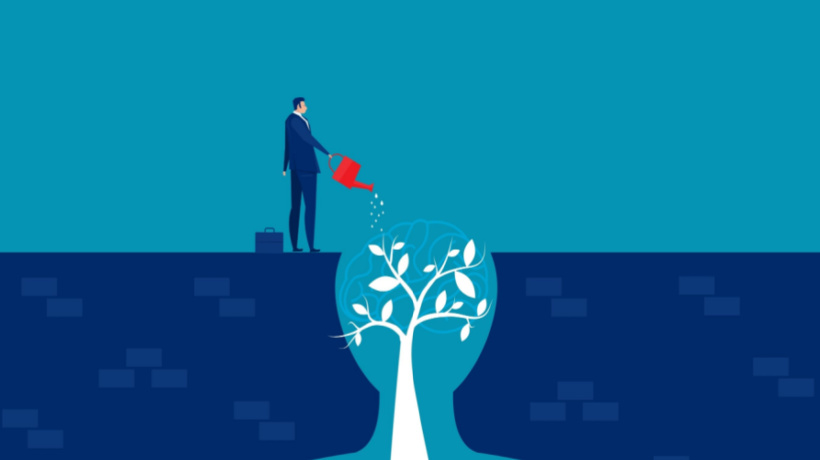
A missed deadline highlights the importance of boundary-setting, while a difficult conversation reveals our emotional triggers. Everyday moments serve as a continuous classroom, testing our resilience and refining our perspective in real time. However, unlocking these lessons requires intentional presence and reflection rather than moving through life on autopilot.
By paying attention to the ordinary, we discover that wisdom is not reserved for monumental events—it is continually offered in the quiet, subtle rhythms of daily life.
Social media is no longer just a communication tool; it has fundamentally re-engineered how humans interact, focus, and perceive reality. By capitalizing on core psychological drives, these platforms have reshaped human behavior through variable reward loops—the same mechanism behind slot machines. Every like, comment, and notification triggers a hit of dopamine, conditioning our brains to seek continuous external validation while fragmenting our attention spans.
This shift has profoundly altered social connection. Nuanced, real-time communication is often flattened into curated highlight reels, encouraging superficial performance over authentic vulnerability. As algorithmic feeds amplify outrage and fuel constant social comparison, users face rising anxiety, digital fatigue, and a distorted sense of reality. Identity itself has transitioned from something privately developed to a public persona continuously broadcasted for metrics.
Ultimately, social media has transformed us from engaged participants in the real world into hyper-connected, easily distracted performers.
Influence is the ability to affect action, but true leadership is the responsibility to guide it toward a meaningful purpose. Anyone with authority, popularity, or resources can exert influence, shifting behaviors through persuasion or pressure. However, influence alone can be self-serving, transactional, or temporary if it lacks a moral compass.
True leadership transcends mere popularity. It is rooted in integrity, empathy, and service to a vision larger than oneself. While influence focuses on getting people to follow, true leadership empowers them to grow, take ownership, and lead themselves.
Ultimately, influence is a tool, but leadership is a commitment. Influence commands attention in the moment, whereas true leadership builds legacy, character, and lasting trust.