Self Loading Concrete Mixers for Road Construction Projects in Latin America
Infrastructure modernization across Latin America relies heavily on expanding and rehabilitating rural roadway networks, mountain passes, and urban bypass roads. Construction crews operating in these environments frequently face steep terrain, remote material supply points, and unpredictable weather conditions. Bringing traditional stationary batching plants or large transit mixers to these decentralized sites creates immense logistical bottlenecks and inflates transportation budgets. Adopting a self-loading concrete mixer transforms road building workflows by integrating loading, weighing, batching, and pouring into a agile single-vehicle operation. Contracting teams that evaluate equipment investments evaluate the self-loading concrete mixer price in Colombia and neighboring regional markets to determine how mobile batching assets maximize job site independence and drive project profitability.
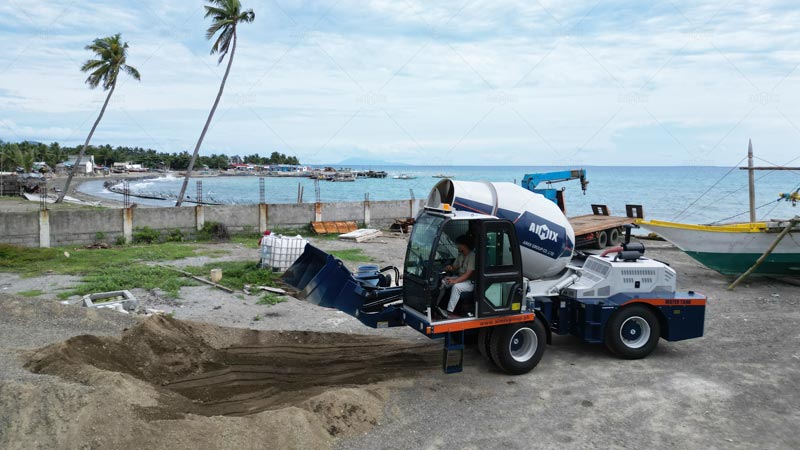
Regional Infrastructure Demands Across Latin American Road Networks
Road construction throughout Latin America presents distinct topographical and operational challenges. Contractors must adapt their material supply strategies to suit mountain corridors, rainforest feeder roads, and high-altitude highway extensions.
Overcoming Geographical Barriers and Remote Supply Lines
Traditional concrete logistics depend on commercial batching plants within reasonable driving distances. However, rural pave sites often sit hours away from ready-mix plants.
- Batch Preservation: Transporting pre-mixed concrete over long distances along rough mountain roads risks drum flash-setting or aggregate segregation before arrival.
- Continuous On-Site Production: Utilizing a self-loading concrete mixer(auto hormigonera) enables crews to produce fresh concrete directly at the pour point, eliminating transit delays and material degradation.
Logistics Optimization for Decentralized Paving Works
Road construction rarely stays in one spot; project fronts move forward daily as drainage channels, retaining walls, culverts, and road slabs are completed.
- Rapid Equipment Relocation: Unlike fixed batching setups, a self-loading concrete mixer travels independently along newly graded road corridors without requiring auxiliary transport trailers.
- Reduced Fleet Footprint: Combining aggregate loading shovels, weigh batchers, and concrete delivery trucks into one machine reduces traffic congestion on narrow mountain roads.
Financial Dynamics and Cost Analysis for Latin American Contractors
Managing capital expenditures while maintaining strict project timelines is critical for civil contractors bidding on public and private infrastructure contracts.
Evaluating Keyphrase Factors Driving Fleet Investments
When procurement managers evaluate equipment acquisition, local market factors heavily influence financial decision-making across regional construction hubs.
- Capital Efficiency: Analyzing the overall self-loading concrete mixer price in Colombia(autohormigonera precio Colombia) helps contractors compare single-unit purchase costs against the combined expense of acquiring separate wheel loaders and transit mixers.
- Operational Cost Reduction: Operating a self-loading concrete mixer reduces fuel consumption and minimizes labor costs by requiring only one skilled operator for the full mixing cycle.
Lifecycle Value and Maintenance Returns in Latin American Operations
- Local Parts Availability: Choosing regional equipment importers ensures access to wear plates, hydraulic pumps, and filter kits, protecting the long-term value of your self-loading concrete mixer investment.
- Regional Resale Value: Comparing initial self-loading concrete mixer price in Colombia metrics with projected three-year trade-in values demonstrates strong equity retention due to high demand in municipal road maintenance.
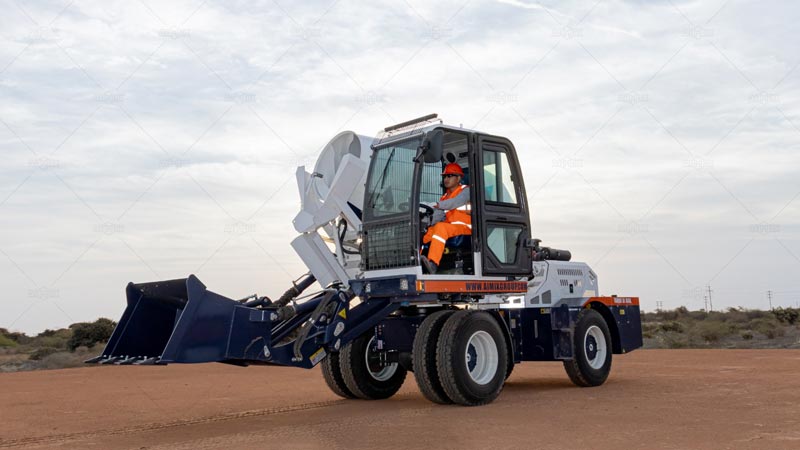
Technical Specifications Tailored for Heavy Civil and Paving Tasks
Selecting the ideal mobile unit requires aligning technical features with specific engineering demands, such as slope stability, batch accuracy, and concrete compressive strength.
High-Torque Drivetrains and Articulated Chassis Design
Navigating unpaved mountain gradients requires superior traction and chassis flexibility.
- Four-Wheel Drive Systems: Heavy-duty planetary axles provide essential torque to maneuver loaded drums up steep incline slopes during mountain pass construction.
- Articulated Steering Agility: Tight turning radii allow operators to maneuver around narrow mountain curves and pour ditch liners without blocking active traffic lanes.
Precision Batching for Highway Standard Concrete
Modern public works agencies enforce strict mix design parameters to ensure road pavement durability against heavy freight loads.
- Integrated Electronic Load Cells: Sensor networks under the mixing drum verify aggregate weights before water dosing, ensuring consistent slump and strength.
- Multi-Recipe Software Memory: Operators using a modern self-loading concrete mixer can quickly toggle between high-strength structural recipes for bridge piers and standard mixes for gutter channels.
Strategic Operational Insights for Paving Project Managers
Maximizing return on investment requires integrating mobile mixing technology directly into daily project scheduling and material management routines.
Staging Material Stockpiles Along Moving Construction Routes
Position aggregate and cement stockpiles strategically every few kilometers along the road project path. This practice minimizes driving distances for your self-loading concrete mixer, allowing continuous output of up to four batches per hour.
Strategic Sourcing for Municipal and Regional Infrastructure
Understanding regional market conditions helps contractors make well-informed equipment sourcing decisions. Assessing the target self-loading concrete mixer price in Colombia and adjacent markets allows fleet managers to balance performance features with localized project budgets. Utilizing a versatile self-loading concrete mixer empowers road construction teams to overcome geographical hurdles, accelerate paving schedules, and build resilient transportation infrastructure across Latin America.