Southeast Asia Remote Patient Monitoring Market 2026-2034 | Connected Healthcare, Wearable Technology & Industry Trends
Southeast Asia Remote Patient Monitoring Market Outlook
The market is surging as chronic illnesses rise, populations age, and digital health becomes part of everyday care. Remote patient monitoring uses digital technologies to collect data such as weight, blood pressure, oxygen levels, heart rate, and ECG from patients in one location and send it securely to providers elsewhere.
The model is especially useful for chronic disease management, post-operative recovery, and elderly care. Personalized healthcare, where care plans are tailored to individual needs, is a primary driver of the market.
Market Snapshot
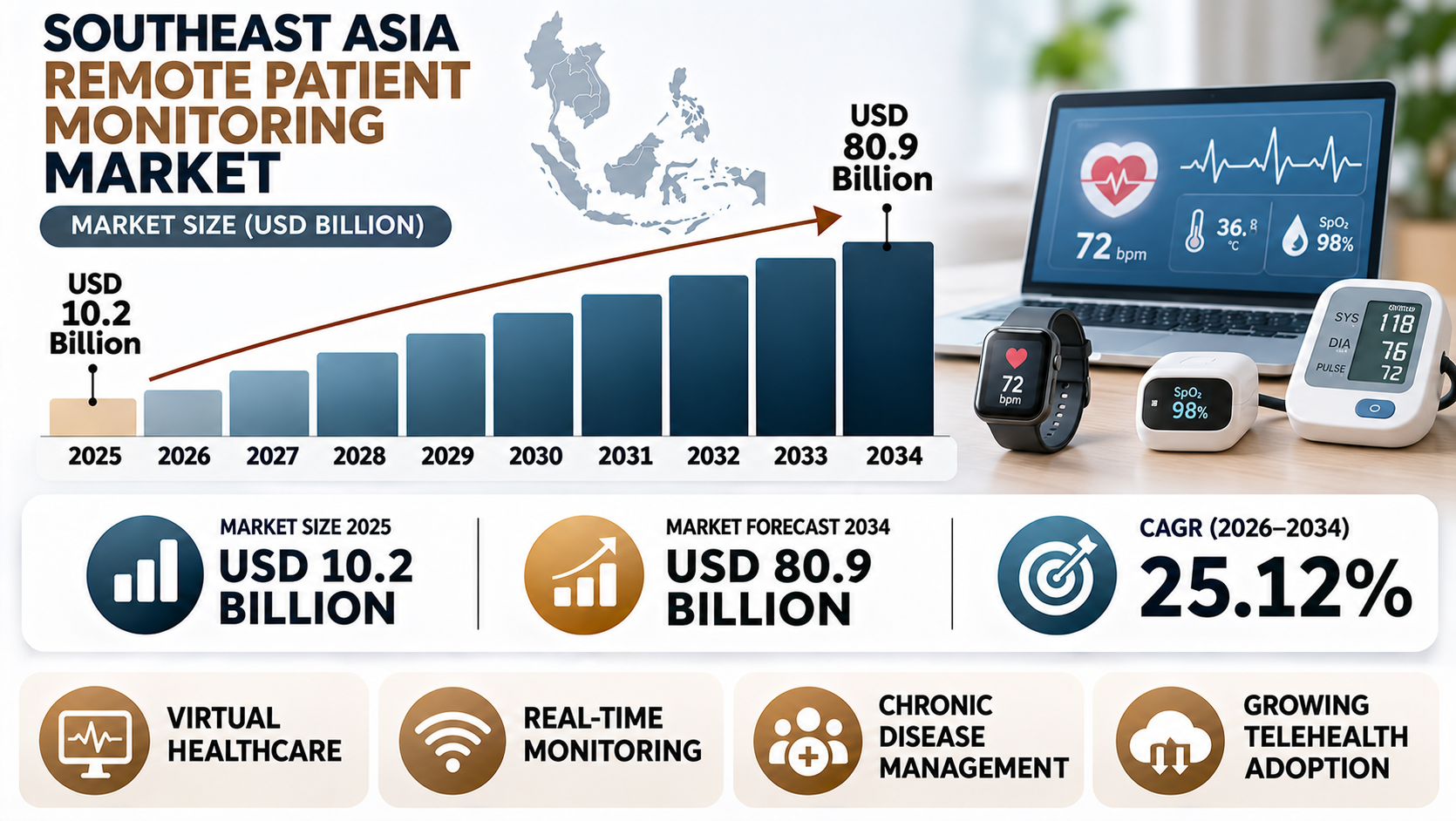
- Market Size (2025): USD 10.2 Billion
- Forecast Market Size (2034): USD 80.9 Billion
- CAGR (2026-2034): 25.12%
- Segments Covered: Device Type, Application, End Use, Country
- Countries Covered: Indonesia, Thailand, Singapore, Philippines, Vietnam, Malaysia, Others
- Key Growth Drivers: Chronic disease prevalence, aging population, digitization, healthcare workforce shortages
Executive Summary
The market is projected to grow from USD 10.2 Billion in 2025 to USD 80.9 Billion by 2034 at a CAGR of 25.12%. Growth is driven by diabetes, hypertension, and cardiac disorders, the expanding elderly demographic, and heavy smartphone reliance with faster internet access.
The Southeast Asia remote patient monitoring market size also reflects a scarcity of healthcare professionals in remote regions, which makes RPM an efficient alternative to conventional care. IMARC segments the market by device type, application, end use, and country, giving stakeholders a detailed view of demand pools.
Southeast Asia Remote Patient Monitoring Market Key Drivers
- Rising Chronic Illness and Aging Populations:
Diabetes, hypertension, and cardiac disorders require continuous tracking, and older adults are more susceptible to severe conditions, increasing the value of at-home monitoring.
- Digitization and Connectivity:
Rapid digitization, heavy smartphone use, wider high-speed internet access, and rising income levels are growing demand for RPM solutions.
- Healthcare Workforce Shortages:
A mounting scarcity of healthcare professionals, particularly in remote regions, is accelerating RPM adoption so limited medical staff can manage more patients.
- Pandemic Preparedness:
Healthcare systems are strengthening readiness for pandemics and emergencies, and RPM helps maintain continuity of care when physical visits are difficult.
Evaluate Market Opportunity with the Business Sample Report
Southeast Asia Remote Patient Monitoring Market Emerging Trends
- Growth of Mobile Health Applications:
M-health apps, chatbots, and real-time interactions are delivering virtual care and home-based medical services.
- Personalized Healthcare Models:
Treatments and care plans tailored to individual needs are expanding the role of continuous data collection.
- Shift Toward Homecare Settings:
IMARC’s end use breakup includes hospitals and clinics, homecare settings, and others, reflecting the move of monitoring from facilities into homes.
Southeast Asia Remote Patient Monitoring Market Challenges
Despite strong momentum, stakeholders commonly cite several structural headwinds:
- Patient data privacy and cybersecurity requirements demand secure transmission and storage
- Uneven connectivity and digital literacy across countries can limit adoption in remote and lower-income communities
- Integration with existing hospital systems and varied national healthcare rules adds implementation complexity
Government Initiatives and Regulatory Support
- Digital Health Strategies: Governments across the region are investing in digital health frameworks, which support telehealth and connected care.
- Telehealth Guidelines: Evolving rules for virtual consultations and remote data sharing give providers clearer paths to deploy RPM.
- Pandemic Preparedness Planning: Health systems are building resilience for emergencies, increasing interest in remote monitoring capabilities.
Explore the Full Report with Charts, Table of Contents, and List of Figures
Southeast Asia Remote Patient Monitoring Market Segment Insights
By Device Type
- Blood Pressure Monitor
- Glucose Monitor
- Heart Rate Monitor
- Pulse Oximeters
- Respiratory Monitor
- Others
By Application
- Cancer Treatment
- Cardiovascular Diseases Treatment and Monitoring
- Diabetes Treatment
- Sleep Disorder Treatment
- Weight Management and Fitness Monitoring
- Others
By End Use
- Hospitals and Clinics
- Homecare Settings
- Others
Country Insights
- Indonesia
- Thailand
- Singapore
- Philippines
- Vietnam
- Malaysia
- Others
Competitive Landscape
IMARC’s report covers market structure, key player positioning, top winning strategies, a competitive dashboard, and a company evaluation quadrant, with detailed profiles of major companies. Competition is expected to center on device accuracy, data integration, mobile applications, and the ability to serve both hospital and home settings.
Understanding Southeast Asia remote patient monitoring market share by segment and country will help companies decide where to focus investment.
Investment Opportunities
- Chronic Disease Monitoring Devices: Glucose, blood pressure, and heart rate monitors serve diabetes and cardiovascular care.
- Homecare Platforms: Connected devices and apps support elderly care and post-operative recovery outside hospitals.
- M-Health and Virtual Care Integration: Apps with chatbots and real-time interaction can expand reach where specialists are scarce.
Discuss Your Requirements With an Analyst and Get Your Customized Market Report
Frequently Asked Questions (FAQ)
- How big is the Southeast Asia remote patient monitoring market?
The market reached USD 10.2 Billion in 2025.
- What is the projected growth rate?
The market is expected to grow at a CAGR of 25.12% during 2026-2034, reaching USD 80.9 Billion by 2034.
- What is driving market growth?
Personalized healthcare options, chronic disease prevalence, an aging population, digitization, and healthcare professional shortages.
- What segments does the report cover?
Device type, application, end use, and country.
- What are the key market dynamics?
Rising smartphone use, faster internet, m-health applications, pandemic preparedness, and the need to stretch limited medical staff.
Conclusion
The Southeast Asia remote patient monitoring market is entering a high-growth phase, driven by chronic disease burden, aging populations, and digital health adoption.
Companies that invest in connected devices, homecare solutions, and m-health integration will be best positioned to capture value as the market scales toward USD 80.9 Billion by 2034.
Source: IMARC Group