India Soft Skills Training Market 2026-2034: Size, Share, Industry Growth & Forecast Report
Introduction
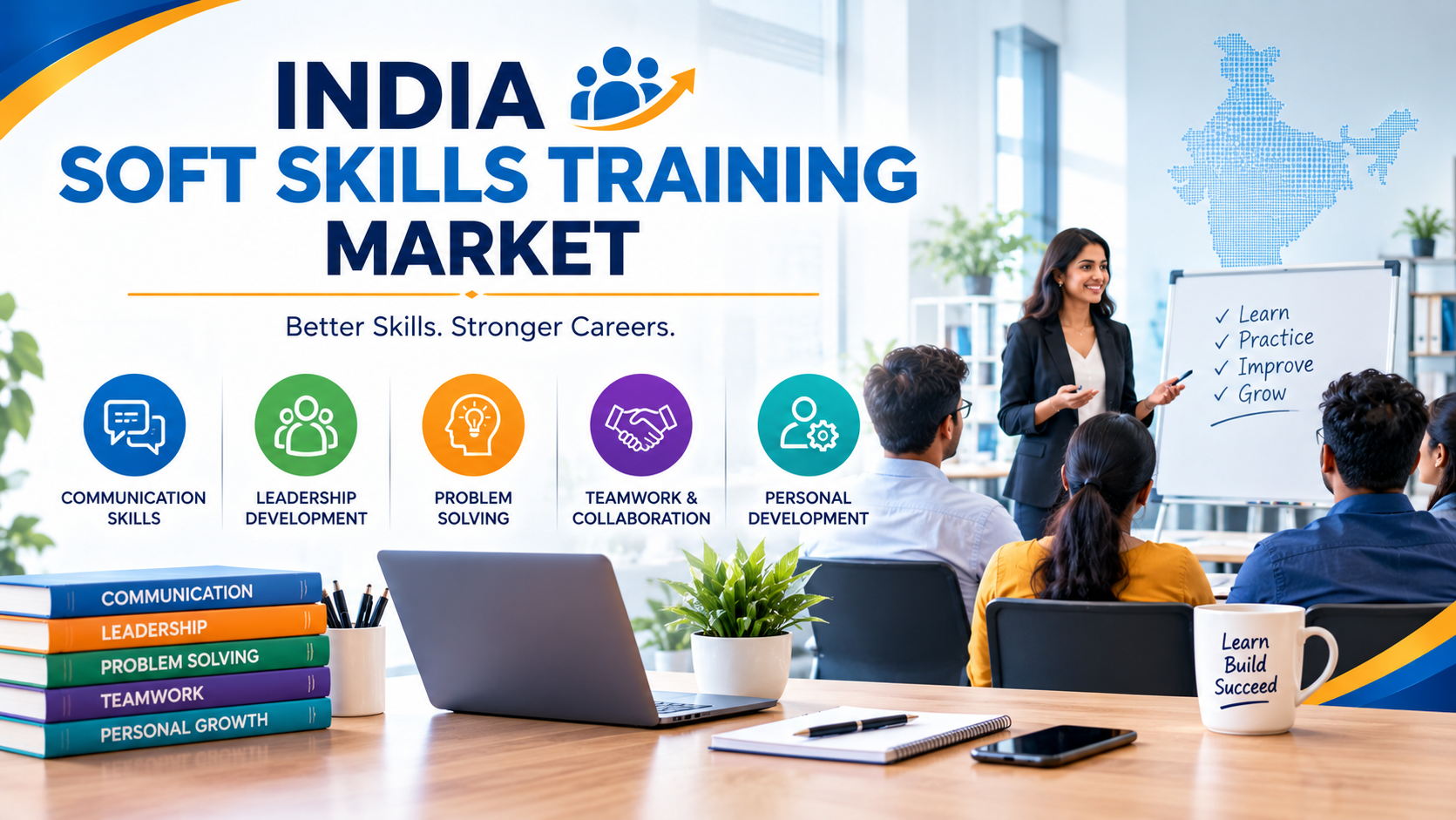
India's soft skills training market stands as a rapidly maturing segment of the country's corporate learning and development ecosystem, encompassing Management and Leadership, Administration and Secretarial, Communication and Productivity, Personal Development, Teamwork, and other soft skill types, delivered through Corporate/Enterprise, Academic/Education, and Government channels, sourced In-house or Outsourced, via Online and Offline delivery modes, across BFSI, Hospitality, Healthcare, Retail, Media and Entertainment, and other end-use industries, spanning North, West and Central, South, and East India. The soft skills training companies in India collectively serve a market that reached USD 793.8 Million in 2025 and is projected to reach USD 1,836.8 Million by 2034, exhibiting a growth rate (CAGR) of 9.48% during 2026-2034.
The market is growing due to rising corporate investment in holistic employee development, rapid SME expansion, and increasing adoption of technology-enabled learning platforms. Outsourced training dominates the sourcing segment at 61.3% in 2025, reflecting corporate preference for specialist external providers offering globally benchmarked curricula and certified facilitators, while offline delivery leads at 57.8%, driven by the continued effectiveness of face-to-face experiential learning in developing interpersonal and behavioral competencies. India's expanding IT/BPO sector, employing over five million professionals, alongside the Skill India Mission's push toward SME workforce professionalization, is further strengthening the India skill development market size outlook through 2034.
Market Snapshot
- Current Market Size (2025): USD 793.8 Million
- Projected Market Size (2034): USD 1,836.8 Million
- CAGR: 9.48%
- Outsourced training represents the leading and fastest-growing sourcing segment, commanding a 61.3% share in 2025, driven by corporate preference for specialist external providers with globally benchmarked curricula.
- Offline delivery leads the market with a 57.8% share, reflecting the continued value of real-time facilitator feedback and experiential, role-play-based learning formats.
- West and Central India dominates regionally with a 33.2% share, anchored by Mumbai's financial services concentration, Pune's manufacturing and IT clusters, and Ahmedabad's expanding corporate sector.
- South India follows as the second-largest region with a 26.8% share, driven by Bengaluru's IT and Global Capability Centre (GCC) ecosystem demanding strong communication and leadership training.
What Growth Factors Are Driving India Soft Skills Training Market?
Corporate Sector Focus on Holistic Employee Development:
The shifting priorities of Indian enterprises toward comprehensive workforce effectiveness beyond technical skills represents the primary structural driver of market growth. Large corporations across BFSI, IT, retail, and manufacturing sectors have institutionalized annual soft skills training budgets targeting communication excellence, leadership pipeline development, and client management capabilities. India's IT services and BPO sector, employing over five million professionals, requires advanced English communication, client management, and cross-cultural effectiveness programs, creating the largest concentrated demand pool for soft skills training in any single Indian industry vertical. Growing enterprise recognition that interpersonal and leadership competencies directly influence productivity, retention, and client satisfaction continues to reinforce sustained training budget allocations across large and mid-sized organizations.
SME Expansion and Workforce Professionalization:
India's estimated 63 million SMEs are increasingly adopting structured training programs as they scale operations, compete for professional talent, and target institutional clients requiring certified workforce capabilities. The government's Skill India Mission directs targeted funding toward SME workforce development programs, while rising SME formalization and access to institutional credit are enabling greater investment in employee training infrastructure. This professionalization wave is expanding the addressable market for soft skills training providers well beyond the traditional large-enterprise client base, creating durable mid-market growth opportunities through 2034.
E-Commerce and Technology-Enabled Learning Expansion:
The rise of AI-powered coaching platforms, mobile-first learning management systems, and virtual instructor-led training is making soft skills training more accessible and scalable across India's geographically distributed workforce. Online delivery, growing at an estimated 10.3% CAGR through 2034, is enabling corporate clients to deploy consistent training programs across multiple office locations without travel and venue costs, while gamified and AI-coached learning formats are improving engagement and completion rates compared to traditional e-learning methods.
Evaluate Market Opportunity with the Business Sample Report
Government Policy Support:
- Skill India Mission: This flagship government program directs funding and policy support toward workforce professionalization, including soft skills development for SMEs, frontline workers, and first-generation professionals across India.
- National Skill Development Corporation (NSDC) Framework: By establishing sector skill councils and vocational training standards, the NSDC framework is creating structured pathways for soft skills certification and quality benchmarking across training providers.
- Skill India Digital Platform: This digital initiative is expanding access to training content for non-corporate segments, including rural youth and school and college graduates, creating new B2G revenue opportunities for established training providers.
- Ministry of Skill Development & Entrepreneurship Guidelines: Regulatory guidelines governing vocational and professional training standards are improving training quality consistency, supporting greater corporate confidence in outsourced training investments.
What Are the Latest Emerging Trends in India Soft Skills Training Market?
AI-Powered Personalized Learning Transforming Soft Skills Development:
Artificial intelligence is enabling real-time, individualized feedback on communication patterns, presentation delivery, and interpersonal interactions. AI coaching platforms analyze speech, word choice, and tone, generating personalized improvement recommendations that accelerate skill development beyond periodic classroom interventions. This technology shift is making high-quality coaching accessible to a broader segment of India's workforce, including mid-level professionals in Tier-2 and Tier-3 cities who previously lacked access to premium facilitator-led programs.
Gamification and Experiential Learning Driving Higher Engagement:
Gamified learning platforms incorporating scenario-based challenges, peer competitions, and point systems demonstrate significantly higher completion rates and knowledge retention than traditional e-learning, driving rapid corporate adoption across large enterprises seeking measurable training engagement outcomes. Alongside this, large enterprises are increasingly structuring soft skills training contracts with performance-based outcome clauses linking trainer compensation to measurable post-training behavioral improvements, shifting commercial models toward shared accountability between providers and corporate clients.
Vernacular Language Training Unlocking Tier-2 and Tier-3 Markets:
Providers offering soft skills programs in Hindi, Tamil, Telugu, Marathi, and other regional languages are accessing previously underserved markets of mid-level professionals and frontline workers outside metropolitan centers, significantly expanding the total addressable market beyond English-medium instruction and reinforcing broader-based India skill development market size growth.
Competitive Landscape — By IMARC GROUP
The market research report has also provided a comprehensive analysis of the competitive landscape. Competitive analysis such as market structure, key player positioning, top winning strategies, competitive dashboard, and company evaluation quadrant has been covered in the report. Also, detailed profiles of all major companies have been provided.
- Dale Carnegie & Associates Global, Inc.
- Pearson
- Momentum Training Solutions
- Franklin Covey Co.
In September 2024, Dale Carnegie Training expanded its India presence with a new franchise launch in Gujarat, while in July 2025, Pearson and HCLTech announced a multi-year partnership to co-develop AI-powered learning programs and workforce analytics tools for Indian enterprises and higher education institutions.
How Is India's Soft Skills Training Market Segmented?
➤ By Soft Skill Type
- Management and Leadership
- Administration and Secretarial
- Communication and Productivity
- Personal Development
- Teamwork
- Others
➤ By Channel Provider
- Corporate/Enterprise
- Academic/Education
- Government
➤ By Sourcing
- In-house
- Outsourced
➤ By Delivery Mode
- Online
- Offline
➤ By End Use Industry
- BFSI
- Hospitality
- Healthcare
- Retail
- Media and Entertainment
- Others
➤ By Region
- North India
- West and Central India
- South India
- East India
How will India Soft Skills Training Market Evolve in the Coming Years?
The India soft skills training market is forecast to expand from USD 793.8 Million in 2025 to USD 1,836.8 Million by 2034 at a CAGR of 9.48%, adding approximately USD 1,043.0 Million in incremental annual market value over the forecast period. Three structural forces are expected to shape the market through 2034: AI-powered personalization enabling scalable, individualized skill development at lower per-learner costs; the expansion of Global Capability Centres requiring cross-cultural and global communication capabilities within India's talent pool; and the systematic professionalization of India's SME base creating a vast new addressable market for structured training programs. Providers investing in digital delivery infrastructure, outcome measurement capabilities, and vernacular-language content are best positioned to capture India's expanding soft skills training opportunity.
Request Customized Data Tailored to Your Interest
Note: If you require any specific information not covered within this report's scope, we will provide it as part of the customization.
Frequently Asked Questions
How big is the soft skills training market in India?
➤ The India soft skills training market size reached USD 793.8 Million in 2025, underpinned by growing corporate investment in employee development, India's 63 million SMEs professionalizing their workforce, and rising demand from the IT/BPO sector's five million-plus professionals.
What is the projected growth rate of the India soft skills training market?
➤ The market is expected to exhibit a CAGR of 9.48% during 2026-2034 to reach USD 1,836.8 Million by 2034, driven by AI-powered learning adoption, expanding GCC workforce demand, and vernacular-language training expansion into Tier-2 and Tier-3 cities.
What are the key factors driving market growth?
➤ Key drivers include corporate focus on holistic employee development, SME workforce professionalization supported by the Skill India Mission, IT/BPO sector demand for communication and interpersonal skills, and growing adoption of AI-powered and gamified learning platforms across Indian enterprises.
About Us:
IMARC Group is a global management consulting firm that helps ambitious changemakers create a lasting impact. The company offers comprehensive market assessment, feasibility studies, incorporation support, regulatory assistance, branding and strategy services, and procurement research.
IMARC Group
134 N 4th St. Brooklyn, NY 11249, USA
Email: sales@imarcgroup.com
Tel: (D) +91 120 433 0800
United States: +1-201-971-6302