Meditation and Yoga: Creating Balance in a Busy Lifestyle
How Yoga and Meditation Strengthen Each Other
Yoga and meditation were never meant to exist apart from each other. They're two sides of the same coin; one moves the body into awareness, the other settles the mind into stillness. When practised together, something shifts. The noise fades. The clarity arrives. And you begin to understand why ancient traditions always treated them as one unified path.
Yoga builds the physical and mental foundation that meditation needs to take root. Breathwork steadies the nervous system. Movement releases the tension that would otherwise pull your attention away the moment you close your eyes. By the time you sit in stillness, your body is no longer fighting you. That's where the real work begins.
Movement clears the body. Breathing steadies the mind. Only then can stillness actually begin.
There is a significant difference between understanding this connection intellectually and actually living it daily within a structured ashram setting. Mornings begin with purpose. Evenings close with reflection. The rhythm builds something in you that a weekend workshop or a phone app simply can't replicate.
When yoga and meditation strengthen each other inside a dedicated, community-driven environment, the results extend far beyond the mat, into how you teach, lead, and navigate everything life places in front of you.
How to Practice Yoga and Meditation When Time Is Tight
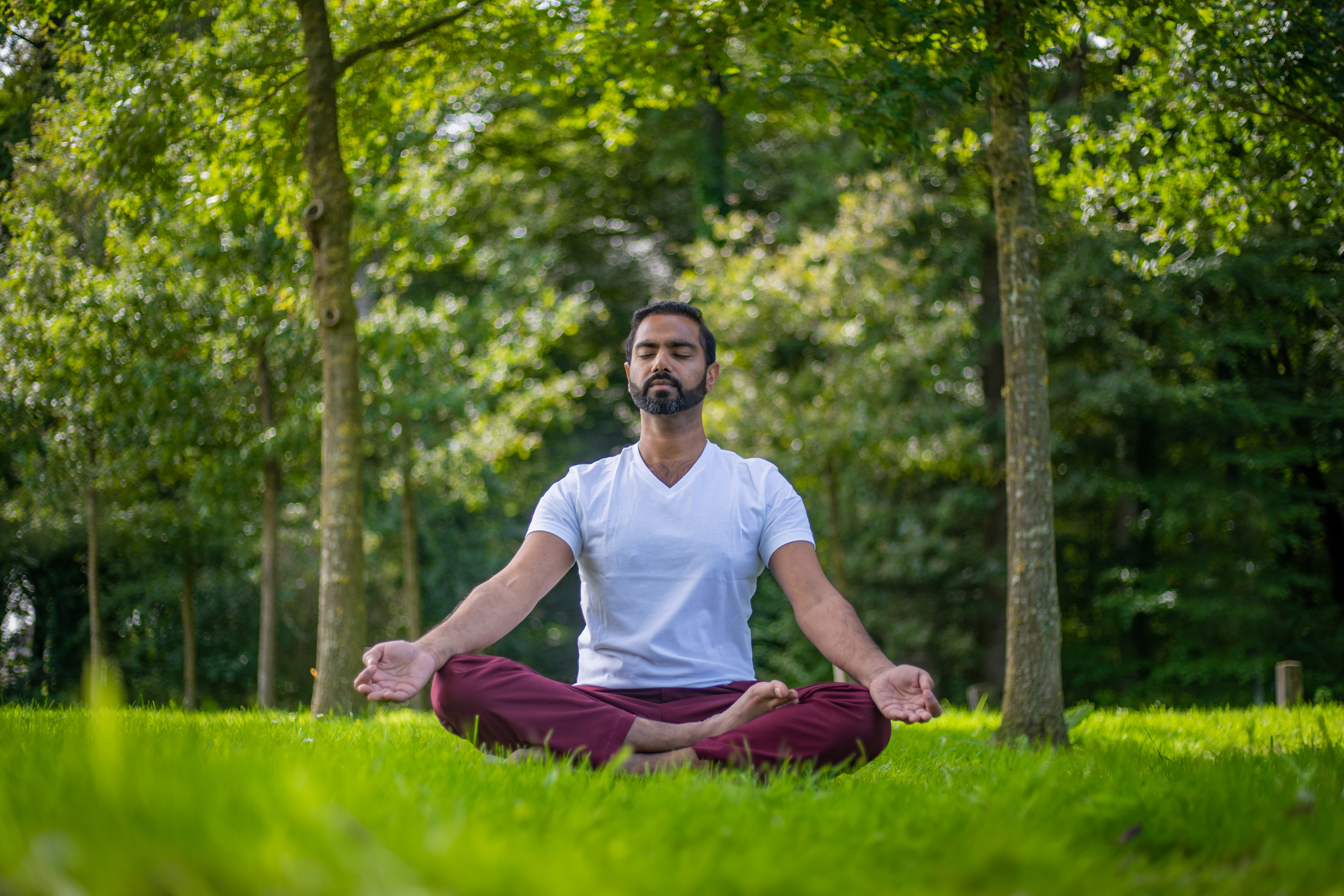
Finding time for yoga and meditation can feel impossible when your calendar is packed. But here's what most people get wrong: they think they need a full hour on the mat to feel any real benefit. They don't.
Even 10 focused minutes daily can shift your mental state, lower stress, and build a foundation that slowly changes how you move through life. The key is consistency over duration.
Start Your Morning With Sun Salutations
Before the noise of the day takes over, roll out your mat and move through 10 minutes of Sun Salutations. This sequence warms the body, sharpens focus, and sets a grounded tone for everything that follows.
Use Breaks to Reset, Not Scroll
Chair yoga and simple dynamic movements during work breaks do more than stretch tight muscles. They interrupt the stress cycle.
A few conscious movements paired with deep breathing can restore mental clarity faster than caffeine ever will.
Breathe With Intention, Anywhere
Pranayama, the yogic science of breath control, is perhaps the most underused tool available to modern practitioners.
You don't need a studio. You don't need silence. You just need a few minutes and the willingness to breathe with awareness.
This is the core teaching philosophy at Arhanta Yoga, making ancient practices genuinely accessible.
Close the Day With Stillness
A short evening meditation, even five minutes, signals the nervous system to downshift.
Sleep improves. Anxiety softens. Recovery deepens.
If you've ever wanted to go beyond these small daily habits and truly understand what yoga is built on, whether you practice for five minutes a day or eventually spend weeks at the ashram in India, the thread connecting it all is the same: intentional, consistent practice that fits your life and eventually transforms it.
What Changes When You Make Yoga and Meditation a Daily Habit
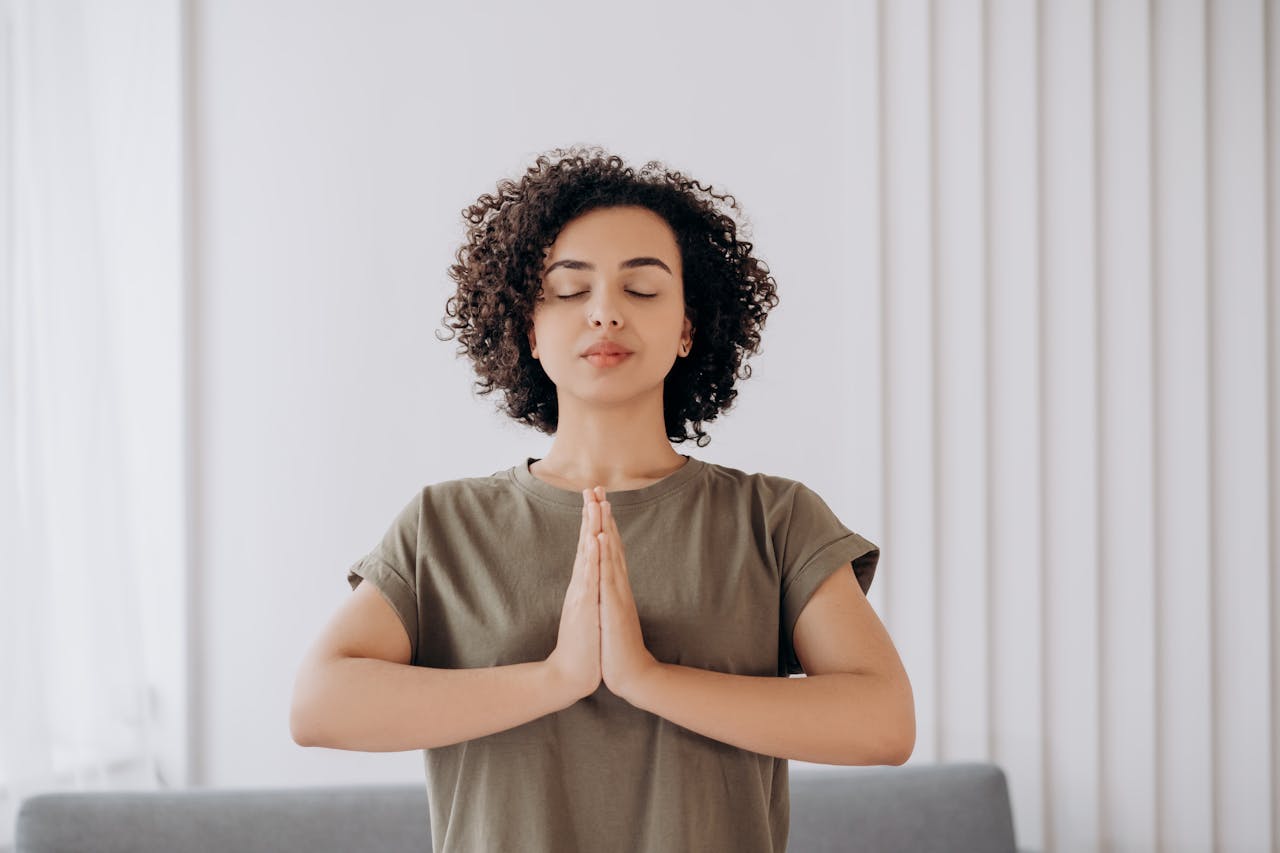
Something quietly extraordinary begins to happen when yoga and meditation stop being occasional rituals and start becoming the rhythm of your actual life. Not a dramatic overnight transformation, but a slow, steady recalibration of how you feel, think, and move through the world.
Yoga opens the body. Meditation settles the mind. Together, they do something neither can fully accomplish alone; they create a kind of coherence between your physical self and your inner world. Cortisol drops. Focus sharpens. Sleep deepens in ways that actually leave you restored rather than just rested.
Here is what consistent practitioners notice over time:
• Stress loses its grip, responses become steadier, more grounded.
• Mental clarity improves, and decisions come from a calmer, clearer place.
• Sleep shifts from restless to genuinely restorative.
• The body grows stronger, more flexible, and surprisingly more resilient.
• Emotional steadiness becomes a lived experience, not just an aspiration.
The challenge most people face isn't the practice itself; it's the environment. Practising alone, at home, with constant interruptions rarely produces the depth of transformation that's possible when you're fully immersed.
This is exactly why thousands of serious practitioners choose to train at a residential yoga ashram in India, where the structure, the community, and the teaching create conditions for real, lasting change.
Programs like the 200 Hour Yoga Teacher Training at Arhanta Yoga Ashrams, developed under the guidance of Ram Jain, are built precisely around this immersive model. Living and practising within the ashram itself removes the friction between intention and action; the practice simply becomes life.
That shift starts the moment you find the right environment to support it.