Silver's Industrial Demand: Why It's Not Just "Cheaper Gold"
There's a lazy way of thinking about silver that treats it as simply gold's more affordable cousin, same investment logic, just a smaller number per gram. This misses something genuinely important about what actually drives silver's price, and why it can move quite differently from gold at times.
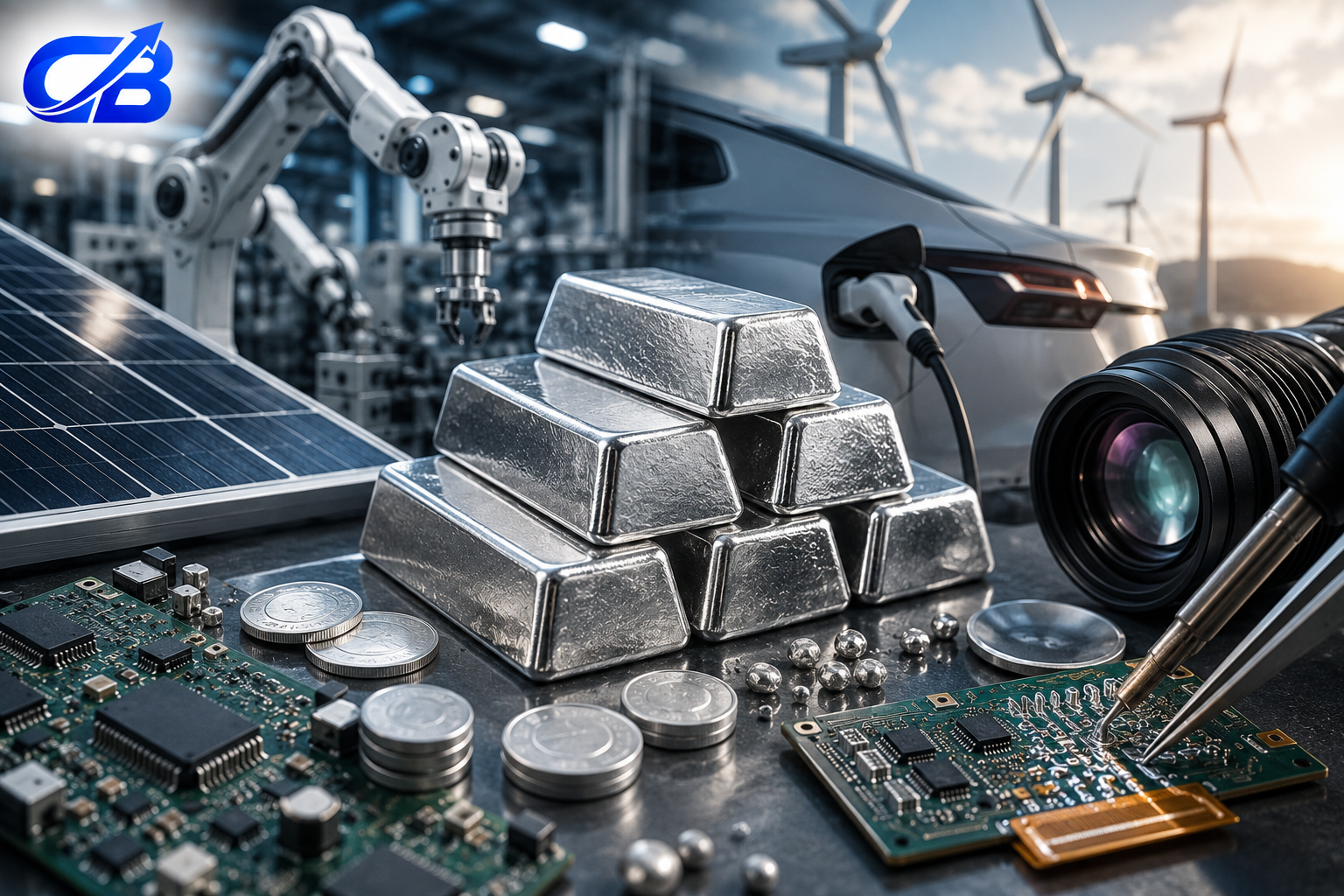
Roughly half of silver's total demand, depending on the specific year and market conditions, comes from industrial applications, not investment or jewellery at all. Solar panels, electronics, electrical contacts, and a range of other industrial uses consume silver as a genuinely functional material, not a store of value. A demand source of gold essentially doesn't have at any comparable scale, which is worth keeping in mind whenever you're comparing the gold rate against silver's movement and assuming they should track identically.
This means silver's price responds to industrial and economic activity in a way gold's largely doesn't. A surge in solar panel manufacturing or electric vehicle production genuinely moves silver demand in a way that has no real gold equivalent, since gold's demand is overwhelmingly investment and jewellery-driven, largely insulated from industrial production cycles.
This dual nature, part monetary metal, part industrial commodity, is exactly why silver can behave with more volatility than gold. During strong economic growth, industrial demand can push silver higher even as its "haven" appeal, the part it shares with gold, might be relatively muted given the generally confident economic backdrop. During a downturn, the reverse tension plays out: safe-haven demand might rise while industrial demand simultaneously weakens, pulling the price in two directions at once.
Understanding this helps explain periods where silver and gold move in noticeably different proportions, rather than assuming they should always track each other closely simply because they're both precious metals with a long shared history in investment and jewellery.
For an investor, this means silver isn't simply "leveraged gold," a cheaper way to make the same bet. It's a genuinely different asset with its own distinct demand drivers, worth understanding on its own terms rather than treating gold's investment logic as automatically transferable.
If you're building any silver position, it's worth checking the current silver rate with this dual nature in mind industrial demand and monetary demand pulling in potentially different directions – rather than assuming its price simply mirrors gold's at a smaller scale.
Buen contenido. La educación financiera es clave y deberia tener mas espacio en la plataforma sin duda.