Film Review: Harry Potter and the Order of the Phoenix (2007)
This is the fifth of eight. The first instalment is here, the second here, the third here and the fourth here.
The previous entry closed on the observation that Goblet of Fire was the point at which Warners stopped hiring directors and started hiring managers. Order of the Phoenix is what happened when the manager turned out to have a subject. David Yates had spent the preceding five years making television about institutions failing the people inside them — State of Play, Sex Traffic, The Girl in the Café — and was therefore, by accident or by an uncharacteristic flash of sense in a studio corridor, the one appointment in eight films whose prior work actually rhymed with the book. The result is the only Potter in which the villain is the government, and the only one in which the heroes are an unauthorised after-school club.
That it is also, at 138 minutes, the shortest film in the series from the longest novel is the whole argument in miniature. Rowling's fifth book appeared on 21 June 2003 at 766 pages, and it is the volume in which she stops being charming about authority. The Ministry of Magic is a bureaucracy in denial, the Daily Prophet is a smear sheet, the courts convict a fifteen-year-old for defending himself, and the school inspectorate is a smiling woman with a clipboard and a blood quill. Every institution in the book is either lying, cowardly or occupied. The film, released on 11 July 2007, nine days before the final novel went on sale, was under orders to be a trailer for it.
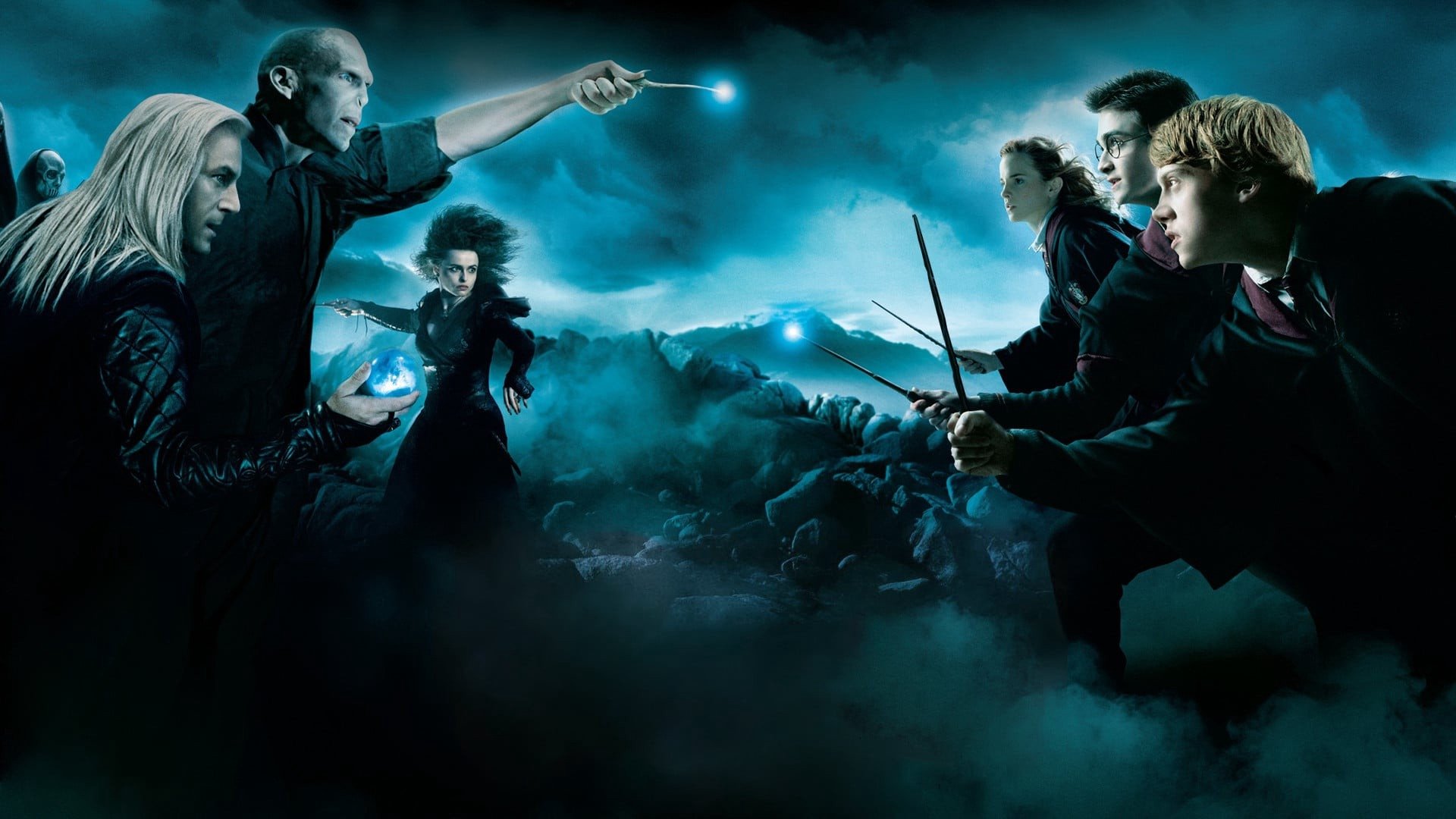
The plot, briefly. Harry (Daniel Radcliffe) is attacked by dementors in Little Whinging, saves his cousin, and is hauled before a Ministry tribunal for underage magic. Cleared on Dumbledore's word, he returns to a Hogwarts in which the Ministry has installed Dolores Umbridge (Imelda Staunton) as Defence Against the Dark Arts teacher, then High Inquisitor, then Headmistress, on a platform of not teaching anything. Harry, Hermione and Ron form Dumbledore's Army in the Room of Requirement; Snape gives Harry Occlumency lessons that go badly; Harry's visions of Voldemort's mind lead him to the Department of Mysteries, a shelf of prophecies, a fight with Death Eaters, and Sirius Black (Gary Oldman) through the veil.
The woman with the clipboard
Umbridge is the best antagonist the series has, and the reason is that she is not a monster. She is a middle manager with a cat obsession, a girlish cough and a fixed smile, and she does her worst work with a nice cup of tea and a form. The Educational Decrees accumulate on the wall like a rash. The Inquisitorial Squad wears badges. Detention is writing lines, with a quill that cuts the words into the back of your hand. Yates shoots her office in a suffocating candy pink against the grey stone of everything else, and Staunton plays the sweetness without a single wink — a performance of terrifying administrative cheerfulness that the rest of the cast are visibly relieved to be in a scene with.
It is the film's one great idea, and it carries an hour of it. Helena Bonham Carter's Bellatrix, all hair and shriek, is the fizzy counterweight; Evanna Lynch's Luna, cast from an open call and approved by Rowling, is the best piece of casting the series did after Oldman, and gives the film its only passages of stillness. Radcliffe is now genuinely good at the specific sullenness of being disbelieved, and the film is smart enough to make that sullenness a flaw rather than a virtue.
The politics, and the excisions
Here is where it gets interesting, and where the critical case for the film has to be separated from the critical case for the book. The book's political machinery runs on a counter-press: Hermione's strategy of taking the story to The Quibbler, Xenophilius Lovegood's crank paper turning out to be right, the Prophet forced into a correction. Almost none of that survives. The interview becomes a montage of pages turning. St Mungo's — the ward, the Longbottoms, Neville's parents and the reason he is in the D.A. at all — is gone, taking the film's best argument for why any of these children are involved. Kreacher and the house-elf labour thread go. The OWLs go. Cho Chang is reduced to a kiss and a betrayal. The trial is cut to a minute and a half and plays as confusion rather than as Kafka for eleven-year-olds.
So the film keeps the state's lie and discards the press that answers it, which flattens an argument into a mood. And at 766 pages into 138 minutes — five and a half pages a minute — the thing is inevitably a series of arrivals rather than a story: the dementor, the trial, the decree, the swamp, the vision, the Hall of Prophecy. There is no accumulated dread because there is no accumulated anything.
The tone, against today
The tone is nevertheless the point, and it is worth stating plainly that the film is quietly out of step with the Hollywood that has come since. In the summer of 2007 the distrust of official narrative was still the ambient weather of the American blockbuster, and a $150 million tentpole could spend two hours insisting that the government was lying, the newspapers were complicit and the school was an occupied territory — and could end with the good adults reinstated only after the children had done what the state and the staff both refused to do.
That reads now as faintly antique. Contemporary franchise cinema is institutional in its temperament: the Sokovia Accords, the state-sanctioned hero, the redeemed bureaucrat, the legacy sequel that restores the order, the prequel cycle that exists to explain how the institutions came to be. Modern blockbusters hedge, and they like a villain with a point — the sympathetic revolutionary, the redeemable functionary. Umbridge has no point. Fudge is a coward rather than a tragic figure. Nobody in the Ministry is misunderstood, and the resolution is reformist: the institution is discredited, not dismantled, and Dumbledore gets his job back. The modern studio, itself a division of a conglomerate, prefers to be told that institutions are flawed but necessary. Phoenix is less polite than that, and the later Potter property — the Fantastic Beasts cycle, with the Ministry as a flawed partner in the middle of the frame — is considerably more so.
The last act
What the film does with the ending is both its best and worst passage. The Department of Mysteries is a handsome set and a thin fight; the Atrium duel between Dumbledore and Voldemort is the first time in five films that the series has let magic look expensive, and it is over quickly. Then Sirius dies by a green flash and a shrug — no fall, no slow motion, no last line beyond "Nice one, James!" — and Oldman, who has been given almost nothing for two films, is gone in a moment, which is exactly right and still feels like a cheat. The possession sequence that follows, Harry's grief dictating the terms of the duel, is the most emotionally direct thing Yates ever shot in this series.
Order of the Phoenix is a worse adaptation than Goblet of Fire and a better film. It has the series' finest antagonist, its most interesting politics and its most disciplined running time, and it is built out of a book it has filleted. It also marks the moment the franchise stopped being a series of films and became a production line with a house style — the grey, desaturated, handheld Yates look that the next three would never shake, and that Half-Blood Prince would use to say almost nothing at all.
RATING: 7/10
Blog in Croatian https://draxblog.com
Blog in English https://draxreview.wordpress.com/
BTC donations: 1EWxiMiP6iiG9rger3NuUSd6HByaxQWafG
ETH donations: 0xB305F144323b99e6f8b1d66f5D7DE78B498C32A7
Blog in Croatian https://draxblog.com
Blog in English https://draxreview.wordpress.com/
InLeo blog https://inleo.io/@drax.leo
Substack https://draxster.substack.com/
BTC donations: 1EWxiMiP6iiG9rger3NuUSd6HByaxQWafG
ETH donations: 0xB305F144323b99e6f8b1d66f5D7DE78B498C32A7
BCH donations: qpvxw0jax79lhmvlgcldkzpqanf03r9cjv8y6gtmk9