Film Review: The Lord of the Rings: Fellowship of the Ring (2001)
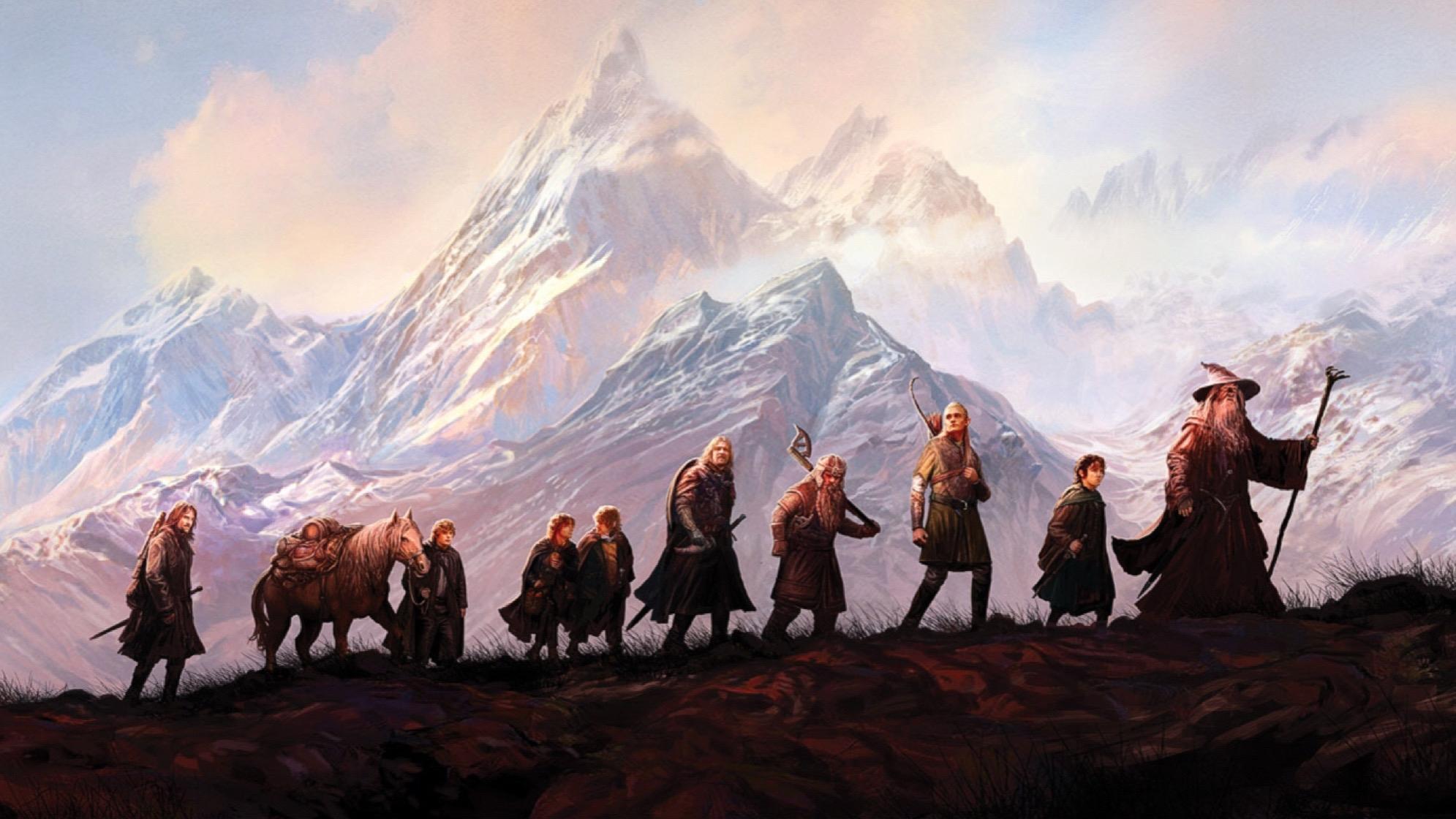
Few films have been so eagerly awaited as The Fellowship of the Ring, and few have arrived carrying so much accumulated failure behind them. Tolkien's novel had been the most beloved and the least filmable book of the century, and the industry knew it. What Jackson managed, in the end, was less an act of adaptation than an act of nerve — and it is worth reconstructing just how much nerve, because the film is inseparable from it.
The long road to the screen
The rights had been sold by Tolkien himself, to United Artists in 1969, for a sum that now looks like loose change. What followed was a parade of abandoned projects. The Beatles, flush with Sgt. Pepper money, fancied themselves as a quartet of hobbits and wanted Stanley Kubrick to direct; Kubrick read the thing, judged it too vast and sprawling, and declined, and Tolkien — approached through his publisher — was not persuaded either. The idea curdled. John Boorman wrote a baroque early-seventies script in which, notoriously, Frodo became something of a lothario with an eye for Galadriel; it stalled, though Boorman recycled its armour and its mysticism wholesale into Excalibur a decade later.
What did reach screens was animation. Rankin/Bass turned out a television Hobbit in 1977, and then Saul Zaentz — who now owned the rights — backed Ralph Bakshi's The Lord of the Rings in 1978. That film is the pivotal failure in this history, and it is worth being precise about why. Bakshi knew he could not compress the whole novel, so he adapted only the first half, rotoscoping live actors into drawn frames and ending on a cliffhanger at Helm's Deep with the story barely begun. As my earlier piece on it noted, the technique backfired: the human characters looked uncanny, the orcs looked fine, and audiences spent the running time playing "who is who". The bloodletting pushed it closer to Conan than to family fare. It mostly failed as cinema, yet it served its purpose — it sent a generation back to the page. Rankin/Bass then finished the job, badly, with a 1980 television Return of the King.
By the time Peter Jackson — a New Zealand horror-comedian turned arthouse darling off Heavenly Creatures — pitched an adaptation to Miramax in 1995, the rights had been shuttled through Zaentz and the whole enterprise had the smell of a curse. Miramax, under the Weinsteins, wanted two films and then balked at the cost of even that; Jackson went shopping, and in August 1998 New Line bought the development rights for around $12 million.
A genre that could not crack it
The second context is the graveyard of fantasy that tried and failed to be Tolkien. The post-Star Wars boom produced a run of swords-and-sorcery pictures that reached for the epic register and mostly grasped air: Hawk the Slayer, Dragonslayer, The Beastmaster, Krull, The Dark Crystal, Legend, Labyrinth, Willow. Conan the Barbarian found a muscle-bound idiom of its own, and Excalibur found a mythic one, but neither built a world with a history, a language and a moral weight. Bakshi's own Wizards had tried an animated version of the same ambition. None of them cracked it. The lesson the industry drew was that fantasy was a genre of diminishing returns, and the lesson was wrong — the truth was that nobody had yet married the material to the money, the technology and the patience it required. As the old saw has it, great books make mediocre films; Jackson's gamble was that the saw could be broken.
The gamble
Which brings us to the decision that defines the trilogy's existence. Robert Shaye, running a studio whose previous most expensive film had been Lost in Space at $85 million, listened to the two-film proposal and asked the obvious question: why two films, when there are three books? New Line then committed to all three at once — a combined production budget of some $281 million, shot back-to-back in New Zealand across roughly fifteen months in 1999 and 2000, with a fixed cast, a fixed design team and a single director. The trade press treated it as folly, and it very nearly was: this was a company betting a large fraction of its own value on a genre it had never worked in, adapted from a book that had defeated everyone who touched it.
The practice of shooting an epic back-to-back was not new — Back to the Future had done it, Superman had tried — but nobody had done it at this scale, from a closed and completed text, with the ending already written and the audience already knowing it. That completeness is the crucial structural fact. It meant the trilogy could be planned as one arc, its foreshadowing and its payoffs placed with precision rather than improvised, and it is precisely the model that the year's other great franchise could not adopt.
The film itself
And so to the picture, which is the weakest of the three and knows it. The Fellowship is an opening chapter rather than a film; it begins, it travels, and then it simply stops on a riverbank with the Fellowship broken and the credits rolling over a story barely under way. Judged as a standalone entertainment, it is far from classic.
What it does brilliantly, it does early. The Shire is a small miracle of warm, lived-in texture; the Black Riders are genuinely frightening; the descent through Moria and the stand on the Bridge of Khazad-dûm are superbly staged, and Ian McKellen's Gandalf gives the whole enterprise its moral spine — grave, amused, and never pompous. Sean Bean's Boromir, and his death, are the emotional peak. Howard Shore's score, and the New Zealand landscape doing the work of a second unit, and Weta's effects, all carry their weight. The decision to make three films rather than one preserved the book's narrative architecture and most of its characters, and the handful of interventions — the expansion of Arwen at the Ford, the reduction of the Council of Elrond — angered the purists without wrecking the whole.
The flaws, though, are real. Jackson strays repeatedly into pathos, and the portentous voiceover, the slow-motion, and the hushed "even the smallest person" register wear thin. Several set pieces land smaller than the mind's eye had made them — the Mirror of Galadriel, the trek through the marshes. The 17-year gap in the book is compressed to the point of confusion. And the near-total absence of women, with Arwen and Galadriel doing decorative duty, throws an enormous amount of weight onto the male friendships — which is why so much of the early-2000s chatter about these films concerned the relationship between certain of the male characters rather than the plot. The prologue, too, is a dense slab of exposition dumped over the opening titles, and the film's reliance on it betrays the anxiety underneath: that an audience raised on Conan might not follow a world with this much history in it.
The Potter parallel
Fellowship opened on 19 December 2001. Five weeks earlier, Harry Potter and the Philosopher's Stone had opened, and the two are the same story told two different ways. Both arrived into an autumn that badly wanted comfort after September the 11th; both were, in their opening weekends, the biggest things the box office had seen. But Potter was adapting an unfinished saga — a living author, four books out, the fifth being written, a readership growing up in real time — and so could not be shot back-to-back with a fixed ending. Jackson had the closed canon and the fixed team; Rowling had the open one. The neatest illustration of the difference is the Oscar for Best Original Score that year: John Williams's Hedwig's Theme, the most durable piece of music either franchise produced, lost to Shore's Middle-earth score, because Jackson's trilogy was one production from a completed text and Potter's could only ever be a film-by-film improvisation. What followed was a decade of studios chasing "the next Harry Potter" — Narnia, The Golden Compass, Eragon — and almost all of them failed, because they mistook the symptoms for the cause.
Verdict
The Fellowship of the Ring is a necessary film rather than a great one: the hinge on which a genuine cinematic landmark turned, and the least interesting part of it. Its commercial success — some $870 million worldwide against a $93 million budget — confirmed the gamble and bought the sequels the room to improve, and improve they did. For now, the flaws are the price of the introduction, and many of them would indeed be corrected.
RATING: 7/10
Blog in Croatian https://draxblog.com
Blog in English https://draxreview.wordpress.com/
InLeo blog https://inleo.io/@drax.leo
Substack https://draxster.substack.com/
BTC donations: 1EWxiMiP6iiG9rger3NuUSd6HByaxQWafG
ETH donations: 0xB305F144323b99e6f8b1d66f5D7DE78B498C32A7
BCH donations: qpvxw0jax79lhmvlgcldkzpqanf03r9cjv8y6gtmk9