Television Review: Game of Thrones (Season 1, 2011)
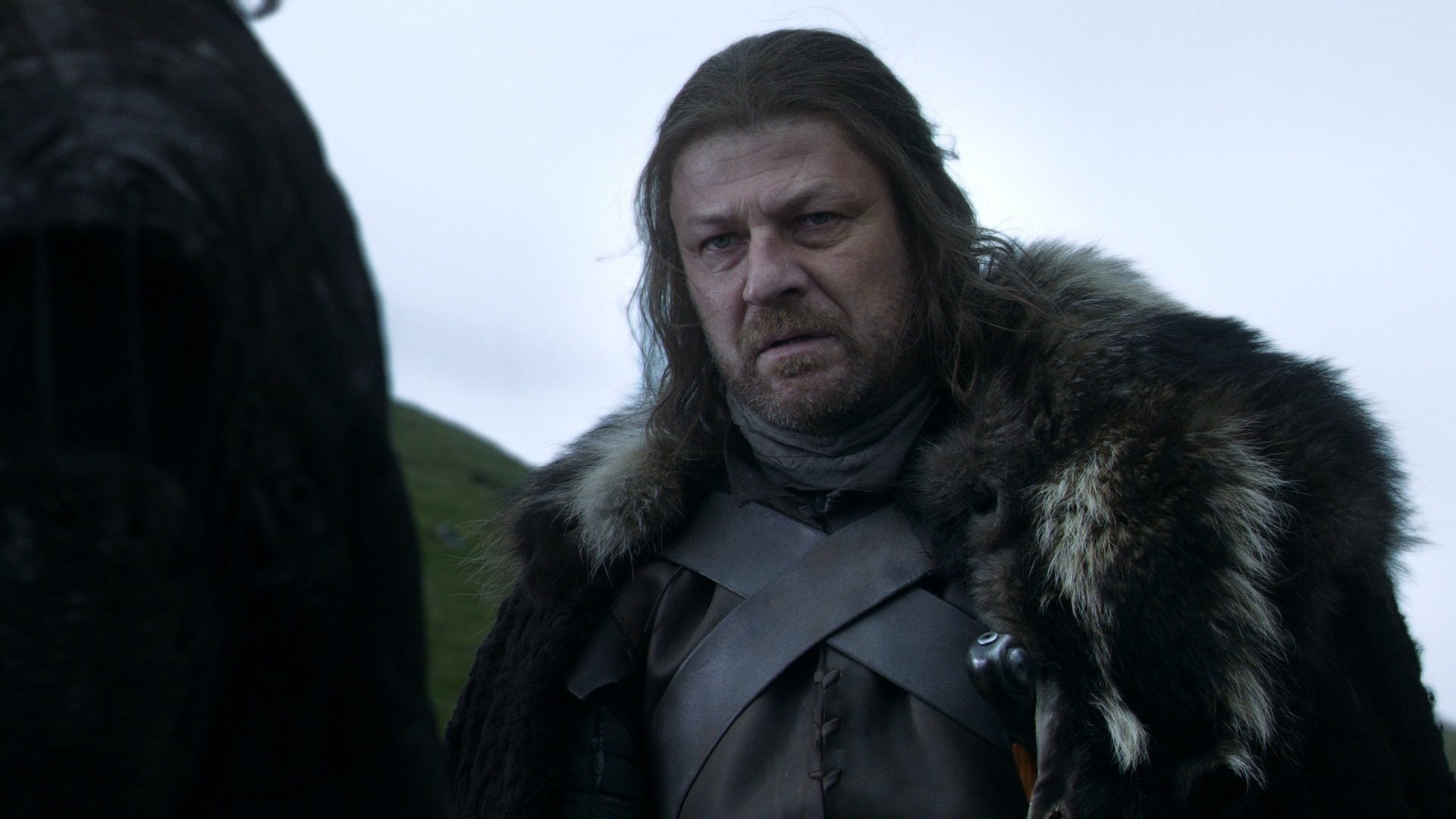
Fifteen years after its premiere, the first season of HBO's Game of Thrones remains a fascinating artefact of television history—simultaneously the confident inauguration of a cultural phenomenon and, through the lens of subsequent disappointment, a poignant reminder of squandered potential. Adapted from George R.R. Martin's novel A Game of Thrones by showrunners David Benioff and D.B. Weiss, this inaugural ten-episode run established a new paradigm for fantasy on the small screen: one defined not by the heroic certainties of Tolkien-esque myth-making, but by a grim, cynical medieval realism where morality is grey, violence is sudden and consequential, and narrative comfort is systematically withheld.
The season's opening instalment, Winter Is Coming, announces these intentions with remarkable efficiency. Following a failed $10 million pilot necessitating significant recasting and retooling, the showrunners emerged with a premiere that methodically establishes the narrative's tripartite foundation: the dynastic power struggles of Westeros, the outsider perspective of the exiled Targaryens across the Narrow Sea, and the existential supernatural threat lurking beyond the Wall. What distinguishes this exposition is its economy and confidence. Rather than overwhelming viewers with spectacle, the episode trusts its audience to absorb complex political alliances and familial relationships through carefully calibrated character interactions. The closing image—Jaime Lannister casually hurling the child Bran Stark from a tower after the boy witnesses incestuous relations with his sister Cersei—immediately codifies the series' darkest promise: innocence offers no protection, and narrative convention will not be respected.
This methodical, novelistic approach to storytelling defines the season's early episodes. The Kingsroad and Lord Snow function as deliberate narrative decelerations, eschewing grand spectacle in favour of deepening thematic foundations and scattering the Stark family across the geographical and political landscape of Westeros. The titular Kingsroad becomes both literal pathway and metaphorical device, as the Starks—positioned as the audience's moral compass—are violently dispersed. Ned Stark travels south to serve as Hand to his old friend King Robert Baratheon, bringing his daughters Sansa and Arya into the viper's nest of King's Landing; Jon Snow journeys north to join the Night's Watch; and Catelyn Stark embarks on her own clandestine investigation into the attempted murder of her son. This dispersal is the season's central structural gambit, forcing characters into new pairings and conflicts that brilliantly serve the series' expansive exposition whilst establishing the impossibility of maintaining familial unity in a world governed by realpolitik.
The season's commitment to "show, don't tell" reaches its apex in Cripples, Bastards, and Broken Things, the first episode scripted by someone other than the showrunners—Bryan Cogman, then the series' unofficial "keeper of the mythos." This instalment pivots from propulsive plot advancement to deepening the texture of Martin's world, focusing on society's marginalised. The introduction of Samwell Tarly, the overweight, bookish son of a martial lord forced to join the Night's Watch, provides the series' first outright "nerd"—a figure with whom modern audiences could immediately sympathise—and instantly softens Jon Snow's stoic isolation. Meanwhile, Tyrion Lannister's explanation of his "tender spot in my heart for cripples, bastards and broken things" establishes the moral complexity that would make Peter Dinklage's performance the season's standout. These character beats, whilst appearing as narrative deceleration, prove essential for sustaining emotional investment through the season's escalating brutality.
By The Wolf and the Lion, the season's midpoint, the narrative architecture shifts decisively from table-setting to kinetic conflict. This episode marks the first true catalyst for open war, its title leaving little doubt as to the opposing factions. The street confrontation between Ned Stark and Jaime Lannister—short, brutal, and profoundly consequential—cements the show's commitment to realistic, impactful violence over choreographed spectacle. Ned's household guard are slaughtered with ruthless efficiency, and the Hand himself is left crippled by a spear thrust. This is not the honourable combat of chivalric romance; it is murderous ambush, a statement that the rules of chivalry are dead in Westeros.
The season's first half culminates in A Golden Crown, frequently cited as the strongest episode of the inaugural run. Here, the series demonstrates its ability to deliver brilliantly executed set-pieces whilst advancing multiple plot threads with remarkable economy. Ned's discovery of the royal secret—that Joffrey and his siblings are the product of incest between Cersei and Jaime—transforms seemingly trivial character beats into the key unlocking the entire season's central conspiracy. Meanwhile, the trial by combat in the Vale, where the sellsword Bronn defeats the armoured knight Ser Vardis Egen through speed and pragmatism rather than honour, visualises the show's cynical ethos. The episode's most celebrated moment, however, arrives in Essos: Khal Drogo's execution of Viserys Targaryen via molten gold poured over his head. This "golden crown" is a brutally poetic demise, darkly humorous and entirely self-inflicted, serving as the catalyst for Daenerys's transformation from frightened pawn to determined leader. For classically literate viewers, the scene resonates as a deliberate nod to the alleged fate of the Roman general Crassus—one of Martin's many historical homages.
The season's back half accelerates towards catastrophe with mounting inevitability. You Win or You Die delivers the series' first seismic political earthquake: King Robert's death following a boar hunt, Ned's honourable but catastrophically naive confrontation with Cersei, and his subsequent betrayal and arrest at the hands of Petyr Baelish. This episode also crystallises the show's most controversial contribution to television vocabulary: "sexposition." The brothel sequence featuring Ros and Armeca, performed against a backdrop of graphic lesbian sex, grafts crucial character exposition onto titillating action. Critics widely condemned the technique as gratuitous, yet even detractors conceded its cynical utility—ensuring viewers absorbed Baelish's motivating pathology alongside their titillation. This technique, previously seen in series like Deadwood, was here distilled to such pure form that it demanded a new label and became a recognised, frequently critiqued narrative shorthand across television.
The Pointy End, written by Martin himself—his first screenwriting work in fifteen years—functions as essential connective tissue, methodically unpacking the fallout from Ned's arrest. The episode's most significant contribution is its demonstration of the Lannister coup's public relations success: the realm perceives Robert's death and Ned's imprisonment not as treacherous power grab, but as rightful suppression of a traitor. Sansa's desperate plea for mercy whilst accepting her father's guilt, and Arya's frantic escape following the death of her beloved dancing master Syrio Forel, brutally delineate the sisters' diverging paths. Meanwhile, Robb Stark's transformation from grieving son to military commander establishes the North's resistance, even as the episode subtly questions this focus through Osha's prophetic warning: the real danger lies north, beyond the Wall.
The penultimate episode, Baelor, delivers the season's defining moment and the series' foundational act of narrative destruction. Following Varys's chillingly rational appeals to the greater good, Ned Stark publicly confesses his "crimes" and recognises Joffrey as king. For a moment, the narrative teases reprieve—Sansa and Cersei have seemingly prevailed upon the boy-king to show mercy. Then, with the petulant sadism that defines him, Joffrey orders execution. The horror flooding Cersei's face—a mother realising she cannot control the monster she created—proves too late to prevent. The mute headsman's sword falls, and the head of the series' apparent protagonist rolls before his daughter's eyes.
This execution is not merely shocking; it is a deliberate annihilation of the conventional television contract. By the established norms of genre television, Ned Stark, the honourable protagonist, was supposed to survive, or at least die a martyr's death. Instead, he is removed in the most capricious manner possible—a victim not of grand villainous plot but of a spoiled child's whim. The message is unequivocal: in this world, no one is safe, and good intentions offer no protection. Director Alan Taylor maintains deliberate pacing, allowing dread to build inexorably whilst cross-cutting between King's Landing, the war camps, Essos, and the Wall to create a compelling tapestry of simultaneous crisis. The off-screen battles—a concession to budgetary constraint that frustrated viewers craving spectacle—nonetheless forced a focus on character and consequence that arguably strengthened the episode's emotional impact.
The season finale, Fire and Blood, functions as aftershock rather than shock, meticulously depicting fallout and illustrating how the sprawling cast must adapt to the brutal new reality Ned's death created. In King's Landing, Joffrey's tyranny manifests with chilling casualness: forcing Sansa to view her father's severed head, having a singer's tongue ripped out for a bawdy song. Sansa's storyline becomes a brutal education in survival through performed submission. Meanwhile, Robb Stark's proclamation as King in the North by his bannermen represents a drastic, irrevocable move—a formal severance from the other six kingdoms that transforms loyalist rebellion into outright secession.
Yet the episode's most consequential development occurs an entire continent away. In Essos, Daenerys Targaryen awakens to cascading tragedies: her son dead, her husband Drogo reduced to a catatonic shell by blood magic, her khalasar abandoned. In an act of mercy and decisive leadership, she smothers the vegetative Drogo and builds a colossal funeral pyre. Walking into the inferno with her three dragon eggs, she emerges the following morning naked and unharmed, with three newly hatched dragons clinging to her. This moment is transcendent—a pivot from grounded political realism to unambiguous fantasy. As Jorah and her remaining followers fall to their knees, the series announces that the myths are true, and a new power has entered the world.
Throughout this inaugural season, the production demonstrates remarkable craftsmanship. The Wall, depicted in awe-inspiring wide shots, is the first truly convincing fantasy location—its stated dimensions of 700 feet rendered with palpable grandeur through elaborate winch-powered elevators. Ramin Djawadi's score, particularly the mournful, cello-driven themes for House Stark and the instantly iconic main title sequence, elevates the material, cementing an atmosphere of Northern honour and impending loss. The casting proves uniformly excellent: Sean Bean's world-weary gravitas as Ned, Peter Dinklage's sardonic wit as Tyrion, Lena Headey's chilling composure as Cersei, and Emilia Clarke's subtle evolution from frightened pawn to emerging queen.
The season is not without its critiques. The pacing in middle episodes occasionally drags, prioritising exposition over propulsion. The "sexposition" technique, whilst effective for information delivery, established a pattern of female nudity as shorthand for "edgy" storytelling that would draw increasing criticism in subsequent seasons. The Dothraki heart-eating ceremony in A Golden Crown can feel somewhat gimmicky, inserted for visceral impact without sufficient cultural exposition. And the series' wholesale rejection of the heroic paradigm, whilst refreshing, occasionally risks descending into nihilism—suggesting that honour is not merely difficult but actively suicidal.
Nevertheless, Season One of Game of Thrones stands as arguably the most authentic, if not outright best, season of the entire series. This authenticity derives partly from its close adherence to Martin's published source material, and partly from its perfect capture of his vision: epic fantasy as cynical, realistic antithesis to simpler heroic archetypes. For nine episodes, fantasy elements remain mere hints—whispers of White Walkers and legends of dragons—whilst the plot focuses on political intrigue, betrayal, and warfare that would not feel out of place in a history of the Wars of the Roses. The season functions superbly within this framework, delivering satisfying, self-contained storytelling within its serialised structure.
Revisiting this season today carries inevitable poignancy. We now watch knowing that many seeds planted with such meticulous care would either wither or bear rotten fruit in later years. The careful pacing and respect for source material contrast painfully with the rushed, character-assassinating conclusions of the series' final seasons. Winter Is Coming feels like the confident first chapter of a great novel, but we now know the final chapters were written by different, less capable authors. The first season remains a remarkably efficient and engaging piece of television, but its legacy is forever shadowed by the failure of the saga it so confidently began.
In retrospect, Season One of Game of Thrones represents a high-water mark for fantasy television adaptation—demonstrating that the genre could support complex political realism, moral ambiguity, and ruthless narrative stakes whilst maintaining mass appeal. It proved that fantasy could be "for grown-ups" without sacrificing emotional accessibility or visual splendour. That the series ultimately failed to honour the promise of its magnificent beginning does not diminish the achievement of this inaugural run. Rather, it renders it all the more precious: a glimpse of what might have been, preserved in ten hours of largely superlative television. The game of thrones, as this season so compellingly established, is played for keeps—and in 2011, the stakes felt genuinely, terrifyingly real.
(NOTE: All reviews can be accesed via this link.)
Blog in Croatian https://draxblog.com
Blog in English https://draxreview.wordpress.com/
InLeo blog https://inleo.io/@drax.leo
Substack https://draxster.substack.com
BTC donations: 1EWxiMiP6iiG9rger3NuUSd6HByaxQWafG
ETH donations: 0xB305F144323b99e6f8b1d66f5D7DE78B498C32A7