Television Review: The Bourne Identity (1988)
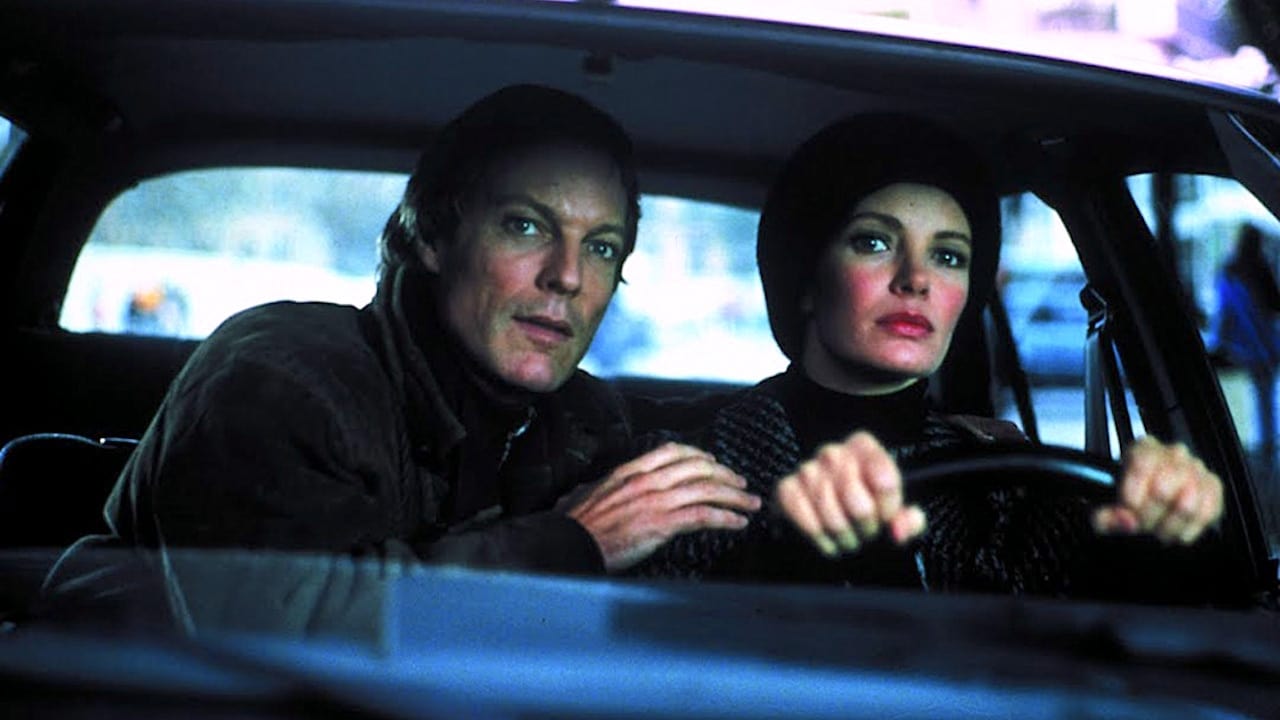
There is a certain breed of television adaptation that arrives freighted with the sincere conviction of its makers, only to be quietly buried by the very cultural memory it hoped to shape. Roger Young's 1988 miniseries The Bourne Identity is precisely that sort of artefact: a genuine attempt at fidelity to Robert Ludlum's bestselling thriller, made under the crushing weight of network-era constraints, and now almost entirely eclipsed by Doug Liman's sleeker, chiselled 2002 reimagining. To watch it today is to observe a fascinating collision between good intentions and the limitations of its medium.
What the miniseries possesses in abundance is a virtue that the Damon films cheerfully jettisoned: fidelity to the novel. The premise unfolds as Ludlum wrote it. A mysterious man is recovered from the French Mediterranean coast, riddled with bullet holes and stripped of nearly all memory. The lone thread back to his past is a surgically implanted Swiss bank account number — an exquisite little device of Cold War paranoia — which propels him to Switzerland and into the crosshairs of men who would rather he stayed dead. Richard Chamberlain, then in his late prime as a reliable television lead, inhabits the role of the amnesiac with a poised, slightly chilly watchfulness.
The plot, crucially, is handled with a competent hand. Young paces the conspiracy with a reasonable grasp of the genre's mechanics, and he has the good sense to exploit the European locations, lending the production a continental texture that its modest budget could otherwise never have bought. There is even a small, subversive pleasure to be had in the violence, which, by the standards of 1980s network television, lands with a startling bluntness — enough to remind you that this is a story about men who kill for a living.
Where the miniseries founders is where all such projects eventually founder: at the intersection of the era's production standards and the datedness of its source material. Ludlum's novel had built its villainy around Carlos the Jackal — the infamous, seemingly uncatchable international terrorist of the 1970s — and the miniseries carries that casting of the villain wholesale. By 1988 this was already anachronistic; by the time the real Jackal was finally captured in the late 1990s, the character had curdled into a period piece. The first Jason Bourne therefore looks hopelessly dated, and not entirely through any fault of its own.
Worse is a casting misjudgement: the conspiratorial might of the CIA's secret apparatus is embodied by a collection of figures who read less as steely mandarins than as a group of harmless senior citizens. The paranoia that ought to crackle through the corridors of power instead shuffles along amiably, sapping the menace from what should be the most dangerous men in the story.
Herein lies the most provocative assertion: that this miniseries is, in many respects, better than the Damon films. It is a claim worth taking seriously, even if it invites scepticism. The Damon trilogy is unquestionably the more technically accomplished, more muscular cinema — but it is also a wholesale reinvention, stripping Ludlum's labyrinthine plotting down to a lean, post-Bourne-genre template. The miniseries, by contrast, offers the genuine article: the story as its author conceived it, with the intricate machinery of the conspiracy intact rather than abbreviated. For the reader who prizes Ludlum's architecture over kinetic set-pieces, the 1988 version is the more honest proposition. Fidelity, however, is not the same as quality, and a faithful adaptation executed with the constraints of network television can still be the weaker work.
The Bourne Identity (1988) is neither the disaster its obscurity implies nor the hidden gem its defenders suggest. It is a respectable, occasionally effective piece of small-screen craftsmanship, hamstrung by a dated antagonist, a misfired supporting cast and the suffocating parameters of its era — yet redeemed by a fidelity that the more famous films simply abandoned. It should be recommended as a worthwhile curio for Ludlum completists and students of the adaptation's craft. For everyone else, a reminder that the best-known version of a story is rarely the most faithful one.
Blog in Croatian https://draxblog.com
Blog in English https://draxreview.wordpress.com/
InLeo blog https://inleo.io/@drax.leo
Substack https://draxster.substack.com/
BTC donations: 1EWxiMiP6iiG9rger3NuUSd6HByaxQWafG
ETH donations: 0xB305F144323b99e6f8b1d66f5D7DE78B498C32A7
BCH donations: qpvxw0jax79lhmvlgcldkzpqanf03r9cjv8y6gtmk9
An insightful review. Your interlocutor has managed to unveil the tragic fate of the retro TV range – to get covered by the more fascinating movie. By calling Roger Young’s 1988 The Bourne Identity “an artefact”, the critic perfectly describes the essence of network-era productions.
However, your writer’s approach to the task of comparing two Bourne movies is even more remarkable. They call out the adaptation for removing “the intricacies of intrigue and Cold War history” and replacing them with the protagonist’s “high-profile action pieces”. By outlining the differences between the 2002 movie and the original, the critic proves that the newer production has little to do with the classic spy novel. It is a sheer masterpiece of analysis that highlights the problematic aftereffects of the chosen way of remaking the classic.