What Losing Weight Really Does to Your Blood Sugar Levels
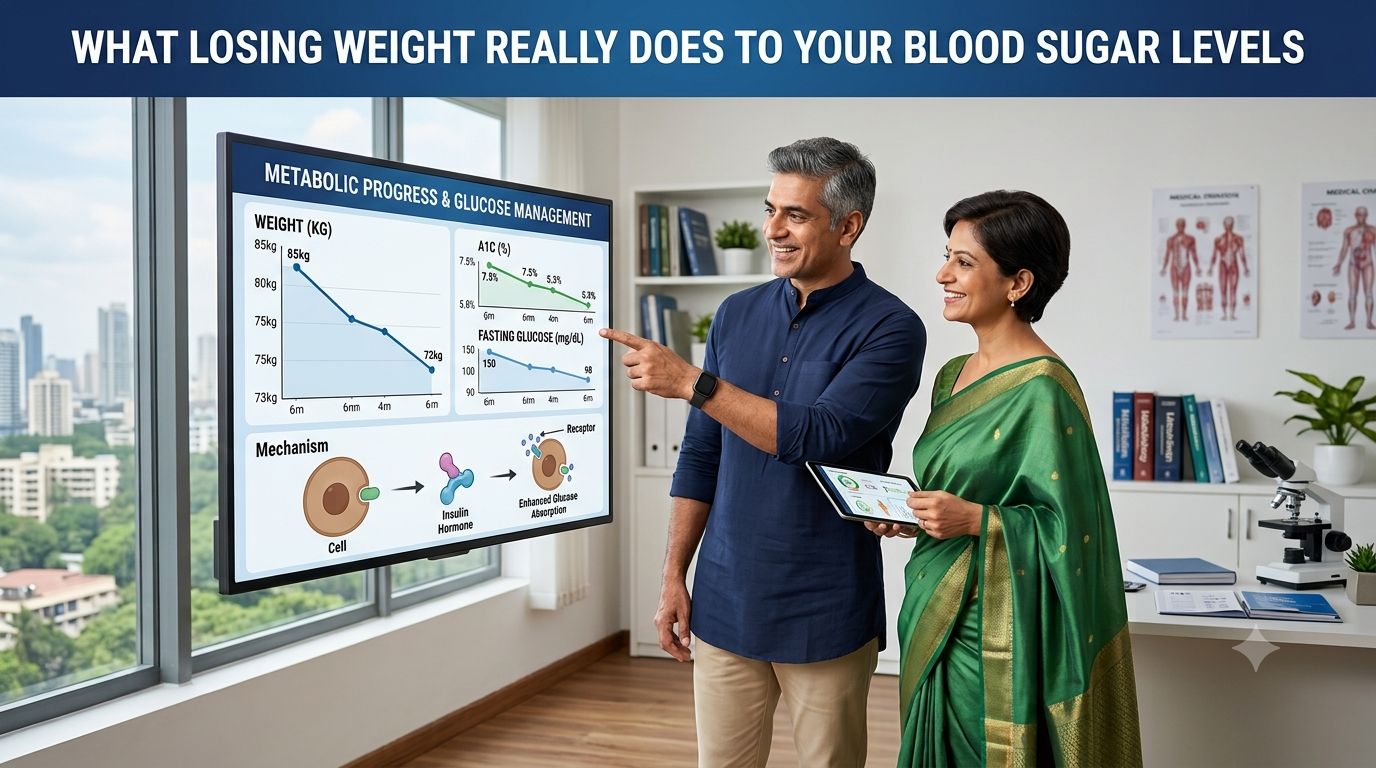
Individuals suffering from type 2 diabetes are frequently informed that weight loss can improve their blood sugar levels. However, they often aren't told what to expect: the nature of the improvement, the timeline, the sequence of blood sugar changes, and the maximum improvement possible in their case. Knowing how blood sugar responds to weight loss helps diabetes patients monitor their blood sugar levels effectively and without frustration.
Key Takeaways
- Blood sugar improvements with weight loss are real and often significant, but they follow a pattern that differs between fasting readings, postprandial readings, and the HbA1c average.
- Fasting blood sugar typically improves earlier and faster than postprandial glucose, reflecting the rapid reduction in liver glucose overproduction that accompanies early weight loss.
- HbA1c takes three months to reflect changes in average blood sugar, meaning patients who are improving will not see this confirmed until their next three-monthly test.
- The depth of blood sugar improvement depends on how long diabetes has been present, how much weight is lost, and whether pharmacological support is helping address the hormonal barriers to both.
How Blood Sugar Is Measured and What Each Marker Shows
Three readings are commonly used to monitor blood glucose in people with type 2 diabetes. The first is fasting blood glucose, measured early in the morning after waking up, which indicates how much glucose the liver produces during that period and how well the body clears glucose during fasting hours. The next measurement is postprandial blood glucose, measured 1 to 2 hours after a meal. This type of reading helps determine how efficiently the body processes glucose from food. Lastly, HbA1c provides information on the average blood glucose level over the last 2–3 months by measuring the amount of glucose attached to haemoglobin in red blood cells.
However, although these indicators and their values change at different speeds and in different ways when losing weight, improvements in blood glucose are rarely complete; instead, they occur gradually across several markers at the same time.
What Happens to Fasting Blood Sugar First
Fasting blood sugar levels tend to predict whether someone has lost weight. A moderate decrease in caloric intake often shows an effect within a few days as the amount of lipid in liver cells starts to decrease. The regular consumption of liver fat leads to a decrease in the synthesis and secretion of sugar from the liver. In this situation, patients begin to notice changes in blood sugar levels, which become lower with glucometer readings, sometimes within one or two weeks of weight loss or pharmacological weight-loss treatment.
The process of fast improvement can be so impressive that insulin dosage adjustment may be necessary.
What Happens to Postprandial Blood Sugar
When we talk about blood sugar levels after eating, postprandial glycaemia improves after fasting blood sugar normalises. Postprandial sugar levels decrease depending on how much the muscle responds to insulin. The improvement of muscle insulin sensitivity is less rapid than that of the liver fat reduction. As weight loss increases, insulin action in muscle cells improves over time, reducing postprandial peaks that can damage blood vessels.
What the HbA1c Trajectory Looks Like Over Months
Since HbA1c reflects a three-month average, people who improve their blood glucose by losing weight may not see the results in their test for another full three months after starting weight loss. A person with improved fasting and postprandial glucose levels will only see partial improvement in their three-month HbA1c.
This major drawback worries many patients who are aware of improvements in their glucose levels at the same time.
Pre-Diabetes vs Type 2 Diabetes: Different Blood Sugar Responses
The extent to which weight loss can improve blood sugar levels depends heavily on where someone stands on the metabolic dysregulation spectrum. In the case of pre-diabetes, with the presence of insulin resistance being observed but with sufficient beta cell functioning, weight loss of approximately five to seven percent could completely normalise blood sugar levels.
In established type 2 diabetes, the blood sugar response depends on how long someone has had diabetes and how much beta-cell function remains. Those diagnosed in the last five years, especially if beta cell function is still sufficient, can achieve complete remission through weight loss. Those who have had diabetes for a longer time and have destroyed more beta cells would be able to achieve improvement, but would be less likely to obtain complete remission due to weight loss alone.
When Medications Need Adjustment During Weight Loss
This is important from a clinical standpoint and is not often properly covered. As weight decreases and blood sugar readings improve, medications that were previously needed may now become excessive. For example, sulfonylurea medicines may cause hypoglycaemia as blood glucose levels normalise with weight loss. Careful insulin dose reduction is required as sensitivity to the medication increases.
Patients must be encouraged to test blood glucose more often during active weight loss and to contact their prescribing doctor as soon as results show consistently low readings, rather than waiting for scheduled appointments.
Treatment That Accelerates Both Weight Loss and Blood Sugar Improvement
For patients where lifestyle changes alone are insufficient to produce the weight loss needed for meaningful blood sugar improvement, pharmacological support that addresses both simultaneously offers the most efficient path to metabolic benefit.
Evidence on GLP‑1 for diabetes and weight loss treatment options shows agents designed to produce meaningful weight reduction alongside direct improvements in blood sugar regulation through hormonal mechanisms.
Tirzepatide acts on the GLP-1 and GIP receptors, which help control hunger by slowing gastric emptying and promoting insulin secretion in response to high blood glucose levels. This mechanism accounts for the medicine’s weight-loss effects and its blood glucose-lowering action, which can trigger weight loss that seems to take effect earlier than with Tirzepatide. Studies in the SURPASS clinical trials showed a considerable HbA1c reduction of up to 2.4% and substantial weight loss with Tirzepatide at higher doses.
The next dose of Mounjaro after initiation is Mounjaro 5mg. The medicine is administered for the first time at the 2.5mg dose weekly under medical supervision.
What Remission Looks Like in Blood Sugar Terms
Clinically, diabetes remission is defined as an HbA1c below 48 mmol/mol (6.5 percent) sustained for at least three months without any medical treatment. Many patients with early-stage diabetes and good beta-cell function can meet this criterion through weight loss.
Patients who do not reach remission can still see meaningful improvements in blood sugar levels that may lead to medication reduction, fewer complications, and improved quality of life.
What Is Worth Remembering
Weight loss affects blood sugar levels in specific, measurable ways that follow a predictable pattern. The first parameter to improve is fasting glucose. The second parameter to improve is postprandial glucose. HbA1c is the last to improve, and it reflects changes over the past three months. Improvement depends on the amount of weight lost, the duration of diabetes, and whether lifestyle changes or pharmacological interventions have been implemented.
The most important thing during weight loss is to monitor blood sugar levels and inform your doctor of the results immediately, rather than waiting for an appointment.
Disclaimer: This article is for general informational purposes only and does not constitute medical advice. Always consult a qualified healthcare professional before starting, stopping, or modifying any diabetes medication or weight management plan.