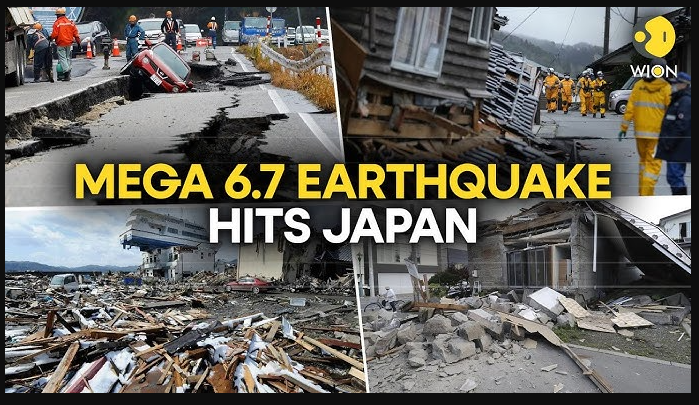
Japan Tokyo Earthquake Today: Magnitude 5.9 Quake Injures 37 and Disrupts Train Services
Japan Tokyo Earthquake Today: Magnitude 5.9 Quake Injures 37 and Disrupts Train Services
A Japan Tokyo earthquake today has shaken the capital region, with a magnitude 5.9 earthquake striking eastern Japan early Sunday, August 23, 2026. The earthquake was felt strongly across Tokyo and surrounding prefectures, injured at least 37 people and disrupted some regional train services.
The earthquake struck at about 2 a.m. local time, when many residents were asleep. Japan's Meteorological Agency said the epicenter was in southern Ibaraki Prefecture, northeast of Tokyo, at a depth of roughly 68 to 70 kilometers. The U.S. Geological Survey measured the earthquake at magnitude 5.8.
Japan Tokyo Earthquake Today: What Happened?
The Japan Tokyo earthquake today produced strong shaking across the Greater Tokyo area. Smartphone earthquake alerts and emergency warnings were activated as the tremors spread through Tokyo and nearby prefectures.
The Japan Meteorological Agency recorded shaking reaching the lower 5 level on Japan's seven-point seismic intensity scale in parts of the region. Unlike magnitude, which measures the energy released by an earthquake, the seismic intensity scale describes how strongly the ground shook at particular locations.
The earthquake was centered in southern Ibaraki, but its effects were felt throughout the Tokyo metropolitan region.
How Many People Were Injured?
At least 37 people were injured across five prefectures following the earthquake, according to Japanese officials and emergency authorities.
Tokyo recorded 15 injuries, while nine were reported in Saitama, eight in Kanagawa, four in Chiba and one in Ibaraki. Most injuries were minor and happened when people fell or collided with furniture and doors after being startled awake by the shaking.
One of the more serious injuries involved an elderly woman in Yokohama who fell from her bed while attempting to get up after the earthquake.
Train Services Disrupted in Tokyo
One of the immediate effects of the Japan Tokyo earthquake today was disruption to regional rail services.
East Japan Railway Company reported delays affecting some trains in the Tokyo area. Express services connecting Tokyo with Narita Airport were among those affected, while other regional lines also experienced delays or temporary suspensions.
Importantly, Shinkansen bullet train services were not significantly affected, according to reports available after the earthquake. Japan's rail network continued operating while railway companies inspected infrastructure and assessed the effects of the shaking.
Travelers in the Tokyo region were therefore advised to check individual railway operators for the latest service information.
Was There a Tsunami Warning?
There was no tsunami threat following the earthquake.
The Japan Meteorological Agency said there were no concerns about a tsunami after the quake, providing some reassurance to residents along the coast.
The absence of a tsunami threat was particularly significant because Japan has experienced devastating tsunami events following major offshore earthquakes.
Did the Earthquake Damage Tokyo?
Initial reports indicate that the earthquake caused limited structural damage.
Authorities reported minor damage to a building in Saitama. A water main also ruptured in Tokyo's Koto Ward, with officials investigating whether the pipe failure was directly connected to the earthquake. The damaged water pipe was subsequently repaired.
There were no immediate reports of widespread building collapses or major fires in Tokyo.
Japan's nuclear authorities also reported no abnormalities at nuclear facilities following the earthquake.
Where Was the Japan Earthquake Centered?
The Japan Tokyo earthquake today was centered in southern Ibaraki Prefecture, northeast of central Tokyo.
The Japan Meteorological Agency placed the earthquake at a depth of approximately 70 kilometers. Although the epicenter was outside Tokyo, the depth and location allowed the shaking to reach a broad area of the densely populated Kanto region.
Tokyo, Ibaraki, Saitama, Chiba and Kanagawa were among the areas affected.
Could There Be Aftershocks?
Japanese authorities have warned residents to remain cautious because additional earthquakes could occur following the main event.
The Japan Meteorological Agency advised people in the affected region to remain alert for potentially strong aftershocks during the following week. Heavy rain in parts of the region also increased concern about landslides because strong shaking can destabilize already saturated soil.
Residents were therefore urged to remain prepared even though the immediate earthquake had passed.
Tokyo High-Rises and Long-Period Shaking
The earthquake also highlighted a particular concern for people living in Tokyo's many high-rise buildings.
Long-period seismic motion can cause tall buildings to sway for an extended period. This type of movement can be especially noticeable on higher floors, where residents may experience prolonged swaying even when buildings do not sustain significant structural damage.
Reports indicated that long-period ground motion was recorded in Tokyo's 23 wards and surrounding areas.
Japan's Government Responds
Prime Minister Sanae Takaichi established a government task force to assess the earthquake and coordinate the national response.
Emergency authorities began checking infrastructure and gathering information about injuries and damage across the affected prefectures. Nuclear facilities were also monitored as a precaution.
The government's response reflects Japan's extensive experience preparing for earthquakes and other natural disasters.
What Travelers Should Know
For visitors searching for updates on the Japan Tokyo earthquake today, the most important immediate issue is transportation.
Some regional rail services were disrupted, particularly north of Tokyo, while bullet train services remained operational.
Travelers should check their railway operator before heading to stations because service conditions can change as inspections continue.
Those staying in hotels or high-rise buildings should also follow local emergency instructions and keep essential items such as phones, water and identification readily accessible.
Japan Tokyo Earthquake Today: Latest Situation
The latest reports indicate that the earthquake caused injuries and transportation disruption but did not result in a major catastrophe across Tokyo.
The confirmed situation includes:
- Magnitude: 5.9 according to Japan's Meteorological Agency
- USGS magnitude: 5.8
- Time: Around 2 a.m. local time on August 23
- Location: Southern Ibaraki Prefecture
- Depth: Approximately 68–70 kilometers
- Injuries: At least 37
- Tsunami: No tsunami threat reported
- Trains: Some regional services delayed or disrupted
- Shinkansen: Bullet train services largely unaffected
- Nuclear facilities: No reported abnormalities
- Aftershock risk: Residents advised to remain cautious
What Happens Next?
Authorities will continue inspecting buildings, roads, railways, utilities and other infrastructure following the Japan Tokyo earthquake today.
The Japan Meteorological Agency's warning about possible additional strong shaking means residents should continue following official emergency information.
While the earthquake was significant enough to injure dozens of people and disrupt transportation, initial assessments suggest that Tokyo avoided the type of widespread destruction associated with Japan's most powerful historical earthquakes.
Bottom Line
The Japan Tokyo earthquake today was a magnitude 5.9 earthquake that struck southern Ibaraki Prefecture at around 2 a.m. on August 23, 2026. Strong shaking was felt throughout Tokyo and neighboring prefectures, and at least 37 people were injured.
Regional train services were disrupted, but Shinkansen bullet trains continued operating. There was no tsunami threat, and authorities reported no abnormalities at nuclear facilities.
With officials warning of the possibility of aftershocks, residents and travelers in the Tokyo region are being advised to remain alert and monitor official updates.