What Should Operators Know Before Choosing a Turnkey Casino Platform?
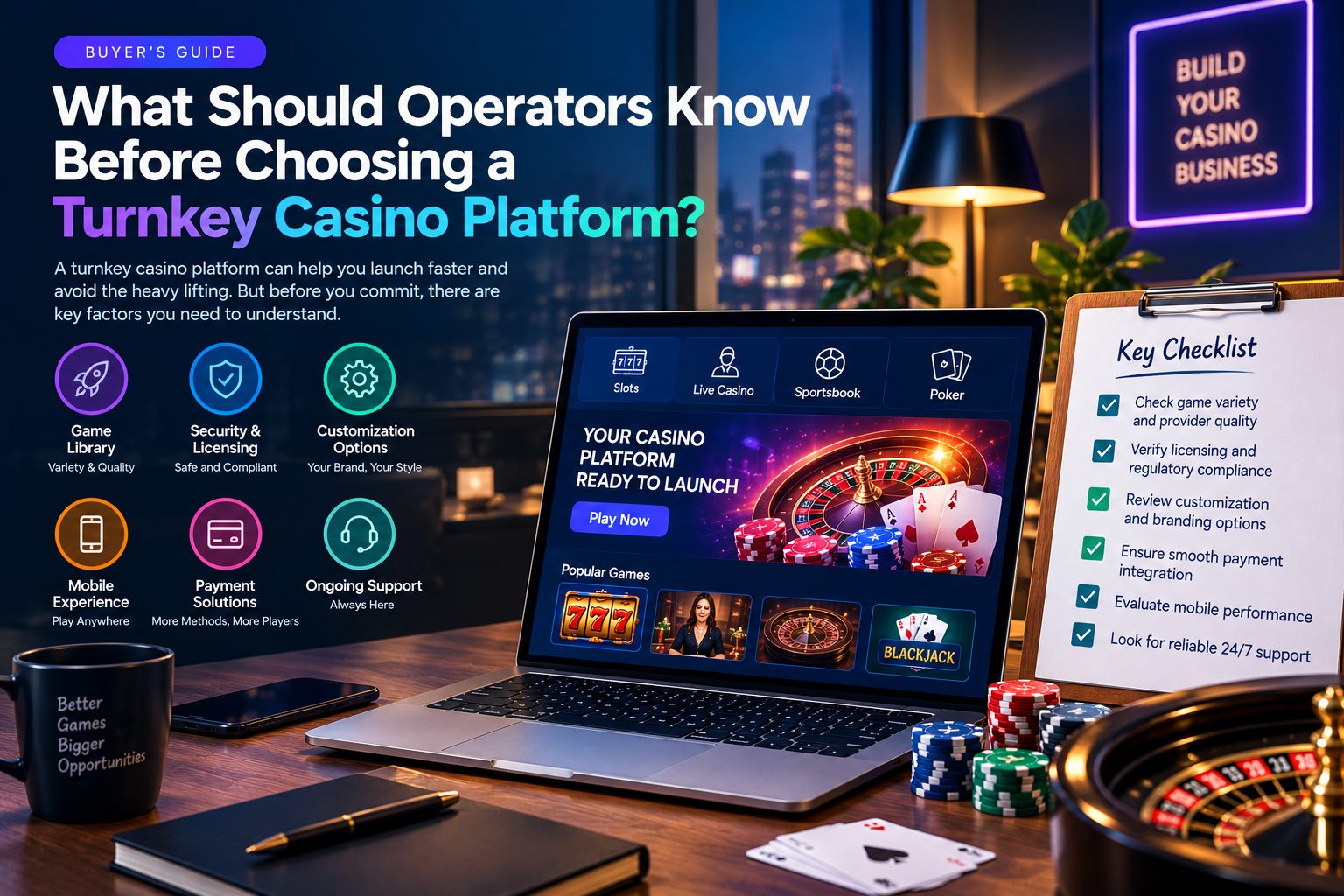
Launching an online casino involves several decisions, including software selection, game integration, player management, security, and operational planning. Building every component from scratch can require significant time, technical expertise, and investment. A turnkey casino platform offers an alternative by providing an existing technology setup that operators can adapt to their business needs.
However, turnkey solutions differ in their features, pricing, customization options, and support services. Operators should evaluate these differences carefully before committing to a provider.
Technology companies such as Playage Gaming offer casino platform solutions that businesses can explore when comparing options. The right choice depends on the operator’s budget, target market, technical resources, and long-term business strategy.
1. Understand What a Turnkey Casino Platform Includes
A turnkey casino platform provides an existing software framework designed to support an online casino business. Depending on the provider, it may include casino software, game integrations, player account management, back-office tools, and reporting functionality.
However, the term “turnkey” does not guarantee that every requirement for launching a casino is included. Licensing, legal advice, marketing, payment arrangements, customer support, and other operational services may require separate arrangements.
Before choosing a platform, operators should request a detailed list of included features and identify any services that need to be sourced independently.
2. Evaluate the Core Platform Features
The platform should support the daily activities involved in managing an online casino. Common features may include player registration, account management, game administration, promotional tools, reporting, and staff permissions.
Operators should request a demonstration to understand how these features work in practice. A long feature list is not enough if the software is difficult to use or does not fit the team’s workflow.
Before making a decision, businesses should check whether the platform can support their current operating model and whether additional features can be introduced as requirements change.
3. Review Game Integrations and Content Options
Game content is an important part of the casino experience. Operators should examine which game categories are available, how integrations are managed, and whether the selection suits the intended audience.
The evaluation should go beyond the total number of games. Businesses should also consider technical compatibility, performance, content updates, integration costs, and commercial terms.
Operators should confirm whether the provider manages game integrations and maintenance or whether these responsibilities fall to the business. Understanding these arrangements early can help prevent delays and unexpected costs.
4. Check the Scope of the Turnkey Solution
Not all turnkey packages offer the same level of service. Some providers supply several connected technology components, while others focus mainly on the core casino platform.
Operators should compare the services included in each package rather than relying on the term “turnkey” alone. Reviewing a turnkey casino solution can help businesses understand the type of platform offering available for their planning.
Before signing an agreement, operators should clarify whether setup, customization, game integrations, maintenance, onboarding, and technical support are included or charged separately.
5. Understand the Setup Process Before Launch
Launching a casino platform involves more than activating software. Operators need to define their business requirements, configure the platform, review integrations, test important workflows, and prepare operational processes before going live.
The time and resources required depend on the provider, the complexity of the project, and the services included in the package. A clear implementation plan can help teams coordinate tasks and identify potential delays.
Businesses researching this process can refer to the turnkey casino solution guide for additional information about platform setup and the considerations involved in preparing an online casino.
6. Calculate the Total Cost of Ownership
The initial setup fee is only one part of the overall investment. Operators should estimate both one-time and recurring expenses to understand the financial commitment required to launch and maintain the platform.
Potential costs include:
- Platform setup and recurring software fees
- Game integration and content charges
- Custom development and design
- Hosting, maintenance, and technical support
- Licensing and legal advice
- Payment service costs, where applicable
- Customer support, security, and marketing
Some providers may also charge revenue-sharing fees or additional fees for optional features. Operators should request a transparent pricing breakdown and check whether fees can change during the contract period.
Comparing the expected total cost across providers can provide a more realistic view of affordability than focusing only on the initial price.
7. Assess Customization and Branding Options
A casino needs a consistent identity and a user experience suited to its target audience. Operators should determine how much control they have over the website design, branding, navigation, and platform configuration.
Some solutions rely on predefined templates, while others offer more flexibility depending on the package and agreement. Businesses should ask whether customization requires additional development work and how changes are managed after launch.
They should also clarify who owns branding assets and what happens to customized features if the business moves to another provider.
8. Prioritize Security and Data Protection
Casino platforms may process personal information, account credentials, and transaction-related data. Security should therefore be assessed before the platform goes live.
Operators should ask about authentication, access controls, encryption, backups, monitoring, software updates, and incident-response procedures. They should also understand how data is stored, who can access it, and which party is responsible for protecting it.
The agreement should clearly define the security responsibilities of both the operator and the provider. Regular testing and maintenance are also important because security requires ongoing attention.
9. Verify Licensing and Market Requirements
The platform must suit the legal requirements of the market in which the operator intends to operate. Depending on the jurisdiction, requirements may cover licensing, player verification, advertising, responsible gambling, data protection, and financial reporting.
Operators should consult qualified legal professionals and relevant authorities to determine whether their proposed activities are permitted and which obligations apply.
A technology provider may offer tools to support compliance procedures, but those tools do not automatically make the business compliant. Operators should verify which capabilities are available and identify any additional systems or processes they need.
10. Evaluate Scalability and Performance
A platform should be able to accommodate changing business requirements. As operations expand, the casino may need additional games, more administrative users, new integrations, or greater capacity to handle traffic.
Operators should ask about infrastructure capacity, performance monitoring, upgrade procedures, backup arrangements, and recovery from technical failures. They should also review service-level agreements to understand uptime commitments and the process for resolving issues.
The objective is to select a platform that meets current requirements while providing a practical path for future growth, without paying for unnecessary complexity.
11. Review Technical Support and Maintenance
Technical problems can affect player access and daily operations, making support arrangements an important part of provider selection.
Operators should confirm when support is available, how urgent incidents are escalated, and whether response targets are documented. They should also clarify who manages software updates, routine maintenance, troubleshooting, and staff training.
These responsibilities should be included in the service agreement. Businesses should not assume that round-the-clock assistance or every maintenance service is included unless the provider confirms it.
12. Examine Back-Office and Reporting Tools
Back-office systems help teams manage routine tasks and monitor casino operations. Depending on the platform, reporting features may cover player activity, game performance, account records, and other operational indicators.
Operators should check whether reports are easy to understand, whether data can be exported, and whether access can be restricted by staff role. They should also determine how frequently information is updated and whether the reports support the business’s operational needs.
A practical demonstration can help the team assess whether these tools are suitable for daily use.
13. Understand Contract Terms and Exit Conditions
The provider agreement can affect the business long after launch. Operators should review contract duration, renewal conditions, pricing changes, service commitments, termination rules, and restrictions on customization or integrations.
Data access is another important consideration. Businesses should establish how they can retrieve relevant records and what assistance is available if they decide to migrate to another platform.
Clear exit terms can reduce uncertainty and help operators maintain greater control over their business if their requirements change.
Conclusion
Choosing a turnkey casino platform requires a careful review of software features, game integrations, setup requirements, pricing, security, compliance, support, and long-term flexibility.
Operators should confirm exactly what each provider includes and understand which responsibilities remain with the business. Comparing providers against a consistent checklist can reveal gaps before a contract is signed.
By evaluating both immediate requirements and future plans, casino operators can make a more informed technology decision and build a stronger foundation for launching and managing their business.