Best Phonics Programs for Kids to Learn Reading at Home
Learning to read is one of the most important skills children develop during their early years. For parents teaching at home, however, knowing where to begin can sometimes be confusing.
Should children memorize words? Should parents start with the alphabet? Or should they focus on letter sounds first?
This is where phonics can help.
The best phonics programs for kids provide a structured way for children to understand how letters and sounds work together. Instead of simply memorizing words, children gradually learn how to decode unfamiliar words.
In this guide, we’ll look at several popular phonics and reading programs for children, what parents should consider before choosing one, and whether Children Learning Reading could be a suitable option for home learning.
What Is Phonics?
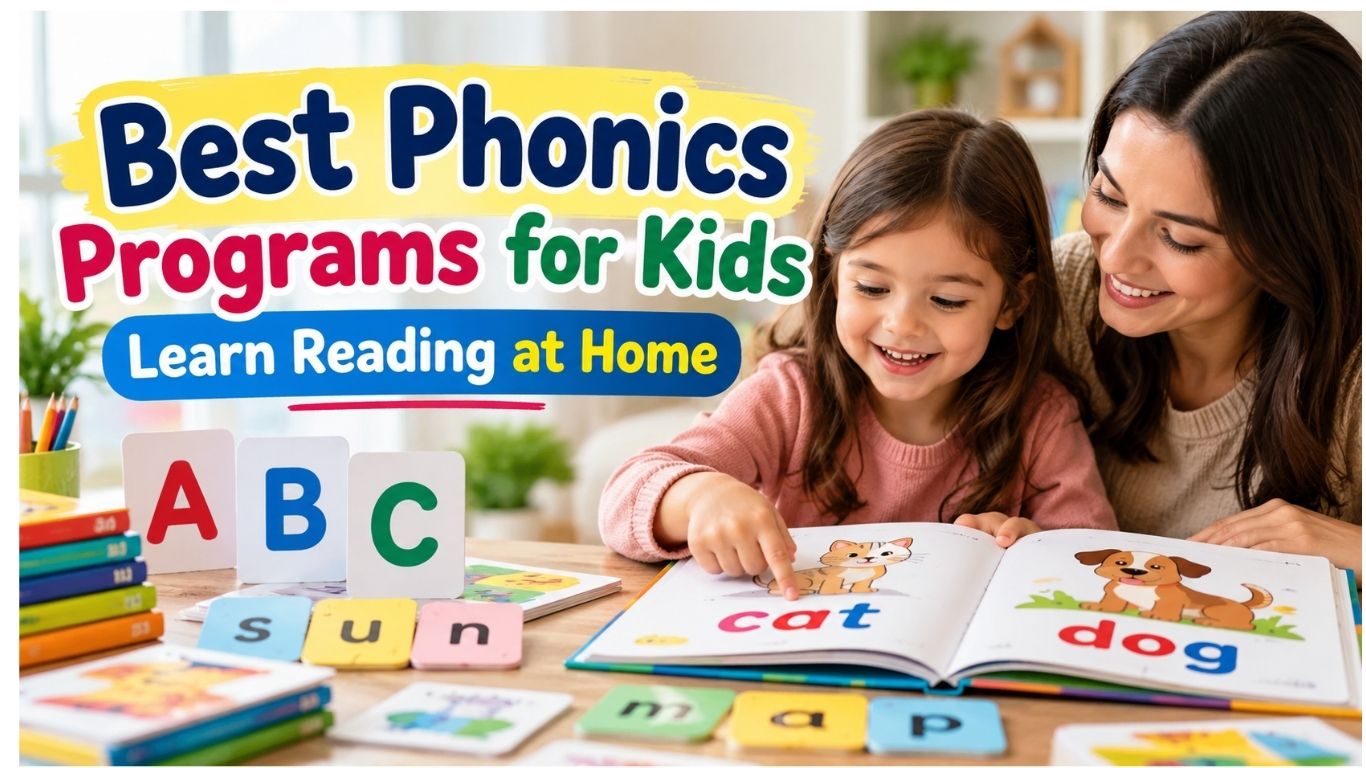
Phonics is a method of teaching reading by helping children understand the relationship between written letters and spoken sounds.
For example, a child may learn the individual sounds represented by:
c – a – t
The child then learns to blend those sounds together to read:
cat
As children progress, they can begin working with more complicated letter patterns, words, sentences, and eventually complete stories.
A structured phonics approach can give beginning readers a practical strategy for decoding words they have not seen before.
Why Use a Phonics Program at Home?
Parents can certainly practice phonics without purchasing a complete program. However, one common challenge is knowing what to teach first and what should come next.
A structured program can provide a clear sequence.
Instead of randomly selecting letters, sounds, worksheets, or videos, parents can follow lessons that gradually introduce new skills.
The best phonics programs for kids typically provide:
- Step-by-step lessons
- Letter-sound instruction
- Blending practice
- Word-reading activities
- Gradual skill progression
- Regular opportunities for practice
- Guidance for parents
The right program should also be realistic for your family's daily schedule.
1. Children Learning Reading
Children Learning Reading is a parent-led reading program designed to help young children develop early reading skills through phonics and phonemic-awareness activities.
Rather than leaving children to complete everything independently, the program is designed around interaction between the parent and child.
Lessons are generally intended to be short and focused, which may be useful for younger children who struggle with long study sessions.
How Children Learning Reading Works
The program follows a progressive approach.
Children begin with foundational reading skills and gradually move toward blending sounds and reading words.
The goal is to build skills progressively rather than expecting children to memorize large numbers of words.
Parents receive instructions they can follow while working directly with their child.
This may make the program particularly interesting for parents who want a ready-made home reading system instead of developing their own lesson plan.
Children Learning Reading Pros
Some potential advantages include:
- Structured reading lessons
- Focus on phonics and phonemic awareness
- Parent-led instruction
- Short practice sessions
- Can be used at home
- Gradual progression of reading skills
- Provides parents with a teaching framework
Children Learning Reading Cons
Parents should also consider the limitations.
The program requires active parent participation. It is not designed as a completely hands-off learning system.
Children also develop reading skills at different speeds. Therefore, parents should not expect exactly the same results for every child.
Families who prefer a highly interactive app-based experience may also prefer a different learning format.
Who Might Consider Children Learning Reading?
It may be worth exploring for parents who:
- Want to teach reading at home
- Prefer structured lessons
- Can practice regularly with their child
- Want a phonics-focused approach
- Prefer shorter learning sessions
- Need guidance about what to teach next
Parents should review the program details carefully before purchasing to determine whether the teaching style matches their child's needs.
Want to see exactly what the program includes?
Check the Children Learning Reading Program Here
2. Teach Your Child to Read in 100 Easy Lessons
Teach Your Child to Read in 100 Easy Lessons is a well-known book-based reading program.
It provides scripted lessons, which means parents receive specific guidance about what to teach and say during each lesson.
This can be useful for parents who want a straightforward system without creating their own curriculum.
One advantage is its physical-book format. Parents who want to minimize screen time may appreciate this approach.
However, the structured teaching style may feel repetitive to some children.
It can be a good option for families who prefer traditional parent-led lessons.
3. Reading Eggs
Reading Eggs takes a different approach.
It is an online learning platform that uses interactive lessons, activities, and games to develop literacy skills.
Children who enjoy learning through computers or tablets may find this format engaging.
The interactive environment can make reading practice feel more like play.
However, parents should remember that digital activities should ideally be combined with real reading experiences.
Reading books together, discussing stories, practicing sounds aloud, and encouraging children to read printed material remain valuable activities.
4. All About Reading
All About Reading is another structured reading curriculum used by many homeschooling families.
The program combines phonics instruction with hands-on learning activities.
It provides materials designed to help parents teach reading systematically.
One advantage is the amount of structure and physical learning material available.
However, families looking for a very simple or inexpensive reading solution may find a comprehensive curriculum more than they need.
It may be better suited to parents who want a complete home reading curriculum.
5. Logic of English
Logic of English provides structured literacy materials covering reading, spelling, phonograms, and language skills.
The program focuses on helping children understand patterns within English rather than simply memorizing words.
It can provide comprehensive instruction for homeschooling families.
However, the depth of the curriculum may require more preparation and involvement from parents.
Parents looking for quick daily reading activities may prefer a simpler program.
#What Makes a Good Phonics Program?
When searching for the best phonics programs for kids, avoid choosing a program based only on advertising.
Consider how the program actually teaches reading.
Systematic Instruction
Skills should ideally be introduced in a logical sequence.
Children can begin with foundational concepts before moving toward more difficult sound patterns.
Blending Practice
Knowing individual letter sounds is only one part of reading.
Children also need practice combining sounds to read complete words.
Age-Appropriate Lessons
Young children often have shorter attention spans.
Short, focused lessons may be easier to maintain than long study sessions.
Reading Practice
Children should have opportunities to use their developing phonics skills while reading actual words, sentences, and appropriate books.
Parent Guidance
For home learning, clear instructions can make a major difference.
Parents should understand what they are teaching and how to introduce each activity.
Children Learning Reading vs. Other Phonics Programs
There is no single reading program that will be ideal for every family.
Children Learning Reading may appeal to parents wanting relatively short, structured, parent-led lessons.
Reading Eggs may appeal more to families looking for interactive online activities.
All About Reading may suit parents who want a comprehensive curriculum with physical learning materials.
Teach Your Child to Read in 100 Easy Lessons may appeal to families wanting a straightforward book-based approach.
Logic of English may be useful for parents looking for a broader structured literacy curriculum.
The best choice depends on your child's current reading ability, age, attention span, learning preferences, and how much time you can dedicate to instruction.
You Can Read Also- Children Learning Reading Review: Does It Really Work for Kids
How Often Should Kids Practice Phonics?
Consistency can be more useful than trying to complete extremely long lessons.
For younger children, short and focused practice sessions may be easier to manage.
Parents can incorporate reading into everyday life as well.
For example, children can practice identifying sounds in familiar words, reading simple signs, finding letters in books, or sounding out age-appropriate words.
Reading aloud together is also valuable.
Children can listen to stories that are above their independent reading level while continuing to practice phonics at an appropriate level.
Phonics Is Only One Part of Reading
Phonics is important, but children need more than the ability to sound out words.
Strong reading development also involves vocabulary, comprehension, fluency, oral language, and exposure to meaningful texts.
Parents can support these skills by talking about stories after reading them.
Ask questions such as:
“What happened in the story?”
“Why do you think the character did that?”
“What do you think will happen next?”
“What does this word mean?”
These conversations help children understand that reading is about meaning, not simply pronouncing words correctly.
How Parents Can Support Reading at Home
A reading program works best when it becomes part of a broader reading environment.
Keep books where children can easily access them.
Let children choose some of the books they want to read.
Read aloud regularly.
Talk about pictures and stories.
Practice new skills without turning every mistake into a stressful experience.
Children may progress at different speeds, so comparing one child's reading progress with another child's progress is not always helpful.
Focus instead on your child's individual development.
Is Children Learning Reading Worth Considering?
Children learning reading may be worth investigating if you want a structured, phonics-oriented program that you can use directly with your child at home.
Its parent-led format may be particularly suitable for families who want to participate actively in reading instruction.
However, it should not be viewed as a guaranteed solution.
Before purchasing, review the current program contents, pricing, access conditions, and refund terms so you understand exactly what you are receiving.
Interested in learning more?
See Children Learning Reading Program Details.
Frequently Asked Questions
What are the best phonics programs for kids?
Some popular options include Children Learning Reading, All About Reading, Reading Eggs, Logic of English, and Teach Your Child to Read in 100 Easy Lessons. The most appropriate program depends on the child's needs and the family's preferred teaching style.
Can I teach my child phonics at home?
Yes. Parents can practice phonics at home using books, activities, or structured reading programs. A prepared program can be helpful for parents who want guidance about the order in which reading skills should be introduced.
What age should children start learning phonics?
Children develop at different rates, so there is no single age that applies to every child. Early literacy activities can include listening to stories, rhyming, recognizing sounds, learning letters, and gradually developing phonics skills when the child is ready.
Is phonics enough to teach a child to read?
Phonics is an important component of reading instruction, but children also need vocabulary, comprehension, fluency, oral-language development, and opportunities to read meaningful text.
Are online phonics programs better than books?
Neither format is automatically better. Some children enjoy interactive digital activities, while others respond better to books and direct instruction. Parents should consider the child's learning preferences and the amount of parent involvement required.
Does Children Learning Reading require parents to participate?
Yes. Children Learning Reading is designed around parent-child instruction, so parents should expect to participate rather than simply giving the program to the child to complete independently.
Final Thoughts
Finding the best phonics programs for kids does not mean searching for one program that works perfectly for every child.
Instead, parents should look for a program that provides structured instruction, appropriate practice, clear guidance, and a learning style that suits their child.
Children learning reading is one option worth exploring for families interested in short, parent-led phonics lessons at home. Other programs may be more appropriate for families wanting interactive online learning, physical curriculum materials, or more comprehensive literacy instruction.
Whatever program you choose, regular reading together and positive parent involvement can play an important role in developing a child's interest in reading.